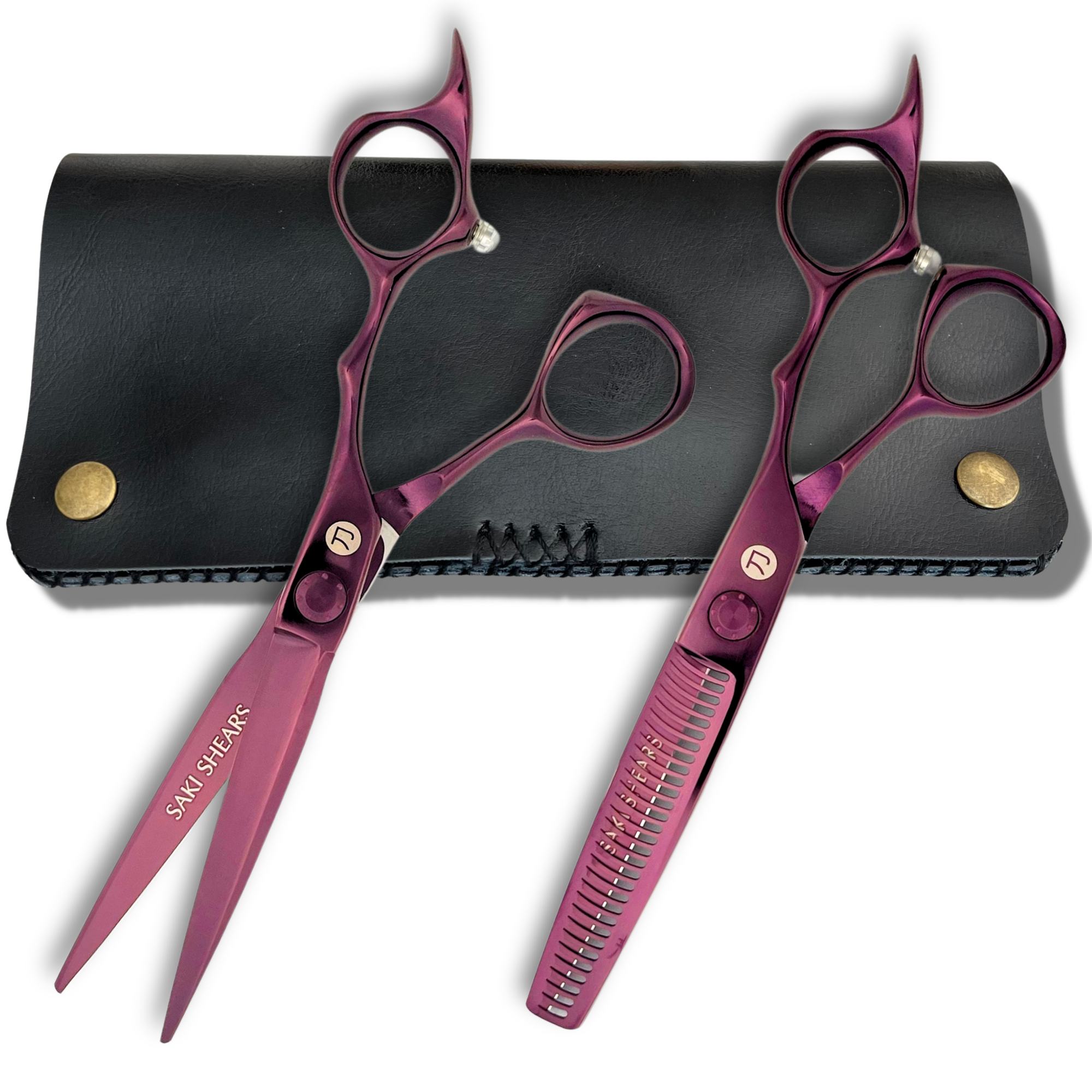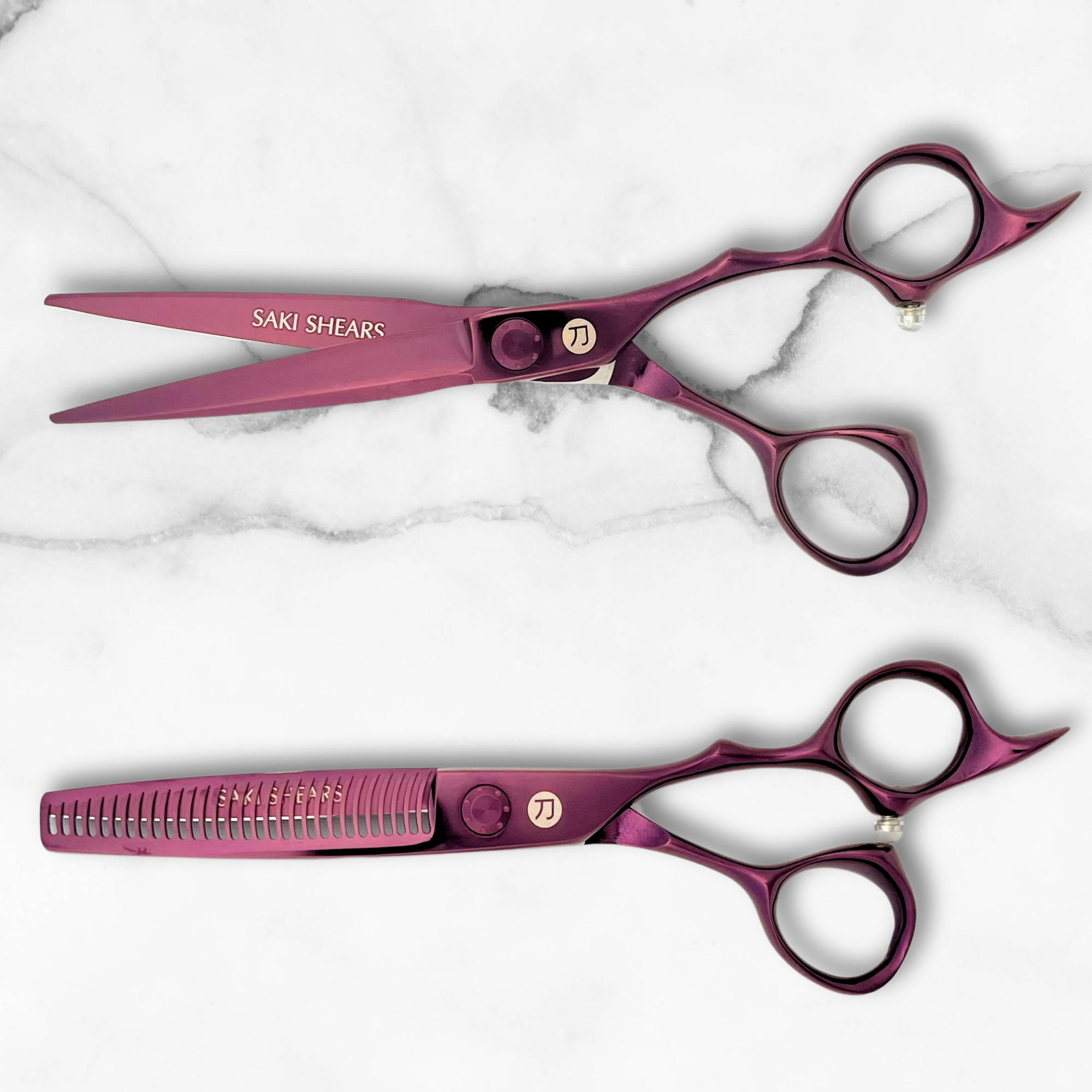
Choosing Hair Shears Based on Your Service Mix
Most shear buying advice treats every stylist the same: pick a steel type, pick a blade edge, done. In practice, the right shear for a barbershop running mostly clipper cuts and fades looks different from the right shear for a salon chair built around color, blunt cuts, and layering. Before you compare steel grades or price tiers, it helps to start with a more basic question: what does your actual service mix look like week to week?
Start With Your Service Mix, Not the Spec Sheet
A barber doing eight fades and two beard trims a day uses shears very differently than a stylist doing color corrections, layered cuts, and blowouts. Clipper-heavy work relies on shears mainly for detail work — cleaning up necklines, blending, and finish cutting — so the shears spend less total time in hand but need to perform reliably in short, precise bursts. Cut-and-color work puts shears at the center of nearly every service, with long stretches of continuous sectioning, slicing, and point cutting. Neither pattern is more demanding than the other, but they wear differently on a blade and put different demands on comfort.
Barbershop, Clipper-Heavy Work
If clippers do most of the cutting and shears are mainly for detail and blending, durability and quick maintenance usually matter more than having the finest possible edge. A shear that holds a serviceable edge through detail work on thick, coarse hair without needing constant babying is often a better fit than a delicate, high-maintenance premium blade. Beveled edges tend to suit this work well: they are more forgiving of the incidental contact that happens when you are moving quickly between clippers, trimmers, and shears in the same service. Shorter shears, in the 5.0 to 5.5 inch range, also tend to give barbers the control they need for tight detail work around the ears, neckline, and beard line.
Salon, Cut-and-Color-Heavy Work
When shears carry the bulk of a service — sectioning, blunt cutting, point cutting, slide cutting through layers — edge quality and consistency over a long service become the priority. This is where finer convex edges earn their keep, producing cleaner lines and smoother slide-cutting results across an entire haircut rather than just a touch-up. Because these shears are in near-constant use, tension consistency and ergonomics also matter more here: a stylist doing back-to-back full services for eight hours will feel a poorly balanced pair by early afternoon in a way an occasional-use pair never gets tested. Longer shears, 6.0 inches and up, are common in this setting for blunt work and larger sections, often paired with a shorter pair for precision detailing.
Mixed Chairs and Generalist Work
Many working stylists do not fall cleanly into either category — a generalist chair might mix men's clipper cuts, women's cut-and-color, and everything in between. In that case, it is worth thinking about where the bulk of your billable hours actually go, not just the variety of services you offer. If detail and blending work outnumbers full shear-driven cuts, lean toward the barbershop profile above. If shear time dominates your week even with some clipper work mixed in, lean toward the salon profile. A second, shorter pair dedicated to detail work is a common way to cover both needs without compromising either one.
How Volume Affects Steel and Maintenance Choices
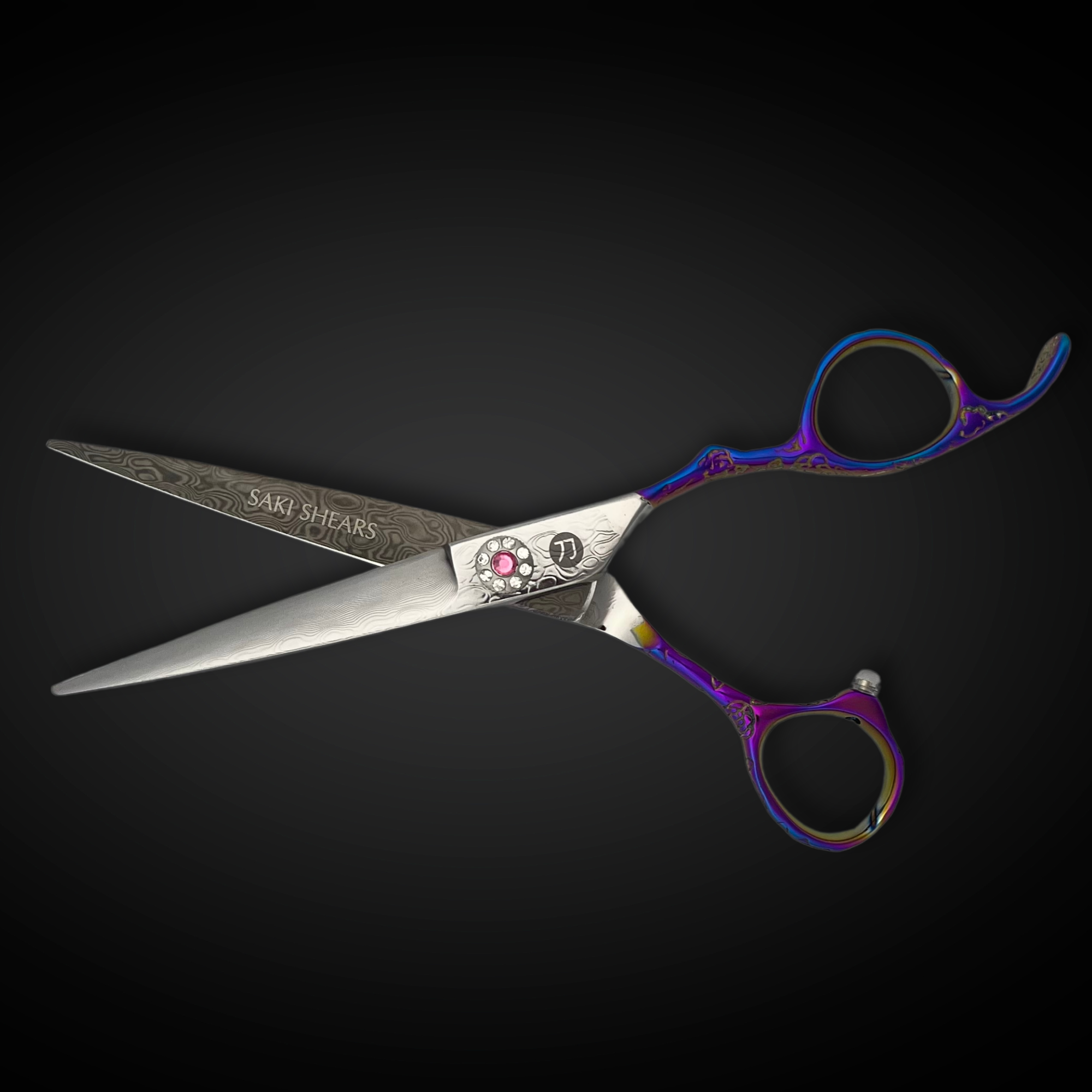
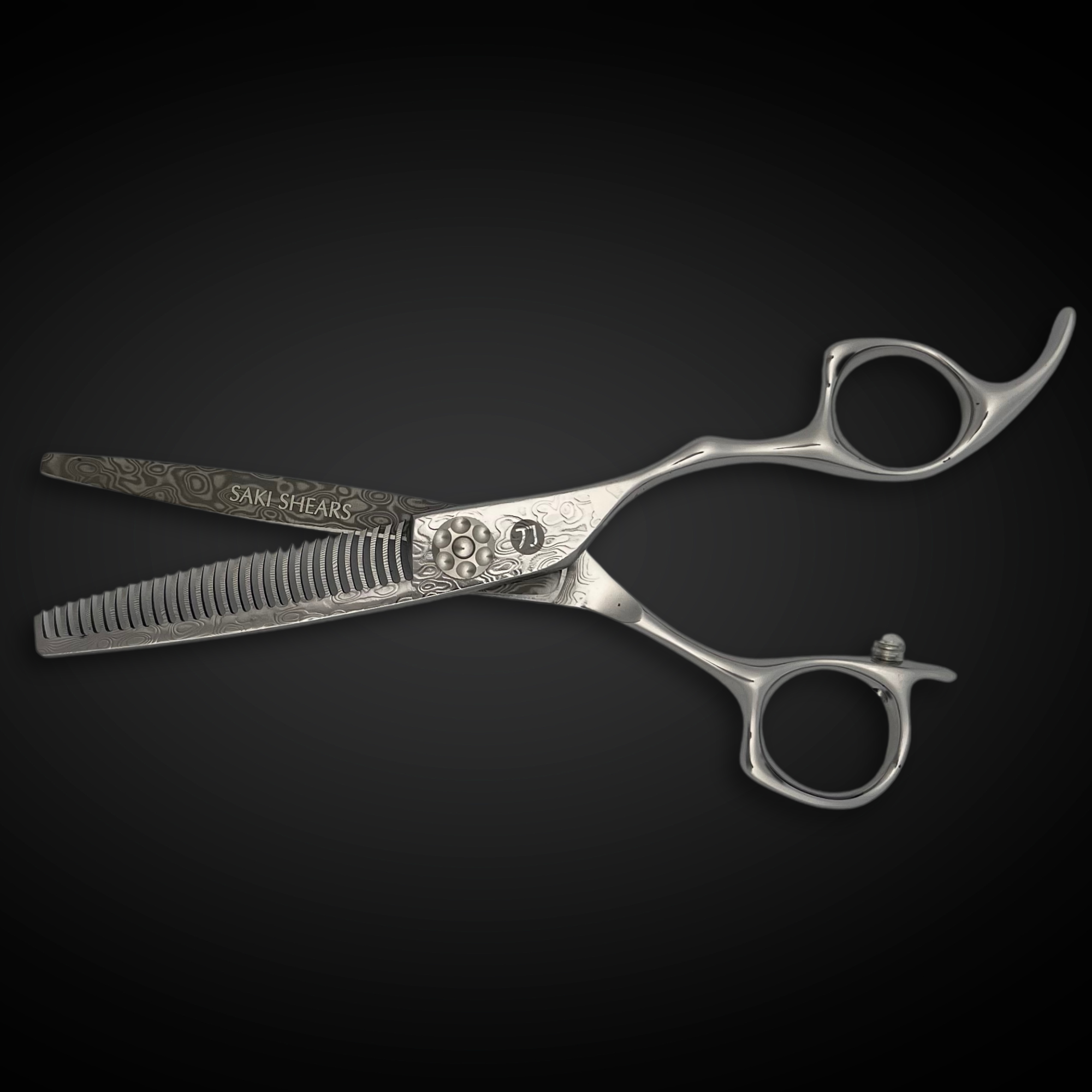
Usage volume changes the math on steel quality too. A shear used for a few hours a week can get by on a lower-maintenance steel because it simply is not accumulating wear as fast. A shear in near-continuous use across a full column of appointments will dull faster in absolute terms, so the edge retention of higher-grade steel — including hardened Japanese steel or layered Damascus construction — pays for itself faster in a high-volume chair than in a light one. If you are cutting more than 30 hours a week with shears doing meaningful work in most of those services, it is worth prioritizing edge retention over initial price. Our hair cutting shears collection and Damascus hair shears collection are organized by these steel and construction differences if you want to compare options directly.
A Practical Way to Decide
- Mostly clippers, shears for detail work: prioritize durability and quick blending performance over the finest possible edge; a beveled edge in a shorter length is usually the practical choice.
- Mostly shears, full cut-and-color services: prioritize edge quality, tension consistency, and ergonomics for long, continuous use; a convex edge and a longer primary shear tend to fit this work.
- Mixed or generalist chair: match your primary pair to where most of your hours go, and consider a second, shorter shear for detail work rather than asking one pair to do everything well.
Steel quality, edge type, and price all matter, but they only make sense once you know what kind of work the shears will actually be doing day to day. Matching the tool to your real service mix, rather than to a generic "best" recommendation, is what makes an investment in better shears pay off in the chair.

Written by Charles Harris