How to Choose Hair-Cutting Shears: A Practical Framework
Most shear buying guides list generic advice — "pick a comfortable pair," "buy the best you can afford" — without explaining what actually separates one pair of shears from another at the working level. Here's a framework built around the three factors that determine how a shear performs on the floor, all day, cut after cut: edge geometry, finger hole fit, and weight and balance.
Blade edge type
The edge geometry determines how the shear engages hair and how much maintenance it needs over time.
Beveled edge. Two flat bevels are ground to meet at the cutting edge. It's the most durable geometry, holds up well to resharpening, and is more forgiving if a shear gets dropped or used on the occasional stray bobby pin. Beveled shears are a solid choice for high-volume cutting where durability matters more than the absolute cleanest slice.
Convex edge. A single curved bevel is honed down to a fine, almost glass-like edge. This geometry produces the cleanest possible cut with the least hair displacement, which matters most for precision work — point cutting, slide cutting, and any technique where the cut line itself is visible in the finished style. The tradeoff is that a convex edge is thinner and less forgiving; it needs professional honing rather than a quick home sharpening, and it's more prone to damage from misuse.
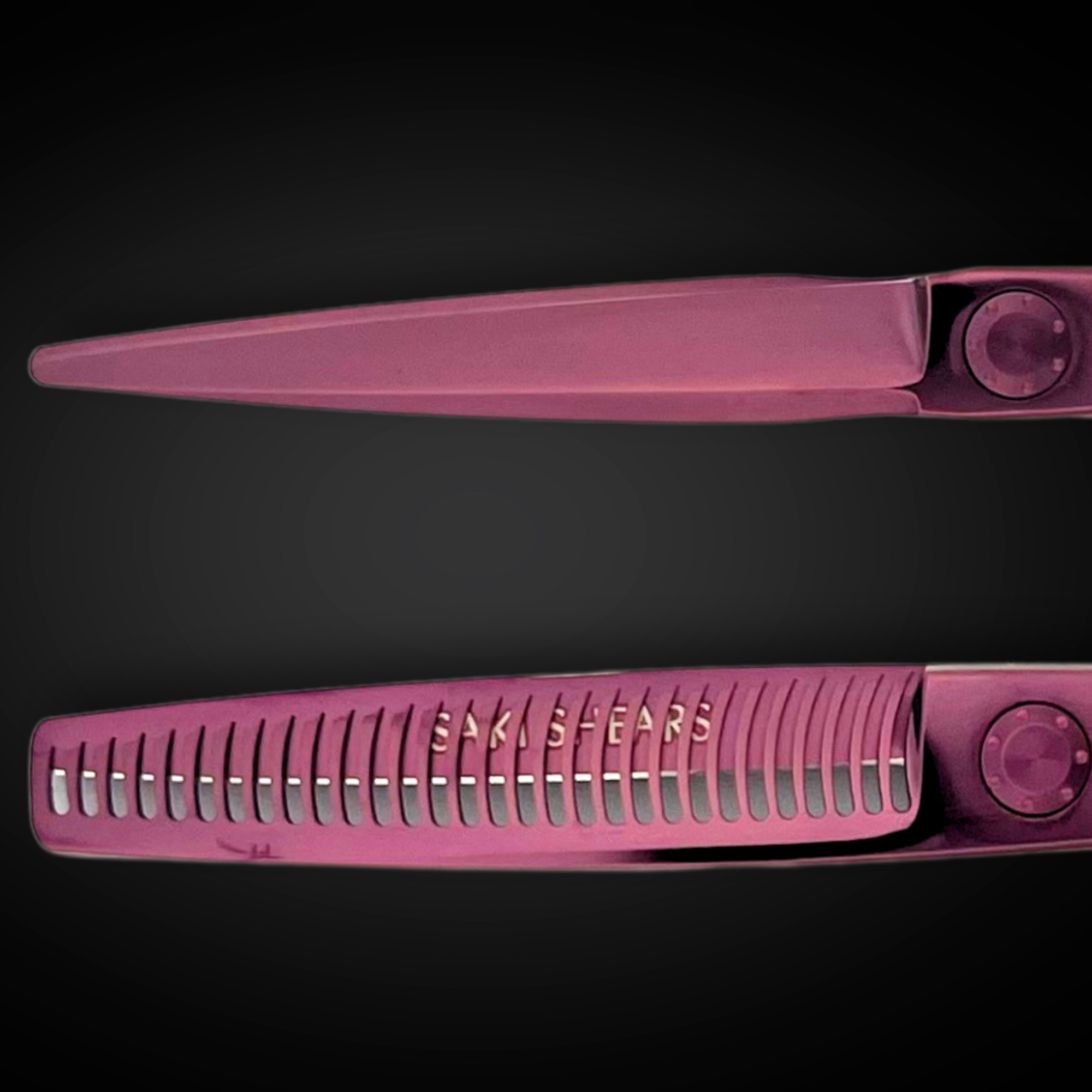
Serrated (micro-serrated) edge. One blade carries fine teeth along the cutting edge, which grip the hair and reduce slippage during the cut. This makes serrated shears more forgiving for less-practiced hands and useful on coarse or slippery hair that tends to slide out of a smooth blade. The tradeoff is a slightly less crisp line than a convex edge delivers, since the serration leaves a marginally rougher finish at the cut point.
None of these is universally "better" — they're suited to different work. Many stylists end up with a beveled or serrated shear for everyday cutting and a convex shear reserved for precision and texture-heavy finishing.
Finger hole comfort and ring size
Fit matters more than most buying guides admit, because a shear that doesn't match your hand causes fatigue and strain long before it causes a bad haircut. A few things to check before buying:
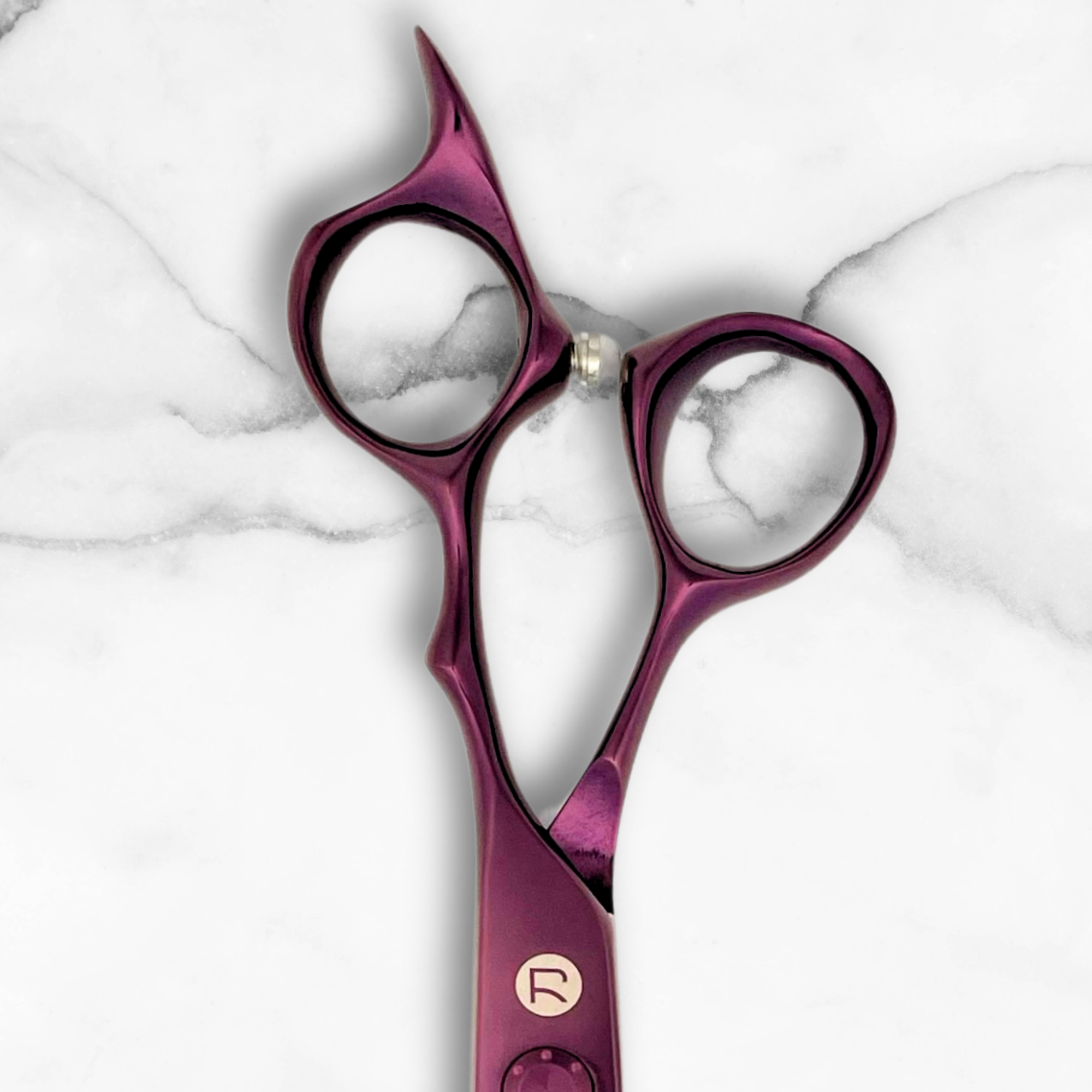
- Ring size. Your thumb and ring finger should sit in the holes without the joints crowding the metal. Too tight restricts finger movement through the cut; too loose forces you to grip the shear to keep it from shifting, which tires the hand fast.
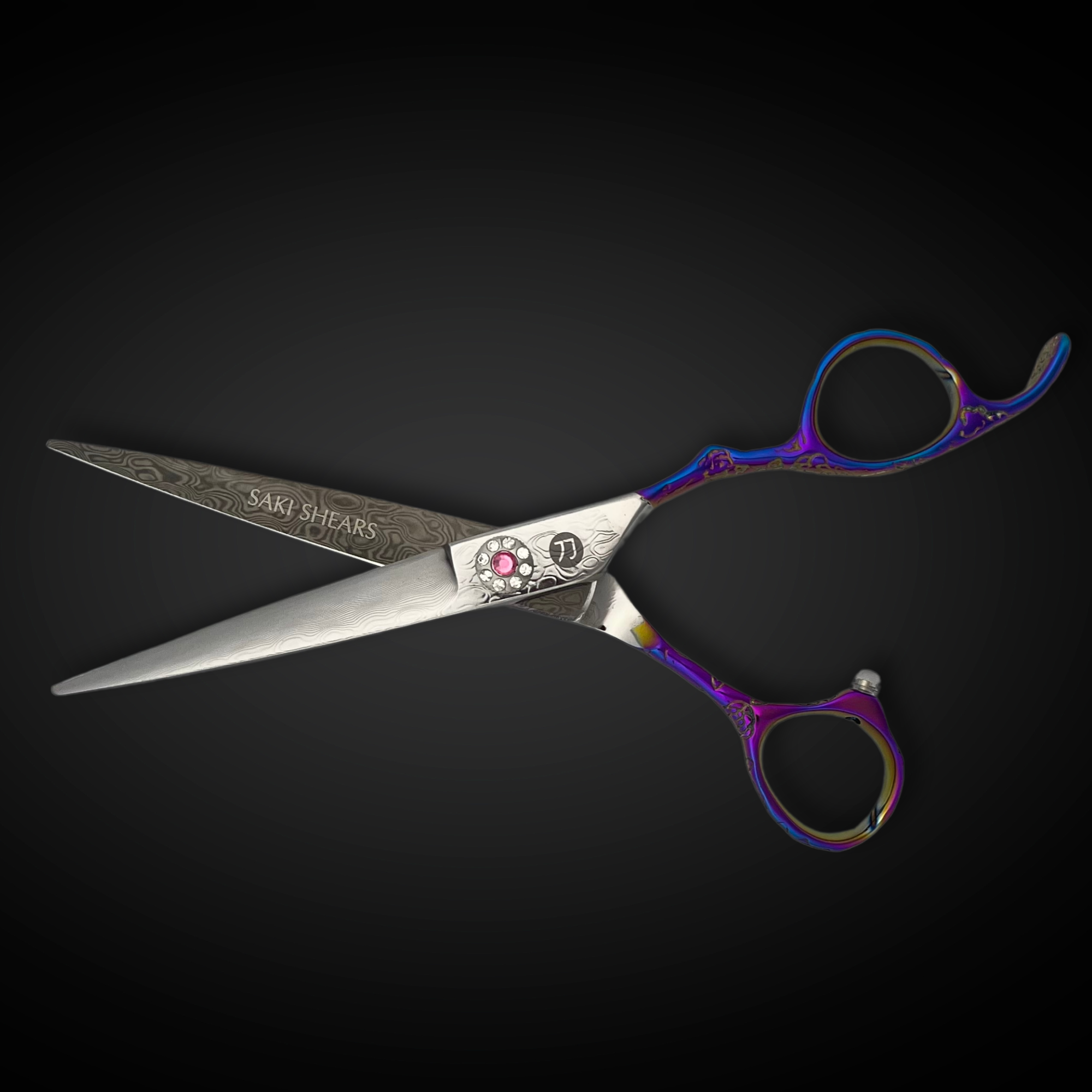
- Offset vs. straight handles. An offset handle angles the thumb ring back, letting the hand and wrist sit in a more neutral position during cutting. Over a full column of clients, that neutral position is what keeps repetitive strain at bay.
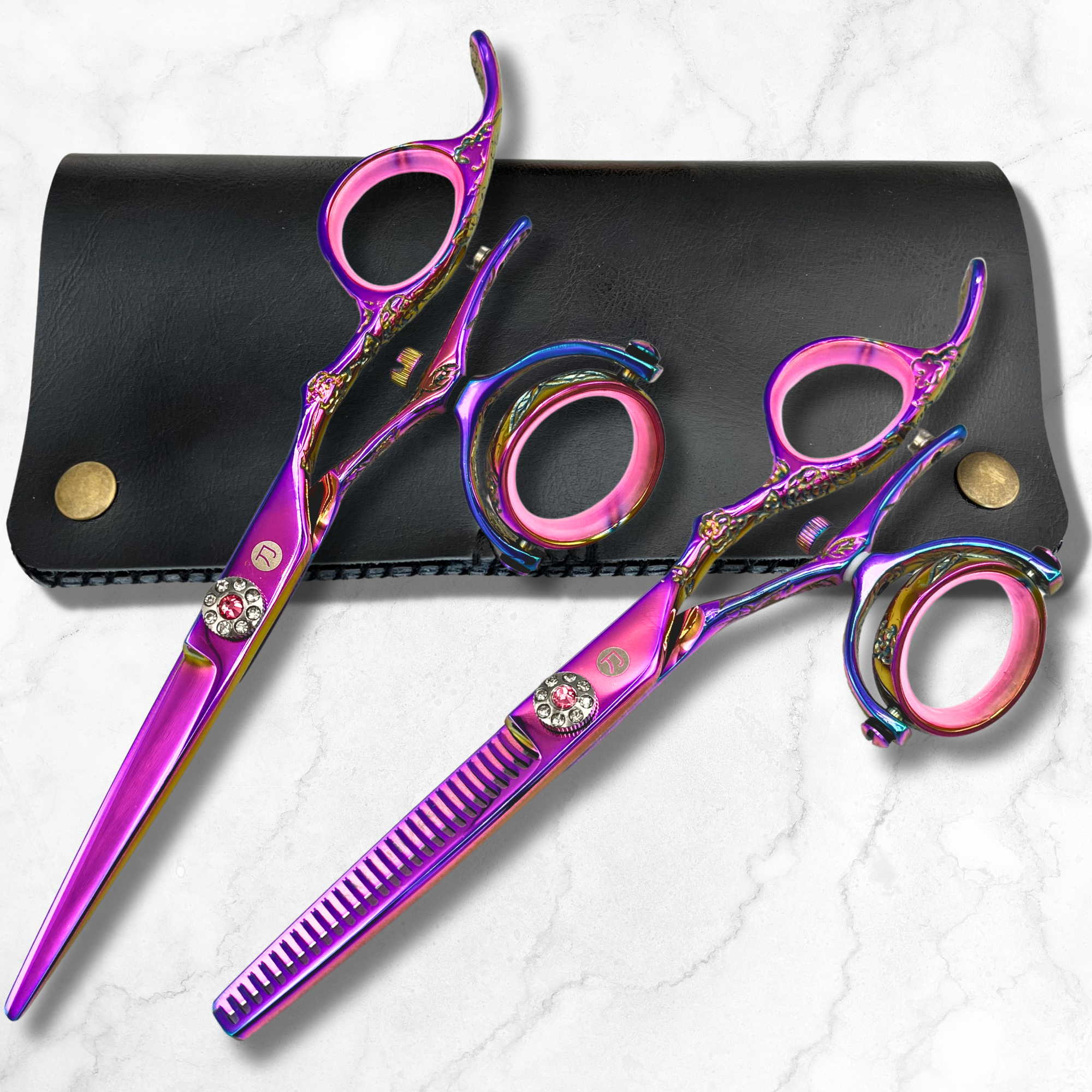
- Adjustable finger rest or removable tang. A finger rest that can be repositioned (or removed) lets you fine-tune where your pinky sits, which affects control on longer cutting sessions.
- Thumb rotation. The thumb ring should pivot smoothly on its own axis, independent of the rest of the shear, so opening and closing the blade doesn't require twisting your whole hand.
If you can, hold a shear in the open-and-close motion you'd actually use at the chair before buying — a shear that feels fine sitting still can still be wrong once your hand is moving through hundreds of cuts a day.
Weight and balance
Weight compounds over a shift. A shear that feels negligible for the first ten minutes can produce real forearm and shoulder fatigue by client number six. Lighter shears, generally made from higher-grade steel that can be ground thinner without losing strength, reduce that fatigue and are worth the investment for anyone cutting full-time.
Balance is separate from weight: it's where the shear's center of mass sits relative to the pivot point. A well-balanced shear pivots with minimal wrist effort, which matters more for control than raw lightness does. Shears that are handle-heavy or blade-heavy require more compensating effort from the hand to keep the blade path steady, even if the total weight is low.
Putting it together
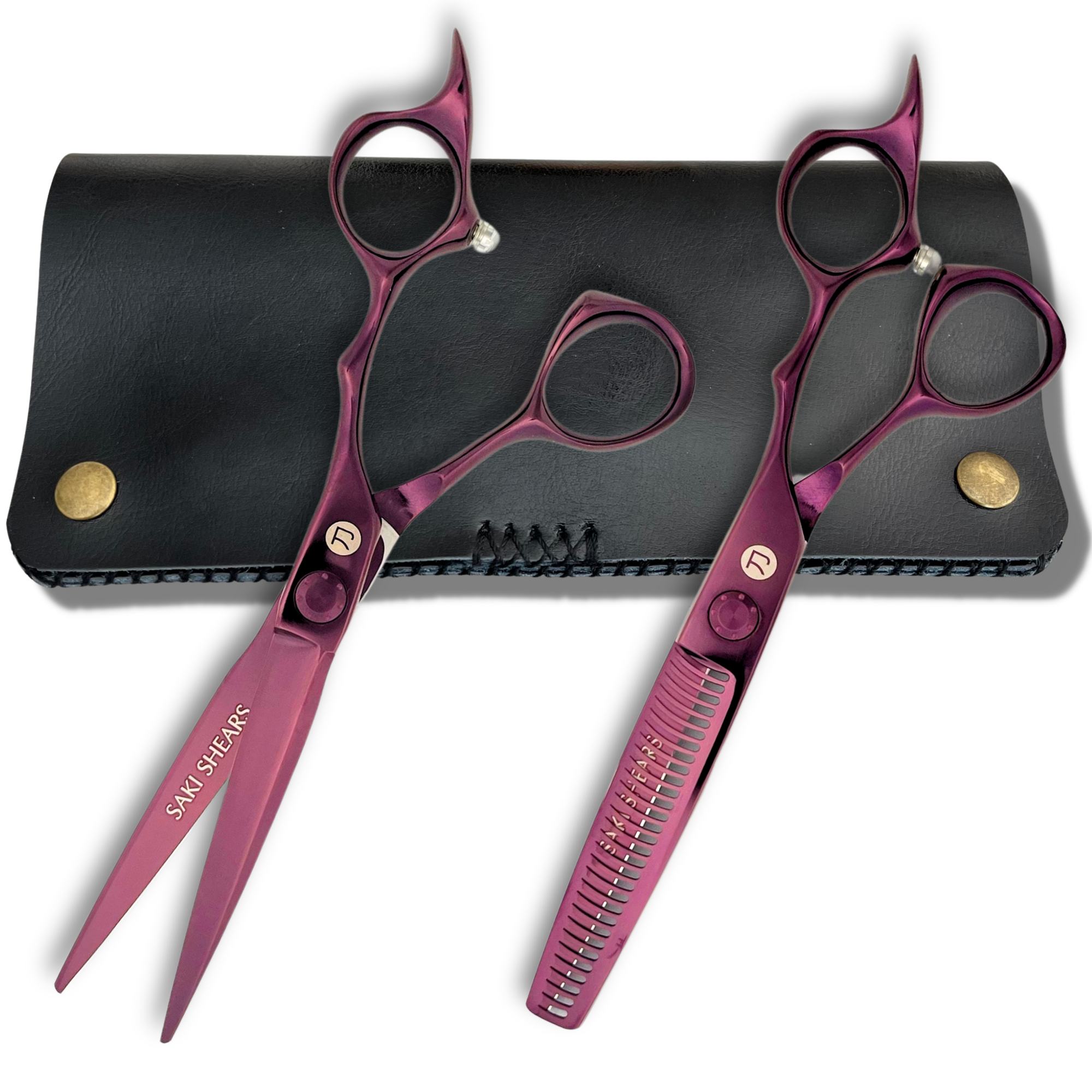
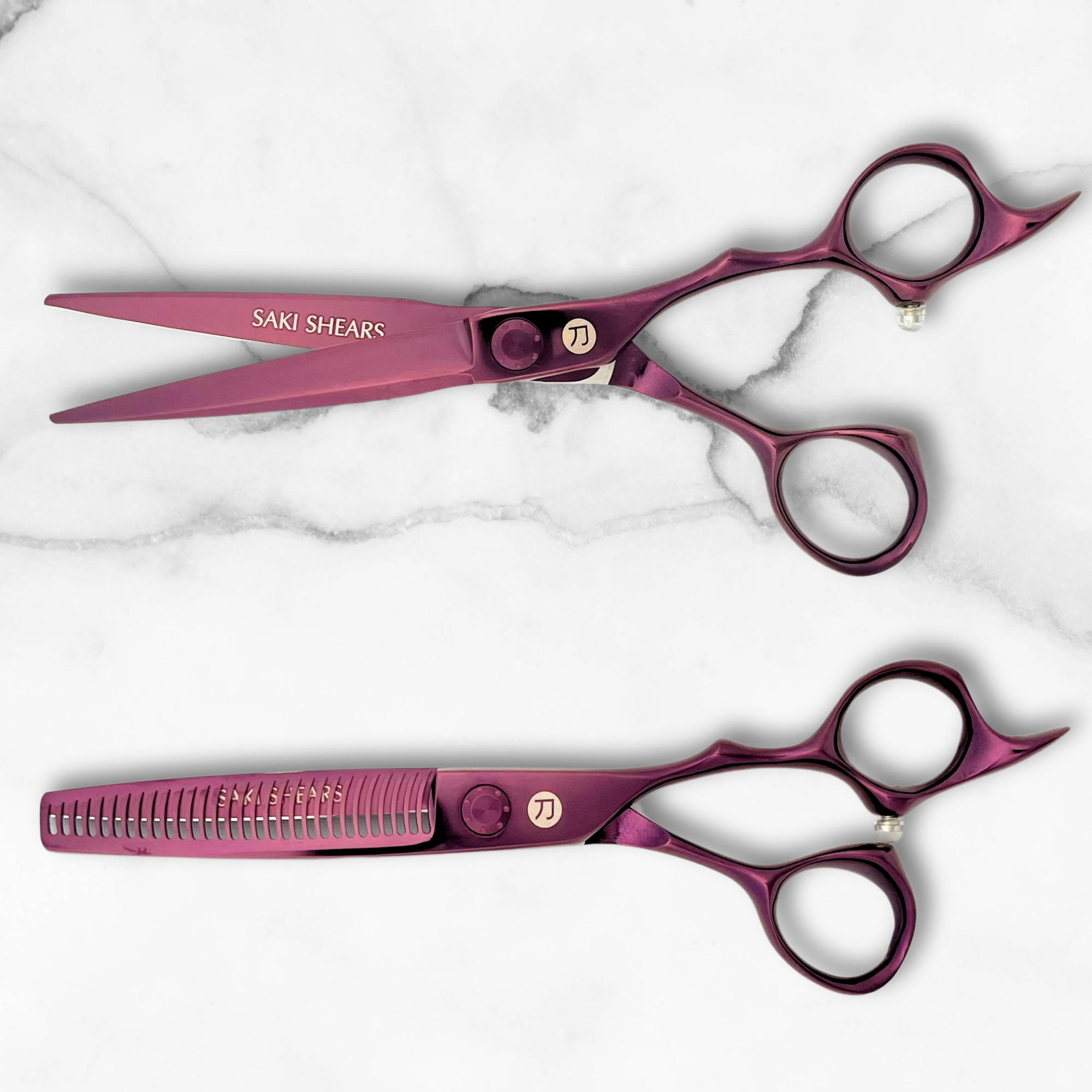
Start from how you actually work: a barber doing heavy volume day-to-day may prioritize a durable beveled edge and a lighter, well-balanced frame, while a stylist doing precision color and texture work may reach for a convex-edge shear despite the extra maintenance. Our cutting shears and Damascus steel shears are organized by edge type and weight so you can match the tool to the work, and our full shear range covers texturizing and thinning options if you're building out a complete kit.

Written by Charles Harris