The Saki Shears Product Line: Cutting Shears, Thinning Shears, and Sets
Built for the Chair, Not the Showroom
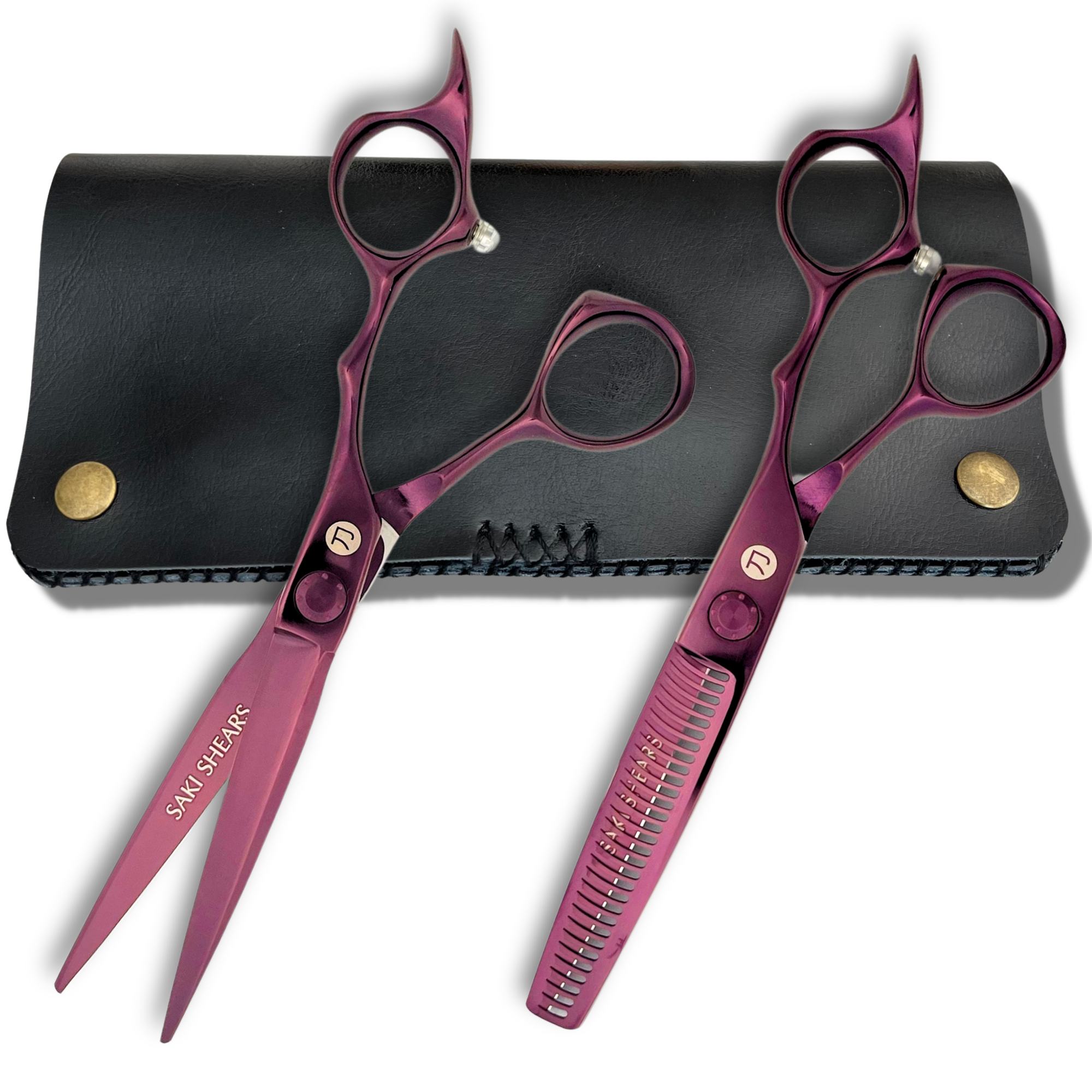
Saki Shears makes a focused range of hair-cutting tools designed around how working stylists and barbers actually use them: hours in hand, repeated open-and-close cycles, and a need for an edge that holds up between sharpenings. Rather than chasing trends, the line is organized around three categories that map to real chair-side needs: cutting shears, thinning shears, and sets that pair the two. Understanding what each category is built for makes it easier to choose the right tool for your technique, hand size, and clientele.
Cutting Shears: The Core Tool
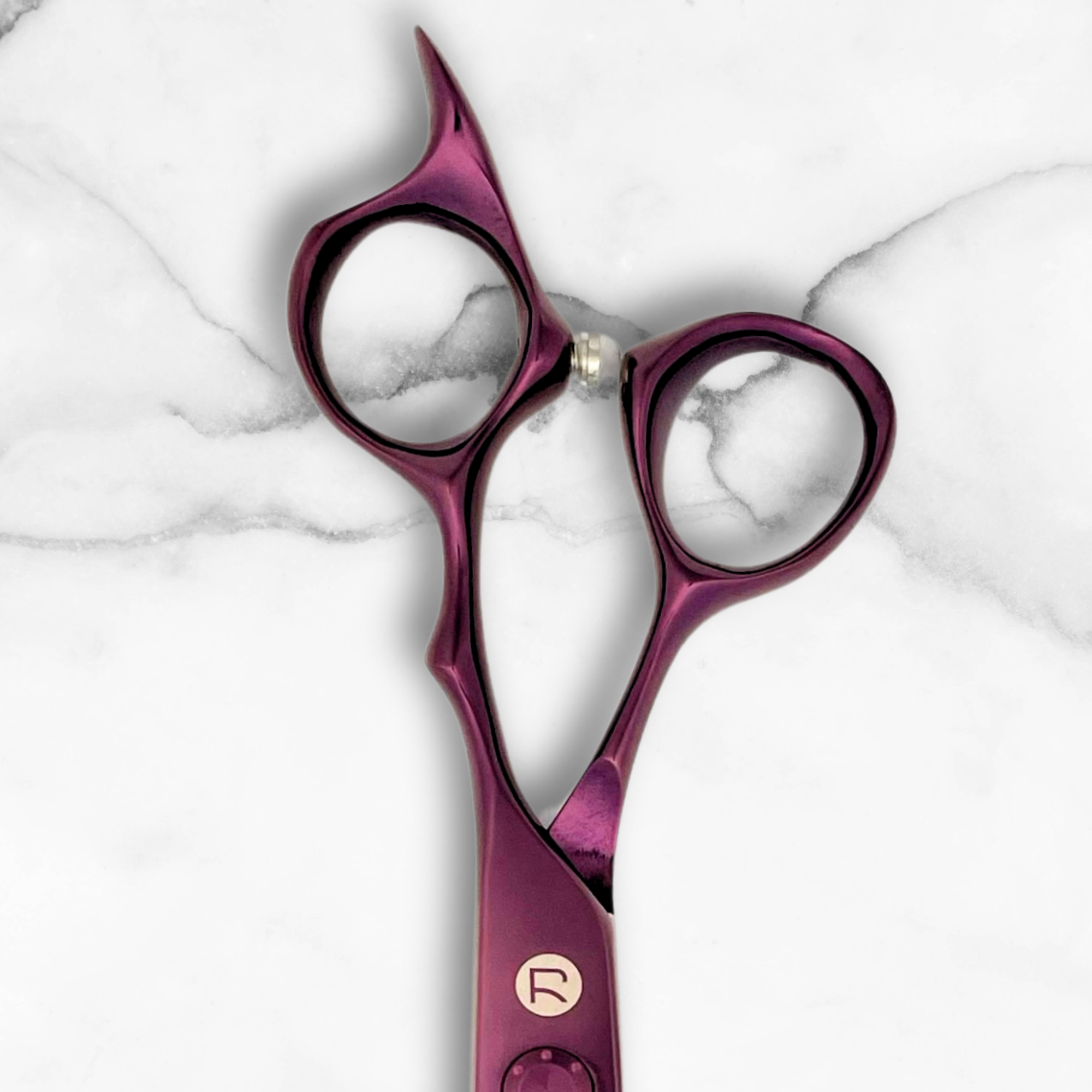
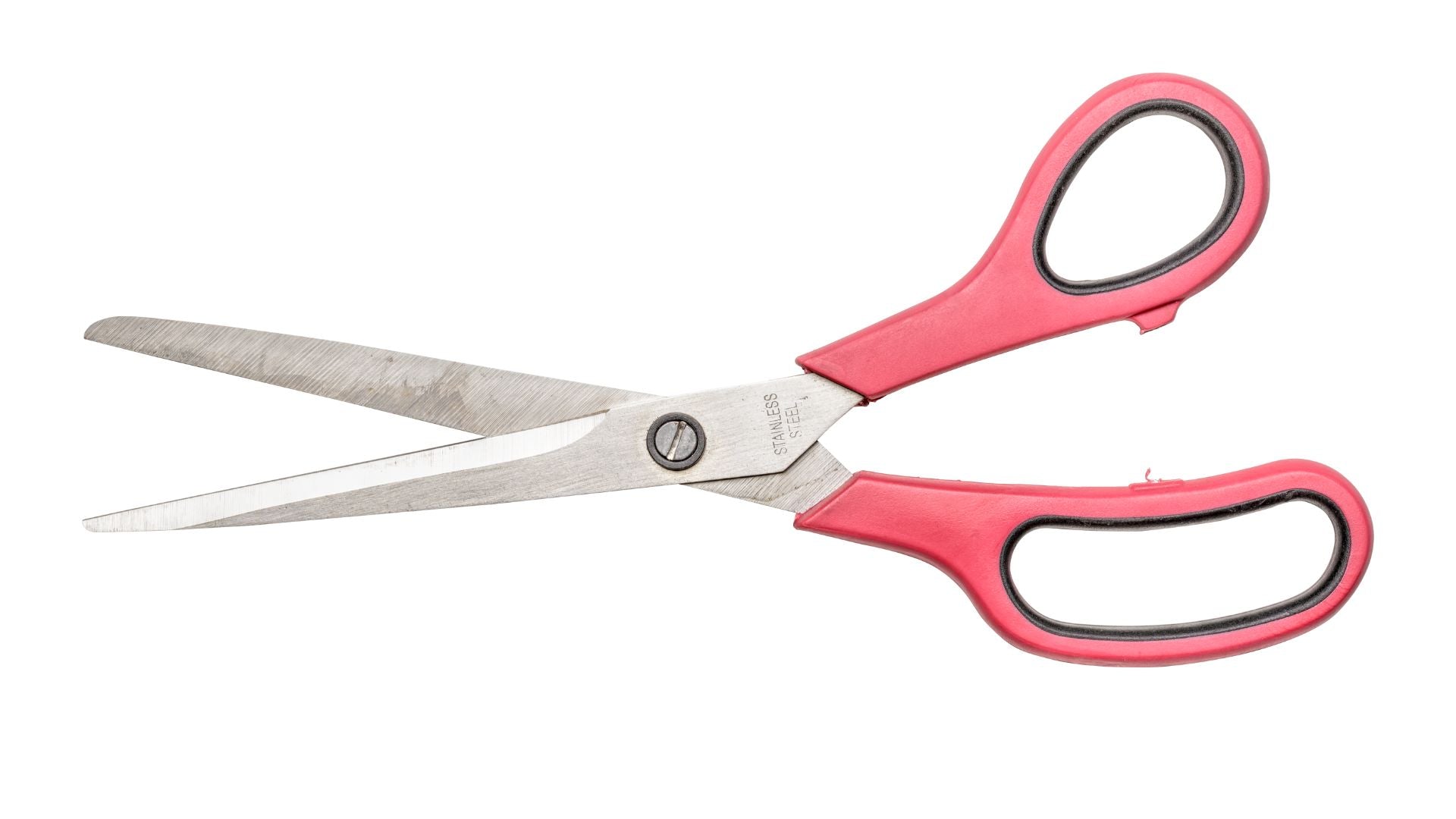
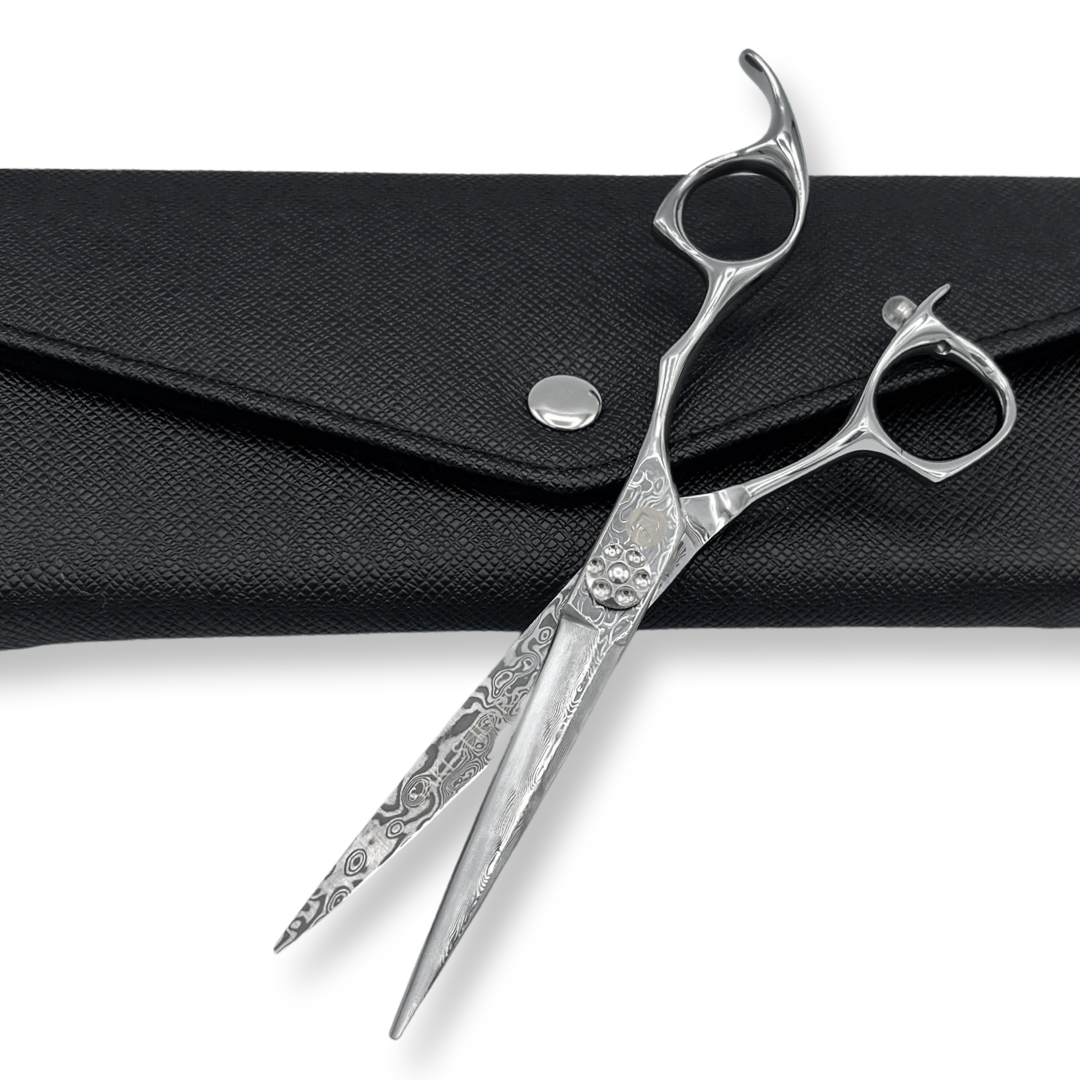
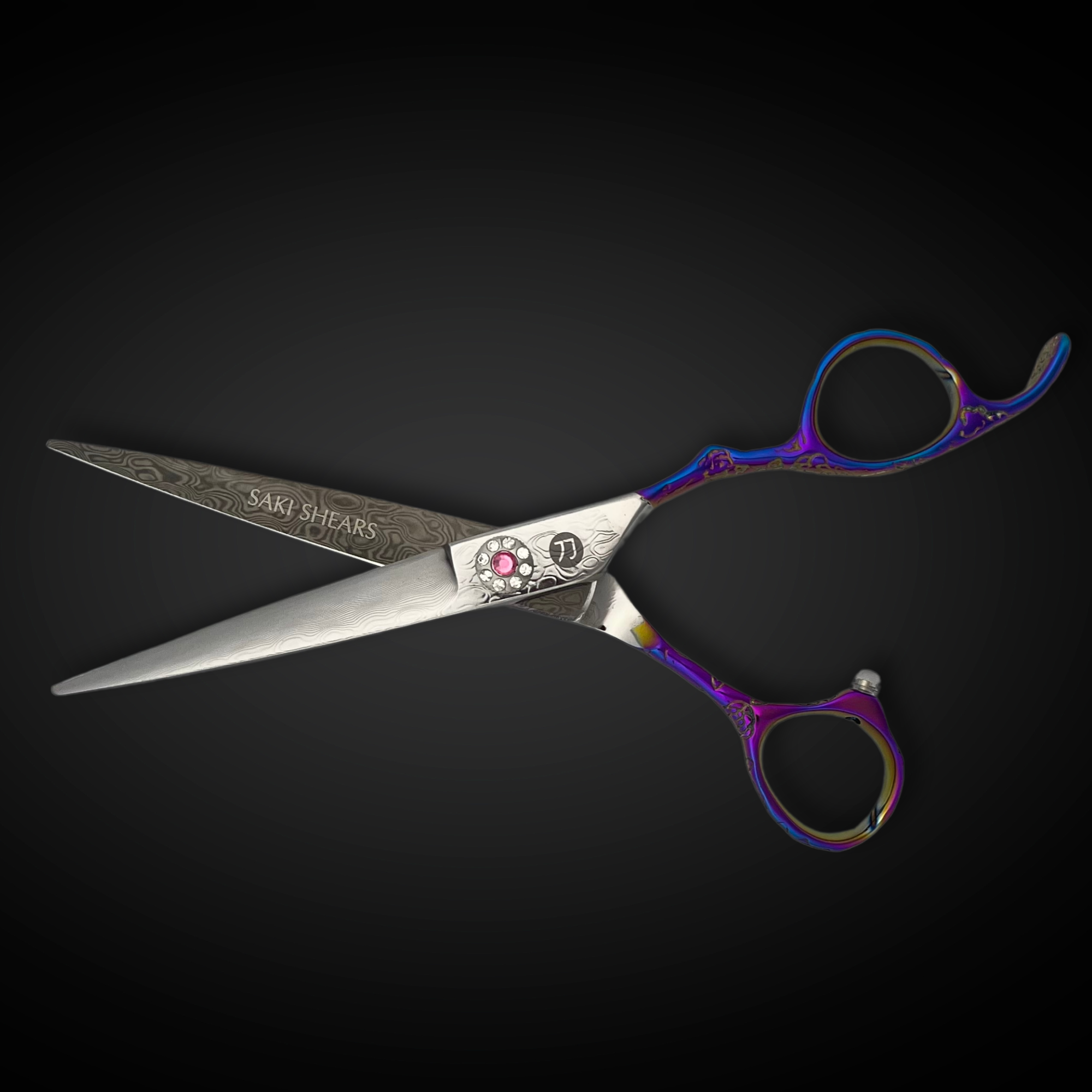
Cutting shears (sometimes called straight shears) are the primary tool for blunt cuts, point cutting, and most base work. The details that matter most are blade geometry, handle style, and size. A convex-ground blade is honed to a fine, polished edge along a curved bevel, which tends to produce a cleaner, smoother cut with less pushing of the hair before the blade shears through it. A beveled edge is more durable and easier to maintain with routine honing, which suits stylists who want lower maintenance overhead. Handle styles also matter: offset handles position the thumb ring forward, which can reduce wrist strain during long shifts, while opposing-thumb designs give a more neutral grip that some stylists prefer for fine detail work. Sizing generally runs from about 5.0 to 6.5 inches, with shorter shears favored for precision and slide cutting and longer shears favored for volume removal and speed on larger sections. Saki's cutting shear range is built to cover this spectrum rather than a single format, and you can browse the current options in the hair cutting shears collection.
Thinning and Texturizing Shears
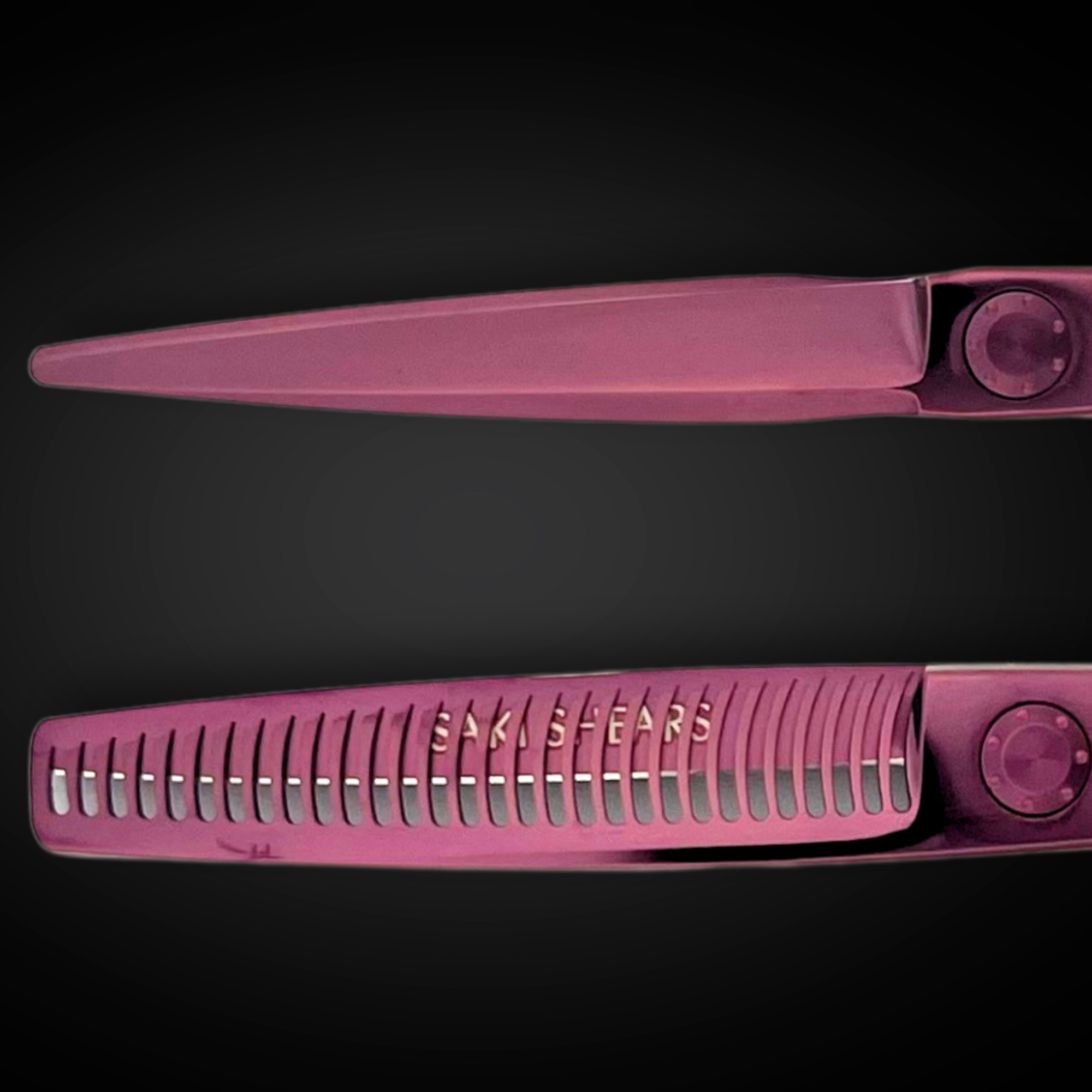
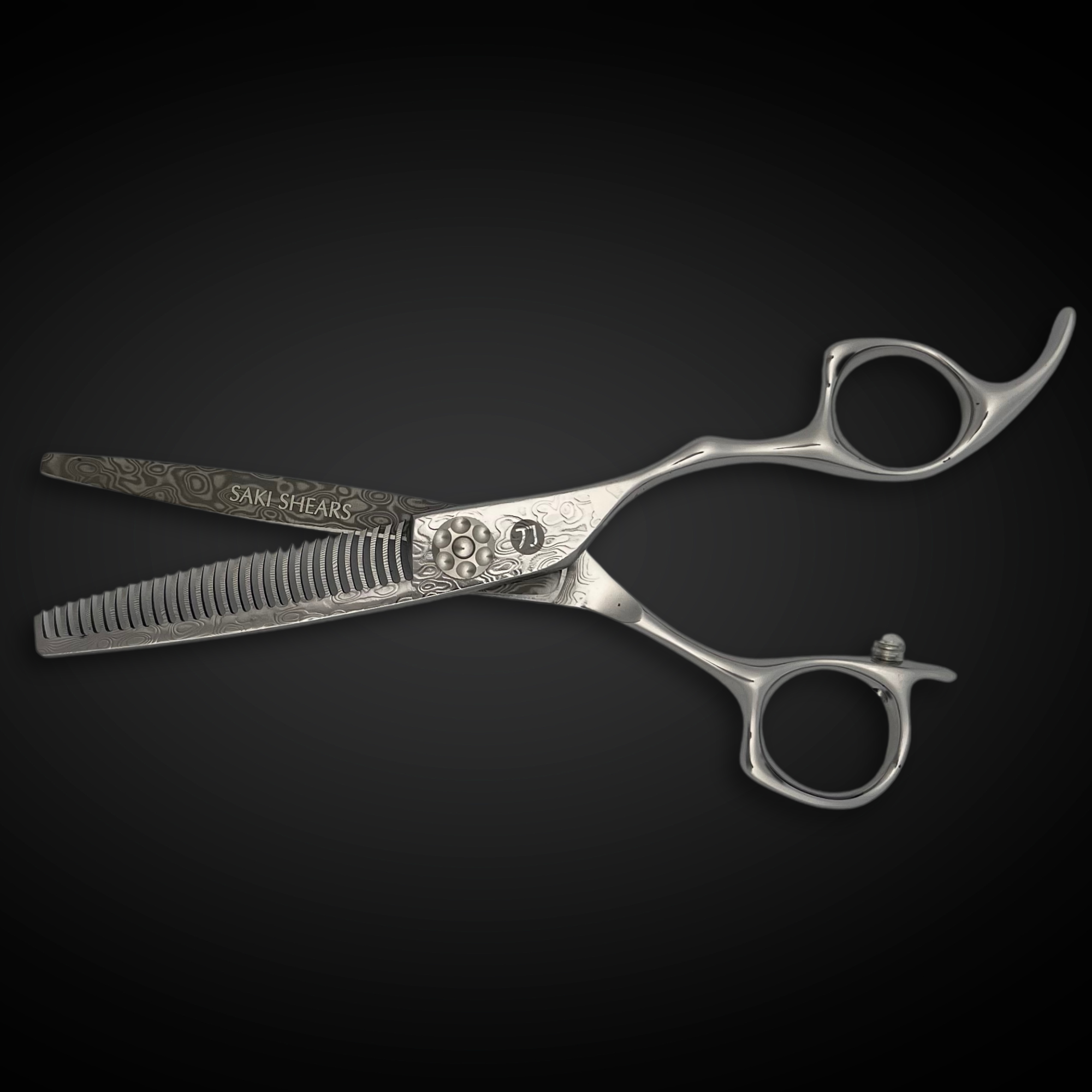
Thinning shears (also called texturizing shears) have one blade with teeth and are used to remove bulk, blend transitions, and create texture without shortening the overall length as aggressively as a straight shear. Tooth count and spacing determine how much hair is removed per pass: fewer, wider-spaced teeth remove more bulk per stroke and suit thicker or coarser hair, while higher tooth counts remove less per pass and give finer, more gradual blending, which is useful on fine hair or when working close to the scalp. Tooth design also affects finish. Some patterns are cut to leave a slightly textured edge intentionally, which can be useful for creating movement in a finished style, while others are designed to blend as invisibly as possible. Matching tooth count to hair type and the amount of bulk you need to remove is the main variable to consider when choosing a thinning shear, more so than brand or price point alone.
Why Sets Make Sense for Many Stylists
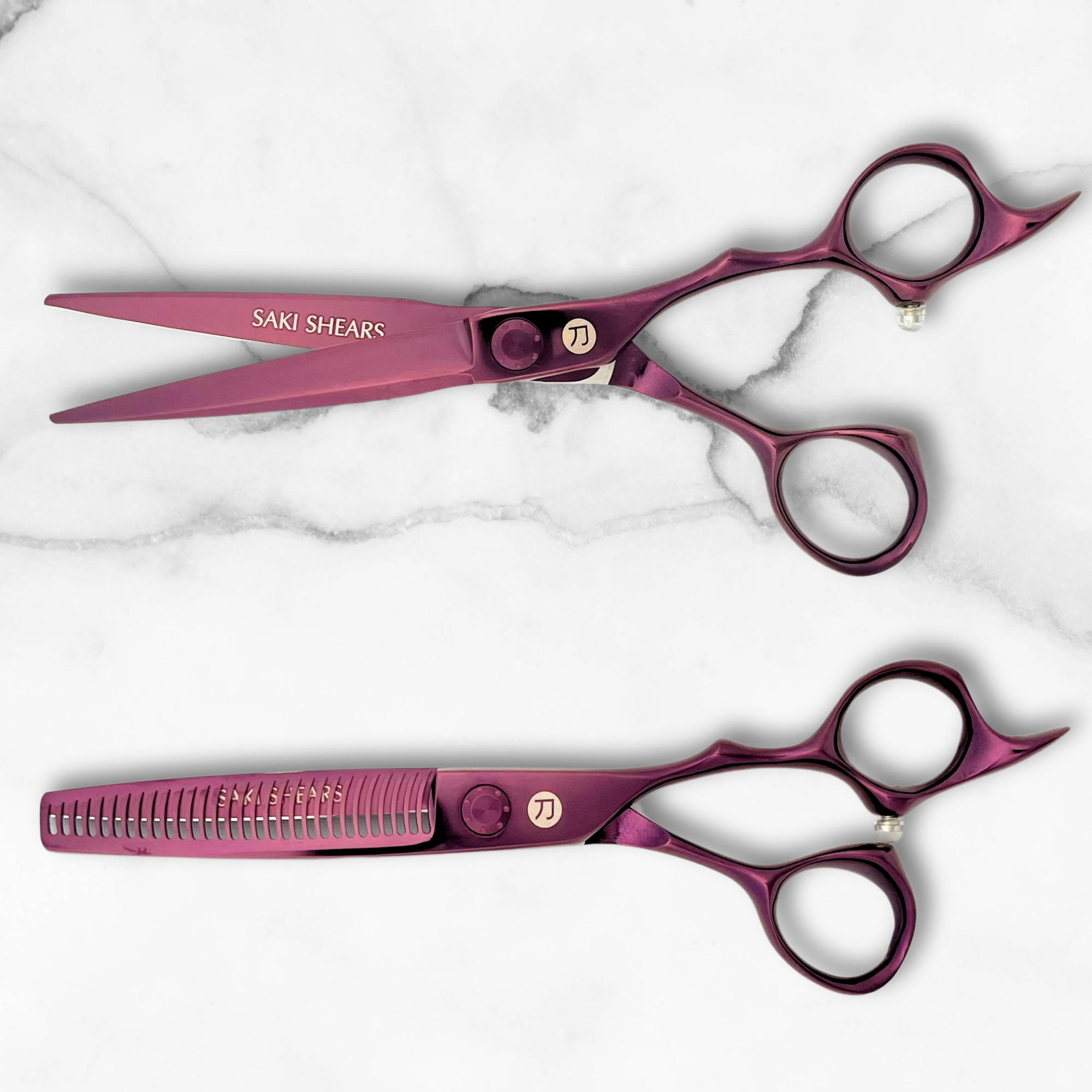
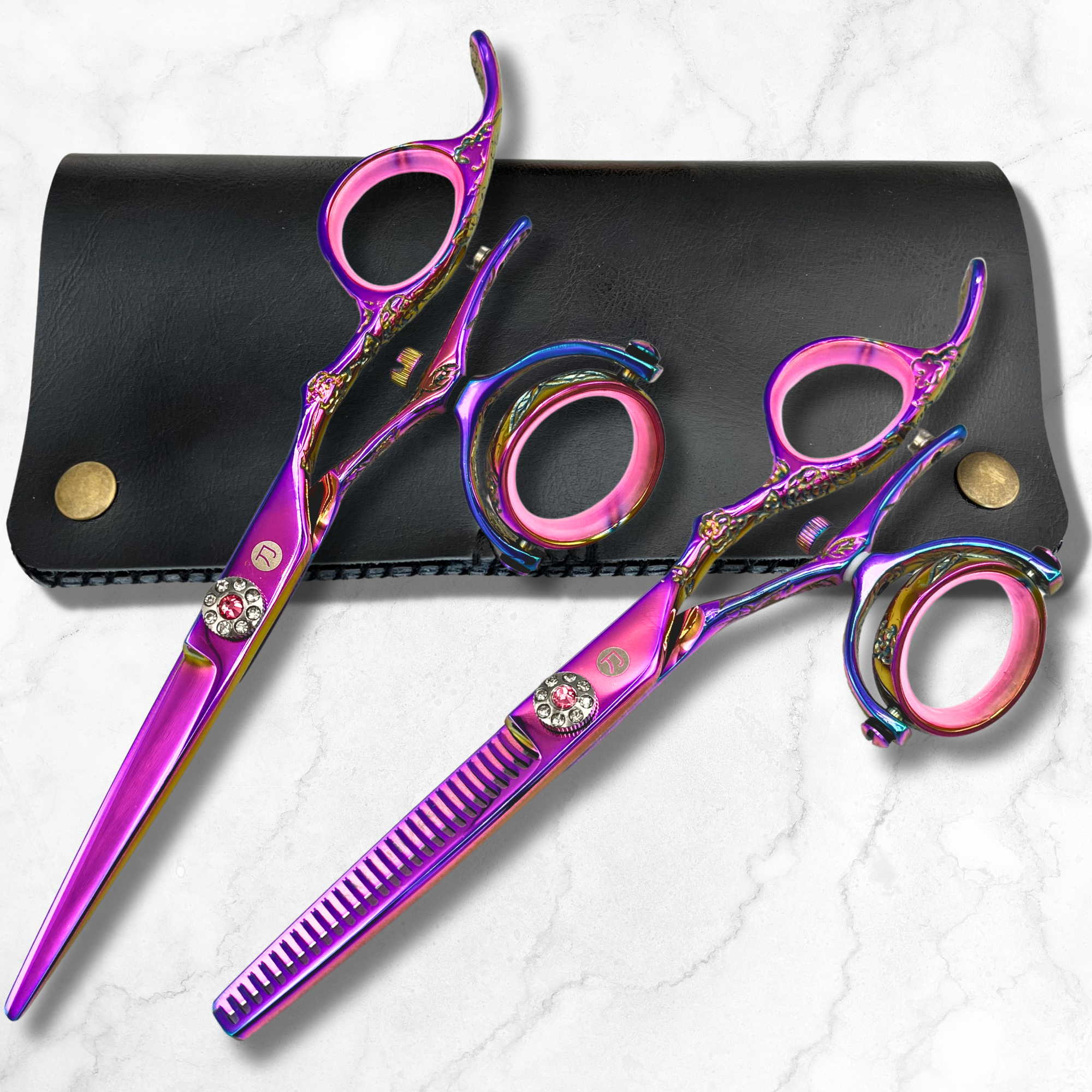
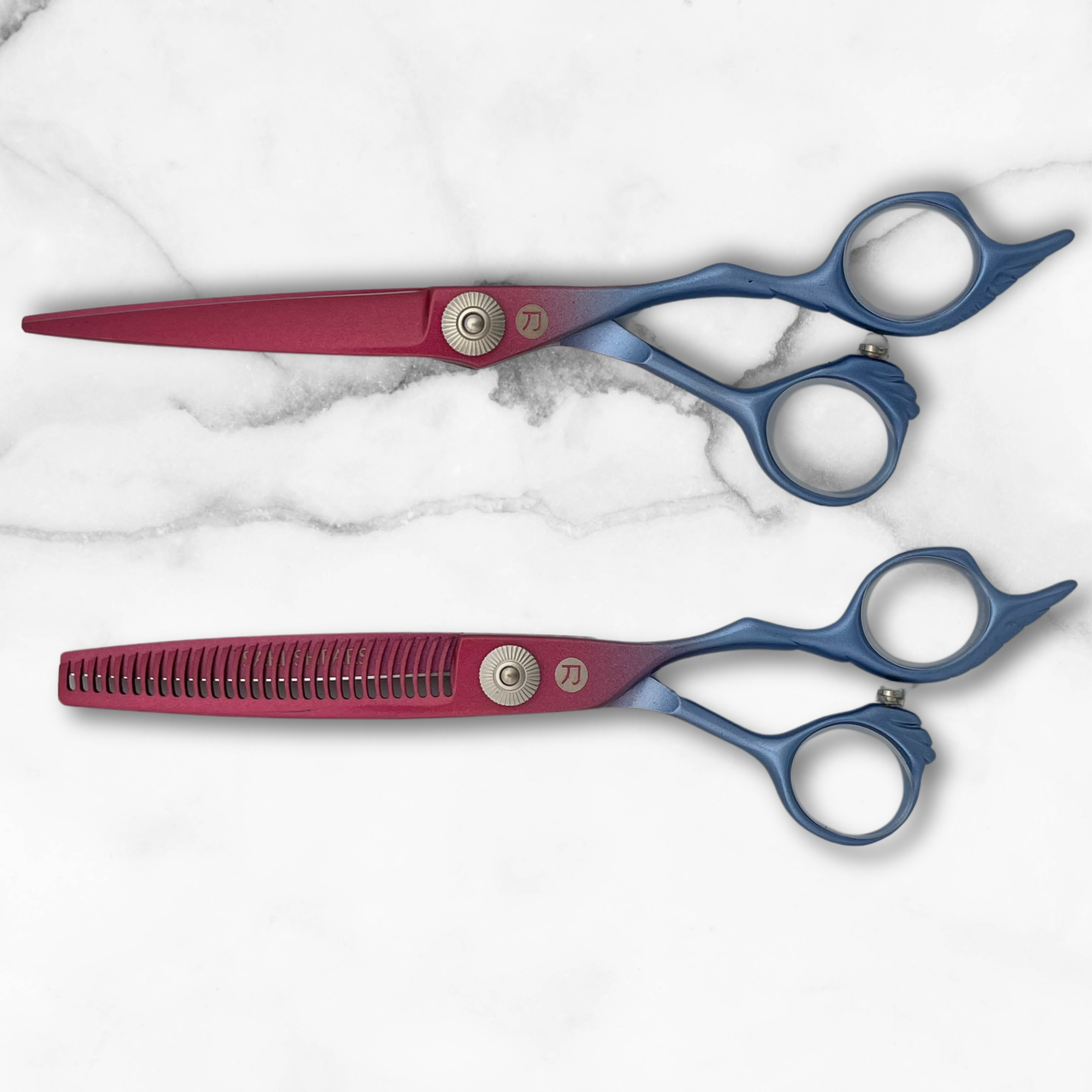
A shear set pairs a cutting shear and a thinning shear built to the same steel, hardness, and handle geometry, so the two tools feel consistent in the hand and can be used back-to-back without adjusting your grip or technique. Sets are a practical option for stylists building out a first professional kit, for those who want a matched backup pair in case a primary shear needs sharpening or repair, and for anyone who prefers not to mix components from different manufacturers with different pivot tensions and blade finishes. Buying a set is not simply a bundling discount; it's a way to ensure the two tools you use most in a single haircut behave predictably together. Saki's paired options are listed in the hair shear sets collection.
Matching Shears to Your Hand and Technique
The best shear on paper is not always the best shear for a given stylist. Hand size affects which finger-hole spacing and handle style will feel comfortable over a full shift, and grip strength and wrist mobility affect whether an offset or opposing-thumb handle reduces fatigue or introduces it. Technique matters too: stylists who rely heavily on slide cutting or point cutting often prefer shorter blades with a fine convex edge, while those doing more traditional scissor-over-comb work may prefer a slightly longer blade for reach and speed. There is no single correct configuration, which is why it is worth testing a few handle styles and blade lengths rather than defaulting to whatever length was used in training.
Maintaining the Investment
Whatever shears you choose, tension adjustment, regular cleaning, and periodic professional honing have more effect on day-to-day cutting performance than most other factors. A shear that is honed correctly but poorly tensioned will still feel like it drags or slips, and even the best steel will dull faster if it's cleaned with harsh chemicals or stored loose in a drawer where the edge can contact other tools. Building a basic maintenance routine, and having it professionally serviced on a regular schedule, will do more for long-term performance than switching models frequently.
Choosing From the Range
Whether you need a single cutting shear, a dedicated thinning shear, or a matched set, the goal is the same: a tool that fits your hand, suits your technique, and holds an edge through a full day of work. Take the time to think through blade geometry, handle style, and tooth pattern before buying, rather than choosing on price or appearance alone.

Written by Charles Harris