Answers to Your Top 5 Hair Shear Questions
Every working stylist eventually asks the same handful of questions about their shears. Below are straightforward answers to five that come up most often in the chair and at the sharpening counter.
How often should I sharpen my shears?
There is no single number that works for every stylist, because sharpening frequency depends on how many cuts you do per week, the hair types you work with, and how well you maintain the shear between sharpenings. As a general guideline, most full-time stylists send their primary cutting shear out for professional sharpening every three to six months. You'll notice the need sooner if you cut a lot of coarse or wet hair, since both accelerate edge wear. A good habit is to test the edge periodically: if the shear starts pushing hair instead of cleanly slicing through it, or if you hear a dull "crunching" sound on dry cuts, it's time to have it sharpened rather than waiting out the calendar.
How do I know when a shear is actually worn out?
A shear that needs sharpening is not the same as a shear that's worn out. Sharpening restores the edge; wear affects the blade geometry itself. Signs a shear may be nearing the end of its useful life include visible pitting or corrosion along the cutting edge that sharpening can't remove, a blade edge that has been ground down so many times it has changed shape or thickness, persistent looseness at the pivot that adjustment no longer fixes, or handles and finger rests that have cracked or become uncomfortable to hold for a full shift. If a trusted sharpening service tells you a shear has been sharpened past a safe point, it's worth retiring rather than continuing to send it out.
How should I care for the tension screw?
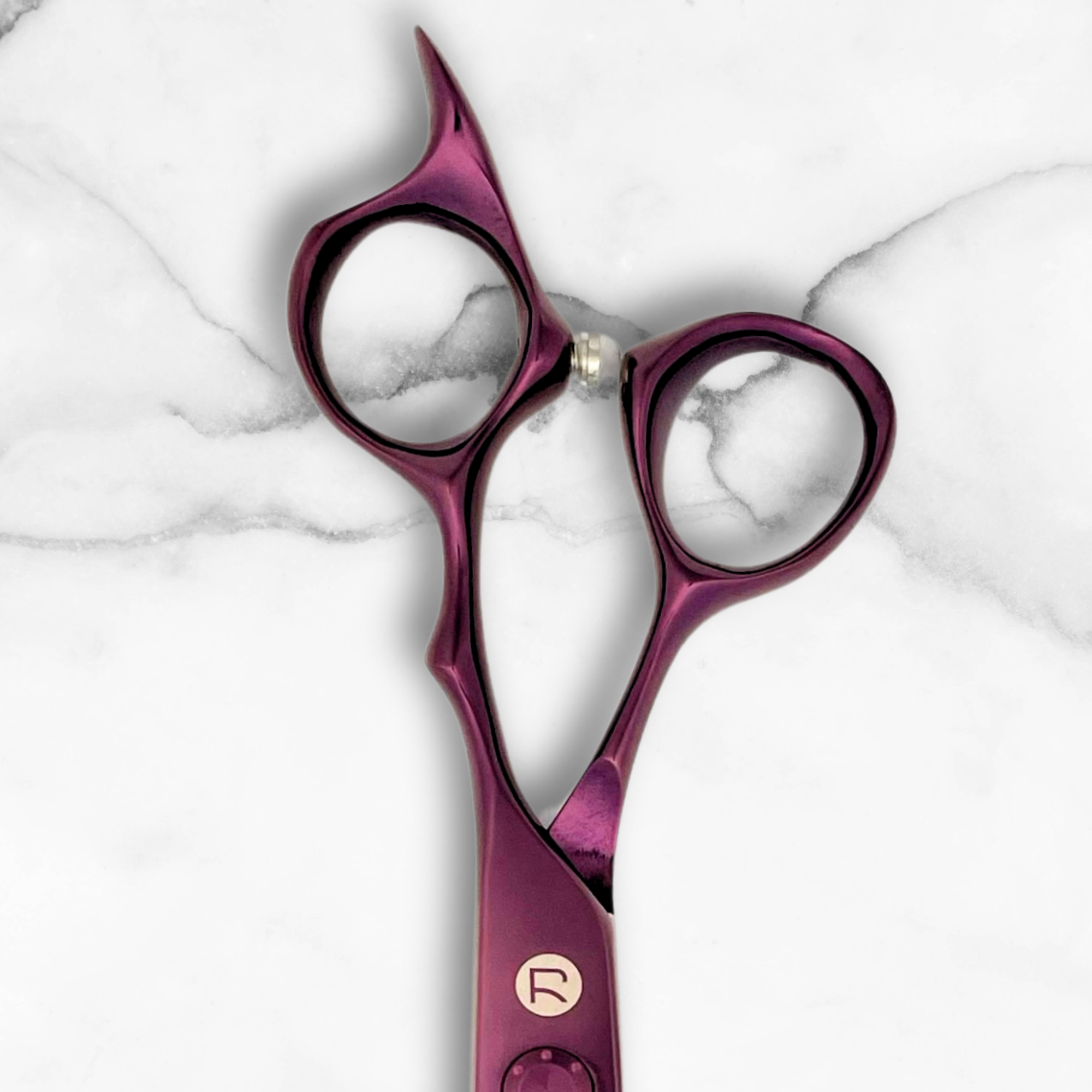
The tension screw controls how the two blades meet, and it has an outsized effect on cutting performance. Check tension at the start of each shift by opening and closing the shear with the blades pointed up — a properly tensioned shear will fall closed slowly under its own weight rather than snapping shut or staying open. Avoid overtightening, which strains the pivot and accelerates wear on both blades; a shear that's too loose will fold hair instead of cutting it. Keep the screw area clean and apply a drop of shear oil at the pivot regularly, especially after cleaning, so the mechanism moves smoothly and doesn't bind or corrode.
What's the real difference between left-handed and right-handed shears?
It's more than the handle orientation. On a right-handed shear, the blade that sits on top when cutting is oriented so a right-handed stylist can see the cutting line clearly while closing the blades toward themselves with natural wrist mechanics. A left-handed shear reverses this geometry so a left-handed stylist gets the same clear line of sight and natural closing motion. Using a right-handed shear with your left hand (or vice versa) forces you to cut somewhat blind to the line and puts unnatural torque on the pivot over time, which can accelerate wear and make consistent results harder to achieve. If you're left-handed, a true left-handed shear — not just a shear held in the left hand — makes a meaningful difference in both control and comfort.
When should I use a cutting shear versus a thinning shear?
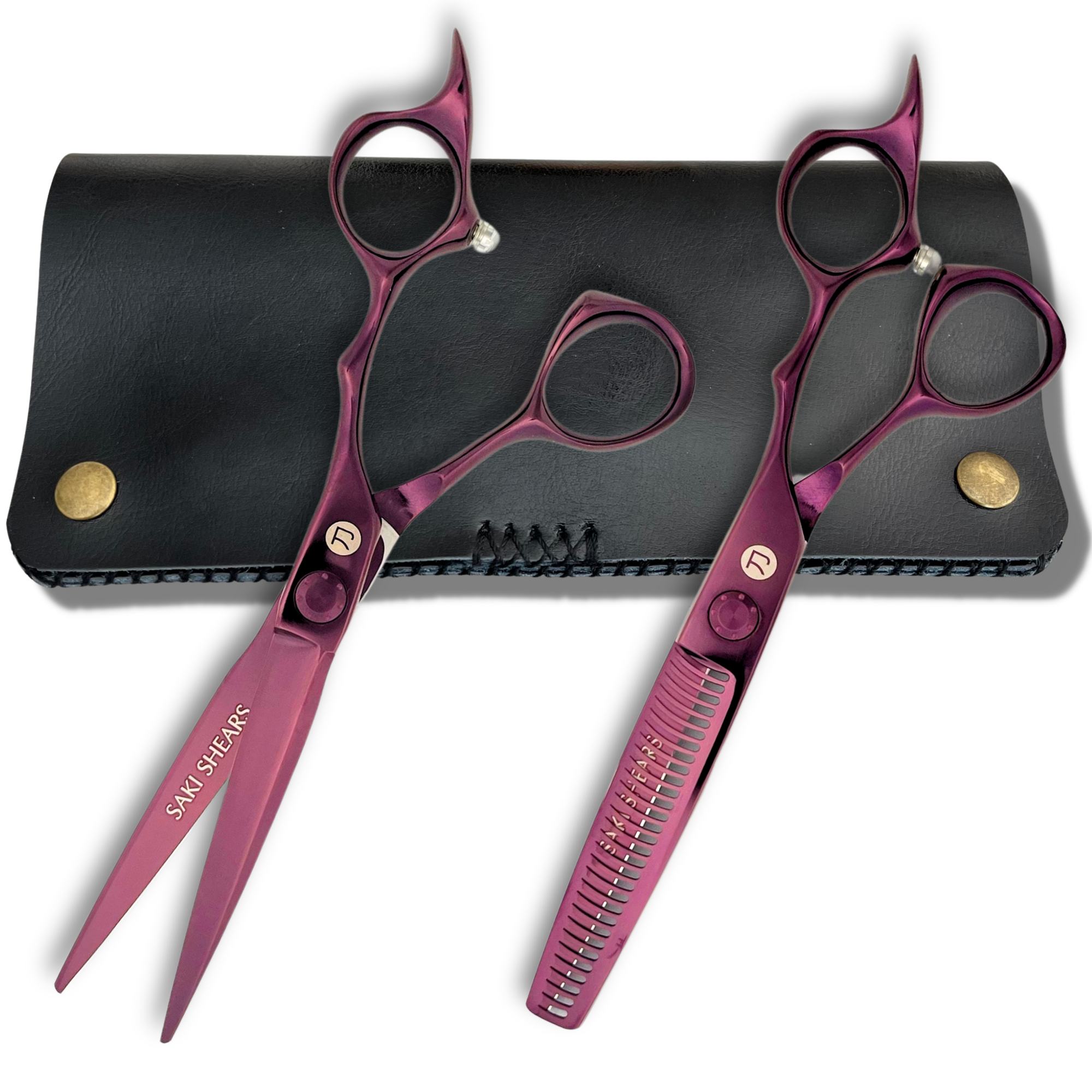
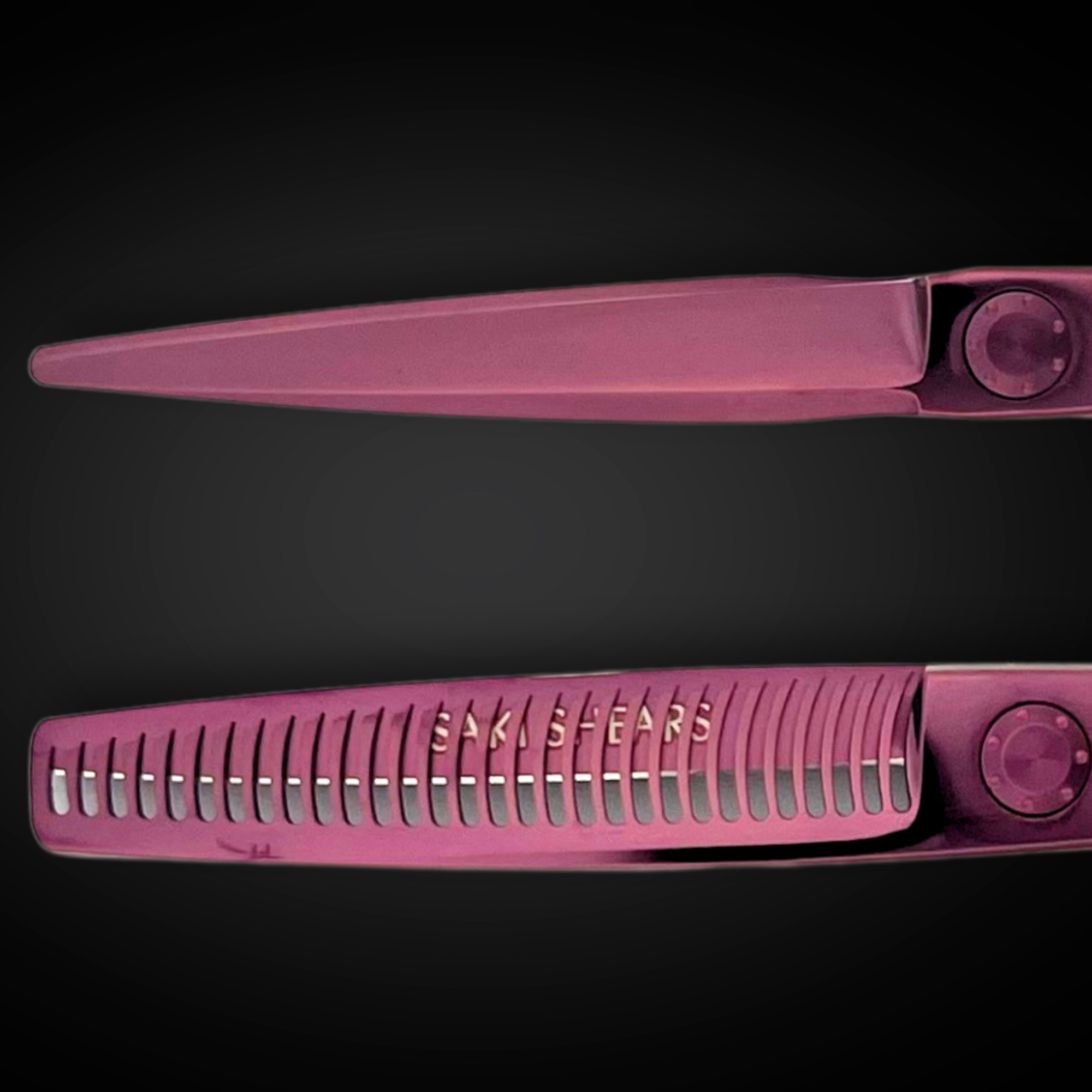
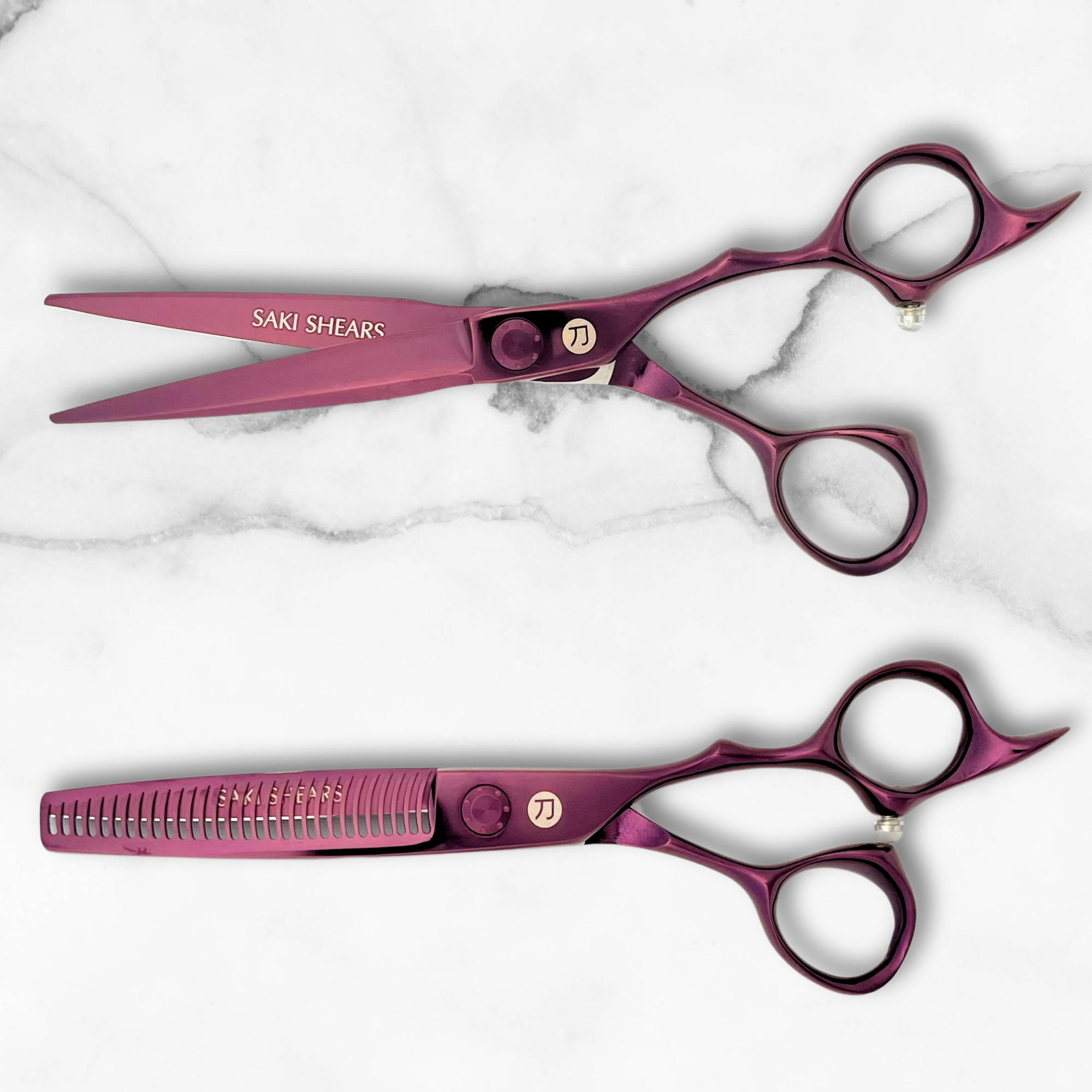
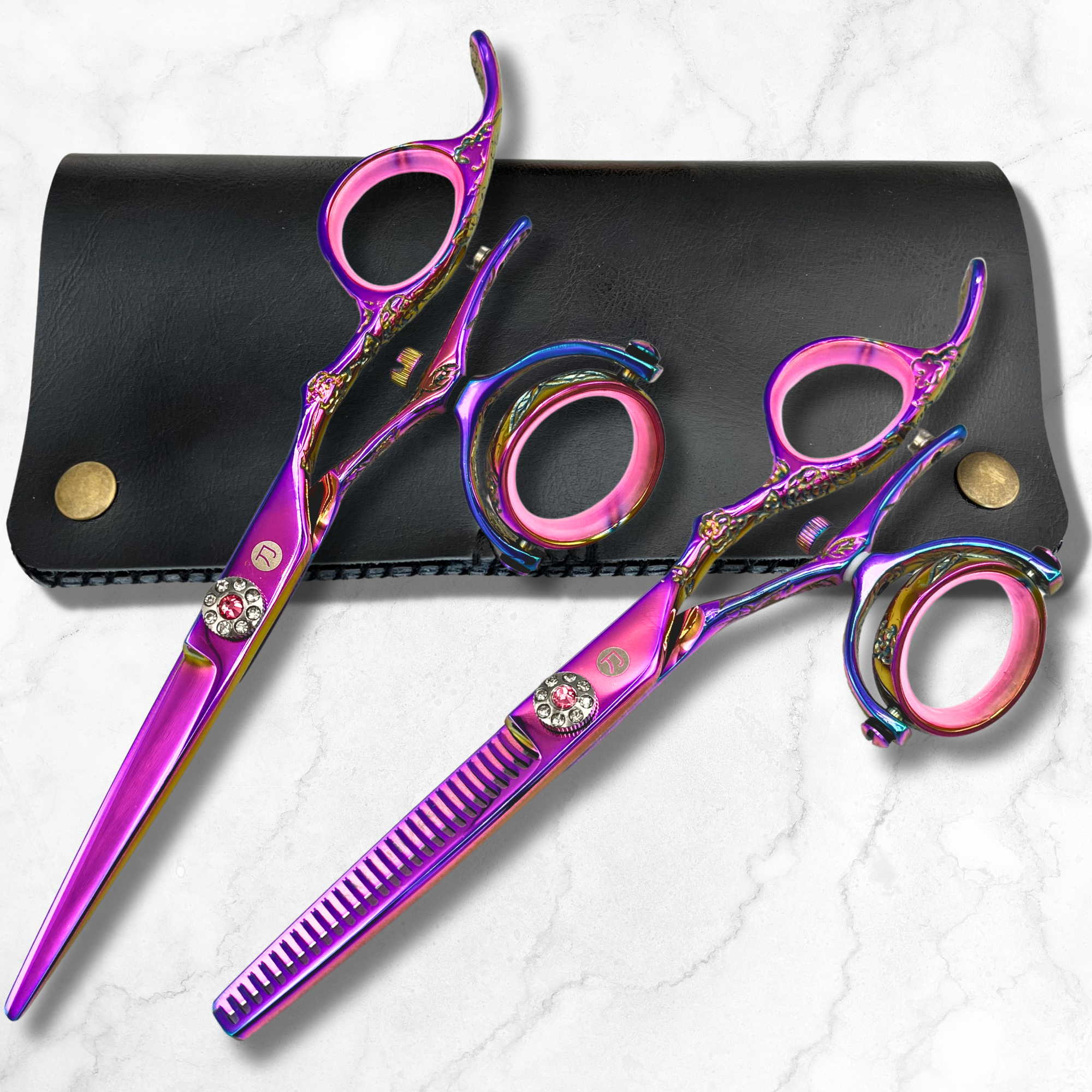
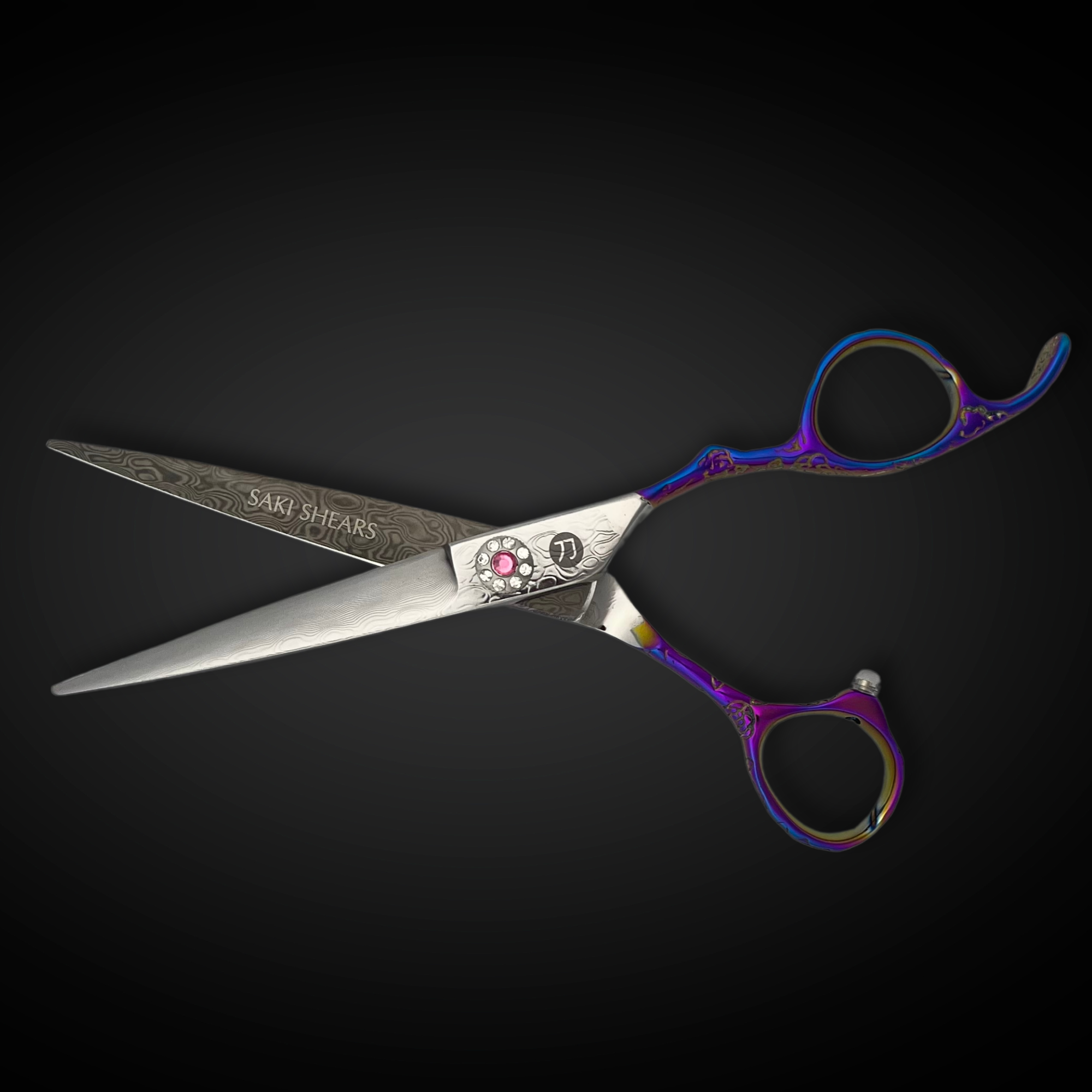
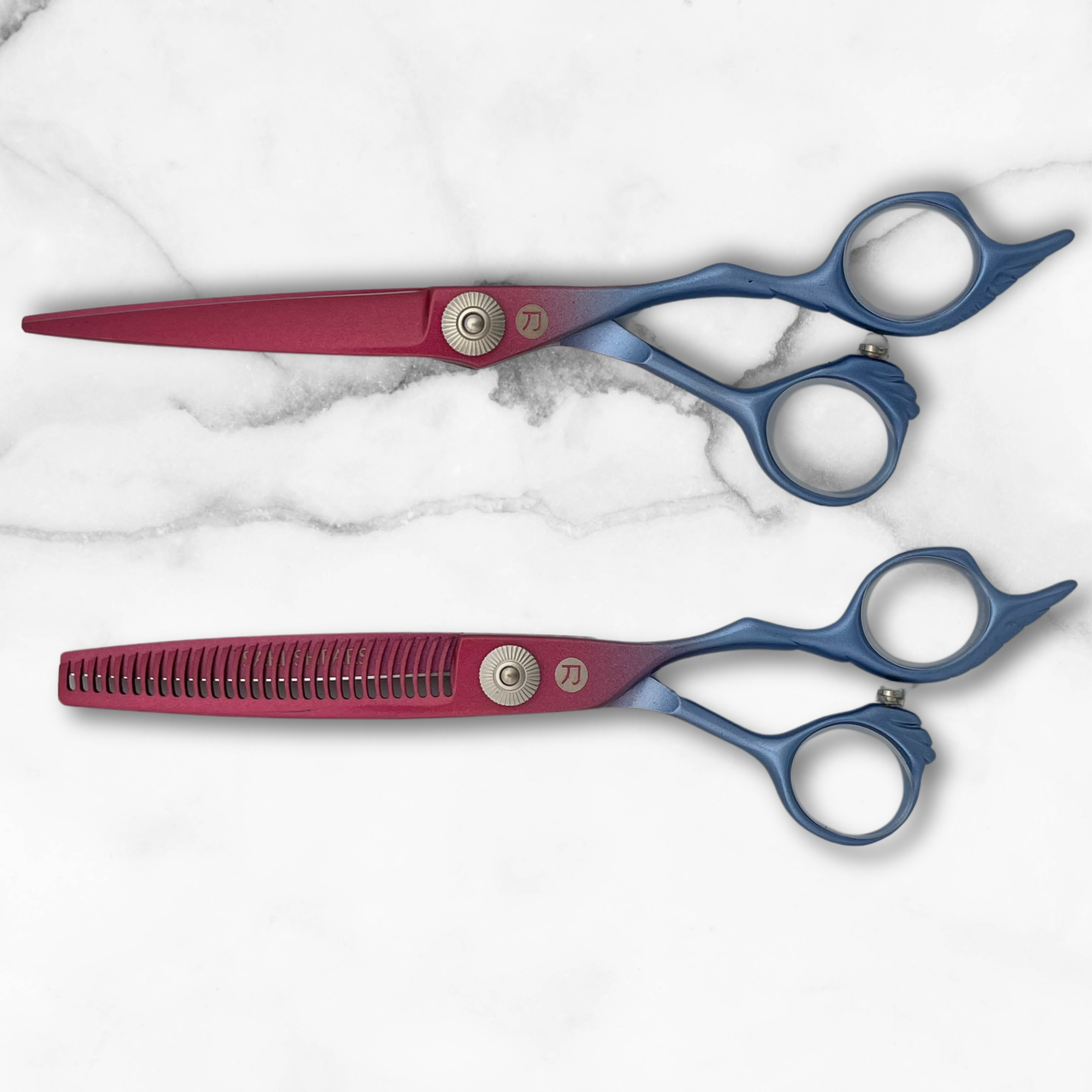
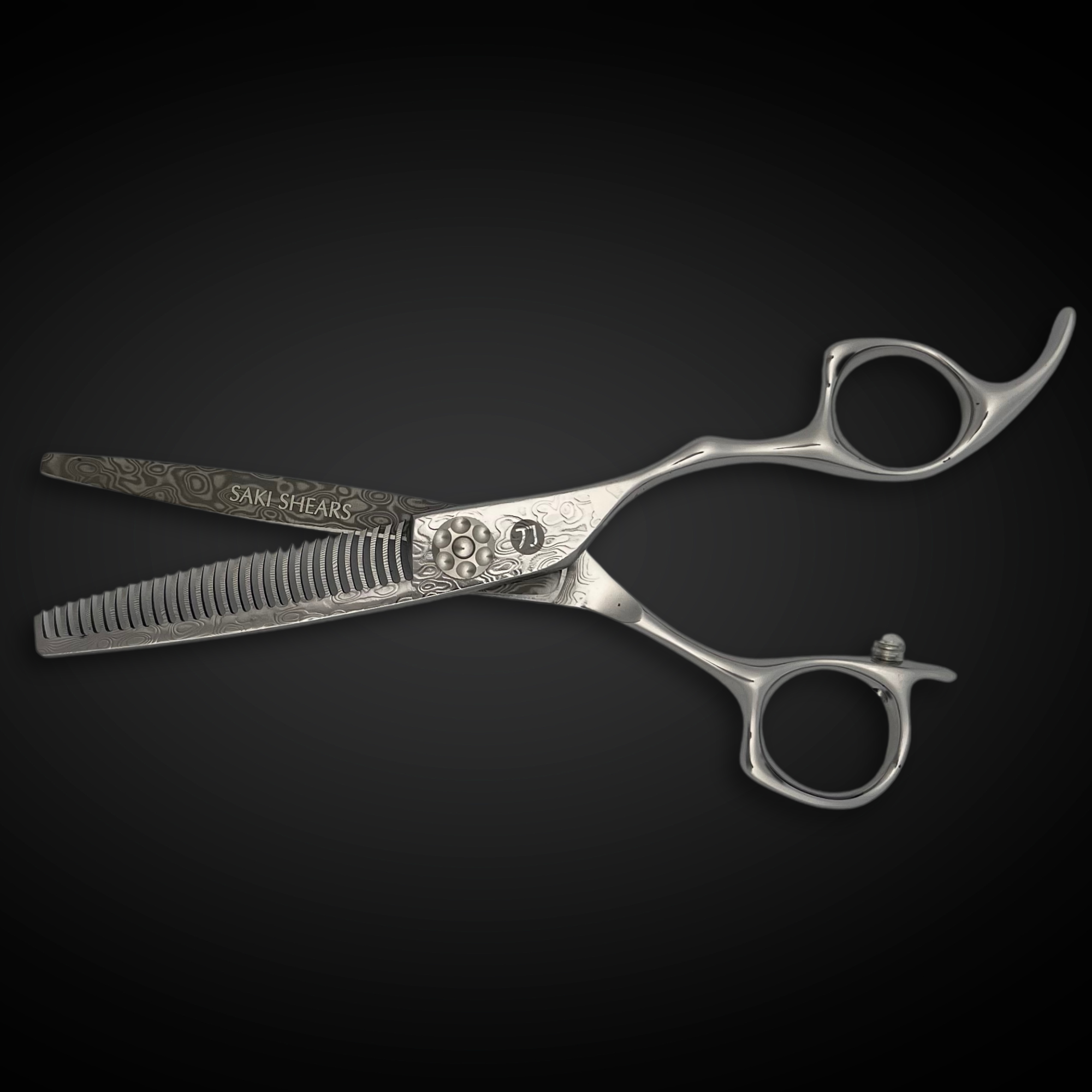
A cutting shear has two solid blades and is built for clean, precise removal of length and for creating defined lines. A thinning (or texturizing) shear has one or both blades notched with teeth, which removes only a portion of the hair caught between them. That makes it the right tool for reducing bulk, blending a harsh line, or softening the transition between lengths without shortening the overall shape. As a rule, finish your shape with the cutting shear first, then move to the thinning shear to refine texture and weight — going the other direction makes it harder to control the final line. Stylists building out a kit often keep both a solid cutting shear and a texturizing shear on hand, along with a thinning shear tuned to their most common finishing work; the hair cutting shears and thinning shears and scissors collections are organized by tooth count and blade length if you're comparing options.
A quick reference
- Sharpen every 3-6 months for full-time use, sooner for coarse or wet-cut heavy work
- Watch for pitting, pivot looseness, or edge damage sharpening can't fix — signs it's time to retire a shear
- Check tension daily and oil the pivot regularly
- Match the shear's handedness to your dominant hand
- Shape with a cutting shear, then refine with a thinning shear
Taking care of these fundamentals — sharpening on a reasonable schedule, watching for real wear versus a dull edge, keeping the tension screw maintained, and using the right tool for the job — keeps shears performing consistently and extends the working life of your kit.

Written by Charles Harris