Shear Anatomy for Working Stylists: Cutting, Thinning, and Blending Shears Explained
A working stylist doesn't reach for the same shear for every task, and treating "hair scissors" as one category is why so many kits end up cluttered with tools that rarely get used. The real question isn't how many shears you own — it's whether each one earns its place by doing a job the others can't. Here's a practical breakdown of the core shear categories, what each is actually built to do, and how to tell when you need one.
Cutting Shears: The Foundation of Every Kit
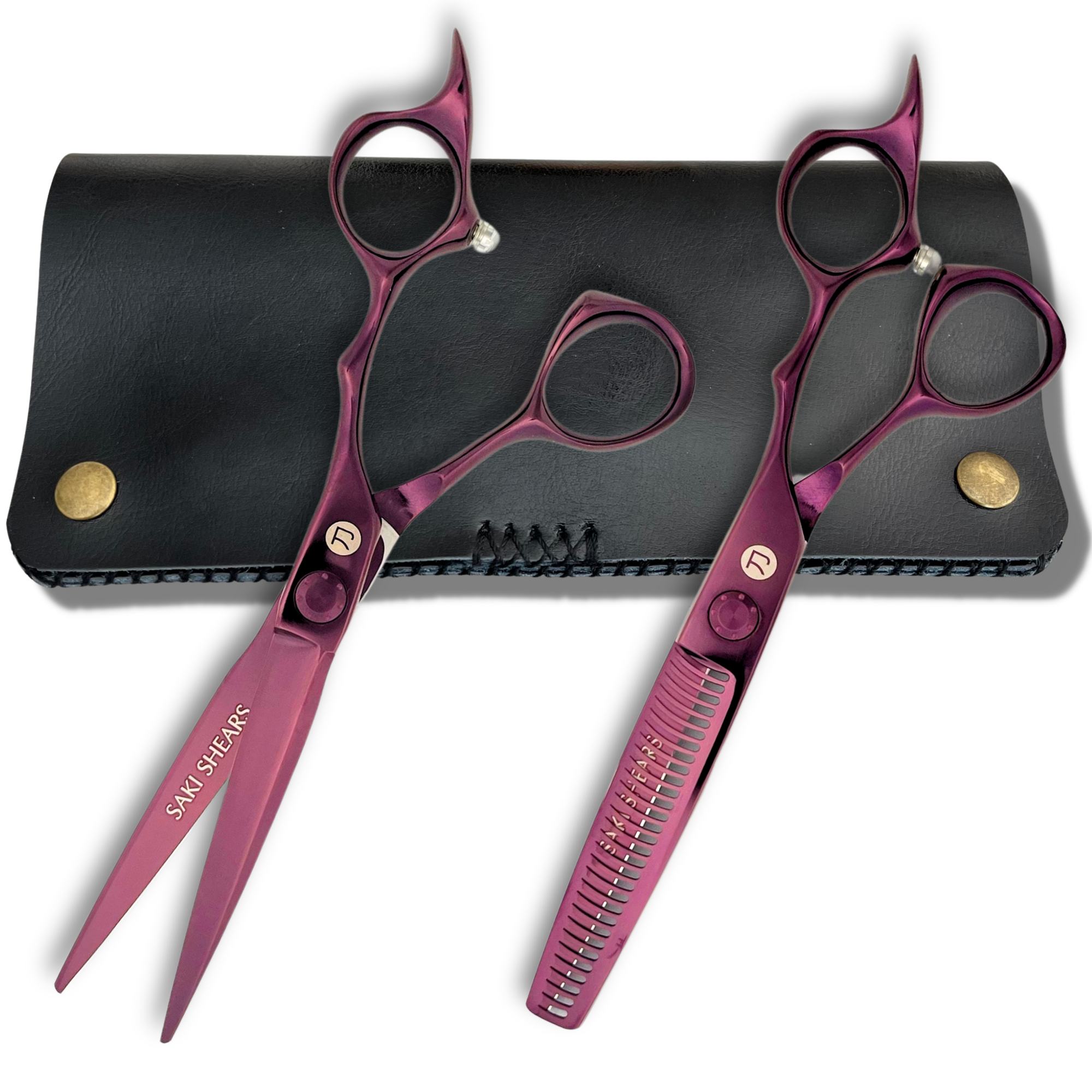
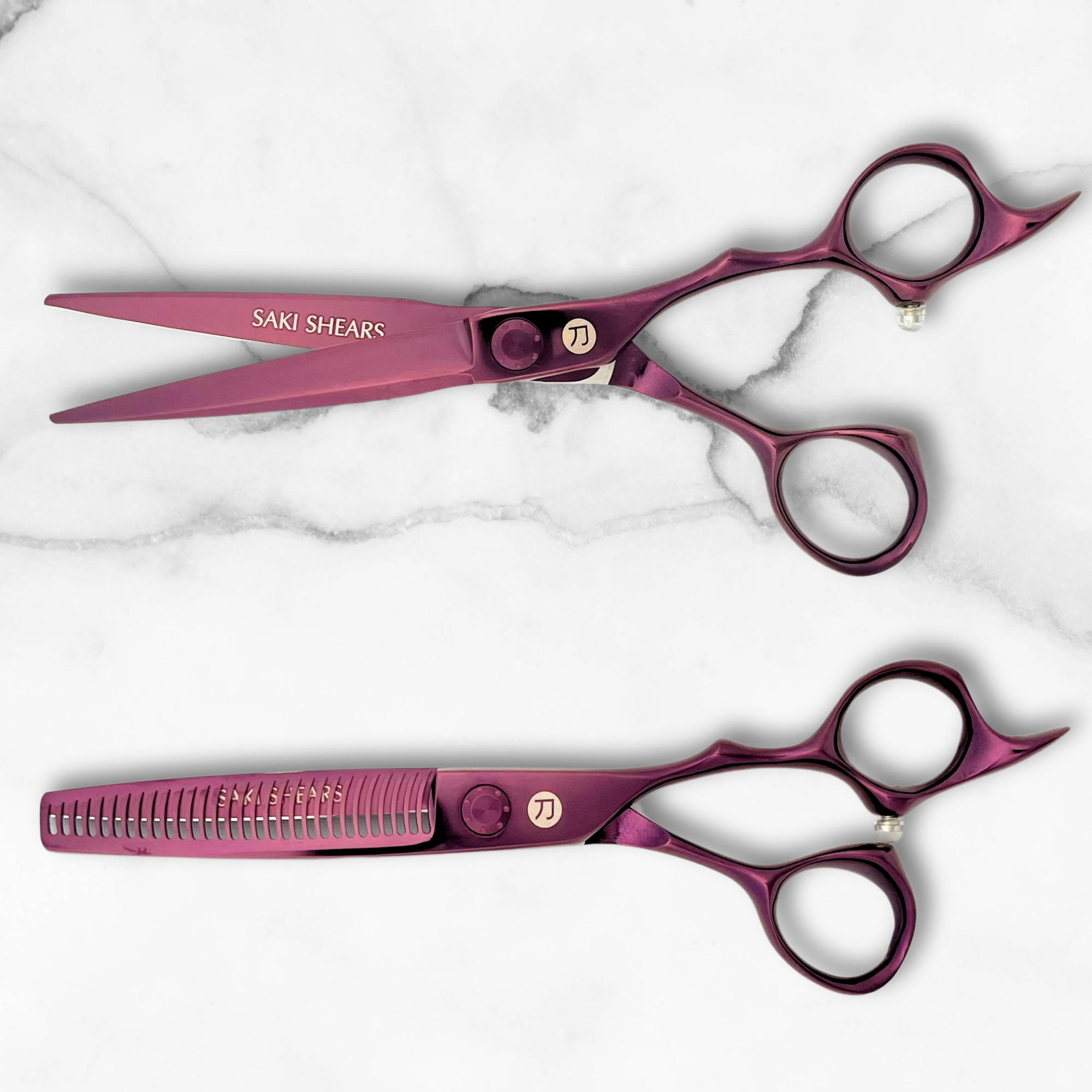
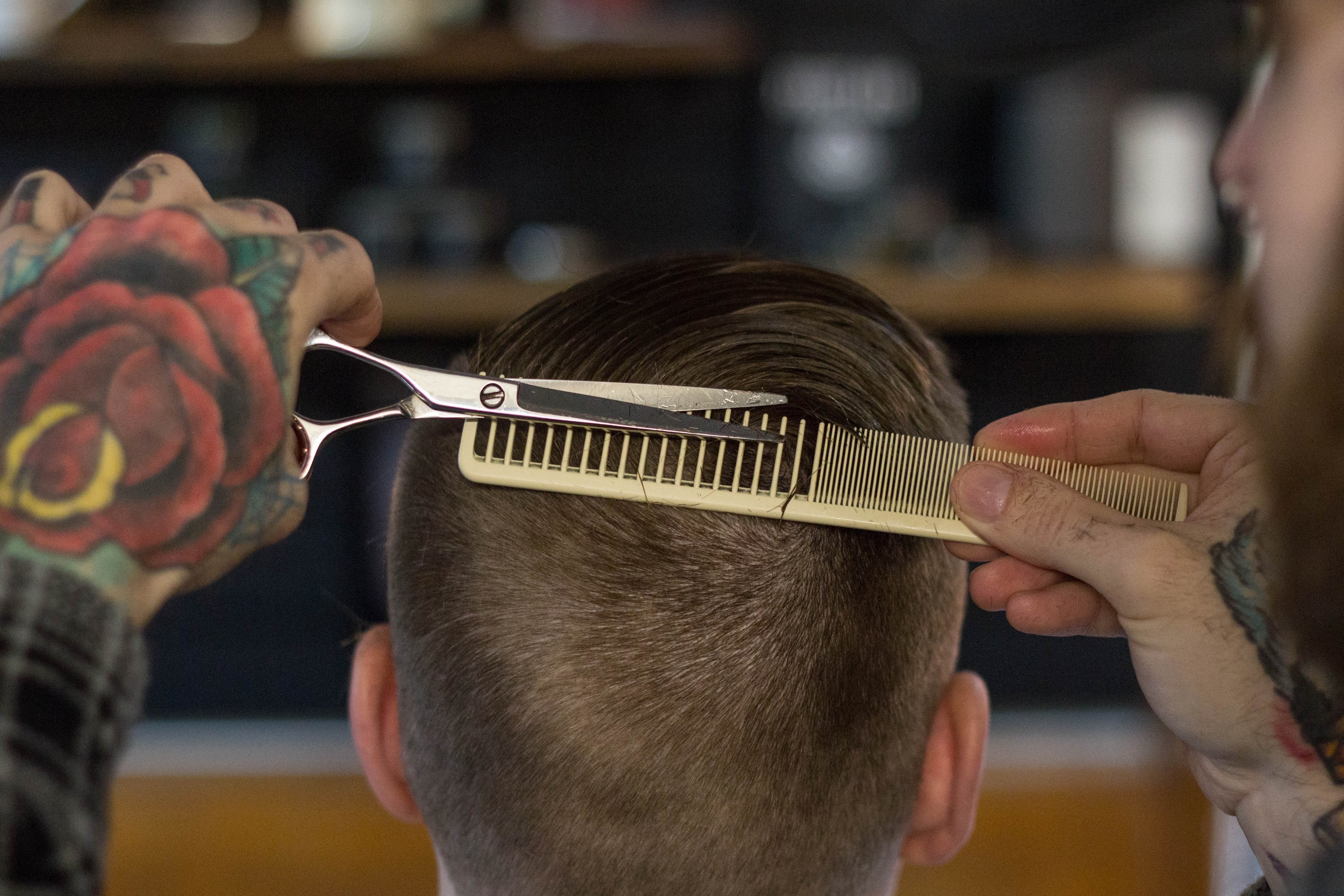
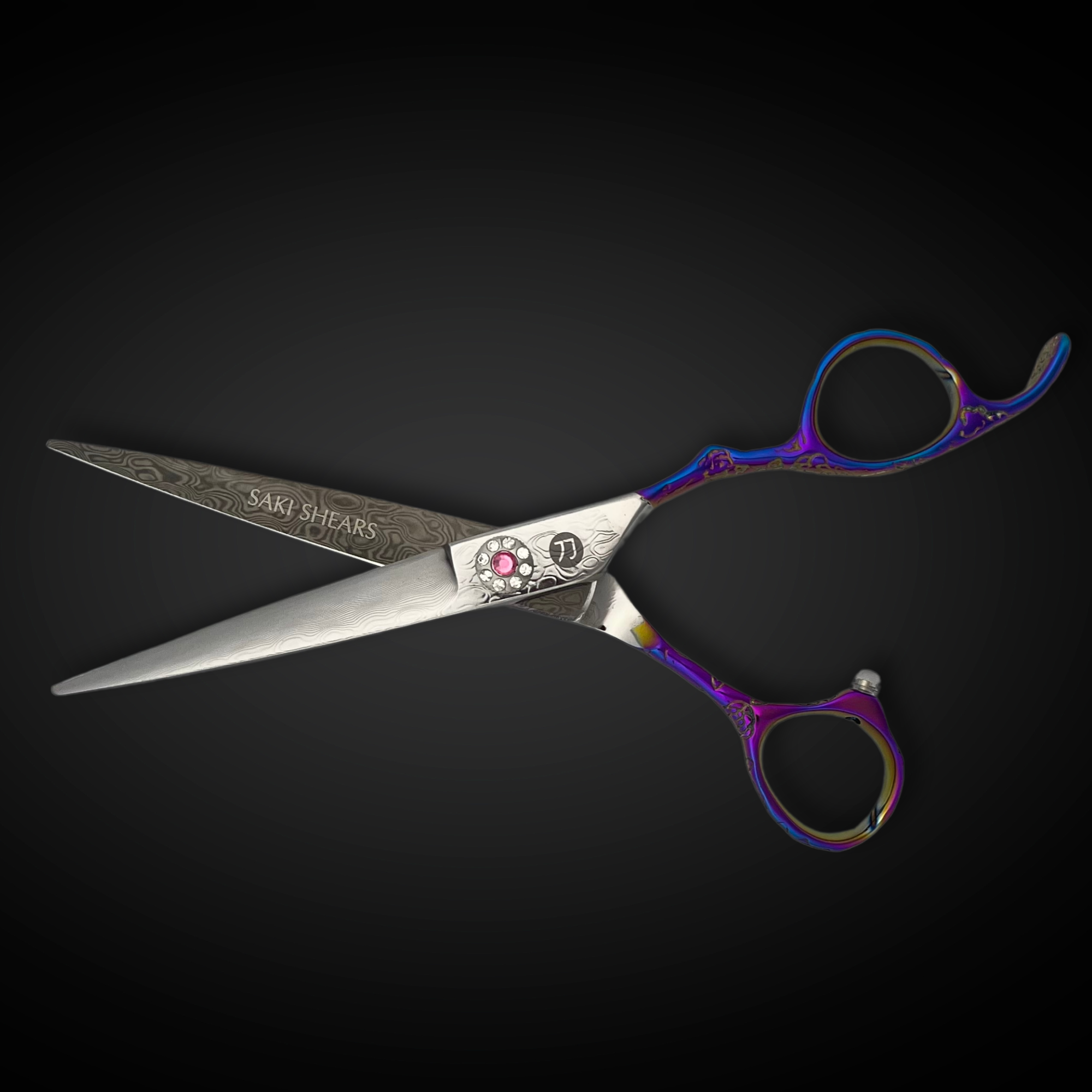
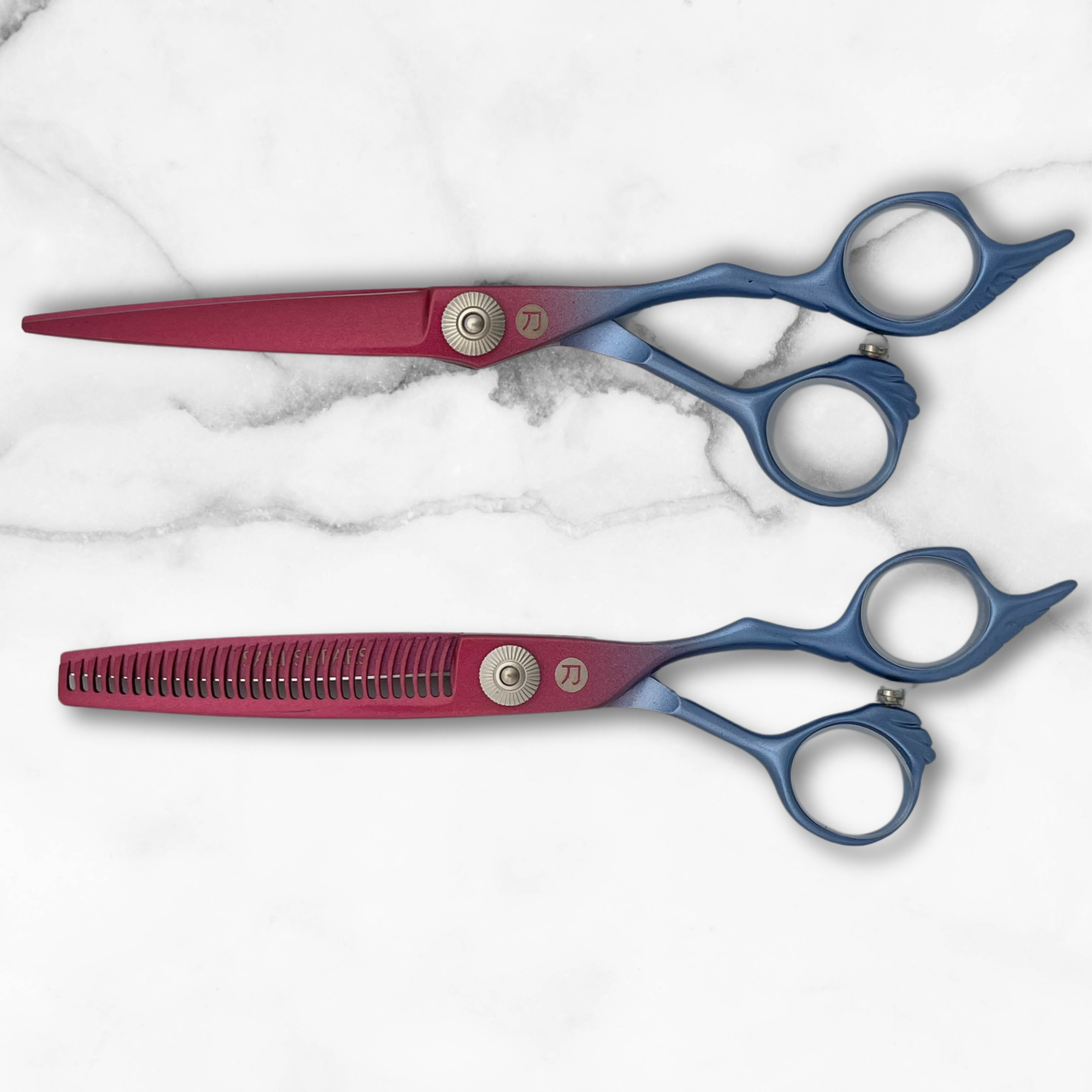
Cutting shears (sometimes called "straight" or "cutting-only" shears) have a solid, uninterrupted edge on both blades. They're the tool for point cutting, blunt cutting, and any technique where you need a clean, controlled line with no texture removed. Blade length matters more than most stylists give it credit for: shorter shears (around 5 to 5.5 inches) give you tighter control for precision work close to the head, while longer blades (6 inches and up) cover more hair per stroke and suit techniques like cutting over-the-comb or working through dense, long lengths efficiently. If you only ever bought one shear, this is it — everything else in this list supplements a good cutting shear, it doesn't replace it.
Thinning Shears: Removing Bulk Without Removing Length
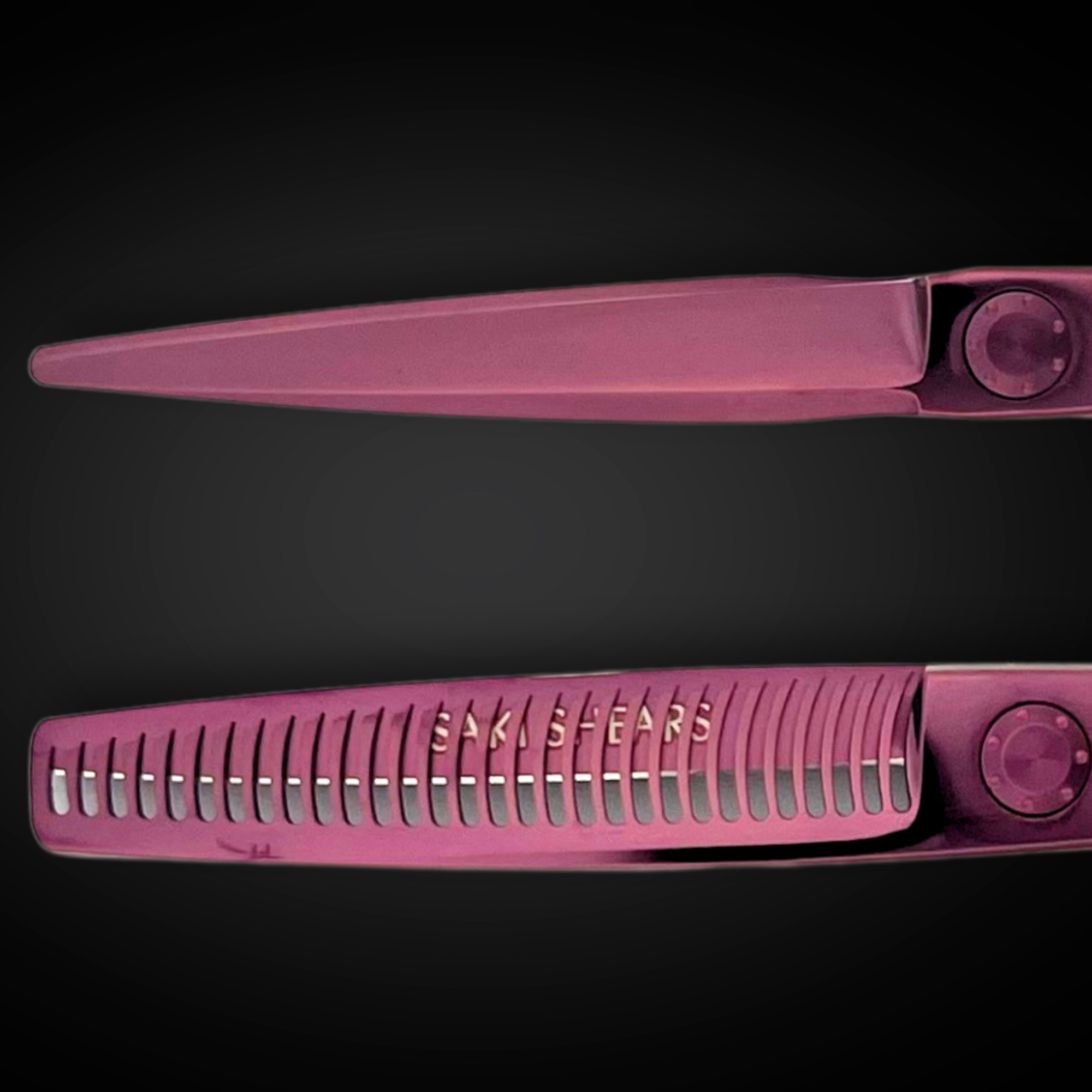
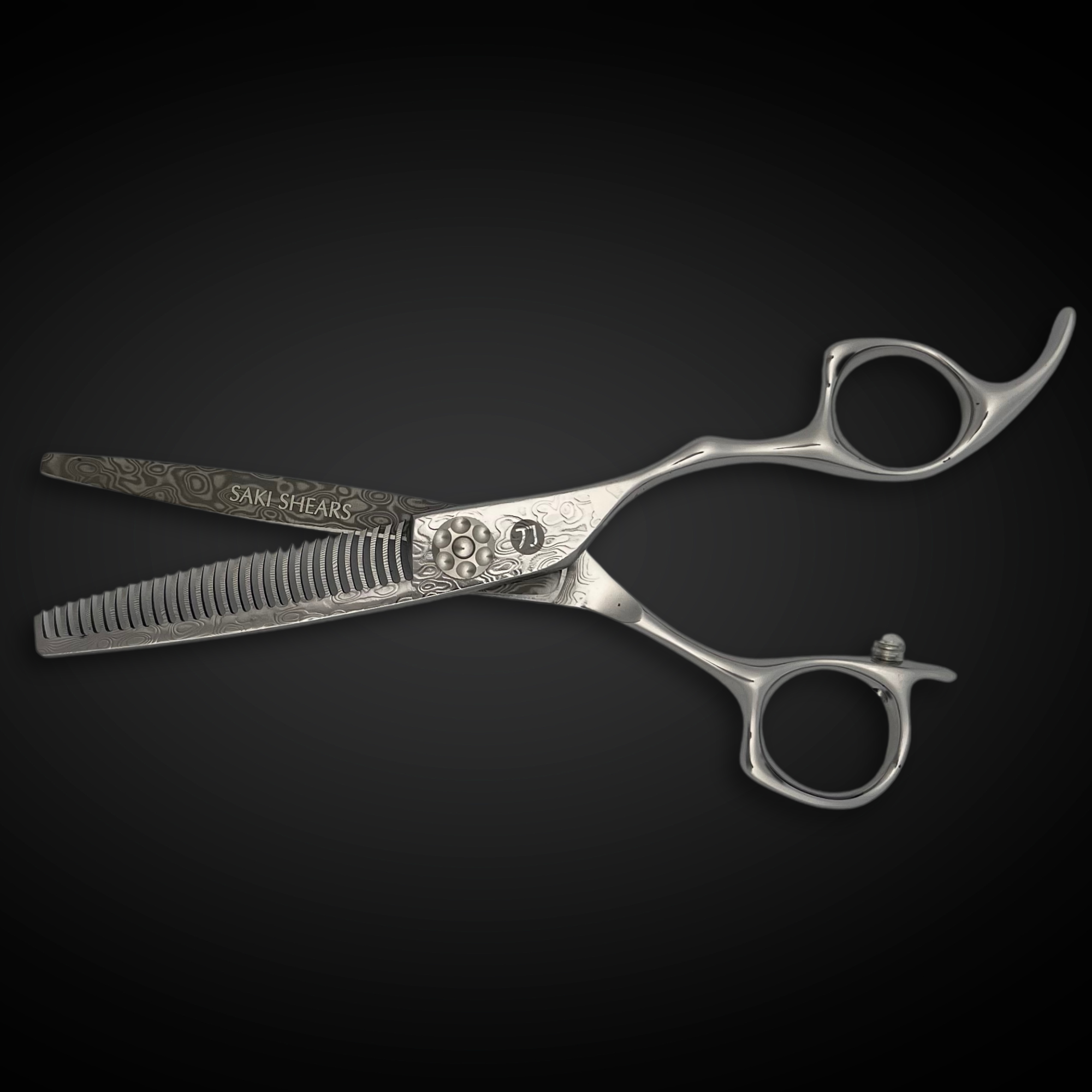
Thinning shears have one fine-toothed blade and one solid blade, and their job is to remove volume and weight from hair without shortening it. The tooth count changes what the shear actually does to the hair: fewer, wider-set teeth remove larger sections of bulk in one pass, which is useful when you're working through thick or coarse hair and need to move fast. More, finer teeth remove smaller amounts per cut, giving you finer control when you're de-bulking near the ends or in areas where over-thinning would show. The mistake newer stylists make is treating thinning shears as a shortcut to blending — they're for bulk reduction first. Used incorrectly on already-thin or fine hair, they can leave visible thin patches or create a strawy texture that's hard to reverse.
Blending Shears: Where Texture Meets Precision
Blending (or texturizing) shears sit between cutting and thinning shears. They typically have more teeth than a thinning shear and are cut at a different angle, so they remove smaller, more controlled amounts of hair per pass. Their job is to soften harsh lines left by a cutting shear, break up uniform density at the ends, and create the kind of natural movement that a blunt-cut line doesn't have on its own. Where a thinning shear says "remove weight," a blending shear says "refine what's already there." On finer or previously thinned hair, this is usually the safer, more controllable choice.
Slide Cutting and Chunking Shears
Some shears are built specifically for slide cutting — a technique where the blades are used to shave through the hair in a sliding motion rather than a closed snip, softening ends and removing length gradually. These often have a slightly different tooth or convex-edge design to reduce snagging during the slide motion. Separately, wide-notch or deep-tooth shears designed for heavier chunking are built to grab and remove larger sections at once, which is a different job from fine blending and shouldn't be confused with it — using a fine blending shear for heavy chunking work will slow you down and dull the edge faster than necessary.
Swivel-Handle Shears: A Handle Design, Not a Cutting Category
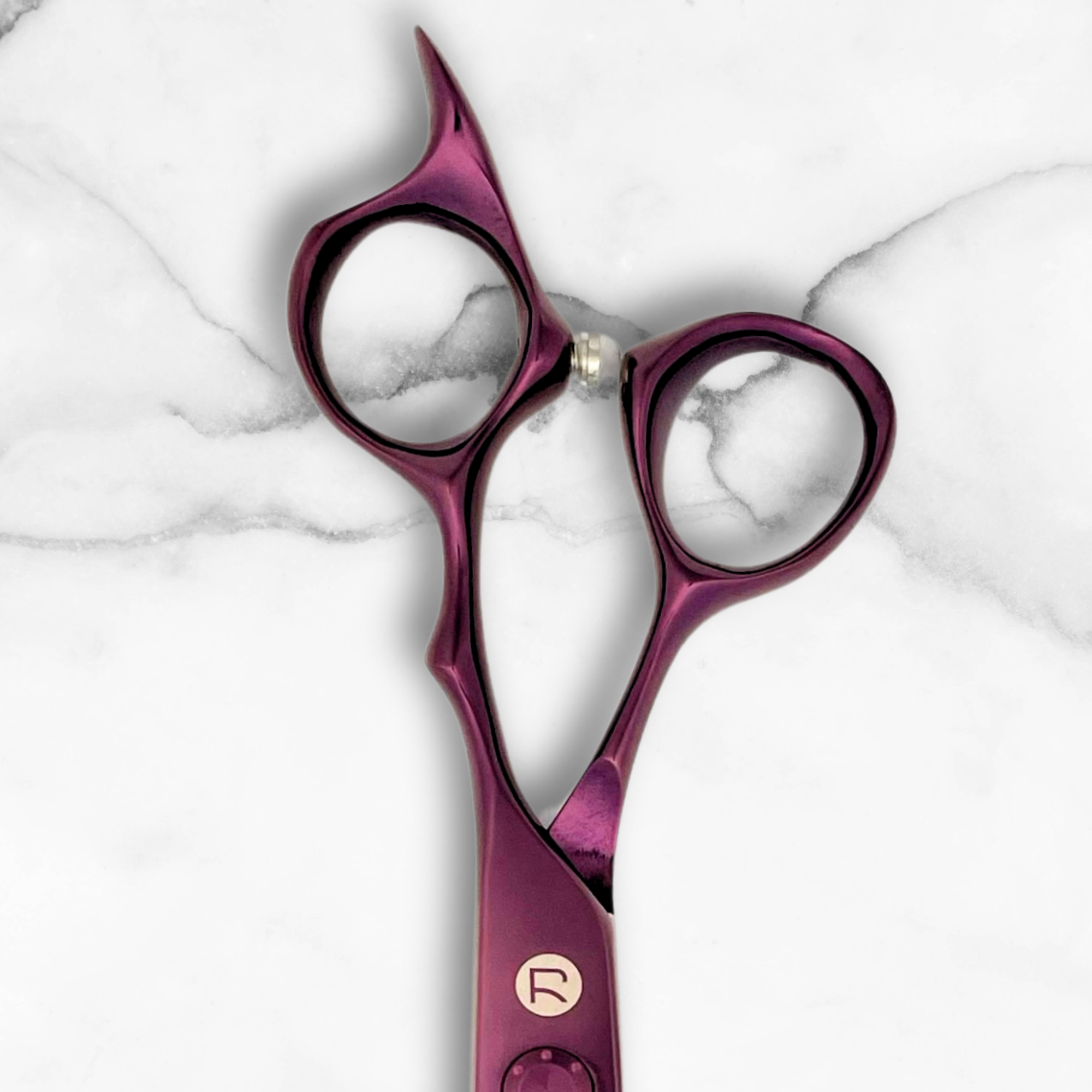
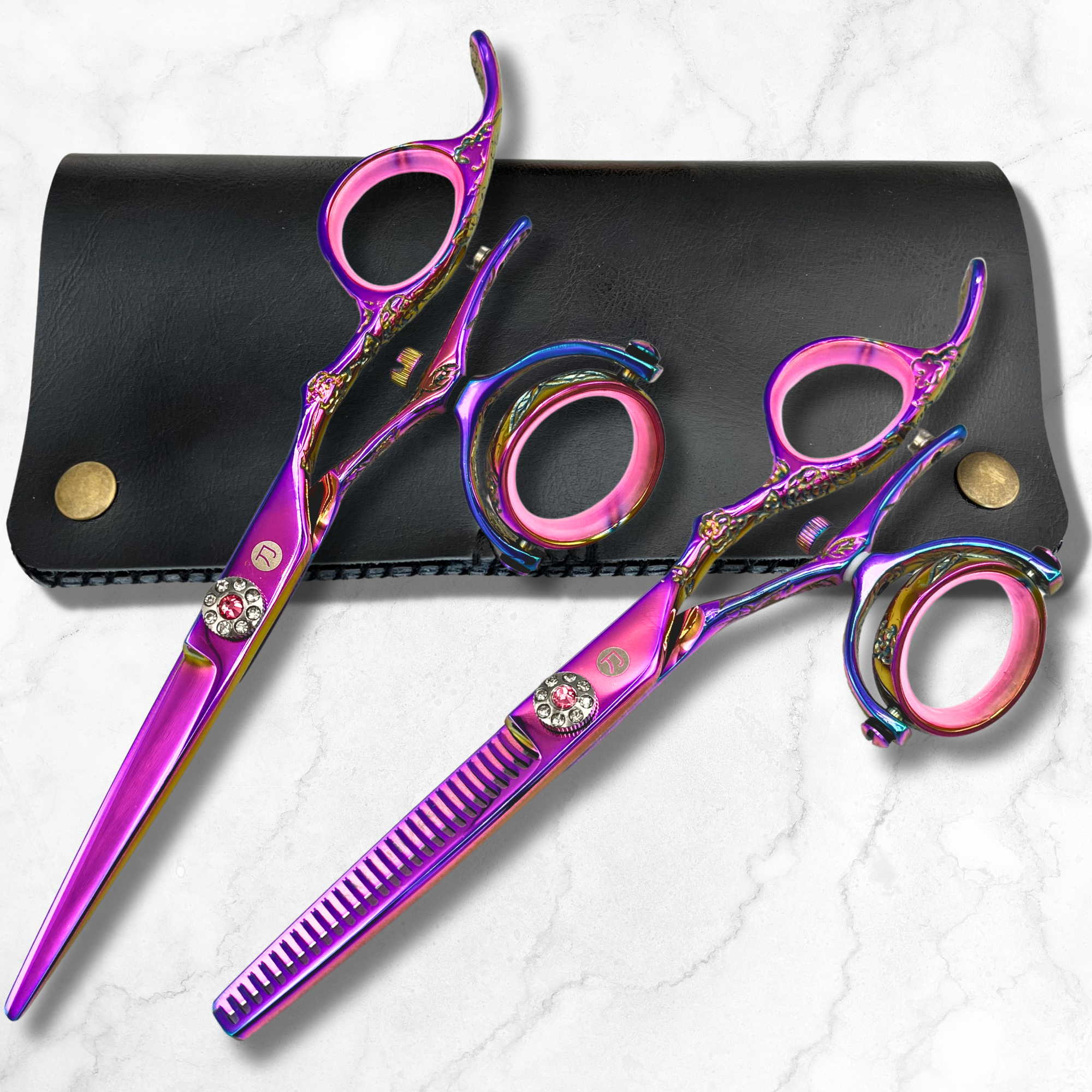
It's worth noting that swivel (rotating thumb ring) shears aren't a separate cutting function — they're a handle design that can be applied to a cutting, thinning, or blending shear. The rotating ring lets your thumb move independently of the blade angle, which changes your hand position through a cutting motion rather than changing what the blade does to the hair. Stylists who spend long hours on technical cutting often prefer a swivel handle for comfort reasons, but the choice of blade type — cutting, thinning, or blending — should still be based on the technique, not the handle.
Building a Kit That Actually Gets Used
Most working stylists don't need five shears in daily rotation. A solid starting kit is one quality cutting shear, one thinning or blending shear matched to the density of hair you work with most, and a texturizing shear if slide cutting and softened ends are a regular part of your service menu. From there, add specialty shears only when a specific technique in your book demands it — not because a kit "should" have five types. Steel quality and edge maintenance matter as much as category: a well-maintained mid-range shear will outperform a neglected premium one every time.
Browse Saki Shears' cutting shears, thinning and texturizing shears, or shear sets to find the combination that fits how you actually work.

Written by Charles Harris