Shear Tension & Alignment: Home Fix vs. Pro Repair
Shears that suddenly feel "off" almost always come down to one of a handful of causes, and most of them have nothing to do with true blade alignment. Before you touch a screwdriver, it helps to know the difference between a simple tension adjustment—something any stylist can safely do at the chair—and a structural realignment issue that belongs with a professional sharpener. Getting this distinction wrong is how expensive shears end up with a bent blade, a stripped screw, or a pivot that never sits right again.
What "Misaligned" Usually Means
When a stylist says their shears are "misaligned," they're almost always describing one of these:
- Loose tension — the pivot screw has backed off slightly with use, so the blades no longer meet with consistent pressure along their full length. This is the most common complaint and the easiest to fix.
- Blade contact wear — normal use gradually changes how the cutting edges meet. This shows up as pushing or catching hair instead of a clean shear, even with correct tension.
- A dropped or knocked shear — an impact can knock the pivot out of true or put a slight bend in one blade. This is a structural problem, not a tension problem, even though it can feel similar at first.
- Worn screw threads or a worn pivot — after enough tightening and loosening cycles, the screw or pivot housing itself wears out and stops holding an adjustment.
Only the first two are things you should adjust yourself. The last two need a technician.
Safe At-Home Check: Tension
Tension is the one adjustment built into every standard shear for the user to manage. Here's how to check it properly:
- Open the shears fully and let one blade hang, pointing straight down, held only by the finger/thumb ring of the other blade.
- The hanging blade should fall slowly and stop around a 45° angle—not slam shut, and not stay frozen open.
- If it falls shut immediately, tension is too loose. If it barely moves, tension is too tight.
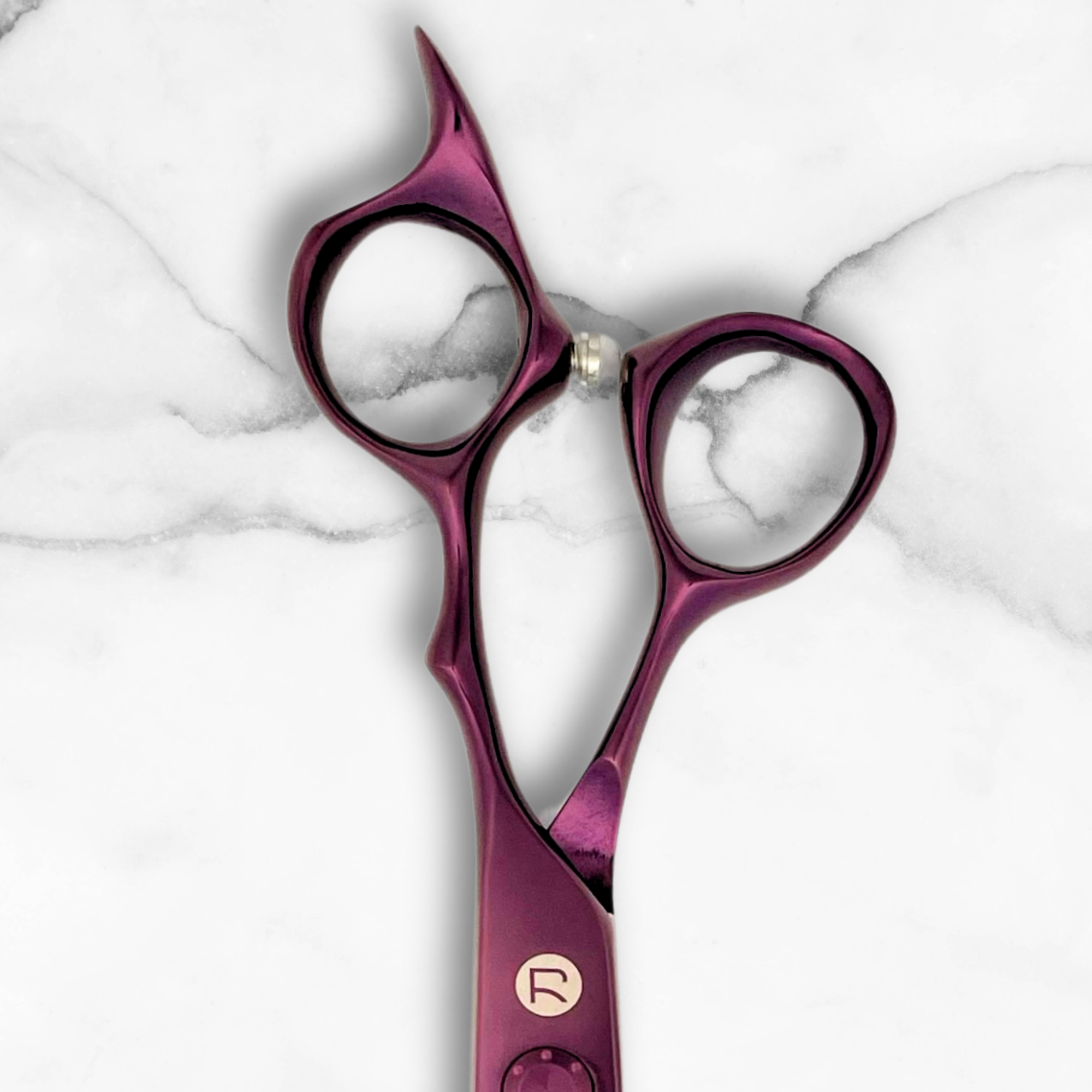
To adjust, turn the tension screw in small increments—an eighth of a turn at a time—then retest. Tightening increases resistance and closing speed; loosening does the opposite. Make one small change, cut a test section or check the fall test again, and repeat. Overtightening is the most common self-inflicted damage: it accelerates edge wear and puts unnecessary load on the pivot. If you're cutting damp or wet hair, note that shears typically need to sit slightly looser than they do for dry cutting, since wet hair adds resistance.
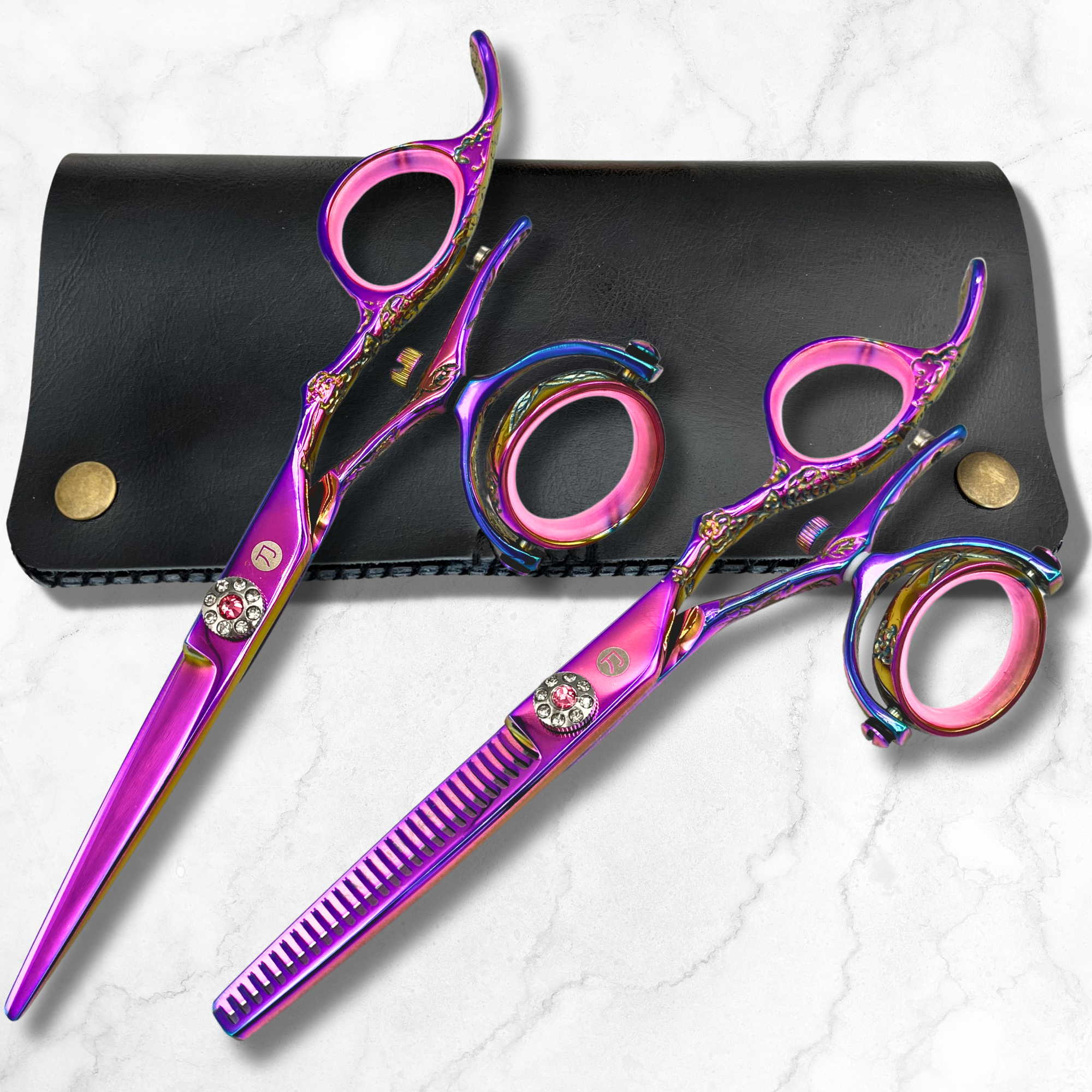
If your shears use a removable tension key or a knurled adjustment wheel rather than a flat screw, the same fall-test logic applies—just adjust with the tool made for that mechanism rather than pliers or a generic screwdriver, which can chew up the fitting.
What Counts as True Realignment—and Why It's Not a DIY Job
True blade realignment is different from tension work. It means correcting the actual geometry of the shear: straightening a blade that's been bent, reseating or replacing a worn pivot screw or pivot housing, or correcting how the two blades track against each other along their length. This is precision work that professional sharpeners handle with dedicated jigs, stones, and pivot hardware—not something to attempt with a screwdriver and a kitchen table.
Signs you're dealing with a realignment issue rather than a tension issue:
- The blades still push or fold hair after you've correctly set tension.
- You can see or feel a gap between the blades at one point when they're closed, but not at another.
- The shear was recently dropped and the fall test won't settle no matter how you adjust the screw.
- The pivot feels gritty, loose side-to-side, or wobbly rather than smoothly tensioned.
Attempting to force a bent blade straight, or over-torquing a worn pivot screw to compensate for play, will typically make the underlying problem worse and can crack a blade or ruin the pivot housing entirely. If you see any of the signs above, stop adjusting and send the shears to a professional sharpening service. A qualified technician can true the blades, replace pivot hardware, and restore correct edge contact—work that's cheap relative to replacing the shear outright, but not something a screw adjustment at the chair can fix.
Keeping Shears Out of Trouble Between Sharpenings
Most "misalignment" complaints are preventable with basic habits: wipe blades dry after every use, oil the pivot regularly, avoid cutting over sinks or counters where a drop is one slip away, and don't use your cutting shears on foil, wire, or anything outside of hair. If a shear does get dropped, check it with the fall test before your next client rather than assuming it's fine.
If you're evaluating whether a shear is worth sending out for realignment versus retiring, it's worth comparing against current options—you can browse professional hair cutting shears or, if you're building out a full kit, complete shear sets.
The short version: tension is yours to manage, and doing it well will solve the majority of "misalignment" complaints. Anything involving a bent blade, worn pivot, or persistent contact issue after a correct tension check belongs with a professional sharpener, not a home fix.

Written by Charles Harris