Choosing Hair Shears for Textured and Coily Hair: A Materials Guide
Cutting textured and coily hair places different demands on a shear than straight or fine hair does. Density, curl pattern, and diameter all change how a blade needs to behave at the point of contact, and the wrong shear specification shows up immediately as snagging, uneven lines, or excess effort on the wrist. This guide covers what actually matters when selecting shears for this hair type: blade steel and sharpness, thinning shear tooth count, handle ergonomics, and technique considerations that pair with the tool.
Why Blade Sharpness Matters More on Dense, Coily Hair
Coily and tightly curled hair typically has a smaller individual strand diameter than it appears, but density per square inch is often higher, and the hair's natural coil means a shear has to cut through multiple overlapping curl clusters rather than a flat, parallel section. A dull or poorly honed edge does not just cut slower on this hair type; it pushes strands ahead of the blade instead of shearing them cleanly, which causes visible snagging, pulling at the scalp, and a ragged rather than crisp line.
Look for a fine, polished edge bevel and a blade steel that holds that edge through repeated dense sections without rolling. Convex-ground blades are worth prioritizing here, since the finer taper of a convex edge shears cleanly through dense, overlapping curl clusters with less pushing than a beveled edge requires. Whatever the grind, the edge needs to stay sharp appointment after appointment, since re-sharpening a shear too frequently on this kind of dense work shortens its working life.
Thinning Shear Tooth Count for Textured Hair
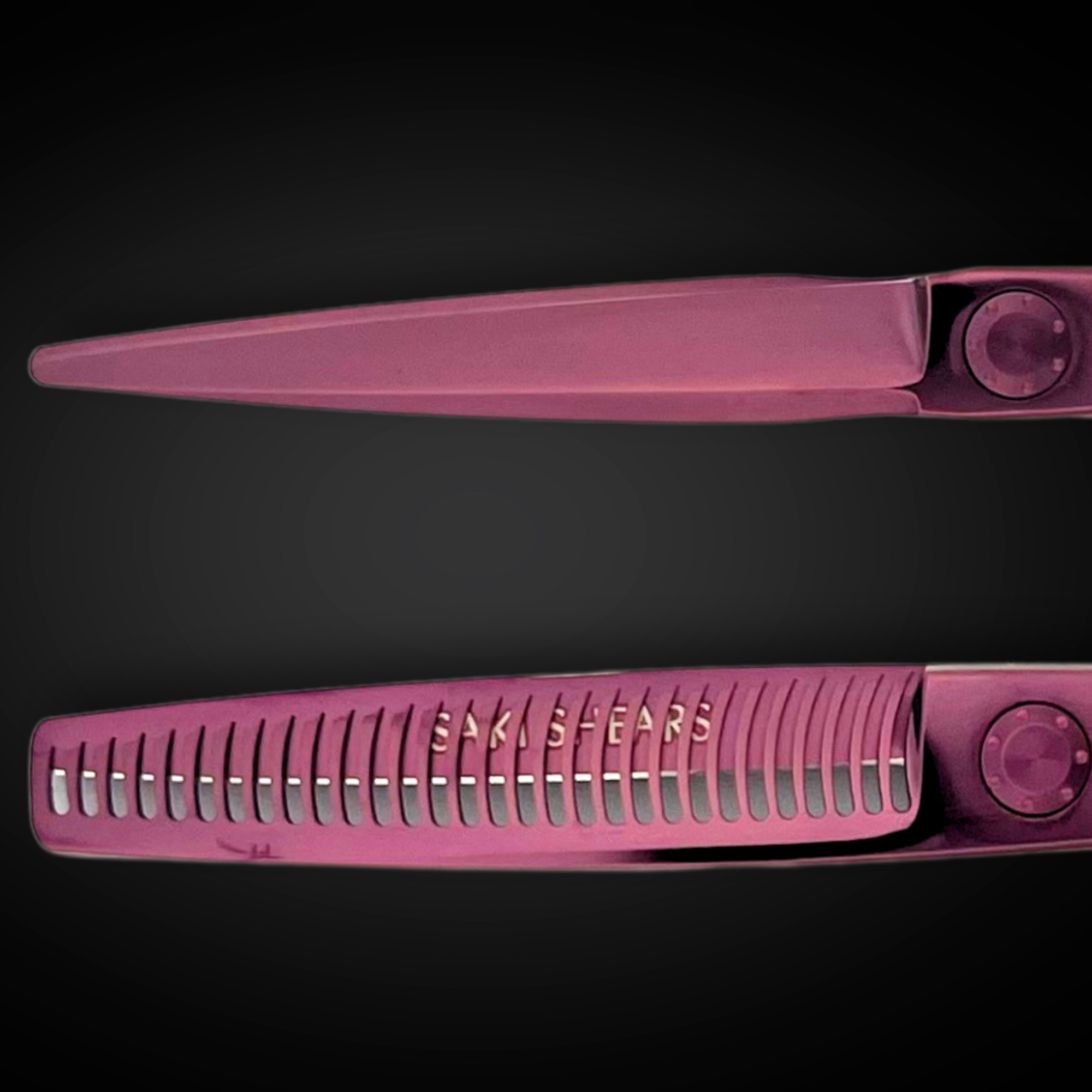
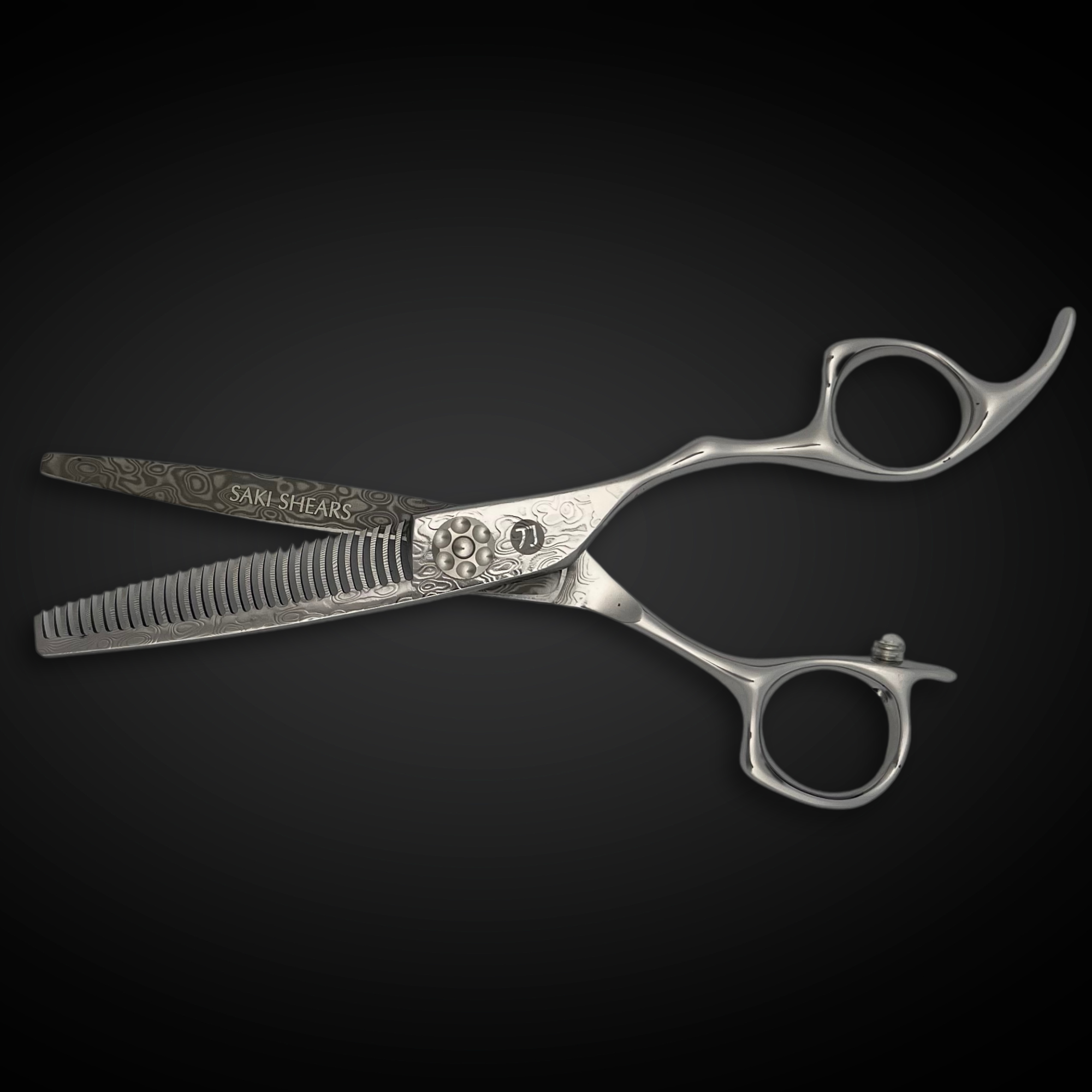
Thinning shears are frequently misused on curly and coily hair, and tooth count is the main variable that determines whether the result is controlled texturizing or unwanted frizz. A lower tooth count (fewer, wider-spaced teeth) removes more bulk per pass, which can be appropriate for very dense, thick coily hair that needs significant weight reduction. A higher tooth count removes less hair per pass and gives finer, more gradual blending, which is usually the safer choice on textured hair where over-thinning disrupts curl clusters and increases frizz rather than reducing volume.
- Higher tooth counts (30+ teeth) are generally better suited to controlled texturizing on curl patterns that rely on their own clustering to hold shape.
- Lower tooth counts (below 20 teeth) remove bulk faster but carry more risk of visible thinning lines on coily hair if not blended carefully.
- Work in the interior only, above the length line, and take fewer passes than you would on straight hair - textured hair shows the effects of thinning more visibly once it springs back to its natural pattern.
Explore tooth-count options built for this kind of controlled work in the thinning shears and scissors collection.
Handle Design and Control on Dense Sections
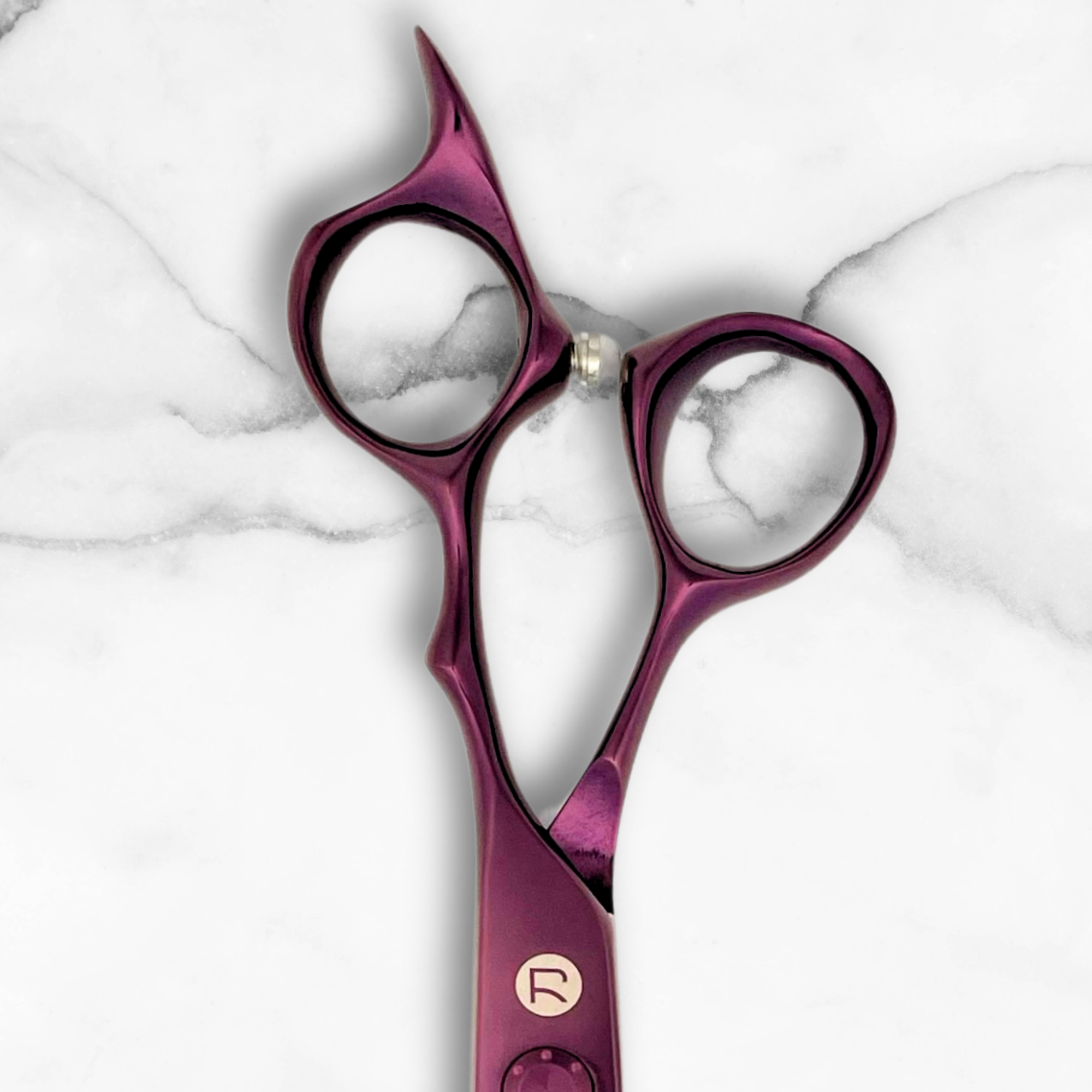
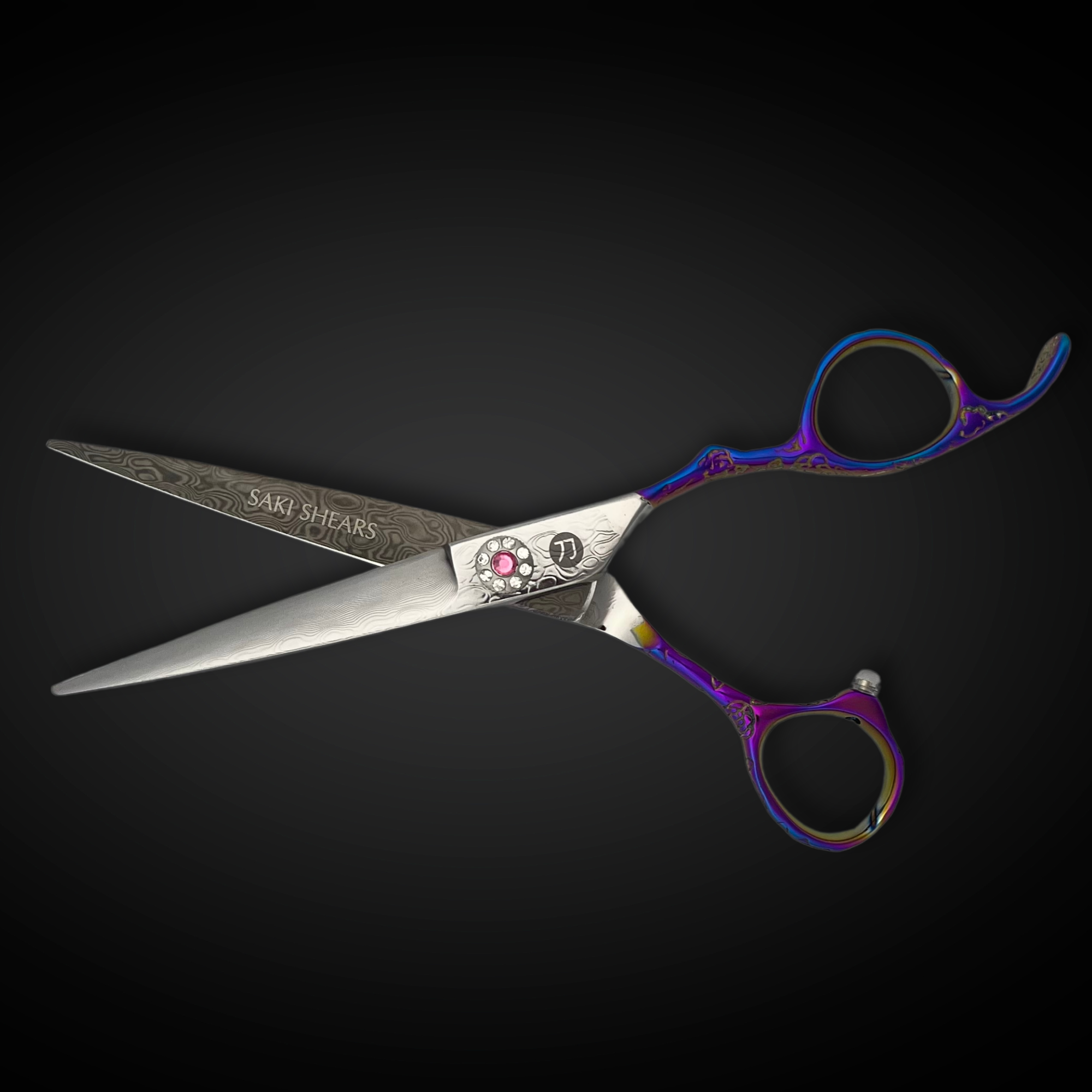
Cutting through denser, coilier sections requires more consistent hand pressure over a longer stroke, and handle geometry affects fatigue and control just as much as blade quality does. An offset or crane handle keeps the thumb and fingers in a more neutral position, which reduces wrist strain during the repeated, deliberate strokes that dense curl work often requires. Shears with adjustable tension screws let you dial in resistance specific to the density of the section you're working, which matters more on coily hair than on fine, straight hair where a looser default tension is rarely an issue.
Weight balance matters too: a shear that is blade-heavy or handle-heavy changes how much wrist effort is needed to maintain a clean line through a full head of dense, coily hair, particularly during longer point-cutting or slide-cutting sequences.
Matching Shear Choice to Cutting Technique
Technique and tool selection are linked. Point cutting and slide cutting - both common on textured hair to soften a line and encourage curl clusters to fall naturally - require a blade that shears cleanly at odd angles without snagging mid-stroke. A shear with a slightly shorter blade (5.0-5.5 inches) offers more control for this detail work than a longer blade suited to blunt, straight-across cutting.
For dry cutting, which many stylists prefer on tighter curl patterns (3B-4C) because it shows the true resting length, edge sharpness becomes even more critical, since there is no water lubrication to ease the blade through the strand. A shear that performs well on wet hair can behave differently on dry, denser sections, so it's worth testing a shear specifically on dry textured hair before committing to it as a primary tool for curl-pattern clients.
Building a Practical Shear Set
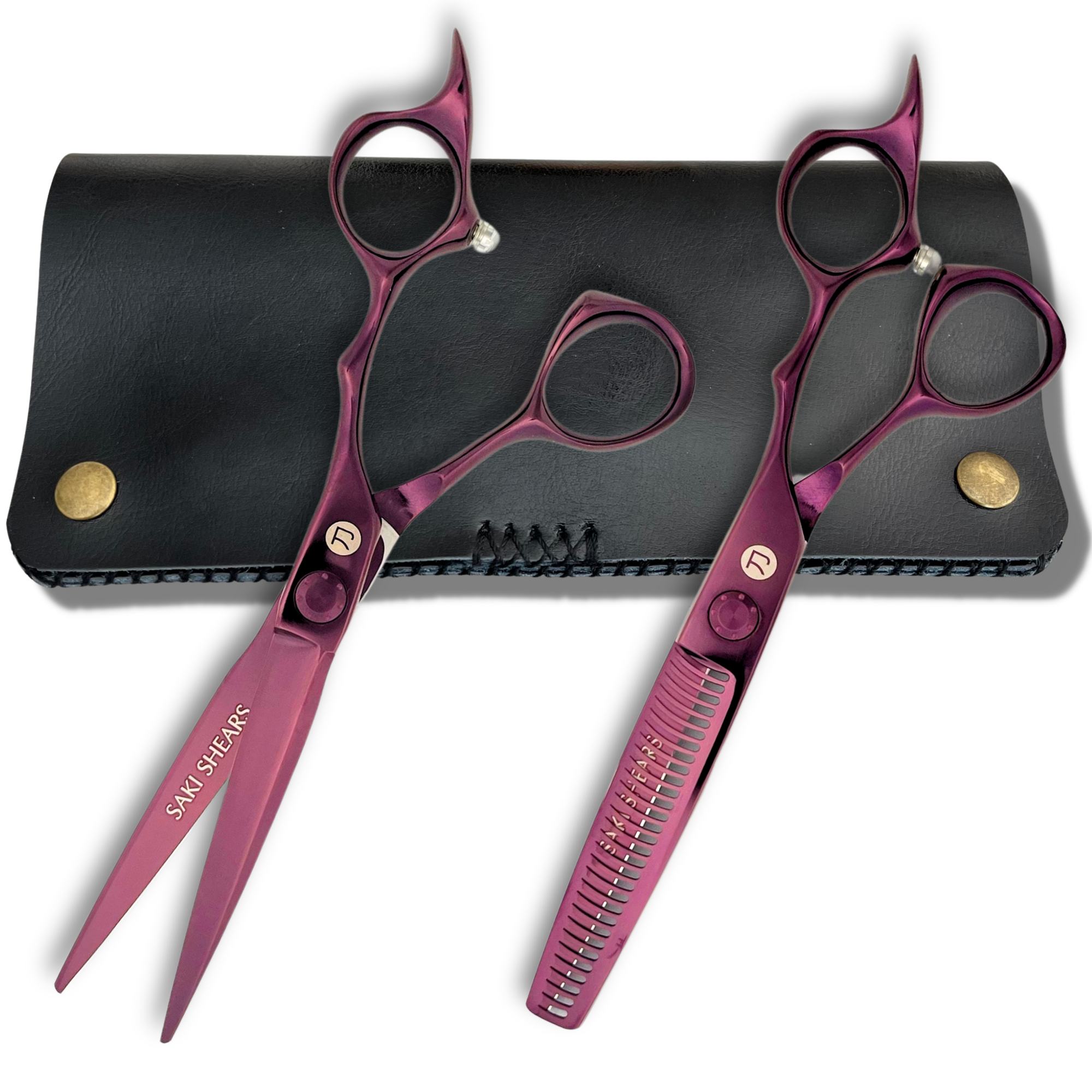
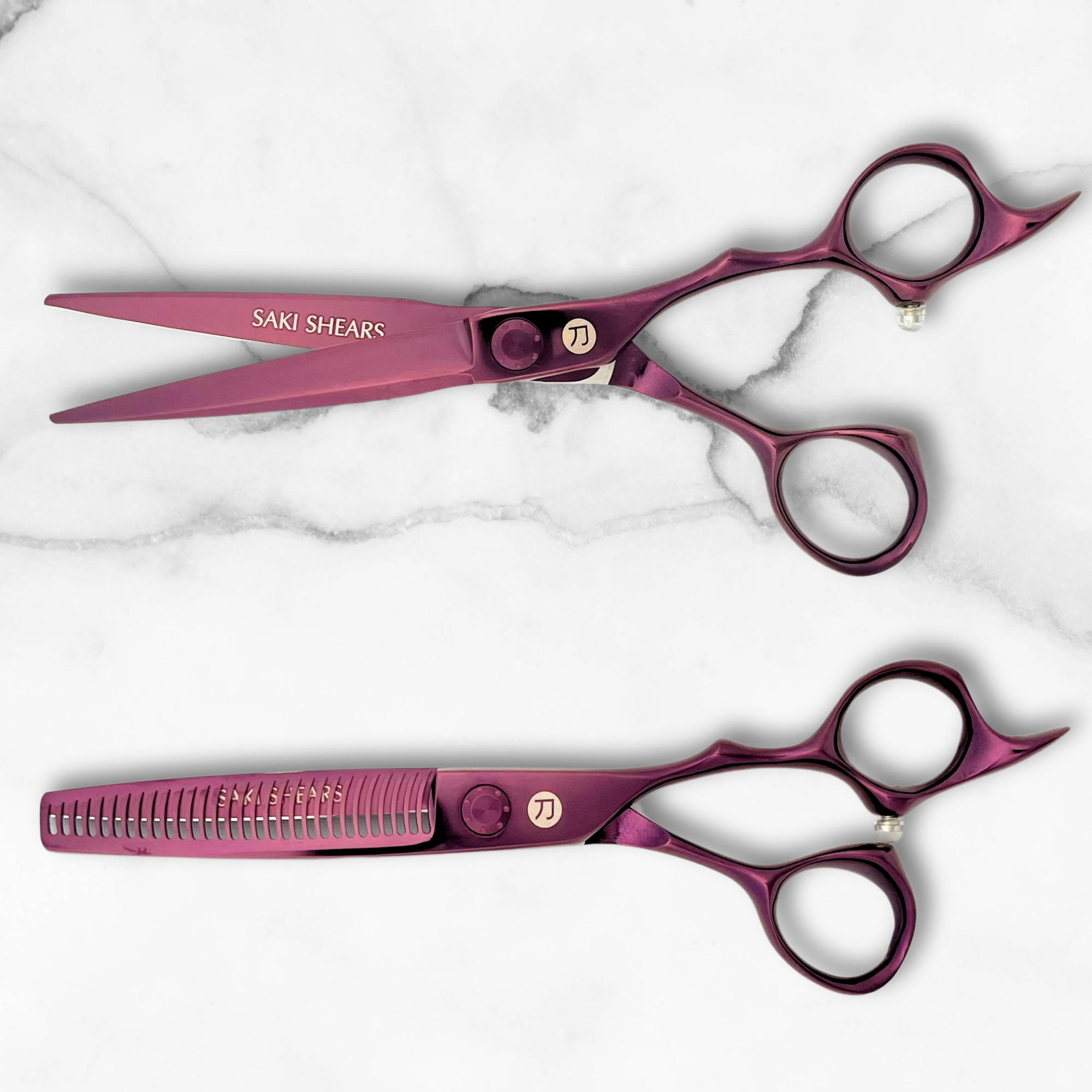
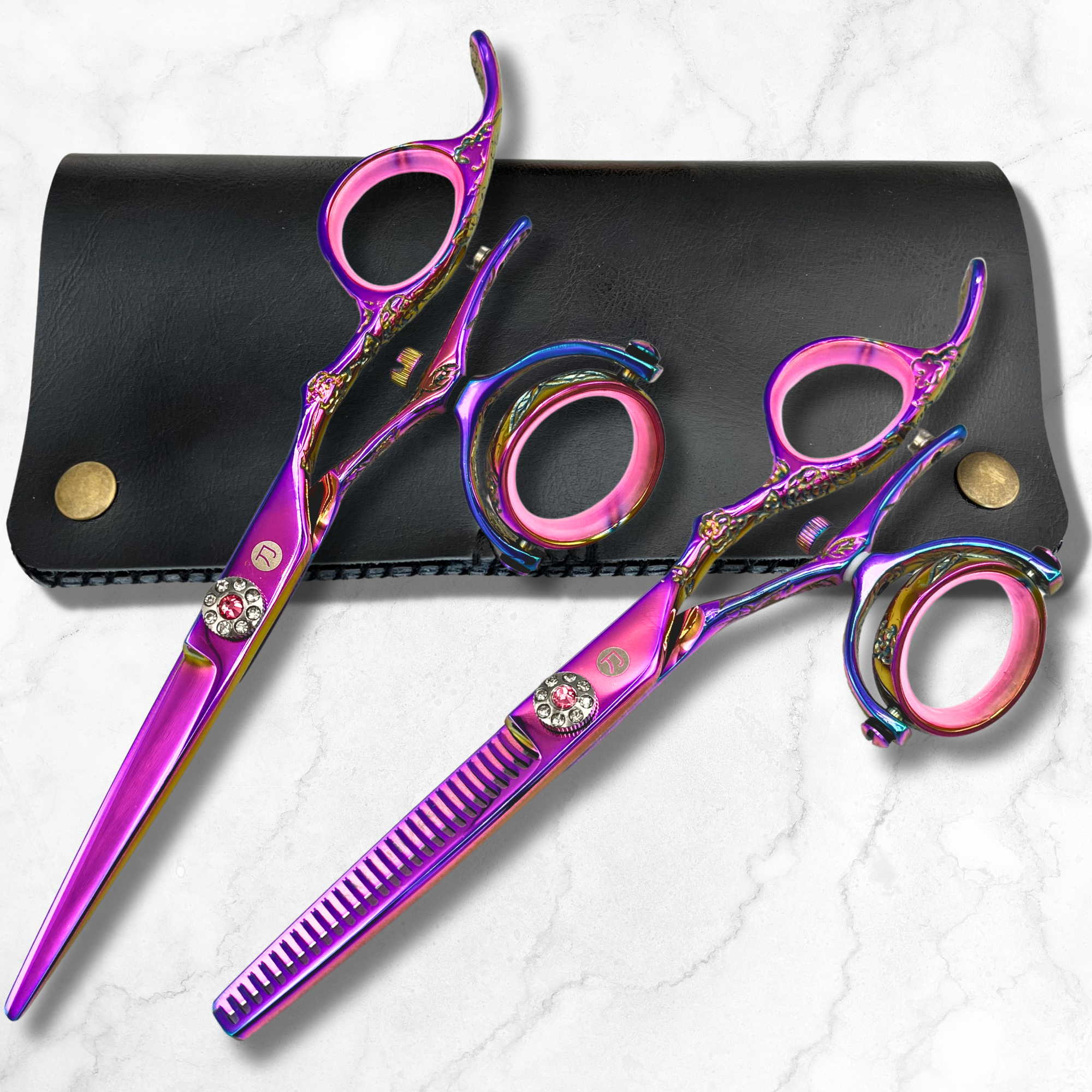
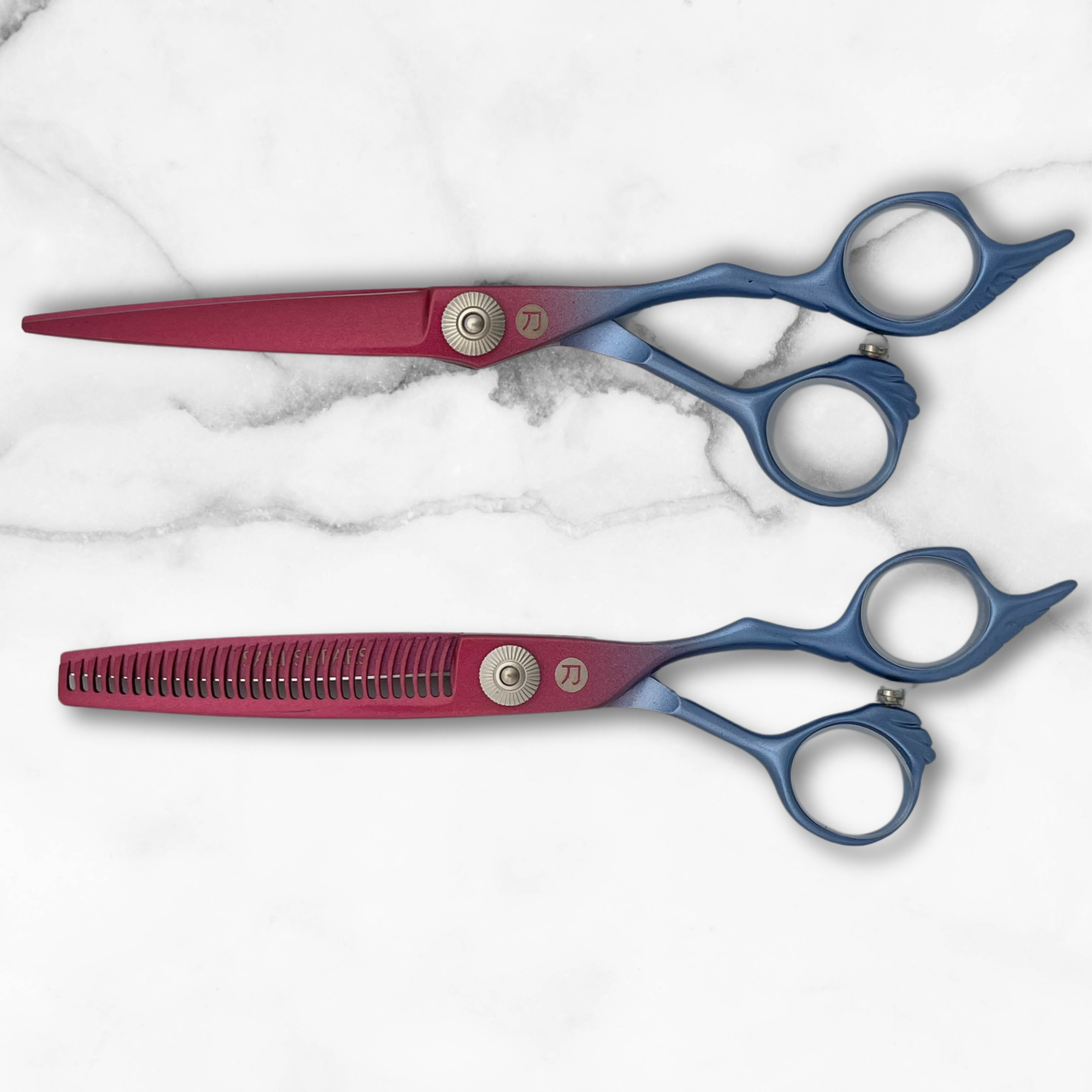
Most stylists working regularly with textured and coily hair end up carrying at least two tools: a primary cutting shear for the overall shape and a thinning shear for interior blending. Keeping both in a matched set simplifies tension and handle feel between the two, which reduces the adjustment period when switching mid-service. Full sets are available in the hair shear sets collection, and single hair-cutting shears can be found in the hair-cutting shears collection.
Maintenance Considerations for Heavy, Regular Use
Shears used consistently on dense, coily hair go dull faster than shears used primarily on fine, straight hair, simply because of the added resistance per cut. Wipe blades after every client, oil the pivot regularly, and have the edge professionally serviced before it starts pushing hair rather than cutting it - waiting until a shear feels noticeably dull means it has already been underperforming for several appointments. A well-maintained shear with the right blade geometry and tooth count for textured work will hold a cleaner line, require less compensating technique, and last longer than a general-purpose shear pressed into daily use on dense curl patterns.