Professional Hair Thinning Shears: The Complete Guide to Blending and Texturizing
Every professional stylist reaches a point where cutting shears alone aren't enough. You need to remove bulk without losing length, blend layers seamlessly, and add movement that makes a finished style look effortless. That's where professional hair thinning shears become essential — and choosing the right pair matters more than most stylists realize.
Whether you're a salon veteran who's been thinning and texturizing for decades or a newer stylist still learning the difference between a 30-tooth and a 46-tooth blade, this guide breaks down what makes thinning shears work, how to pick the right pair for your cutting style, and where Japanese-forged options from Saki Shears fit into the picture.
What Are Hair Thinning Shears and How Do They Work?
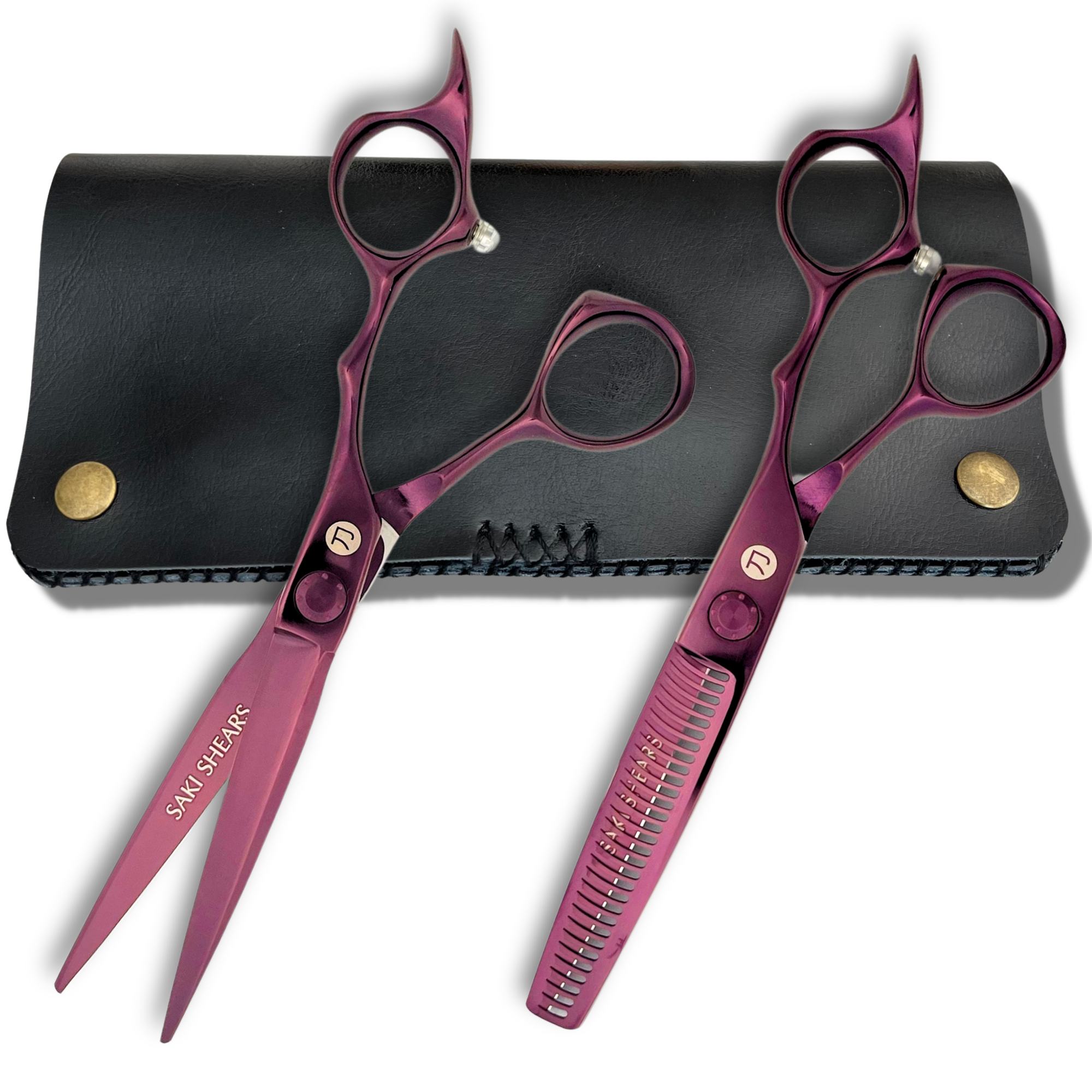
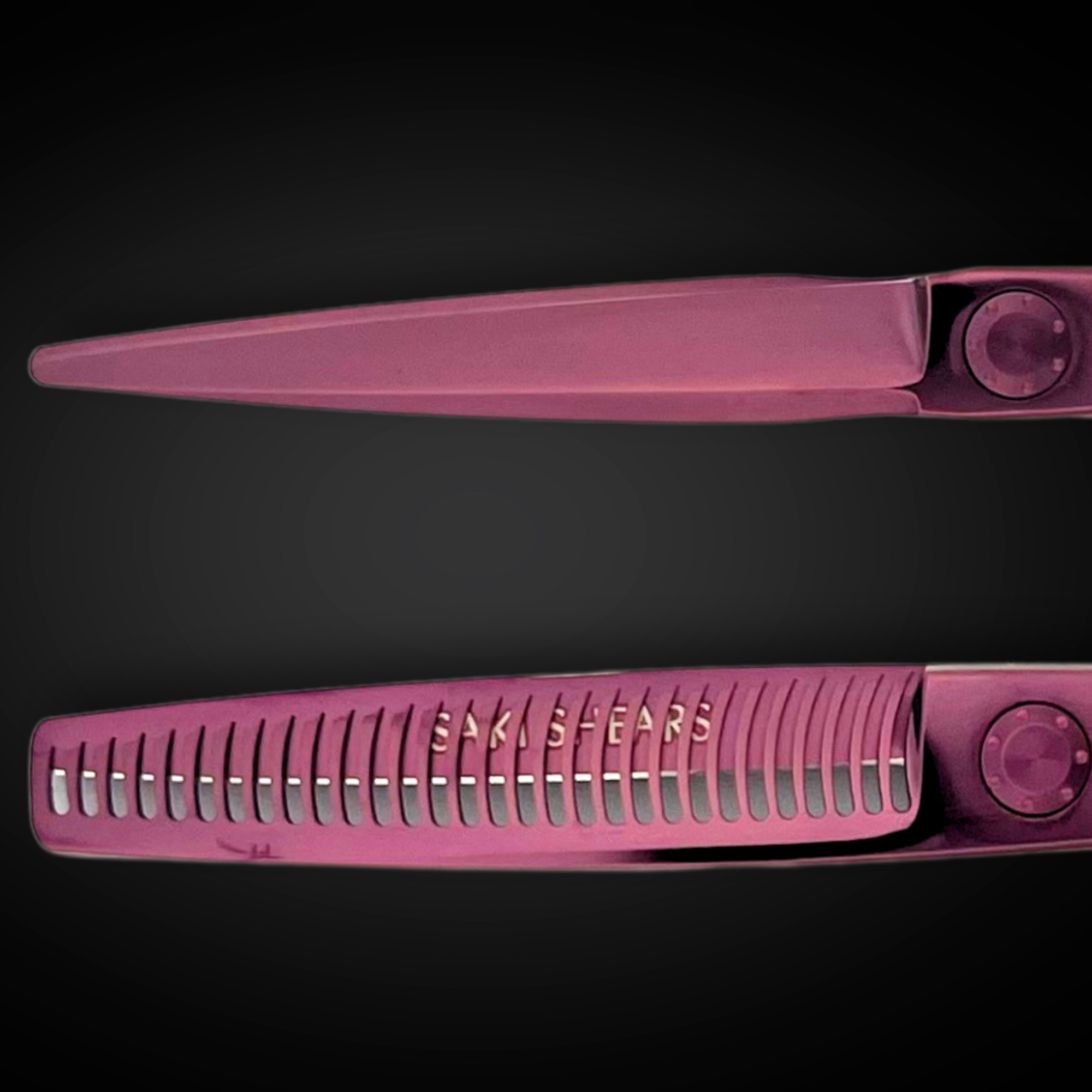
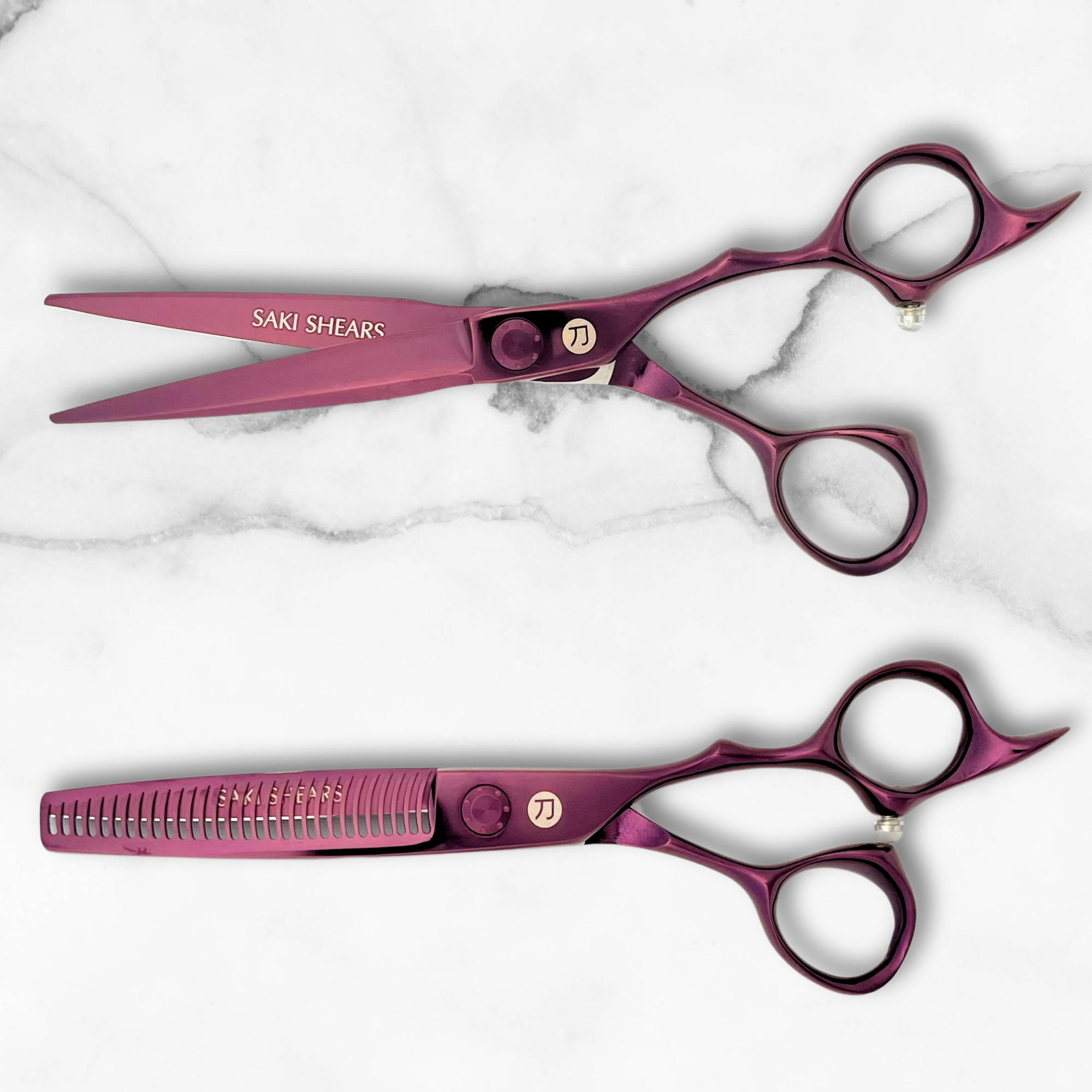
Thinning shears — sometimes called texturizing shears, blending shears, or chunkers — look similar to standard cutting shears but with one critical difference: at least one blade features teeth instead of a straight edge. Those teeth create gaps that allow some hair strands to pass through uncut while others are trimmed. The result is controlled hair removal that reduces density and weight without changing the overall shape or length of the cut.
The mechanics are straightforward. When you close a thinning shear, the toothed blade catches and cuts a percentage of the hair section while the rest slides through the gaps between teeth. A shear with fewer, wider-spaced teeth removes more hair per cut (typically 40–50% per pass), while one with more, closer-set teeth removes less (around 15–25%). This is why tooth count directly affects how aggressive or subtle your thinning results are.
Professional thinning shears differ from drugstore versions in several important ways. The steel quality determines edge retention — how long the teeth stay sharp enough to cut cleanly rather than bending or folding hair. The type of steel used (440C Japanese stainless, VG10 cobalt, or Damascus) also affects how smoothly the blade moves and how precisely each tooth engages the hair. Cheap thinning shears pull, snag, and create uneven results. Professional-grade pairs cut cleanly every time.
Thinning Shears vs. Texturizing Shears: Understanding the Difference
Stylists often use "thinning shears" and "texturizing shears" interchangeably, and while the tools look similar, they serve different purposes in professional haircutting.
Thinning shears typically have 30 to 46 teeth and are designed to remove bulk uniformly throughout a section. They're your go-to for reducing overall density — working through thick, heavy hair to make it lighter and more manageable without altering the cut's silhouette. When a client sits down with dense, coarse hair that overwhelms their face shape, thinning shears are what bring it into balance.
Texturizing shears have fewer teeth — usually between 7 and 20 — with wider spacing. They remove larger chunks of hair and create more visible separation and movement. These are the shears you reach for when you want to add deliberate texture, break up blunt lines, or create that lived-in, piecey look that's dominated editorial styling for the past several years. The Saki Dotanuki Damascus Texturizing Shears are a strong example — their wider tooth spacing gives stylists precise control over how much texture they add per cut.
In practice, most professional stylists keep both types in their case. A thinning shear handles the heavy lifting of bulk removal during the structural phase of a haircut, while a texturizing shear comes out during finishing to refine movement and add dimension.
How to Choose the Right Thinning Shears: What Actually Matters
Tooth Count and Hair Removal Percentage
This is the single most important specification when selecting thinning shears. The number of teeth determines how much hair gets cut per pass:
- 7–15 teeth (chunkers/texturizers): Remove 40–50% per cut. Best for heavy texturizing, creating dramatic movement, and working with very thick hair. Use sparingly — these are powerful.
- 25–35 teeth (standard thinning): Remove 25–35% per cut. The workhorse range for general bulk removal. Forgiving enough for everyday use but effective enough to make a real difference in density.
- 40–46 teeth (fine thinning/blending): Remove 10–20% per cut. Ideal for subtle blending, finishing work, and clients with finer hair where over-thinning is a risk. These create the most natural, seamless results.
If you're building your first professional thinning shear collection, start in the 30-tooth range. The Saki Katana Thinning Shears sit in this sweet spot — versatile enough for bulk removal on thick hair and controlled enough for blending work on medium-density cuts.
Steel Quality and Its Impact on Performance
The teeth on thinning shears are more delicate than a straight cutting blade. Each tooth is a small, precision-ground edge that needs to stay sharp to cut cleanly. When tooth edges dull or chip, the shear starts pulling hair instead of cutting it — which is painful for the client and ruins the finish.
This is why steel quality matters even more in thinning shears than in cutting shears. Japanese steel grades like 440C and VG10 cobalt offer the hardness and edge retention that thinning teeth demand. If you're unfamiliar with how these steel types compare, the complete guide to hair shear steel types covers the differences in detail.
For thinning shears specifically, 440C Japanese stainless steel is the standard for professional-grade performance. It provides Rockwell hardness in the 58–60 range, meaning the teeth hold their edge through months of daily use. VG10 cobalt steel pushes that further with added cobalt for even better edge retention and corrosion resistance — it's the premium choice for stylists who thin and texturize heavily throughout every workday.
Shear Size for Thinning
Thinning shears come in the same size range as cutting shears, typically 5.5 to 7 inches. The right shear size depends on your hand and your technique:
- 5.5–6 inches: Standard for most salon stylists. Offers precision and control for detailed thinning and blending work.
- 6–6.5 inches: A good crossover size for stylists who want slightly more reach without sacrificing maneuverability.
- 7 inches: Preferred by barbers and stylists working with longer, thicker hair where coverage per stroke matters.
Handle Design and Ergonomics
Thinning is repetitive work. On a heavy density client, you might make 40 to 60 individual thinning cuts in a single haircut. Multiply that across a full day of clients and your hand, wrist, and thumb are absorbing thousands of open-close cycles. Handle ergonomics aren't a luxury — they're a career longevity decision.
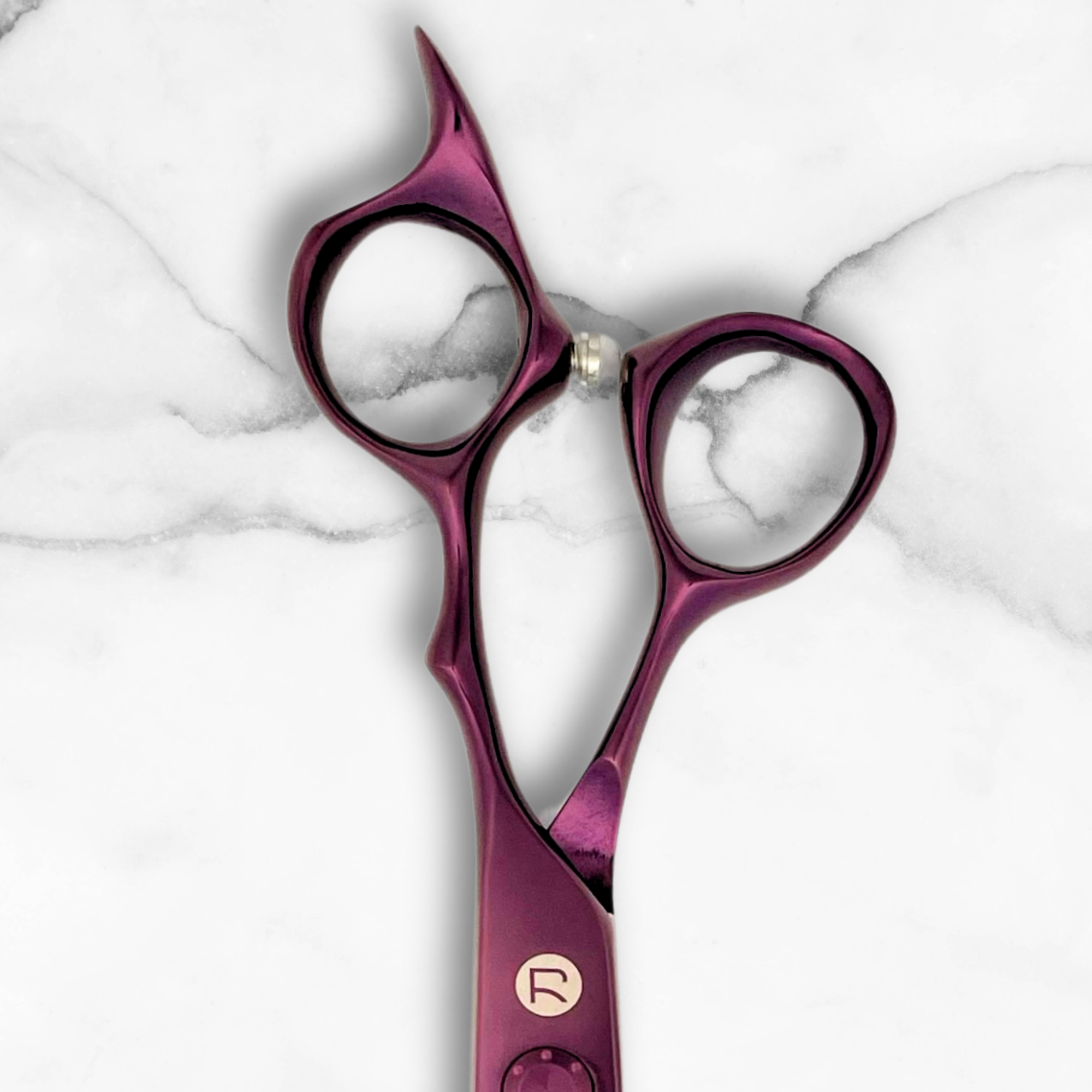
Offset handles angle the thumb ring lower than the finger ring, reducing the amount of thumb extension required with each cut. This decreases strain on the median nerve and the tendons running through your carpal tunnel. If you've ever experienced numbness, tingling, or aching in your cutting hand after a long day, an offset handle design may help.
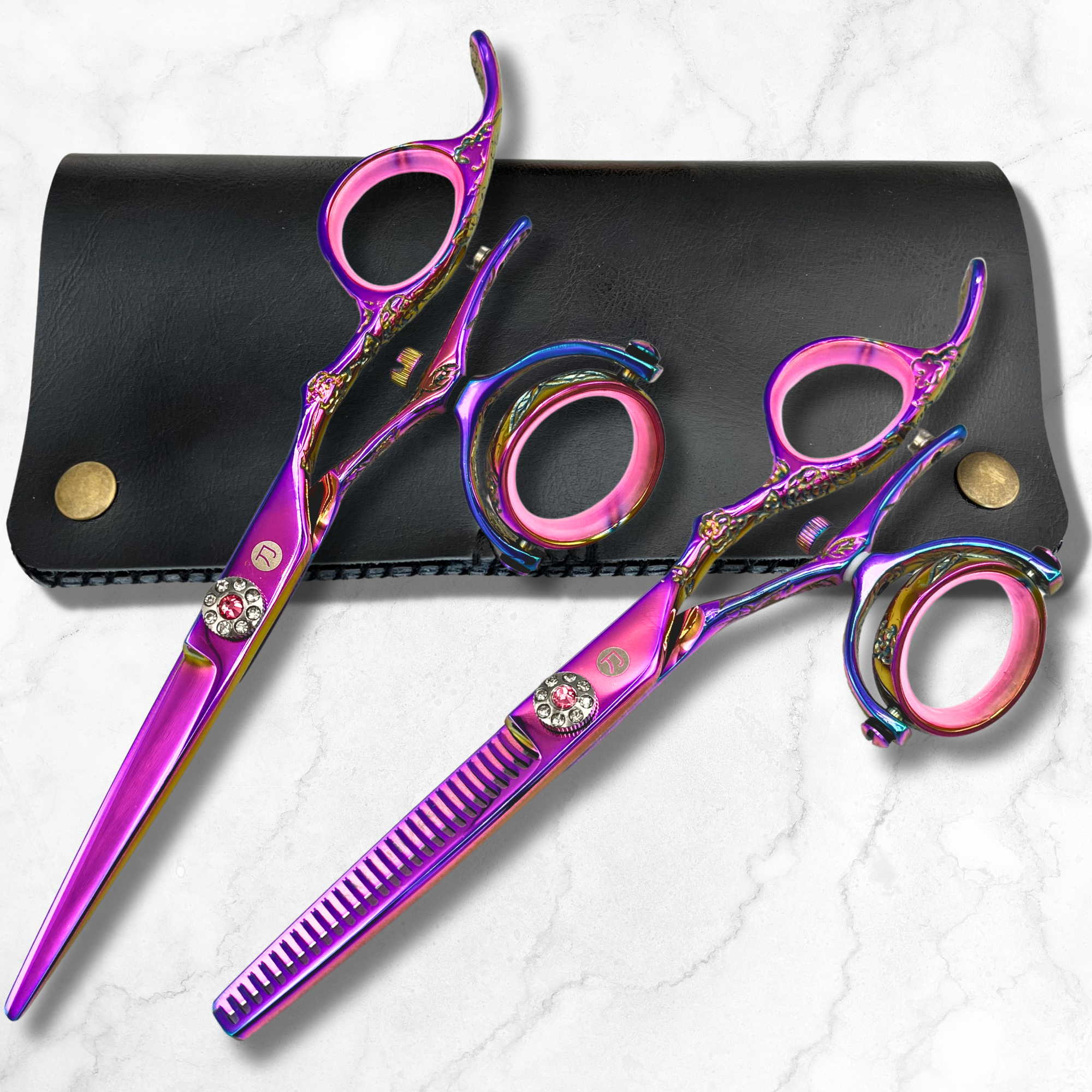
Swivel thumb designs take ergonomics further by allowing the thumb ring to rotate freely through 360 degrees. The Saki Sakura Swivel Thinning Shears use this mechanism, letting the thumb move naturally without forcing the wrist into awkward angles during overhead or side-cutting positions. For stylists dealing with repetitive strain or those who want to prevent it, swivel thinning shears are worth serious consideration.
When and How to Use Thinning Shears: Techniques That Work
Bulk Removal on Thick Hair
Start with clean, dry hair (or towel-dried if you prefer cutting wet). Section the hair as you normally would for a cut. Working from the interior sections outward, position your thinning shears about 2–3 inches from the root — never at the root line, as this creates short, spiky regrowth that sticks out at awkward angles as it grows.
Close the shear once, slide down slightly, and close again. Two to three cuts per section is usually sufficient. Check your work frequently by letting the hair fall naturally and assessing the density change. It's always easier to take more out than to fix over-thinning.
Blending Layers and Weight Lines
After a layered cut, visible weight lines can make the style look choppy rather than flowing. Position your thinning shears vertically (point cutting orientation) along the weight line and make small, precise cuts. This breaks up the hard line without removing significant length, creating a smooth transition between layers.
Finishing and Detailing
During the final stages of a haircut, use fine-toothed thinning shears (40+ teeth) to soften the perimeter and blend any remaining hard lines. Work on dry hair at this stage so you can see exactly how the finished style will look. Hold the shear at an angle and make quick, light cuts along the ends — this adds subtle movement and prevents the "helmet" look that comes from uniformly blunt ends.
Common Mistakes to Avoid
Over-thinning is the most frequent error, especially with new stylists. Once hair is thinned too aggressively, there's no quick fix — the client is living with thin, wispy sections until regrowth fills them in. Start conservative, assess, then thin more if needed.
Thinning too close to the roots creates regrowth problems. Those short-cut hairs will push outward as they grow, creating frizzy, uncontrollable sections within a few weeks. Keep your thinning cuts at least 1.5 to 2 inches from the scalp.
Using dull thinning shears is another common mistake. Dull teeth don't cut — they bend and fold hair, causing damage and split ends. Professional thinning shears should be sharpened by a qualified shear technician every 6–12 months depending on use volume.
Best Saki Thinning Shears by Category
Best Overall: Saki Katana Thinning Shears
The Katana Thinning Shears ($199) are built from 440C Japanese stainless steel with a black titanium coating for added durability and corrosion resistance. They deliver consistent, controlled bulk removal with a tooth design optimized for everyday salon use. Rated 4+ stars by working stylists, the Katana is the thinning shear most Saki customers return to reorder. Pair them with the Katana Cutting Shears or grab the Katana Shears Set for both at $299.

Best for Ergonomics: Saki Sakura Swivel Thinning Shears
If hand fatigue or repetitive strain is a concern, the Sakura Swivel Thinning Shears ($189) feature a 360-degree rotating thumb ring that eliminates forced wrist positions during thinning. Built on VG10 cobalt steel for superior edge retention, these are the long-shift solution for high-volume stylists. Also available as part of the Sakura Swivel Shears Set ($290).
Best Premium: Saki Dotanuki Damascus Thinning Shears
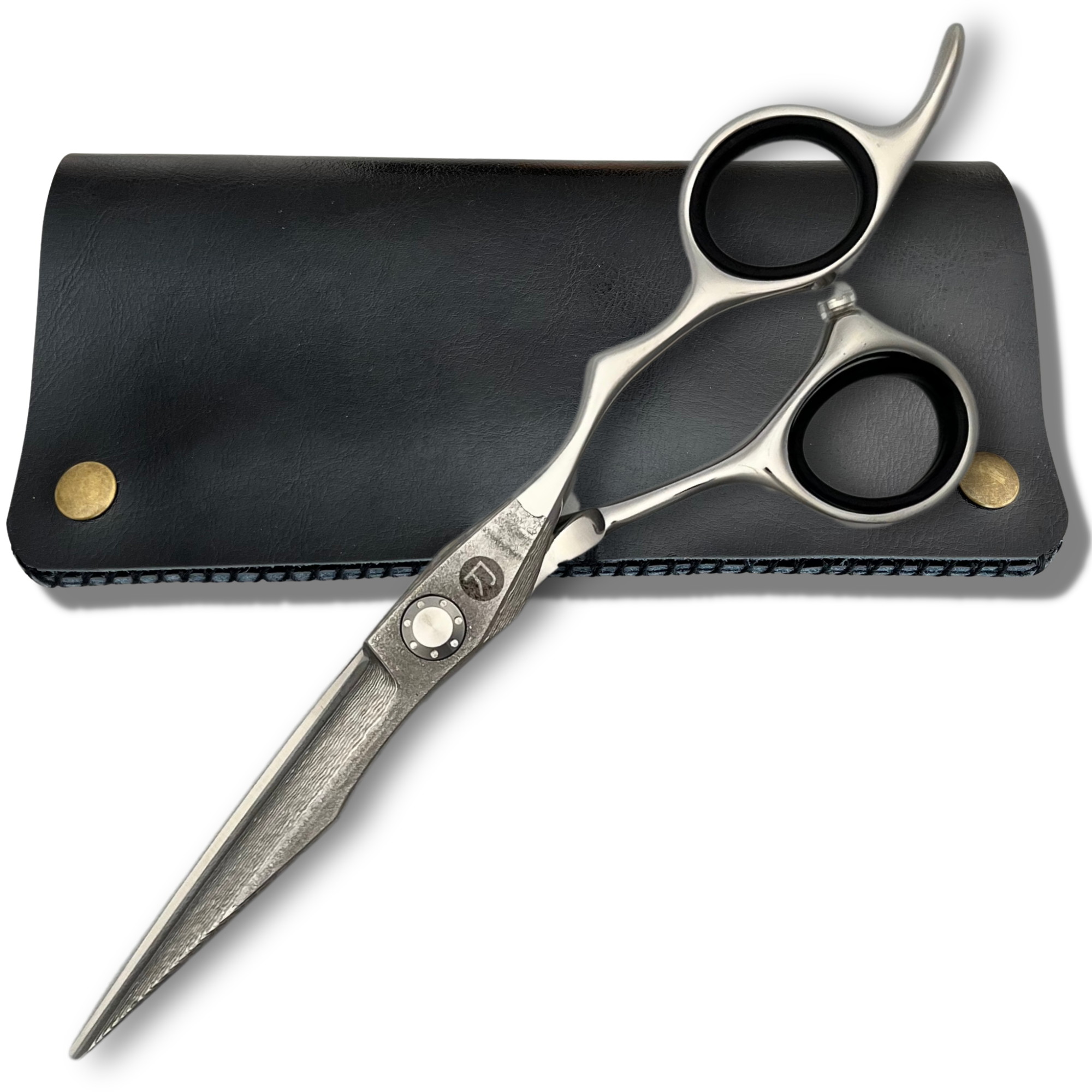
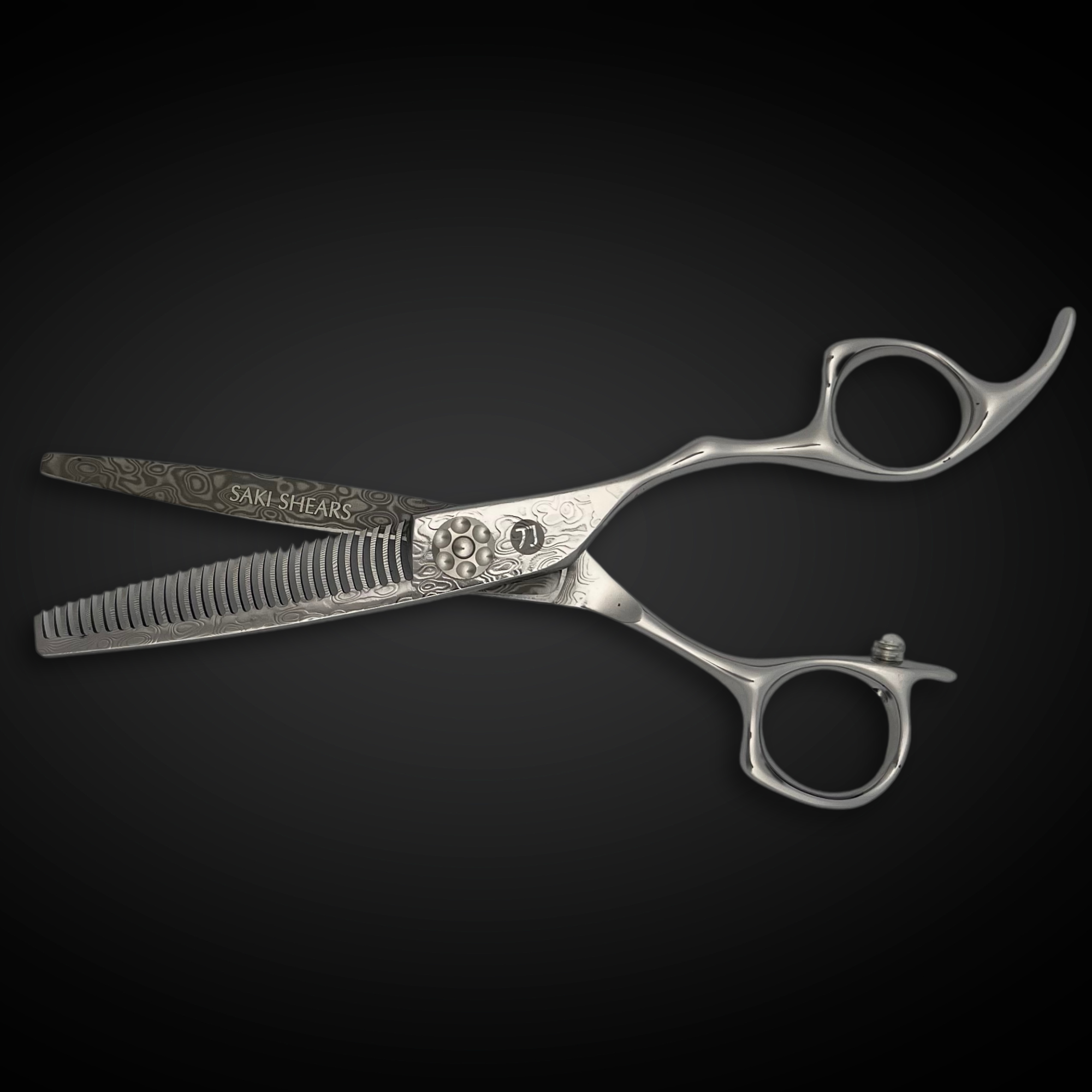
For stylists who want the absolute best, the Dotanuki Damascus Thinning Shears ($325) are forged from layered Damascus steel — the same multi-fold technique used in traditional Japanese sword making. The Damascus construction creates micro-serrations along each tooth edge that grip hair more precisely, resulting in cleaner cuts and smoother results. These are a long-term investment for career professionals who demand the highest performance from every tool they own.
Best Value: Saki Kotaro Thinning Shears
The Kotaro Thinning Shears ($189) deliver professional-grade performance at an accessible price. Forged from Japanese stainless steel with a clean, no-nonsense design, the Kotaro is a reliable daily driver for stylists who need consistent results without the premium price tag. Pair with the Kotaro Cutting Shears or get the Kotaro Set ($275).
Best for Students: Saki Makoto Student Thinning Shears
Cosmetology students need professional-quality tools that won't break a student budget. The Makoto Student Thinning Shears ($175) are purpose-built for learners — the same Japanese steel construction as Saki's professional line, sized and weighted for developing proper technique. Graduate to the full Makoto Student Shears Set ($275) to have both cutting and thinning covered through school and your first years behind the chair.
Best for Color and Style: Saki Gold Thinning Shears
The Gold Thinning Shears ($275) combine VG10 cobalt steel performance with a striking gold titanium finish. These aren't just about aesthetics — the titanium coating adds a layer of corrosion protection that's especially valuable if you thin hair that's been chemically treated. Chemical services can accelerate blade degradation, and the Gold's titanium barrier extends the working life of each sharpening. Available alongside the Gold Cutting Shears ($275) and as part of the Premium Gold Shears Set ($395).
Best for Small Hands: Saki Kohana Pink Thinning Shears
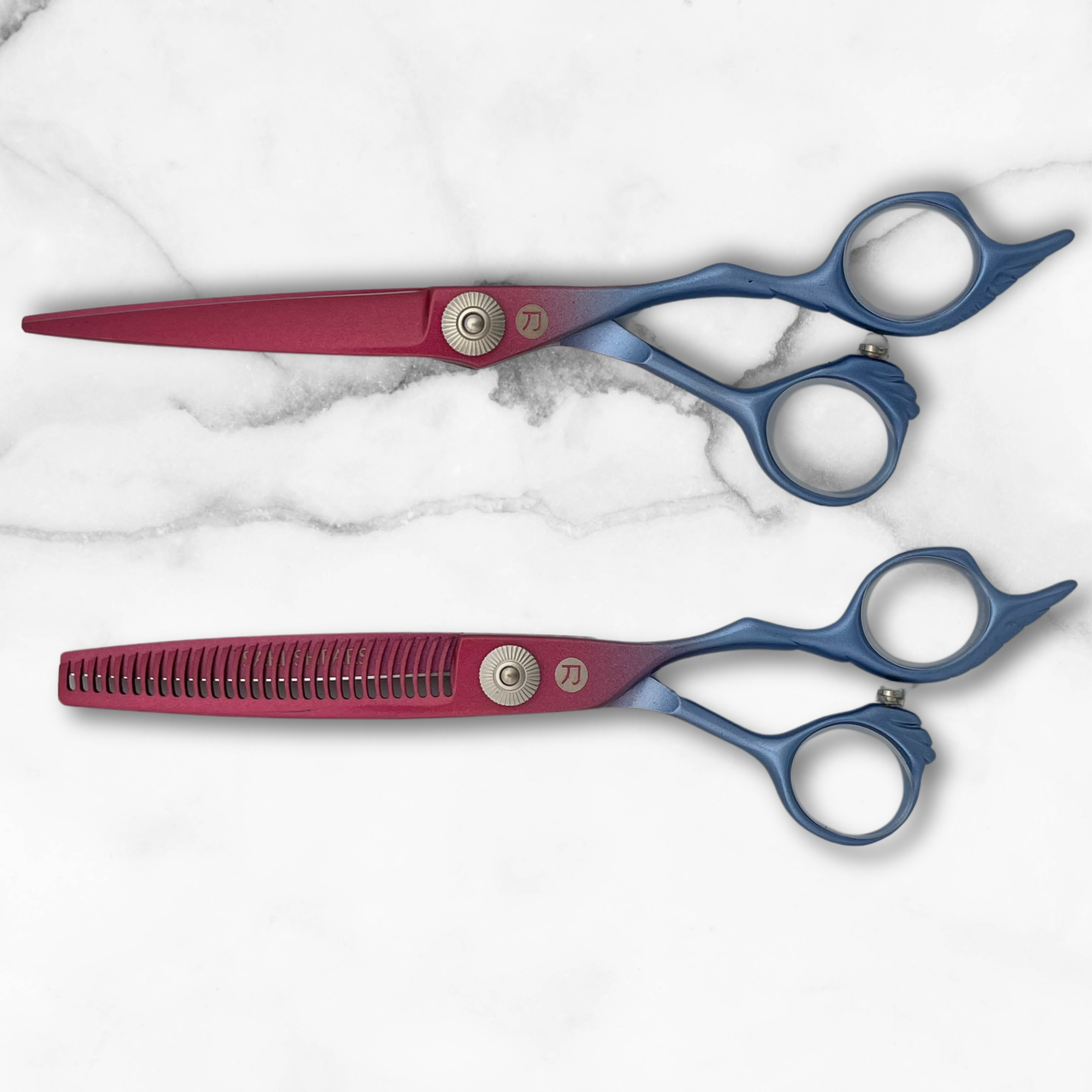
Not every stylist has large hands, and using oversized shears forces compensating grip patterns that cause fatigue and strain. The Kohana Pink Thinning Shears ($145) are designed with smaller finger rings and lighter weight for stylists with petite hands. The pink titanium coating isn't just decorative — it provides the same corrosion-resistant benefits as other titanium finishes. Grab the matching Kohana Pink Shears Set ($265) for a complete small-hand solution.
Caring for Your Thinning Shears
Thinning shears require slightly more maintenance attention than cutting shears because of their tooth geometry. Hair fragments and product residue can accumulate between teeth, affecting both performance and hygiene.
After every client, wipe your thinning shears with a soft cloth to remove hair and moisture. At the end of each day, open the shear fully and use a small brush (an old mascara wand works well) to clean between the teeth. Apply a drop of shear oil to the pivot point and along the toothed blade, then open and close several times to distribute the lubricant.
Store thinning shears in a protective case — never loose in a drawer where the teeth can contact other metal tools. A single collision with another shear can chip a tooth edge, and chipped teeth create pulling and uneven cuts. The Japanese tradition of treating each tool as a precision instrument applies doubly to thinning shears. According to the Professional Beauty Association, regular maintenance and proper storage are among the top factors that extend the useful life of professional haircutting tools.
Professional sharpening every 500–700 haircuts (roughly every 6–12 months for a busy stylist) keeps the teeth performing like new. Always use a sharpener experienced with thinning shears — standard sharpening techniques used on cutting blades can damage the delicate tooth geometry. The International Scissors Sharpening Association maintains a directory of certified technicians who specialize in professional haircutting tools.
How Many Thinning Shears Do You Actually Need?
For most working stylists, two thinning shears cover the full range of services: one standard thinning shear (30+ teeth) for bulk removal and everyday blending, and one texturizer (under 20 teeth) for creating movement and breaking up weight lines.
Barbers working primarily with men's cuts may lean toward a single, versatile thinning shear like the Katana or Kotaro since men's styles typically need straightforward bulk removal rather than nuanced texturizing. The Tachi Barber Shears pair well with either for a complete barber setup.
Stylists specializing in women's cuts, editorial work, or highly textured styles will benefit from having three options: a fine-tooth blender for subtle finishing, a standard thinner for bulk work, and an aggressive texturizer for creating movement. Building a collection over time — starting with the most versatile piece and adding specialty shears as your technique develops — is more practical than buying everything at once.
Frequently Asked Questions
What is the difference between thinning shears and regular cutting shears?
Regular cutting shears have two straight blades that cut every strand in a section. Thinning shears have at least one toothed blade with gaps that allow some hair to pass through uncut. This lets stylists remove bulk and density without changing the overall length or shape of the cut. Thinning shears typically remove between 10% and 50% of hair per cut depending on tooth count.
How many teeth should professional thinning shears have?
It depends on the intended use. Shears with 40–46 teeth remove 10–20% per pass and are best for subtle blending. Standard thinning shears with 25–35 teeth handle most everyday bulk removal. Texturizers with 7–15 teeth create dramatic movement. Most professionals start with a 30-tooth shear for versatility.
Can thinning shears damage hair?
When used properly with sharp, professional-grade thinning shears, thinning does not damage hair. However, dull thinning shears can bend and crush hair strands instead of cutting them cleanly, leading to split ends. Thinning too close to the roots can also create problematic short regrowth. Using quality Japanese steel thinning shears that are regularly sharpened and applying correct technique prevents these issues.

Written by Charles Harris