Hair Cutting Shear Types: A Functional Reference for Stylists
Most shear-buying content treats "hair shears" as a single category and focuses on price point or brand. That's not how a working chair actually uses shears. What matters day to day is function: what a given shear is built to do to the hair, straight cut, remove bulk, blend a line, or soften an edge, and matching the right tool to that function. This reference organizes shears by type, with sizing and material notes for each, so you can build out a kit deliberately rather than by accumulation.
Straight (Cutting) Shears
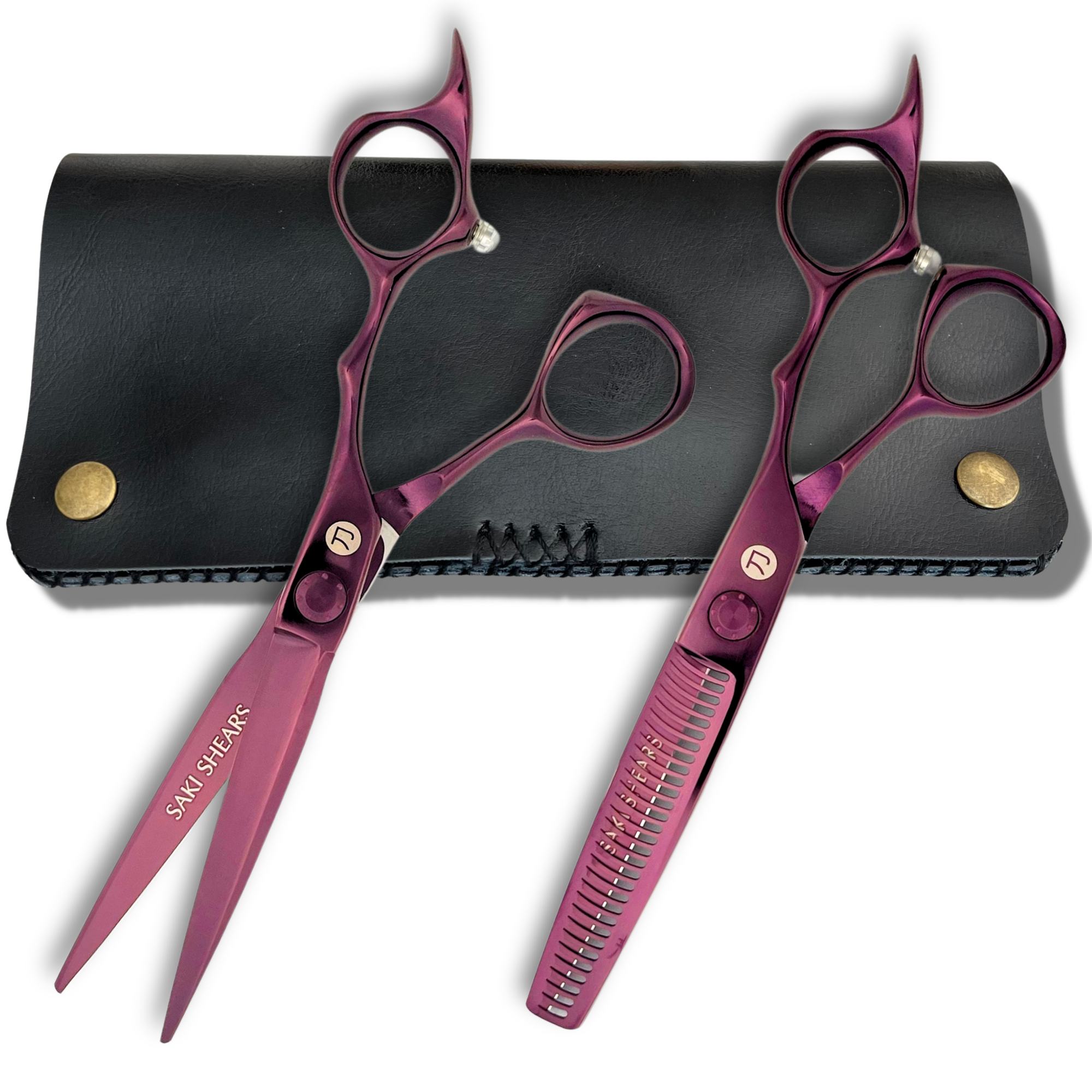
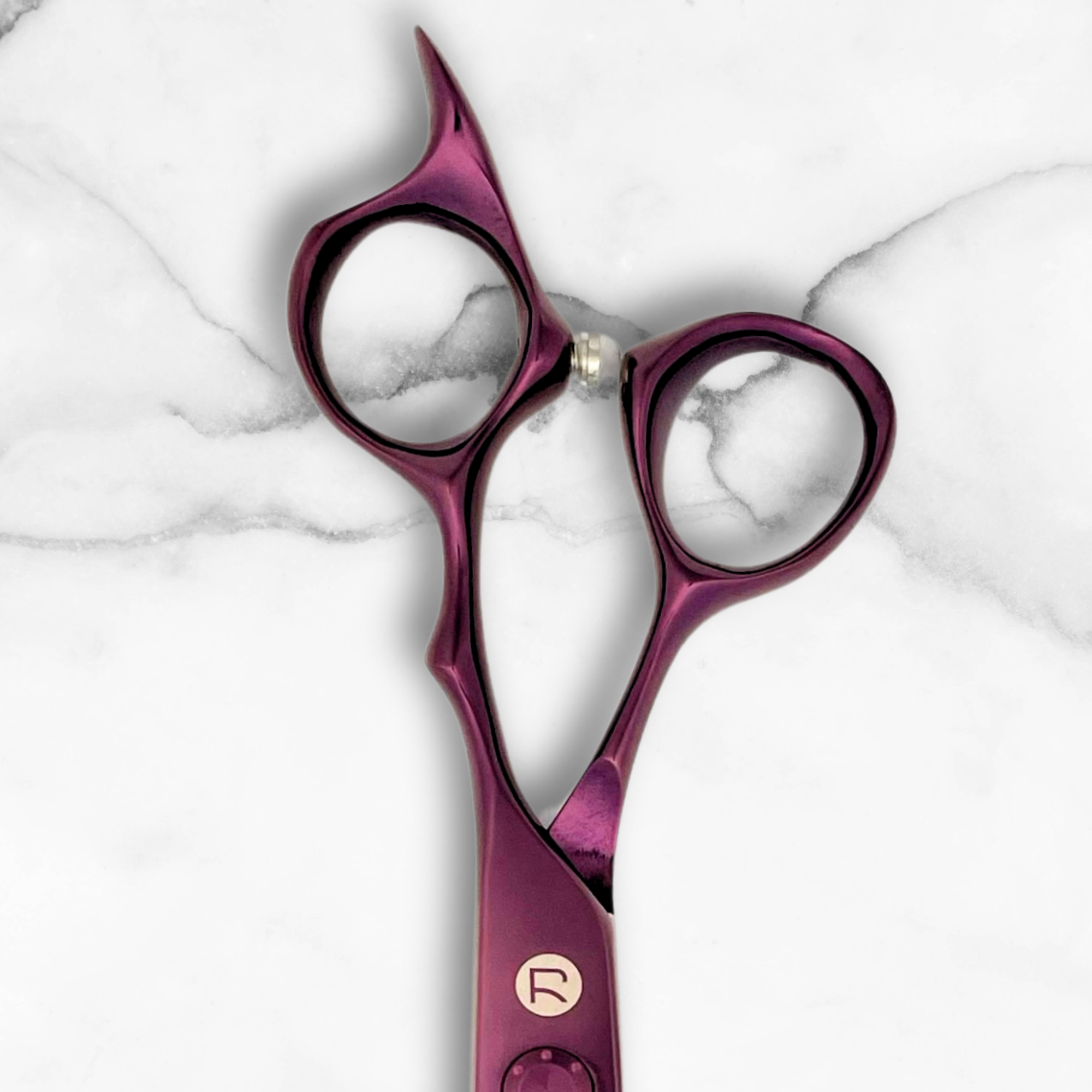
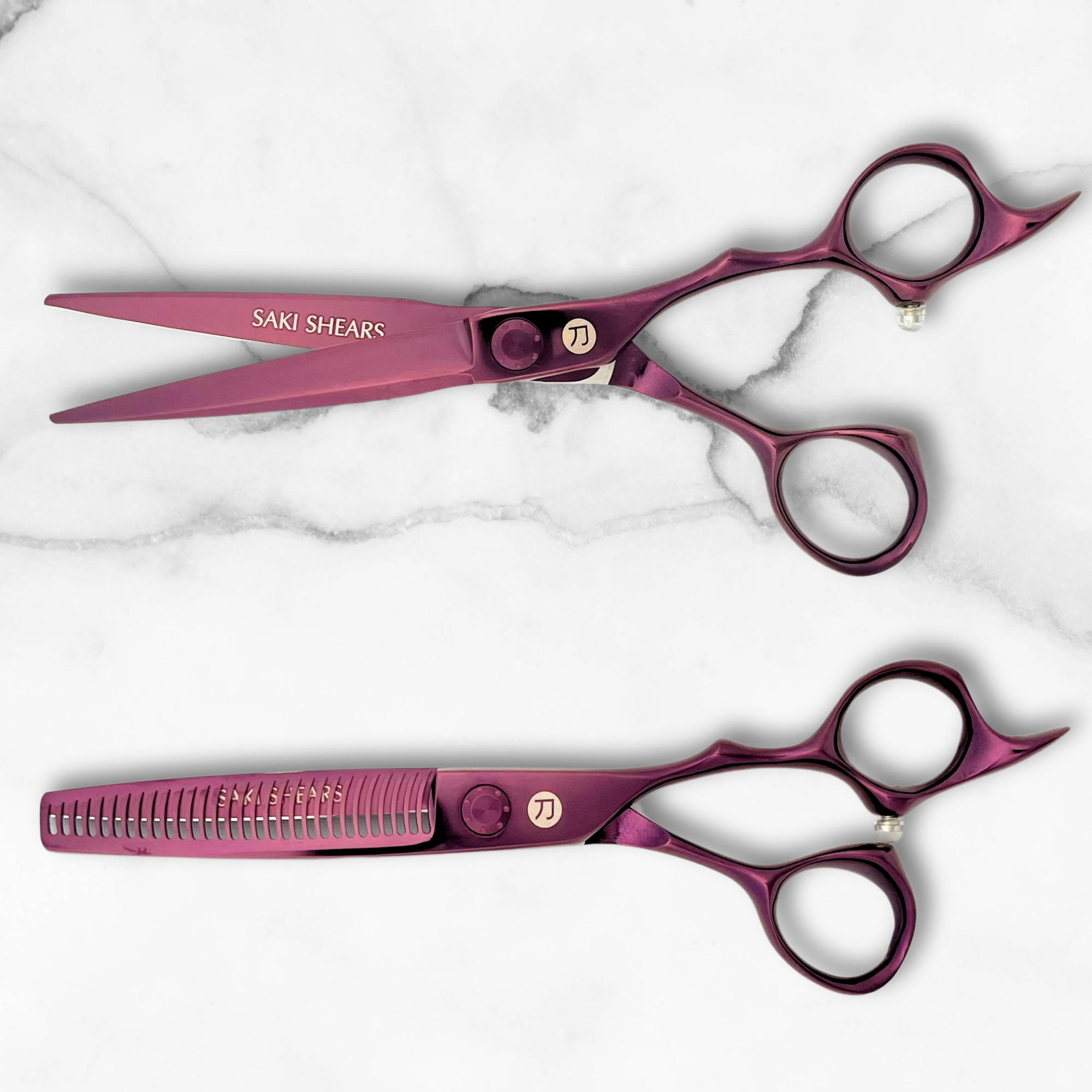
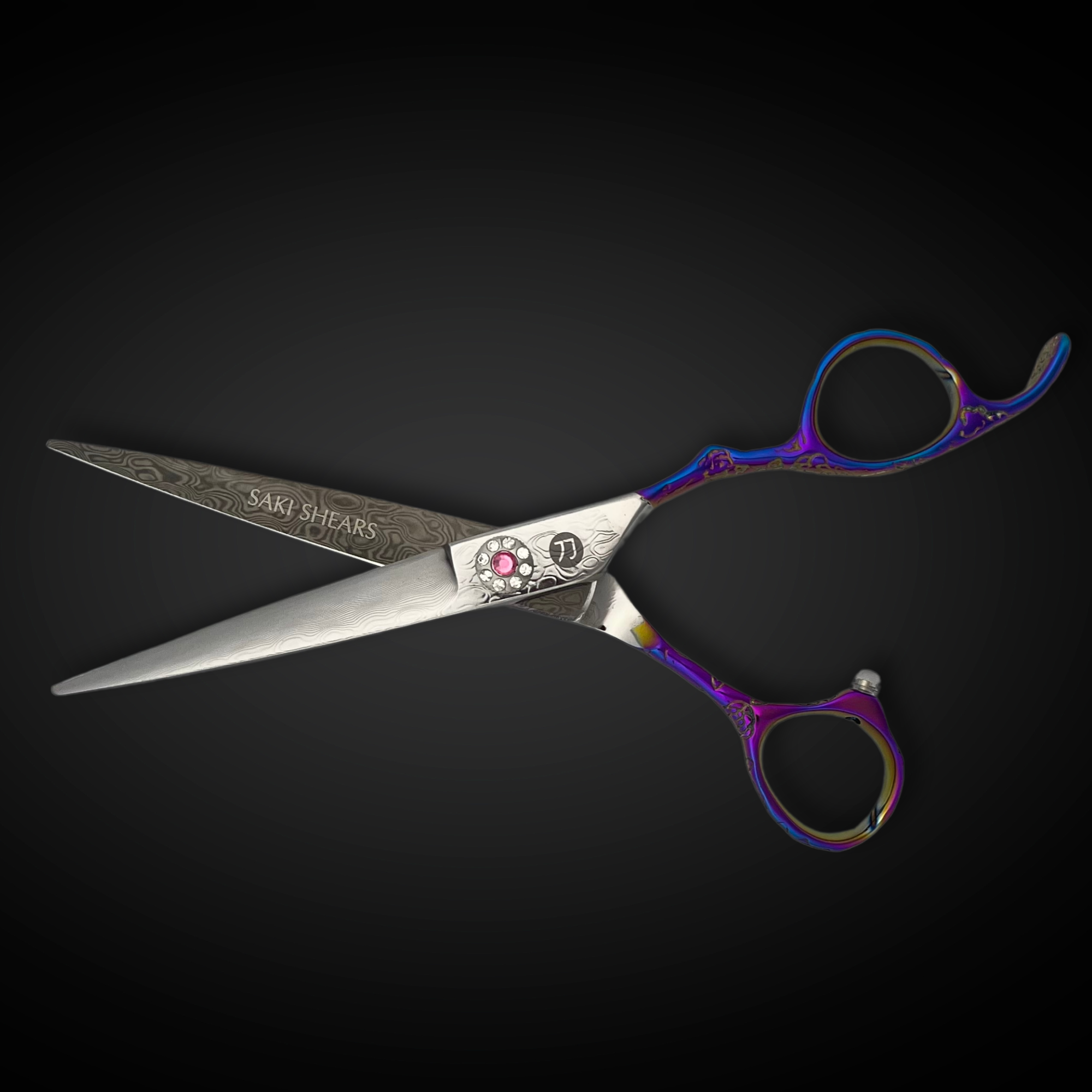
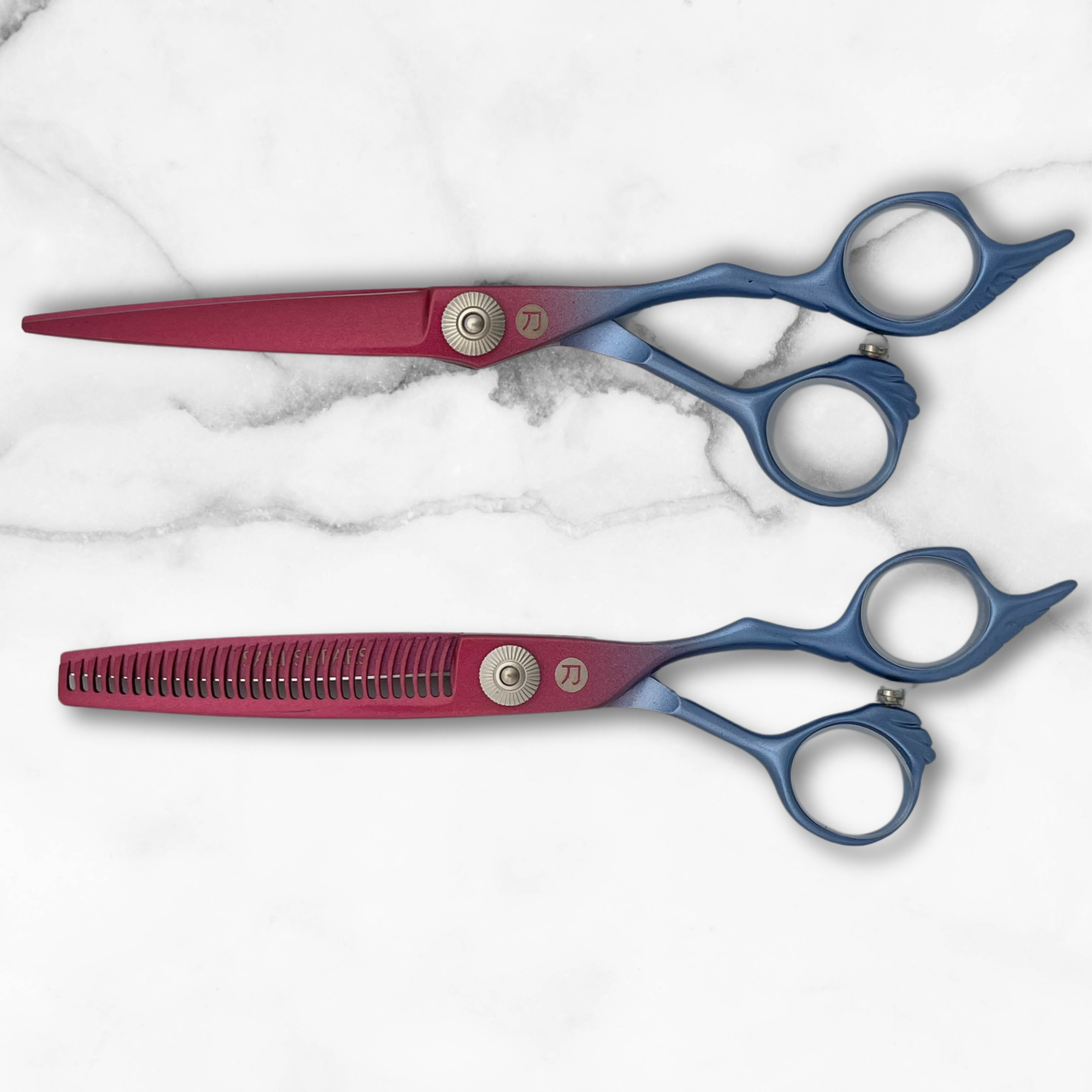
Straight shears, sometimes called cutting shears, have two solid, unserrated blades and are the baseline tool for precision work: blunt cuts, point cutting, over-comb work, and any technique where you need a clean, controlled line. Everything else in a shear kit is built to complement this tool, not replace it.
Sizing typically runs from around 5.0 inches up to 7.0 inches. Shorter shears (5.0-5.5") give tighter control for detail work close to the head and are common in barbering and precision bobs. Longer shears (6.0-7.0") cover more hair per stroke and suit slicing and length removal on longer hair, at some cost to fine control. Blade steel is the primary quality differentiator here: higher-carbon steels hold an edge longer and take a finer bevel, but require more careful maintenance than softer, lower-cost alloys. Cobalt and certain alloy steels are common choices where edge retention and corrosion resistance both matter.
Thinning and Blending Shears
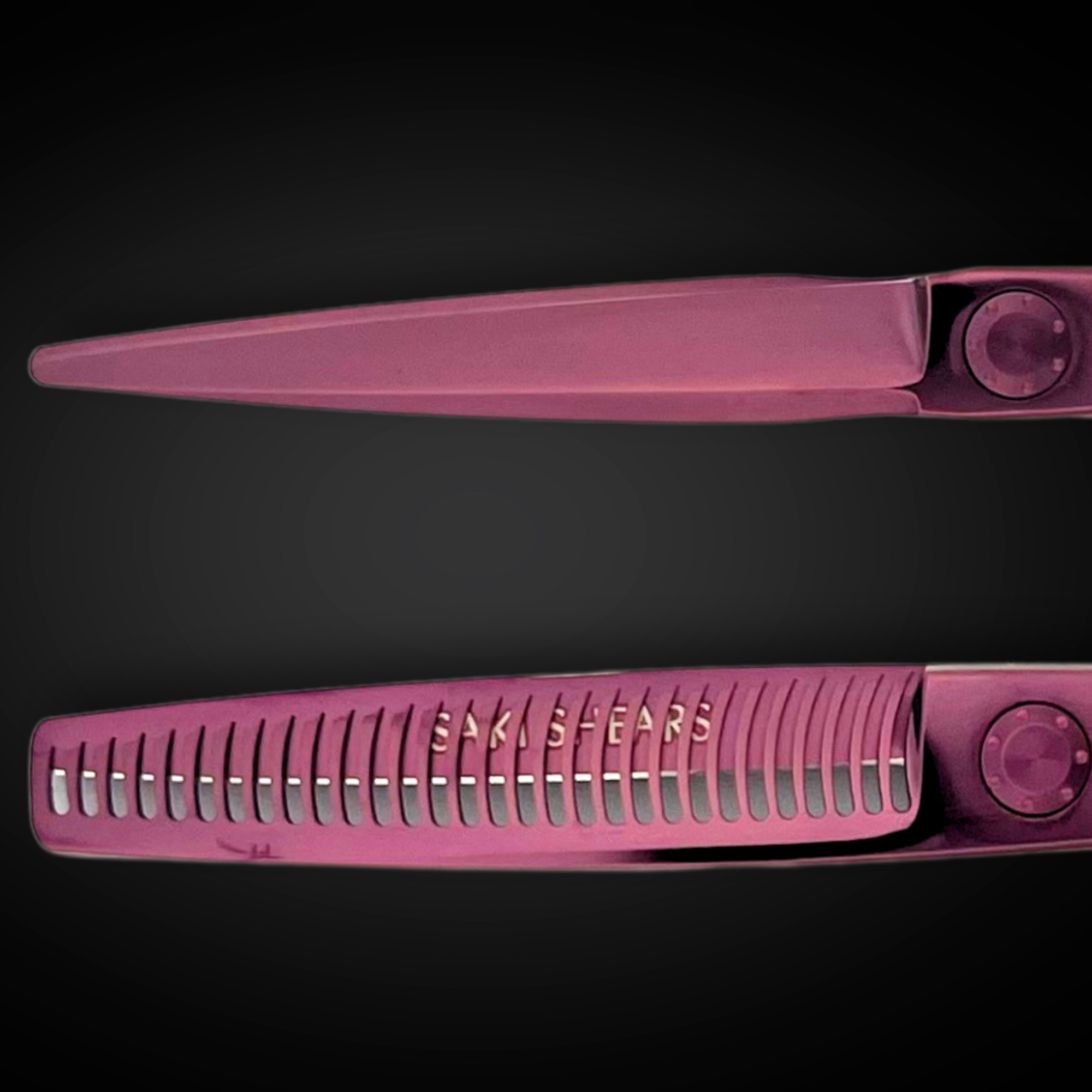
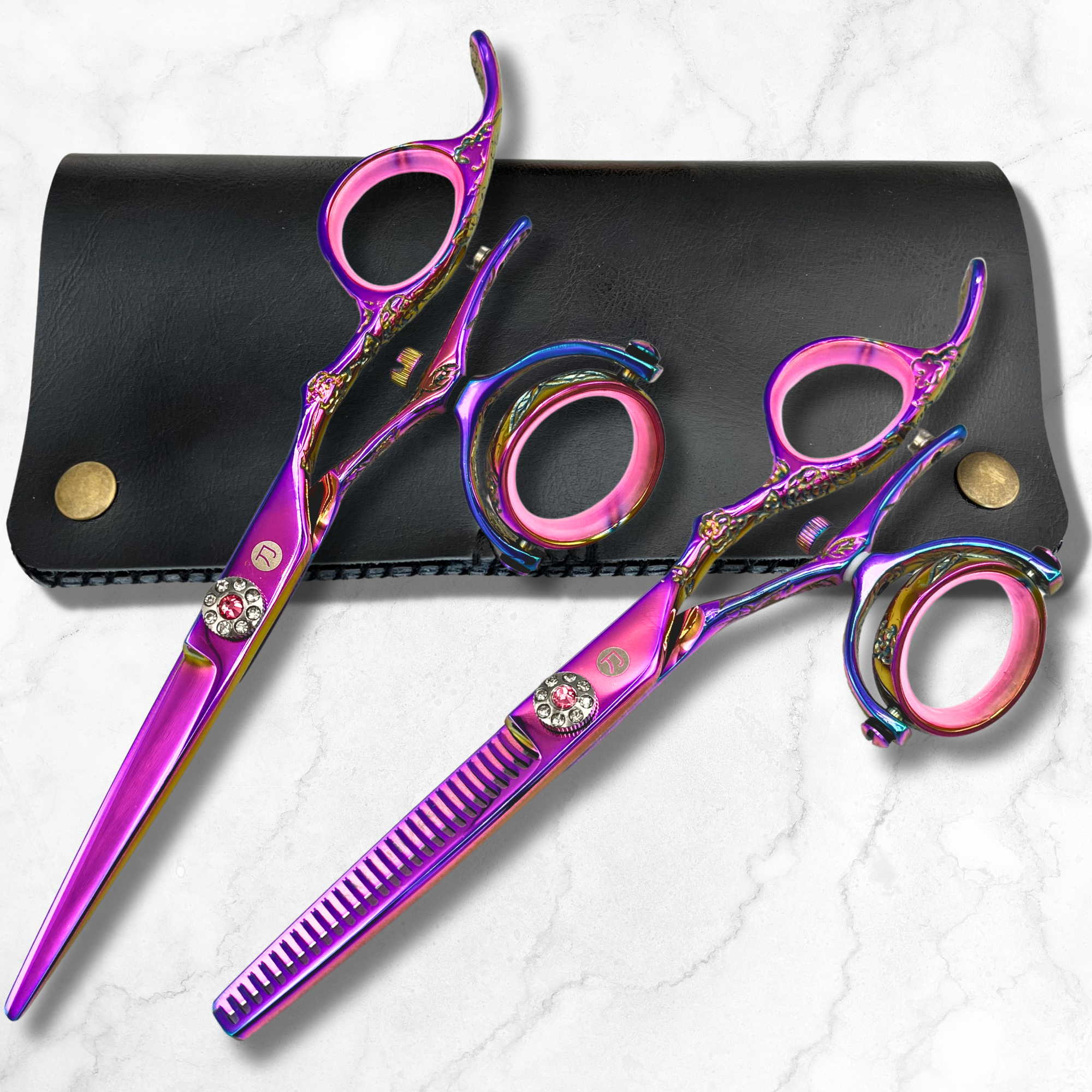
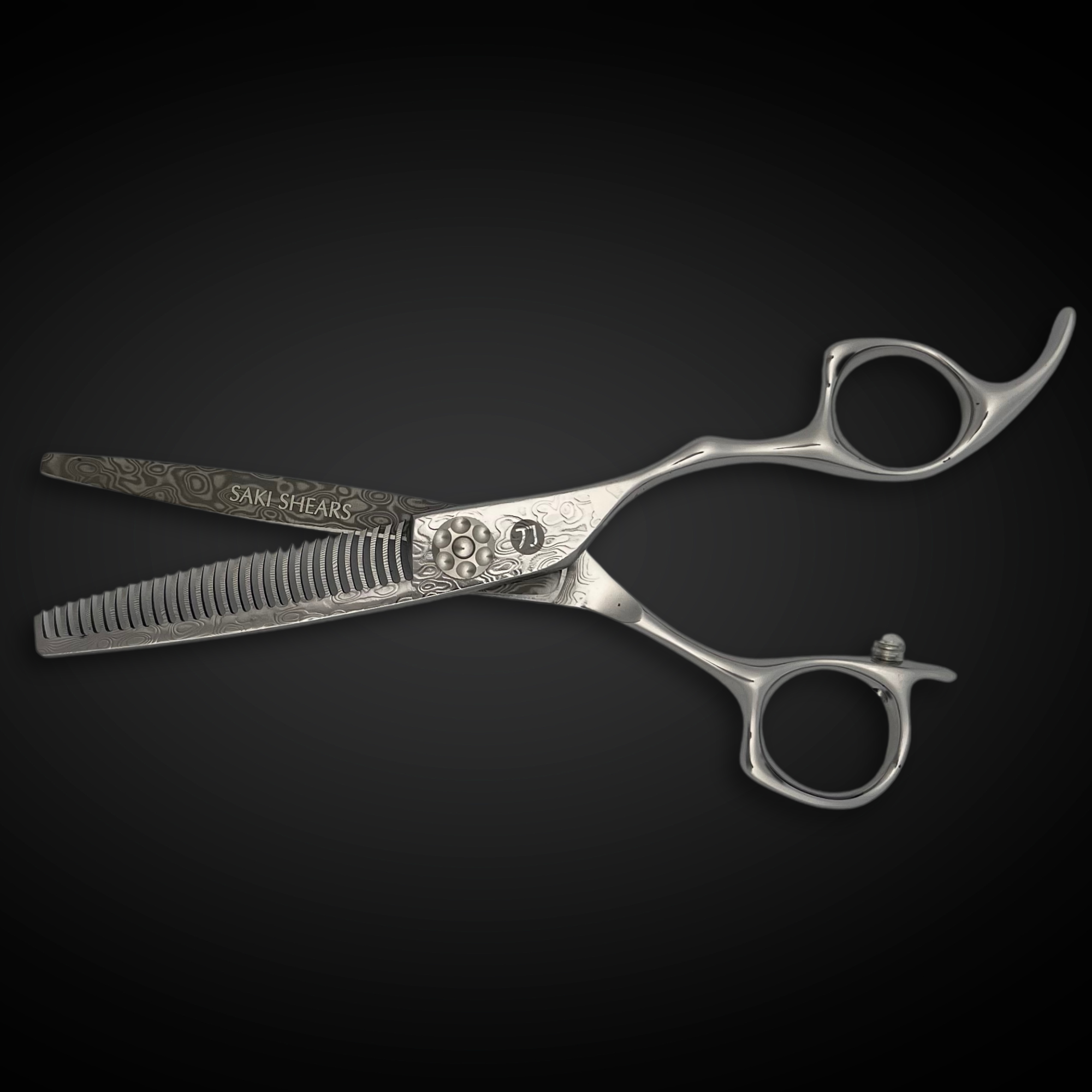
Thinning shears (also called blending shears) have one straight blade and one notched or toothed blade. Instead of cutting every hair in the section, the notches let a portion of the hair pass through uncut, which removes bulk and weight without shortening the overall length. They're the standard tool for blending a harsh line, softening the transition between cutting sections, and reducing density in thick hair.
The number and spacing of teeth determines how aggressive the shear is: fewer, wider-spaced teeth remove more hair per pass, while finer, closely-spaced teeth remove less and give a subtler result, useful for finishing work rather than bulk removal. Sizes generally sit in the same 5.5-6.5 inch range as straight shears, since they're typically used alongside them in the same service. Blending shears see less direct edge wear per tooth than a straight shear's full edge, so mid-range steels are often a reasonable trade-off between cost and performance.
Texturizing Shears
Texturizing shears are a step past thinning shears: both blades are notched, which removes considerably more hair per pass and creates visible, deliberate texture rather than just softening a line. They're used for choppy, piecey finishes, adding movement to blunt shapes, and heavier bulk removal in a single pass than a standard thinning shear would provide.
Because texturizing shears remove more material per stroke, tooth count and spacing matter even more than with thinning shears, more teeth for subtle texture, fewer for aggressive, chunky removal. Sizing tends to run slightly shorter than straight shears (around 5.0-6.0 inches) since texturizing work is usually done in smaller sections with more control. Blade hardness matters less here than tooth geometry, since the notched edges do most of the functional work.
Slide-Cutting Shears
Slide cutting is a technique, sliding the shear along the hair shaft while cutting to create graduated, soft-edged texture, and it places different demands on a shear than chop-style cutting. Shears used for slide cutting need an especially smooth, polished bevel and a tensioned pivot that allows fluid, controlled movement without snagging or pulling. Some straight shears are specifically finished and beveled for this purpose, and are sometimes marketed as slide-cutting or "sliding" shears.
Because a snag mid-slide can damage both the cut and the hair, edge finish and pivot smoothness matter more than raw hardness for this category. A shear with a slightly softer, well-polished edge often performs better for slide cutting than a very hard but coarser-finished blade.
Building a Kit Around Function
A practical working kit generally covers at least one straight shear, one thinning or texturizing shear, and increasingly a dedicated slide-cutting shear as the technique has become more common. Beyond that, additional sizes and finer gradations of tooth spacing are a matter of specialization and personal technique rather than a strict requirement.
If you're evaluating options by category rather than by brand, our straight cutting shears and thinning and texturizing shears collections are organized the same way, along with shear sets for building out a full kit at once.