How Ergonomic Handle Design Affects Hand and Wrist Fatigue
Handle design is one of the most overlooked specs when stylists shop for shears, yet it directly affects how your hand, wrist, and forearm are positioned for every cut you make in a day. This isn't about a single "magic" shear — it's about understanding how offset, crane, and swivel-thumb handles change your hand position, and why that matters when you're on your feet cutting for eight hours straight.
Why Handle Shape Matters
A traditional straight-handle shear places the thumb ring and finger ring at roughly the same level, which requires you to lift your elbow and angle your wrist upward to keep the blades parallel to the head. Held repeatedly over a full shift, that position asks your wrist and forearm muscles to do more work than necessary just to hold the tool correctly, on top of the work of actually cutting. Ergonomic handle designs are built to reduce that extra effort by changing the geometry of the handle itself, not the blade.
Offset Handles
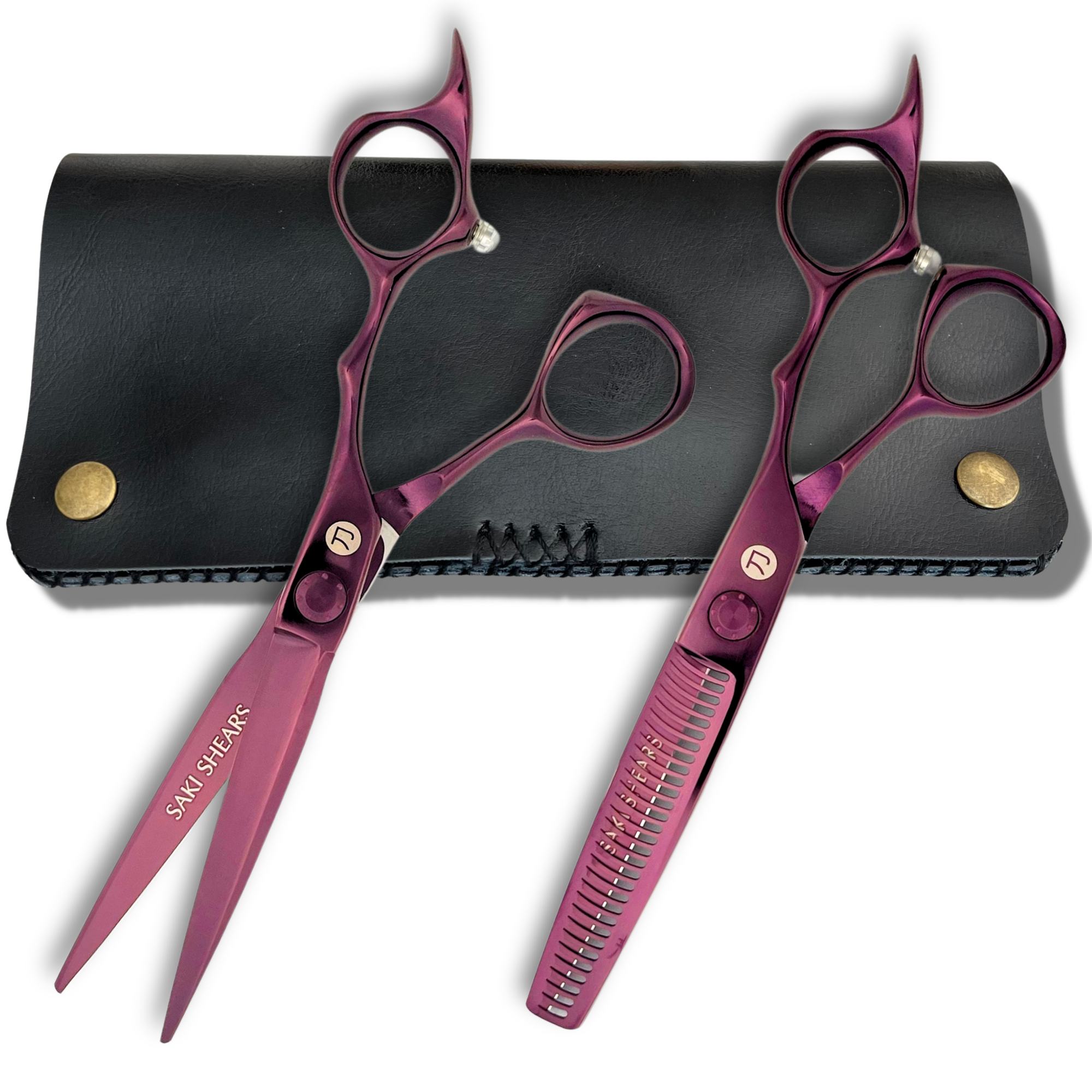
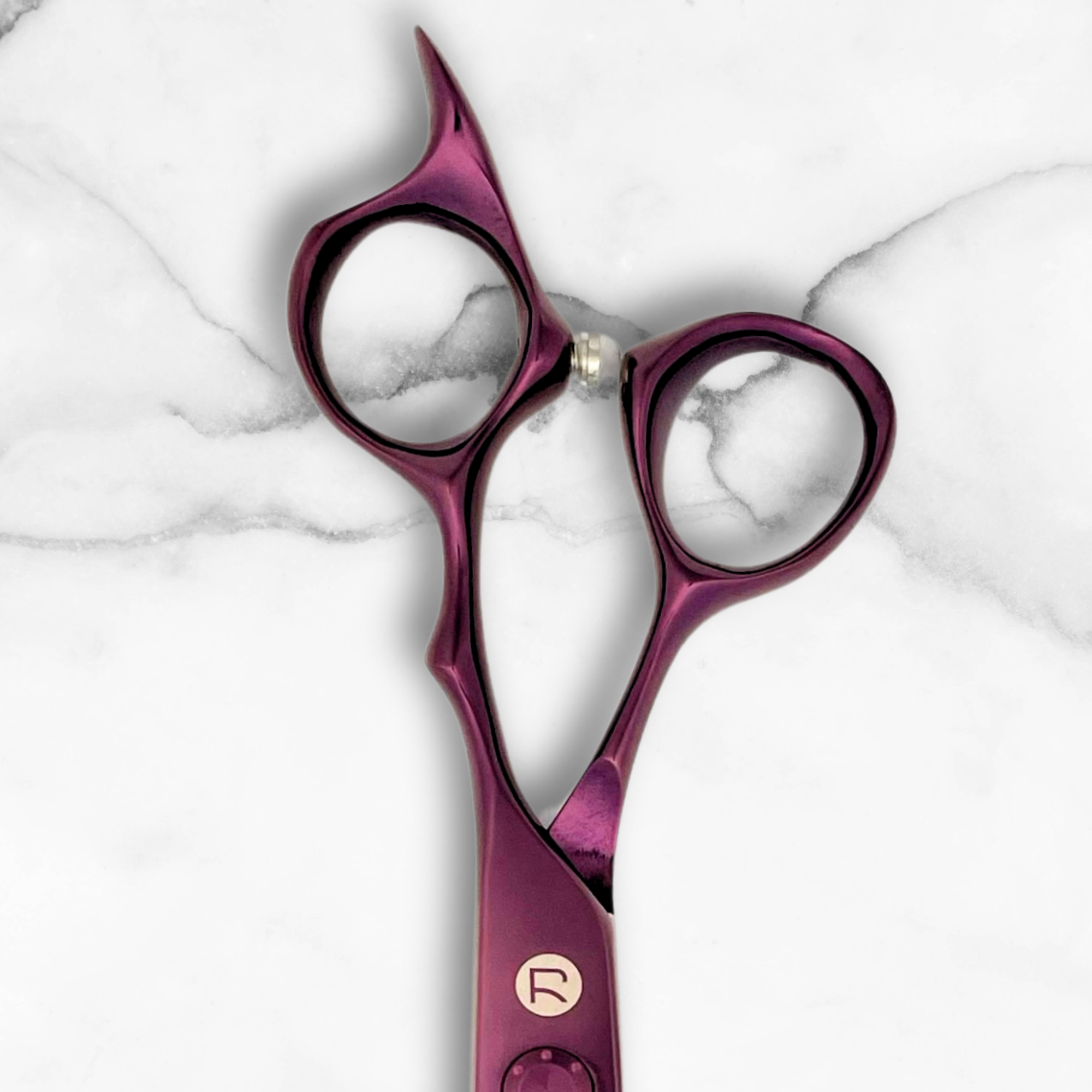
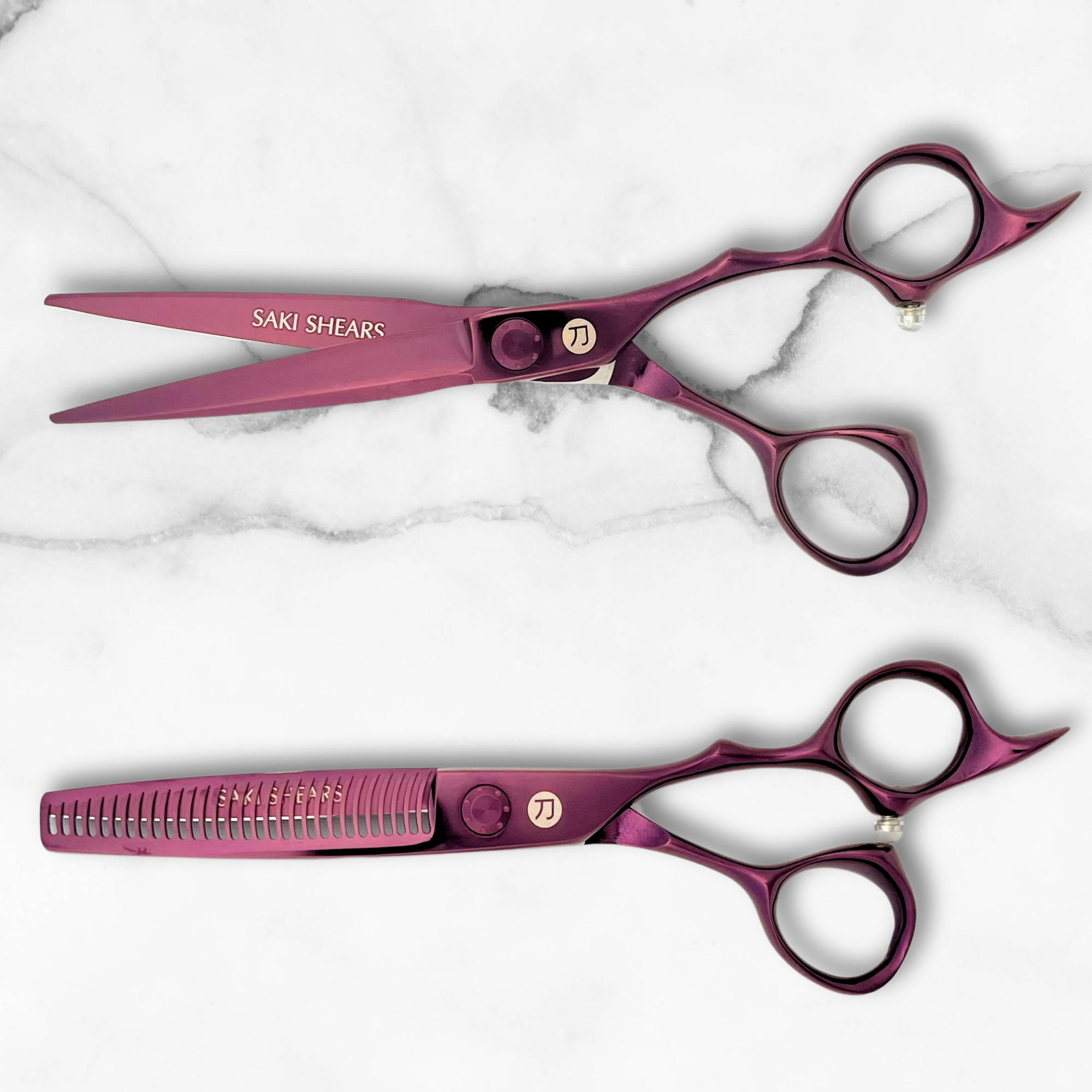
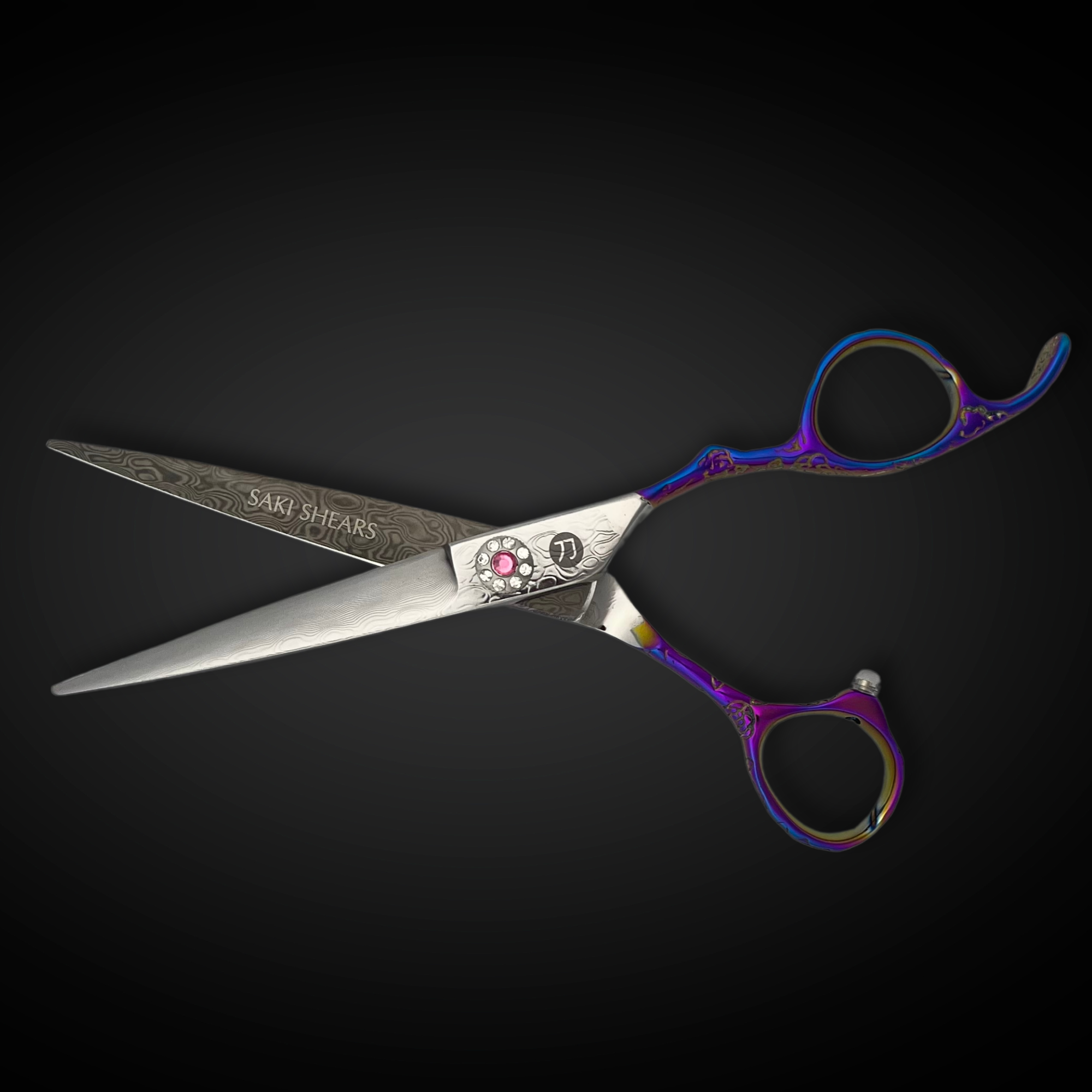
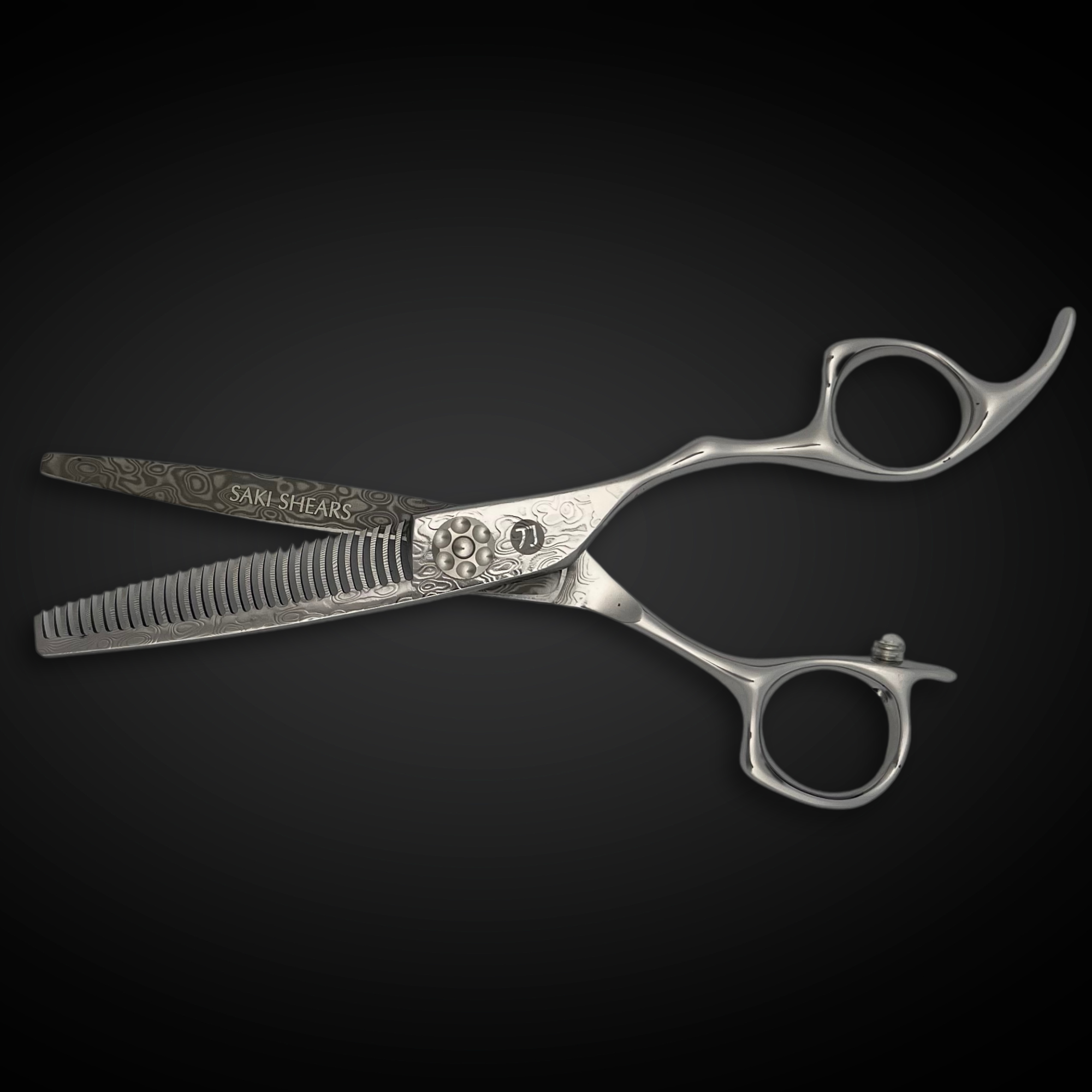
An offset handle drops the thumb ring below the finger ring rather than keeping them level. This lets your thumb sit in a lower, more relaxed position while your fingers stay higher, which in turn allows your wrist to stay closer to neutral instead of cocking upward. For stylists who cut with a fairly stable wrist position and rely more on finger and hand movement, offset handles are usually the most noticeable improvement over a straight handle.
Crane Handles
Crane handles extend the offset further, elongating the finger grip so the hand sits even lower relative to the blades. This shape is designed for stylists who like to keep their elbow down and close to the body while cutting, since it reduces how much shoulder and elbow lift is needed to keep the shear level. It's a more pronounced ergonomic shape than a standard offset, and it tends to suit stylists who already cut with a lower arm position.
Swivel-Thumb Handles
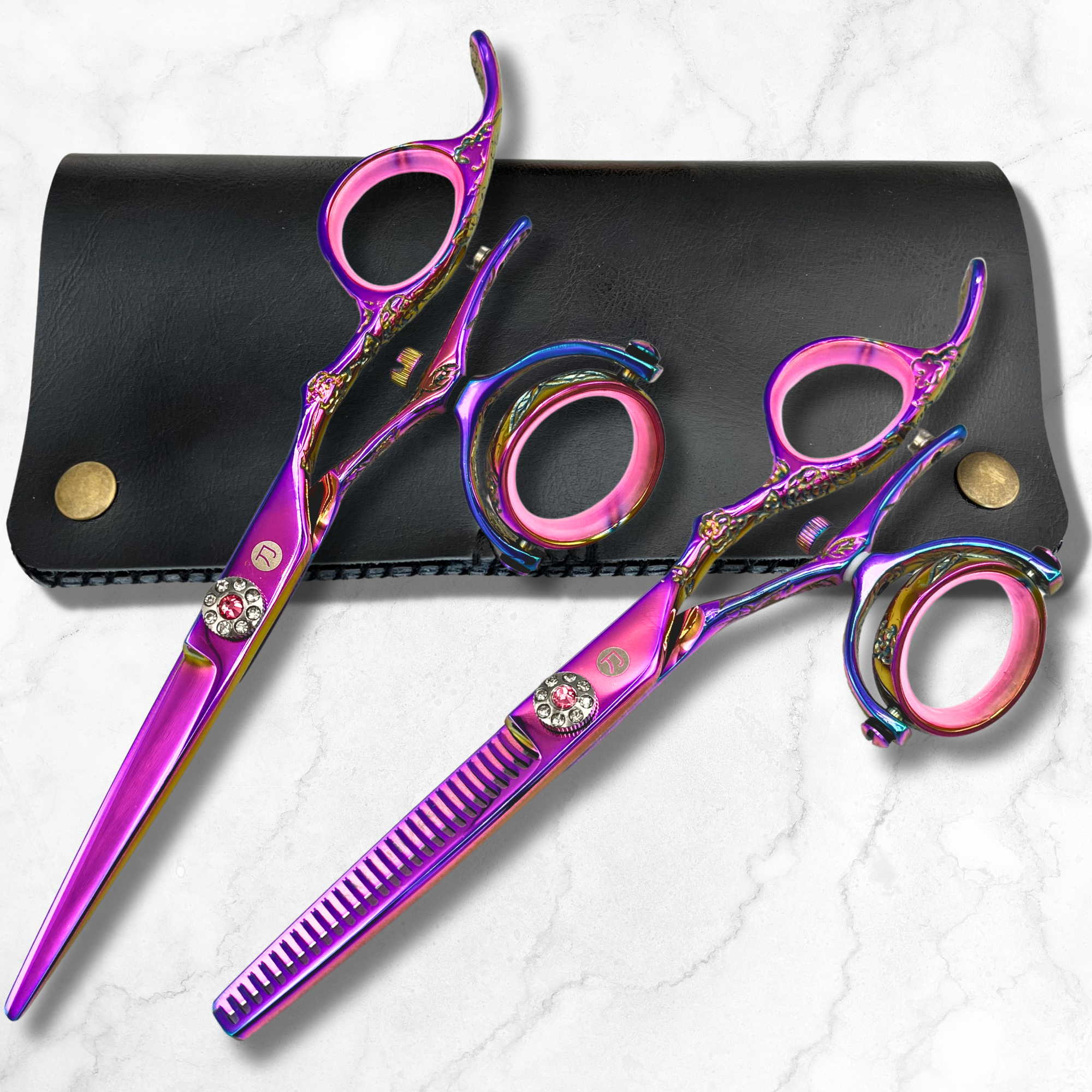
A swivel or rotating thumb ring pivots independently of the rest of the handle, so the thumb can rotate open and closed without forcing the whole wrist to twist along with it. This is particularly useful during techniques that involve a lot of rotation at the wrist, such as slide cutting or point cutting at different angles, where a fixed thumb ring would otherwise require repeated wrist rotation. Some stylists find a swivel thumb takes a short adjustment period, since the thumb ring has more independent movement than they're used to. For the furthest point on that spectrum, see our full look at swivel-thumb shears and carpal tunnel risk.
What This Means Over a Full Day of Cutting
The practical value of these designs is cumulative, not immediate. On any single cut, the difference between a straight handle and an offset or crane handle is small. Multiply that by hundreds of cuts across a full shift, and the reduced wrist extension and lower elbow position can mean noticeably less hand and forearm fatigue by the end of the day. This is a matter of reducing repetitive strain on the muscles and tendons you use constantly, not a guarantee against any specific injury or condition — if you're already experiencing pain, numbness, or ongoing discomfort in your hand or wrist, that's worth discussing with a doctor or physical therapist rather than solving with a handle swap alone.
Finding the Right Fit
Ergonomic handles aren't one-size-fits-all. Hand size, grip style, and the techniques you use most all influence which shape actually feels better in your hand. Where possible, hold a shear before committing, and don't assume that the most offset or most elaborate handle is automatically the best choice for you — a moderate offset is often the right starting point if you're used to a traditional handle and adjusting for the first time.
Explore Ergonomic Options
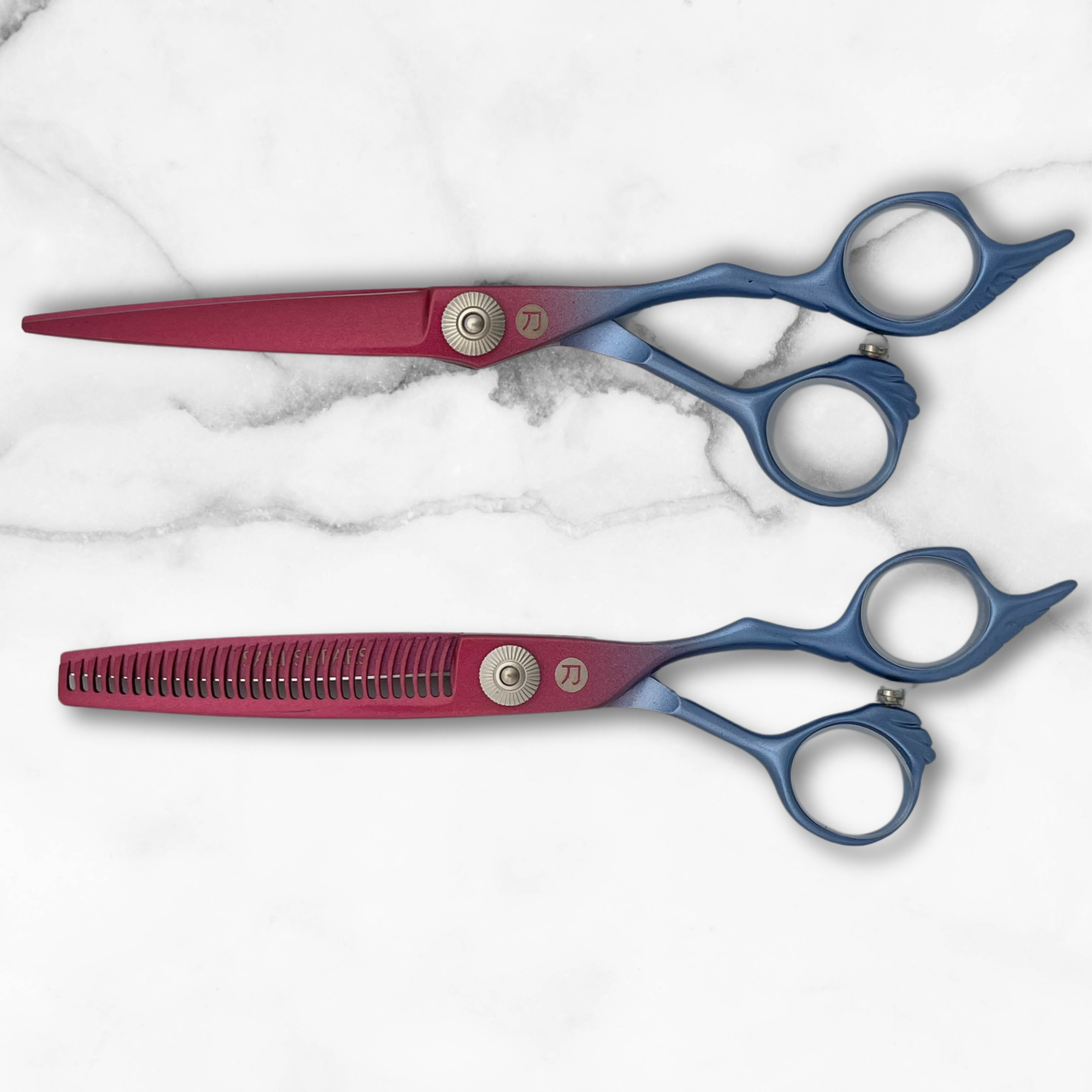
Browse our full range of hair-cutting shears to compare offset, crane, and swivel-thumb handle styles, or look at our shear sets if you want matching cutting and thinning shears built around the same ergonomic handle.

Written by Charles Harris