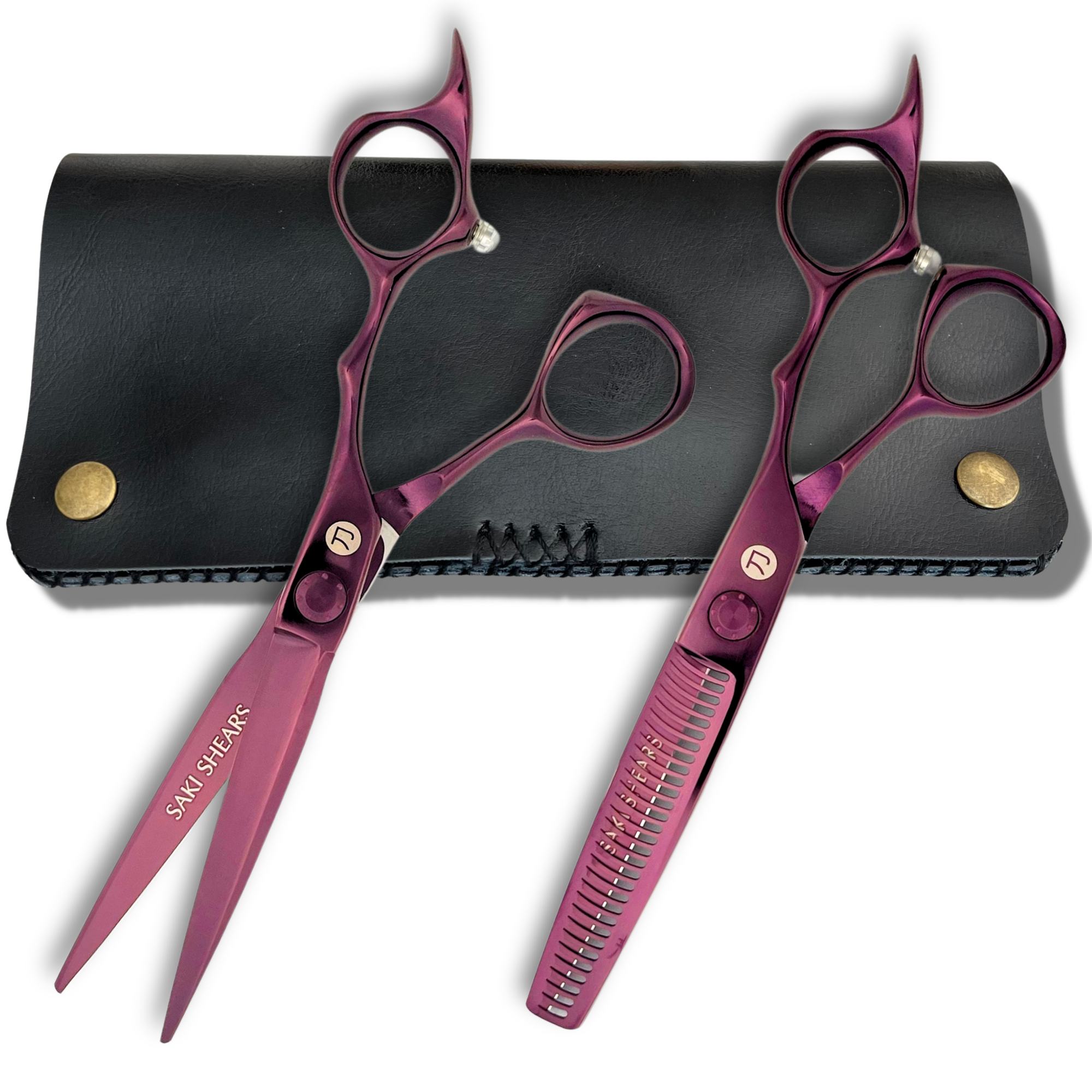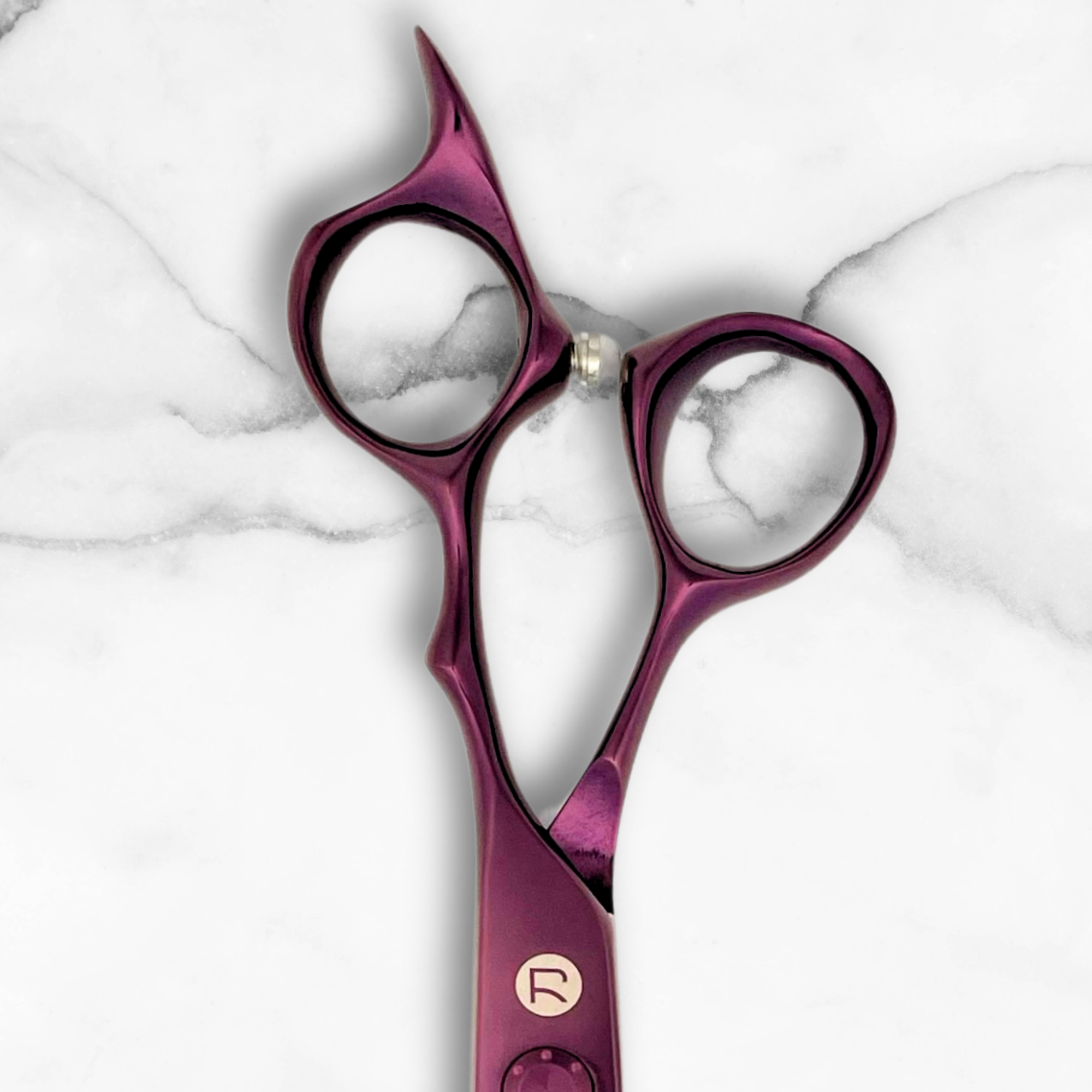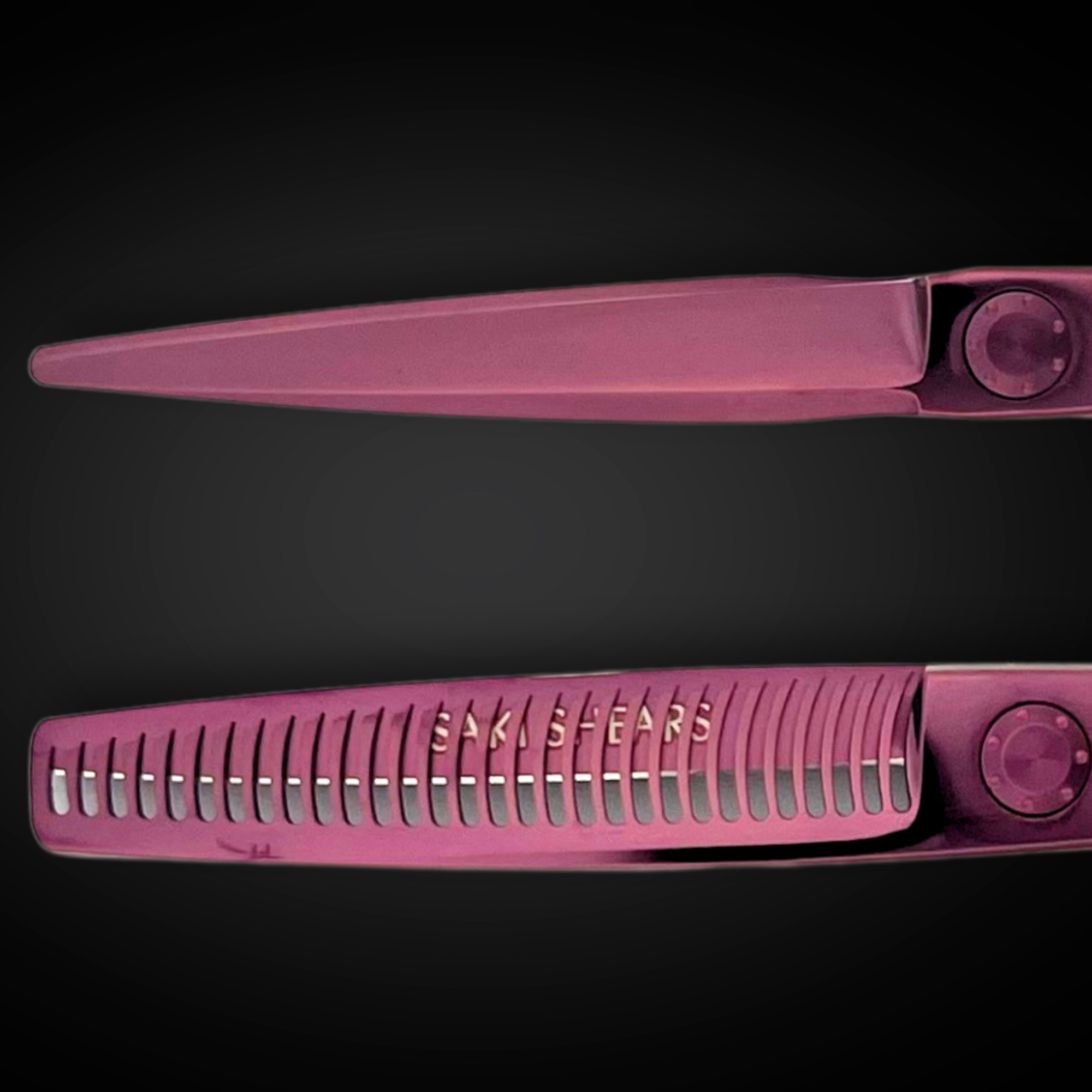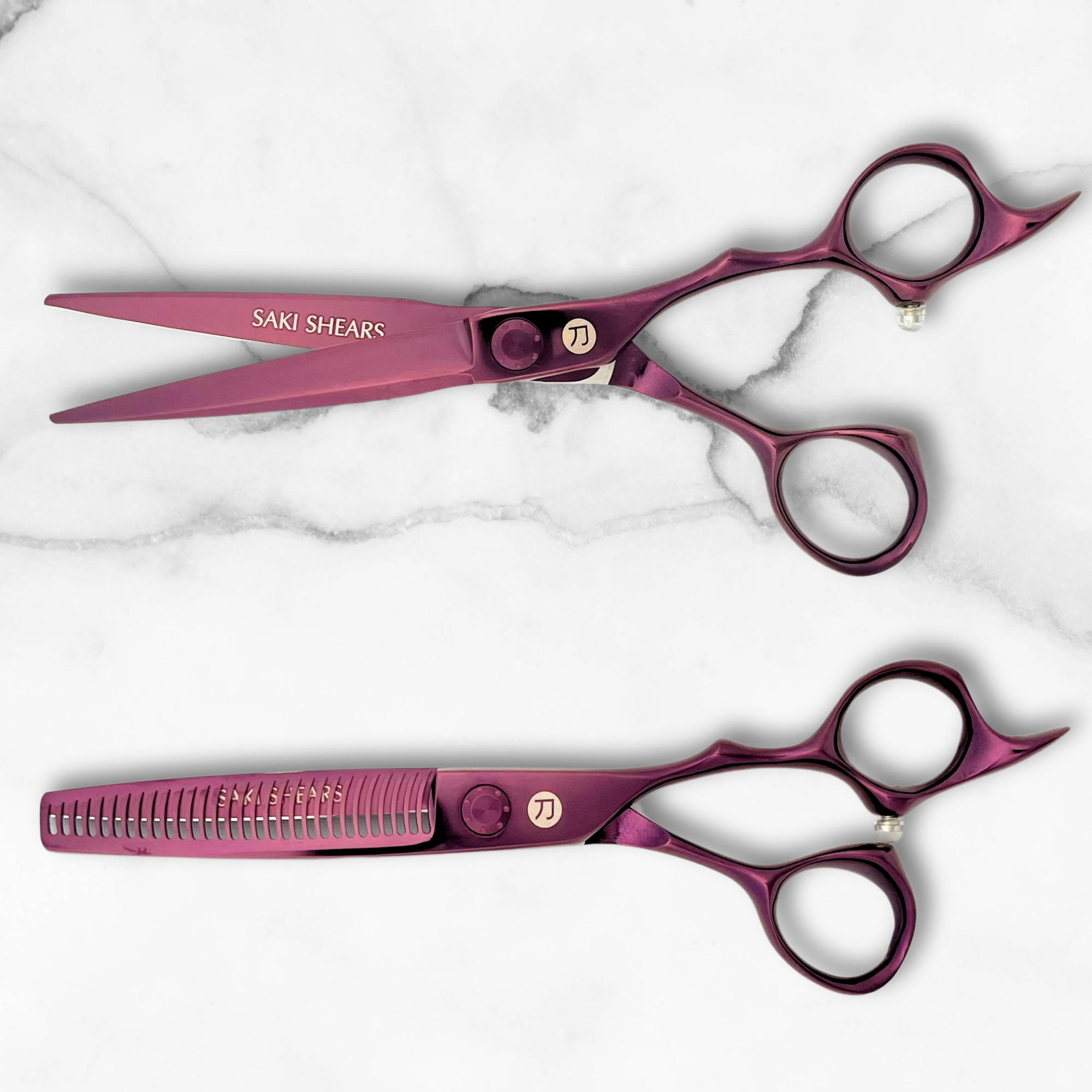
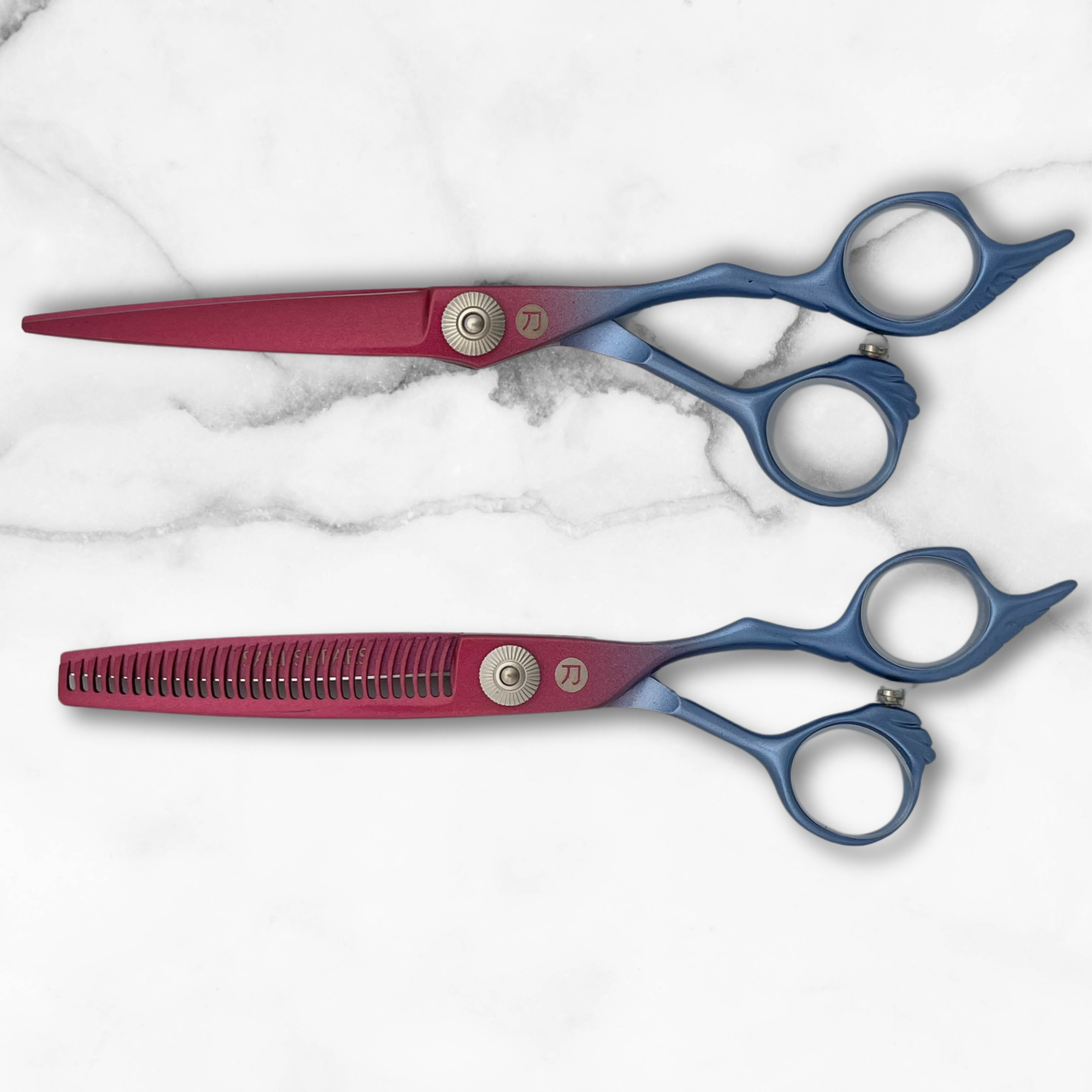
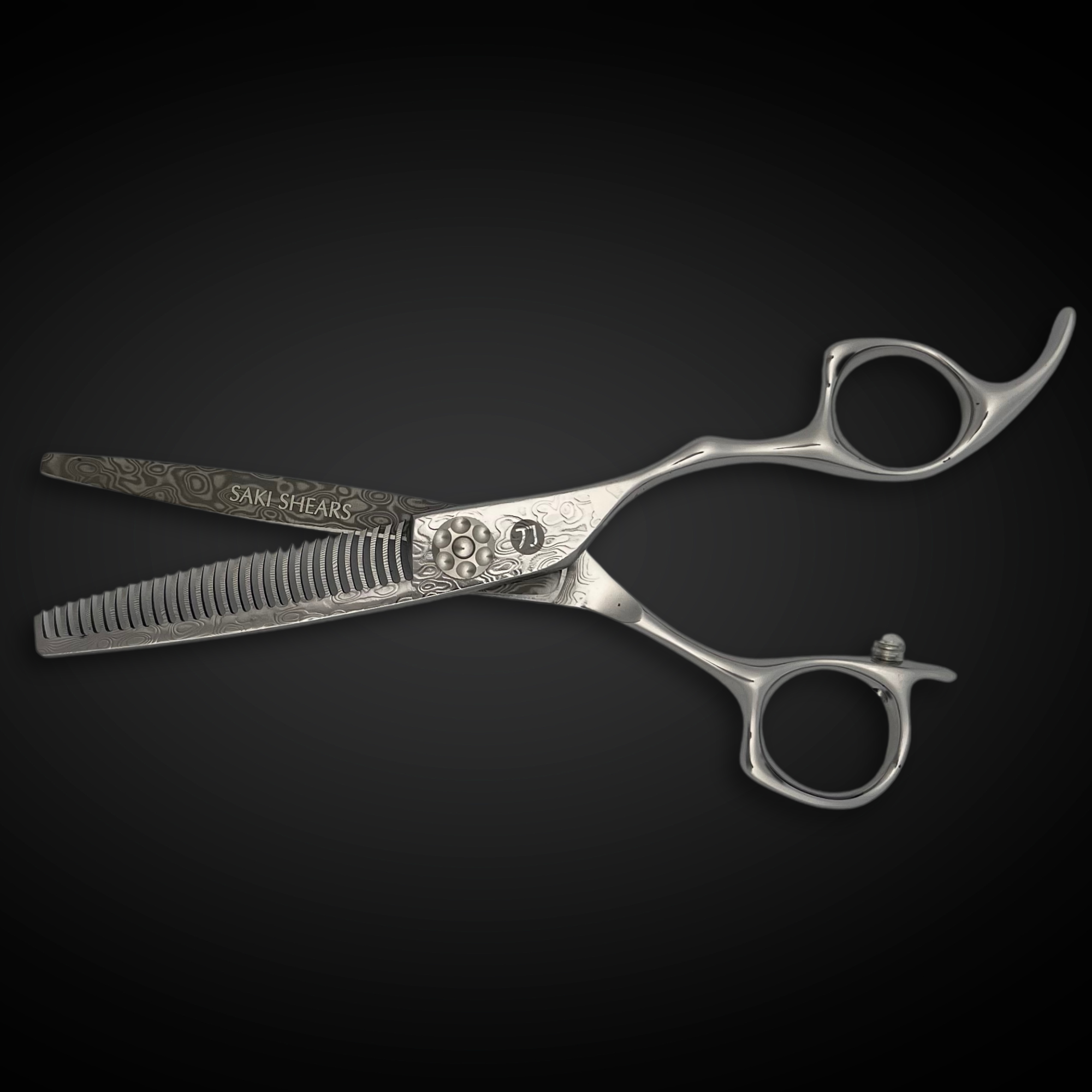
Saki Koten: What It Means to Own a Shear That's Hand-Forged in Japan
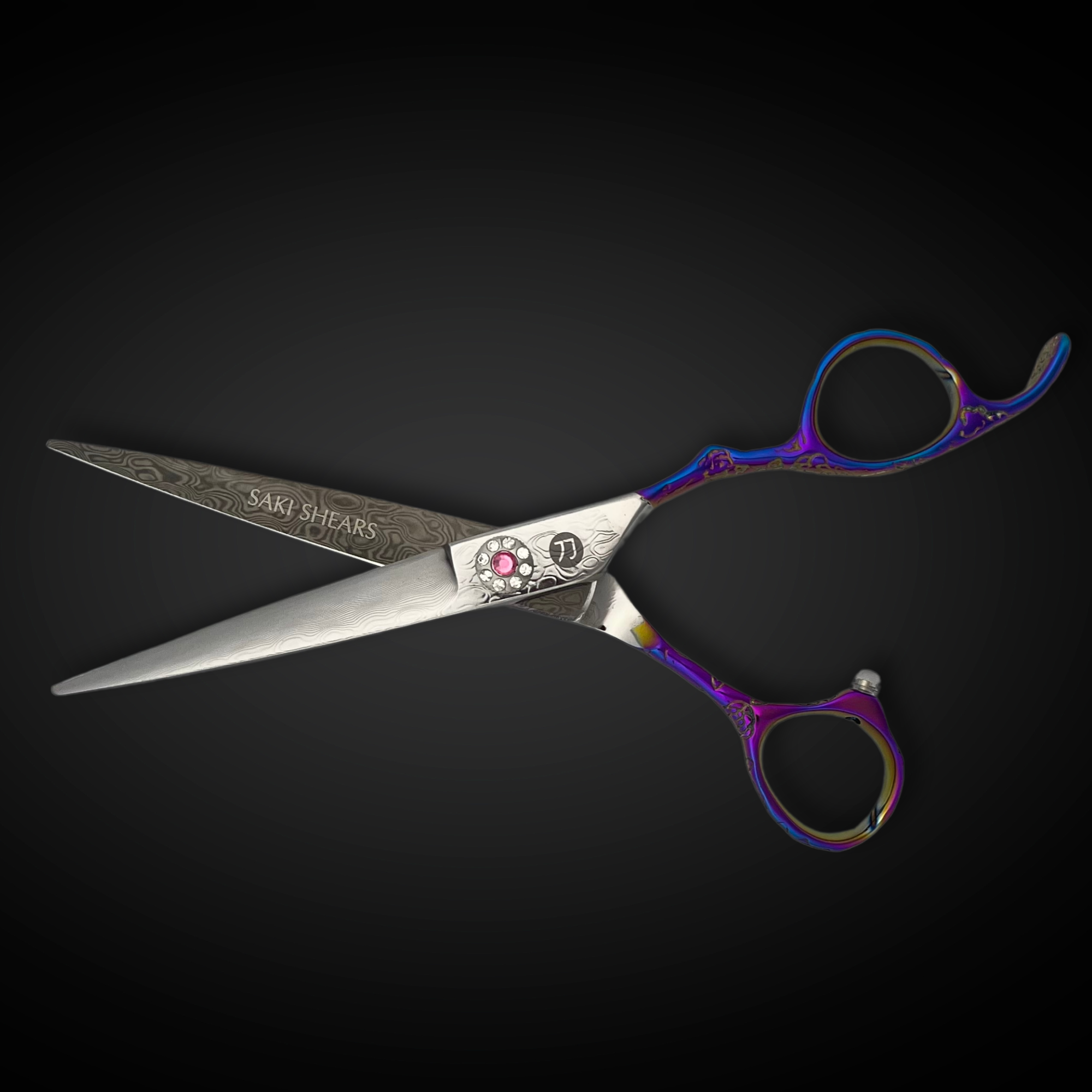
For years, stylists have relied on Japanese steel for its sharpness, edge retention, and reliability. Walk into any professional salon and you'll find shears forged from 440C, VG-10, or ATS-314 — steel grades developed in Japan and trusted by hairdressers worldwide. But there's an important distinction that often goes unnoticed: the difference between shears made with Japanese steel and shears made in Japan. The Saki Koten is our first line to bridge that gap — hand-forged and entirely manufactured in Japan.
Every pair comes from a tradition of blade-making that stretches back centuries — the same techniques and the same relentless pursuit of precision that once produced katanas for samurai. This article breaks down what that actually means for the shears you hold in your hand, and why it matters for the work you do behind the chair. If you're still choosing a set of Japanese hair shears, understanding the manufacturing origin is one of the most important factors to consider.
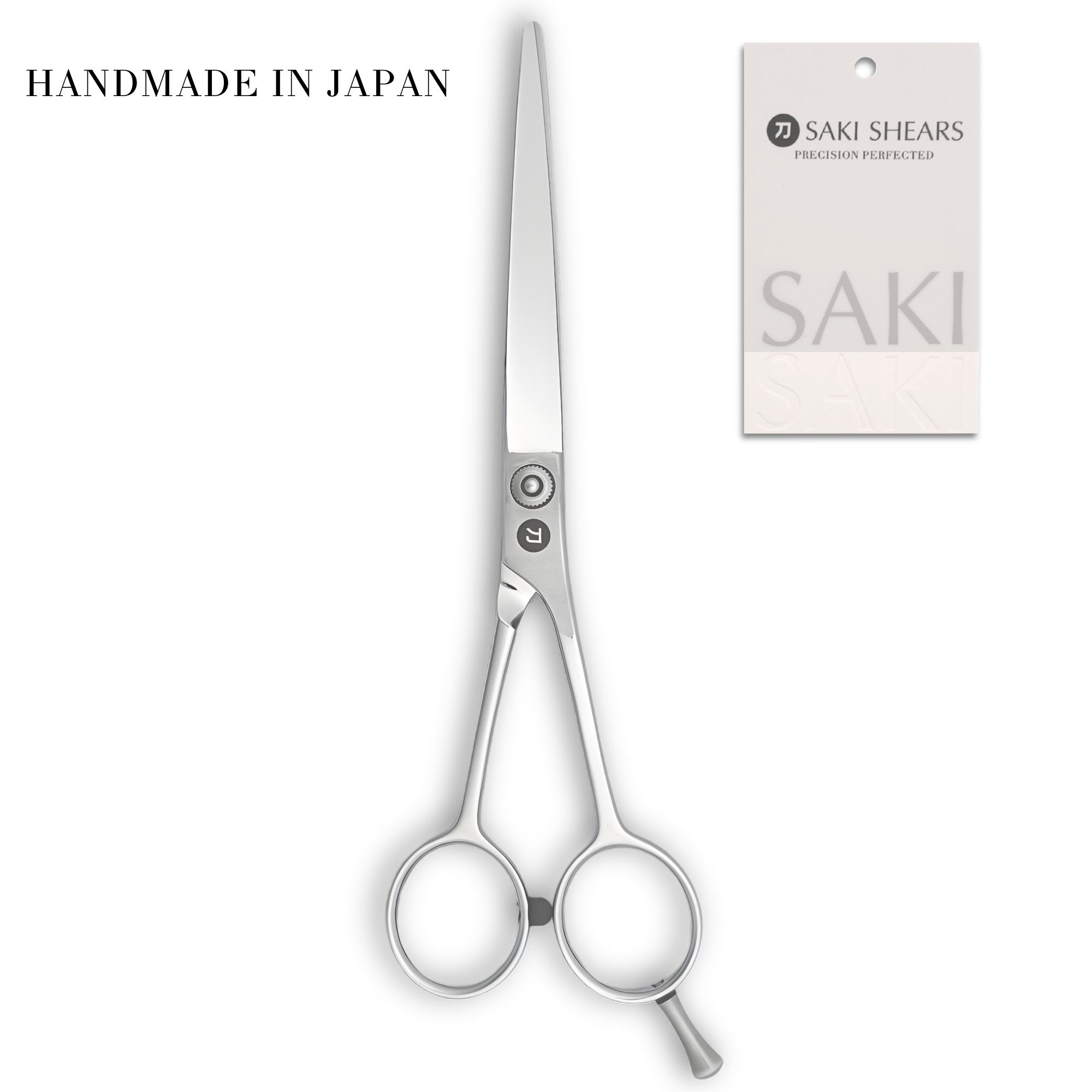
What "Hand-Forged in Japan" Actually Means
Most professional shears on the market today — even good ones — are manufactured using a process called stamping. A flat sheet of steel is cut into a blade shape using a die, then ground and finished. It's efficient and produces consistent results, which is why most brands use it.
Hand-forging is fundamentally different. The steel is heated — not to its melting point, but to a temperature where it becomes workable — and then repeatedly struck and shaped by a craftsman. This cycle of heating, striking, and cooling alters the molecular structure of the metal itself, creating a denser grain pattern than stamped steel can achieve. That density translates directly into edge retention: hand-forged blades hold a sharper edge longer because the steel is structurally tighter at the microscopic level.
Japan's blade-making regions — Seki City in Gifu Prefecture, Sanjo in Niigata, Nara — have been refining these techniques for centuries. Seki alone has over 800 years of continuous blade production, dating back to the 13th century when master swordsmiths settled there for its cold river water (essential for quenching), iron sand deposits, and abundant charcoal. When Japan's 1871 Haitorei Edict banned carrying swords, many of these master craftsmen pivoted to producing cutting tools — including hair shears.
The Saki Koten is a direct descendant of that lineage. Each pair goes through a multi-step forging process that includes repeated heating and striking cycles, precision heat treatment, hand-grinding of the blade geometry, individual tension adjustment, and multiple cutting tests before the shears leave the workshop. Japanese manufacturers producing shears at this level use 90 to 120+ individual steps per pair, with over 40% of production time dedicated to hand-finishing alone.
The Steel: A Proprietary Super Stainless Alloy
The Koten is forged from what Saki Shears calls a Super Stainless Alloy — a proprietary Japanese steel formulation engineered specifically for hair shear performance. To understand why this matters, it helps to know how professional shear steels are typically graded using the Rockwell hardness scale (HRC).
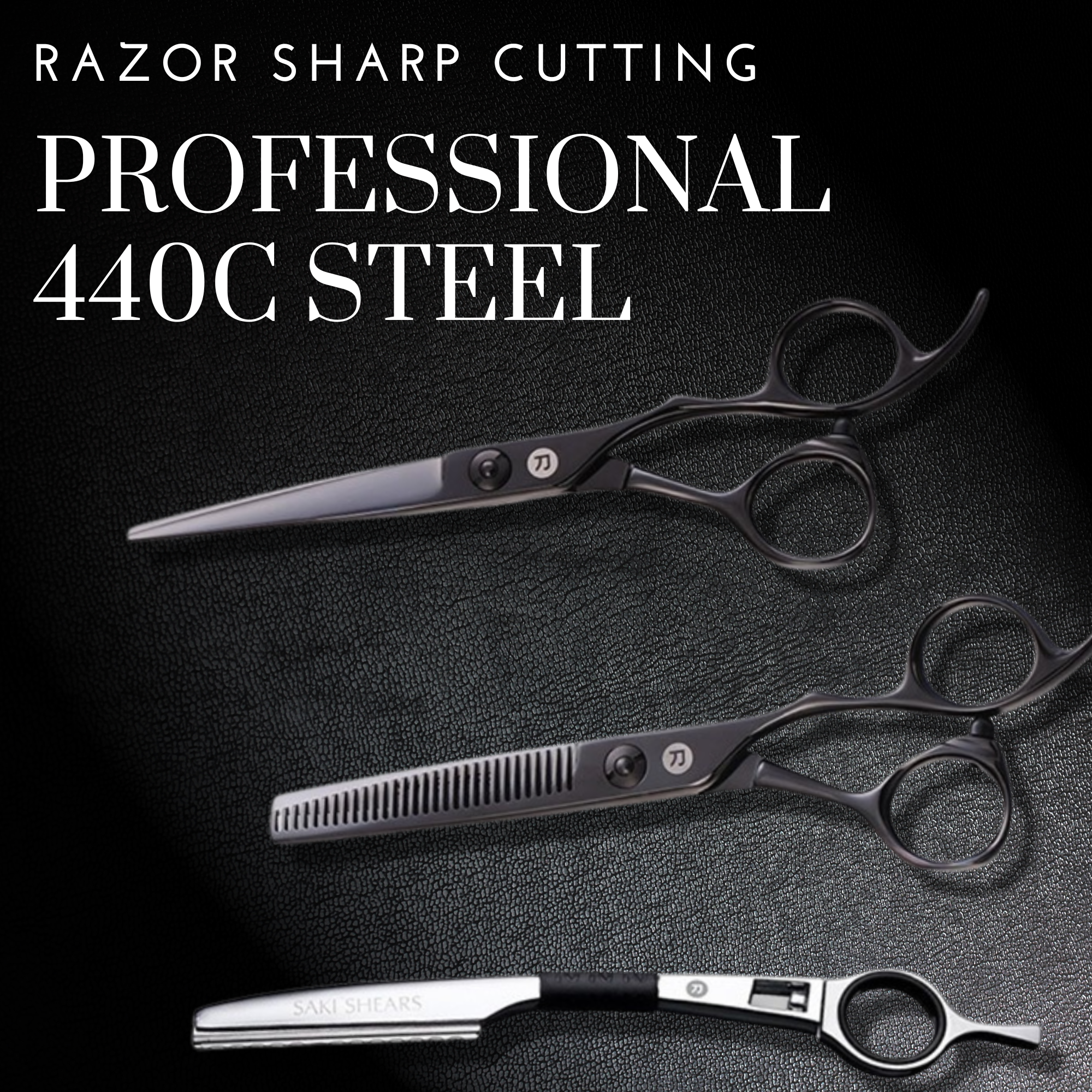
Most stylists are familiar with 440C, the workhorse of the professional shear world. It's a solid Japanese stainless steel that achieves a Rockwell hardness of around 58-59 HRC. It takes a good edge, holds it reasonably well, and is relatively easy to sharpen. For many working stylists, 440C is the right balance of performance and value — it's the steel used in popular models like the Saki Katana.
A step up from 440C is VG-10 — sometimes called "Super Steel" in the industry. Originally developed for Japanese chef knives, VG-10 adds cobalt to the alloy, which pushes hardness to 60-62 HRC. The result is noticeably better edge retention. A VG-10 blade will stay sharp meaningfully longer than 440C before needing professional sharpening, which matters when you're cutting 30-40 heads a week.
Beyond VG-10, you get into premium alloys like ATS-314, which incorporates higher levels of cobalt, titanium, and vanadium. These steels can reach 59-64 HRC and offer the best edge retention of any standard shear steel — but they also cost more and are more demanding to manufacture properly. You'll find ATS-314 in shears like the Dotanuki Damascus, where the steel is layered for both performance and aesthetics.
The Koten's Super Stainless Alloy achieves around 60-62 HRC — comparable to VG-10 in hardness, but that number alone doesn't tell the full story. What sets the Koten apart isn't where it lands on a hardness chart. It's how the steel is worked. A proprietary formulation balances hardness for edge retention, toughness to resist chipping (critical with convex blade geometry), chromium content for corrosion resistance in a wet salon environment, and the ability to be resharpened without specialized equipment. The real advantage comes from the hand-forging process itself: the repeated heating and striking cycles create a denser, more uniform grain structure than you'd get from the same alloy in a stamped blade. That density is what gives the Koten its edge-holding characteristics — not just the steel grade, but what's done with it.
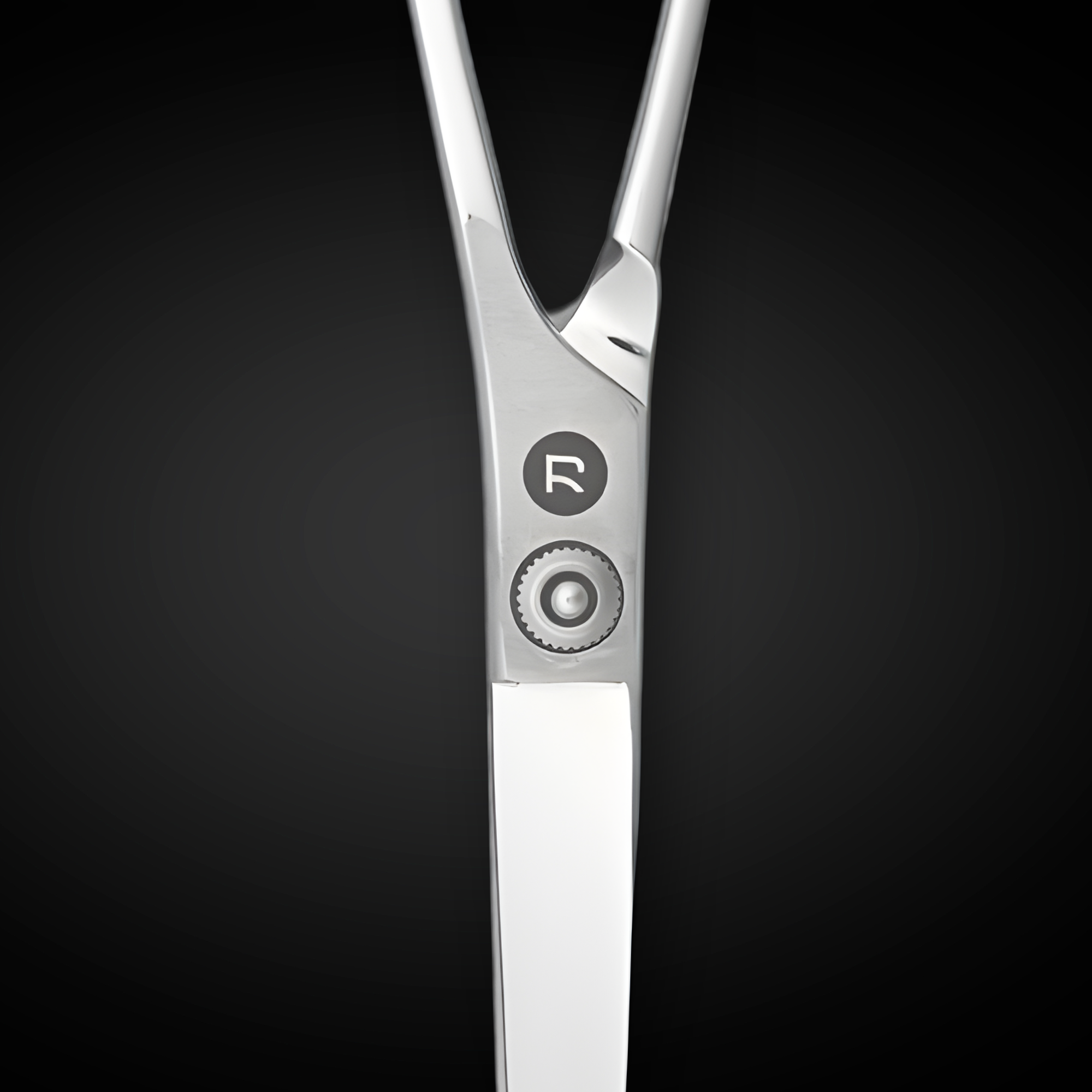

Why Manufacturing Location Matters — Not Just Steel Grade
Here's something worth understanding if you're shopping for professional shears: the vast majority of shears sold in the United States — including many that say "Japanese steel" on the box — are manufactured in China, Pakistan, or Korea. The steel formula might be identical to what's produced in Japan, but the manufacturing execution is not.
Steel composition is only part of the equation. The forging process, heat treatment, tempering, and hand-finishing all determine how that steel actually performs in your hand. A 440C blade that's been properly heat-treated in a Japanese workshop, hand-ground to the correct blade geometry, and individually tension-tested will cut differently than a 440C blade that was mass-produced overseas with less rigorous quality control.
The differences show up in specific ways. Edge retention is the most obvious — shears manufactured in Japan with proper heat treatment protocols (where temperature tolerances are controlled to within a few degrees Celsius) will hold their edge measurably longer. Blade alignment consistency is another factor: Japanese manufacturers hand-adjust the tension and alignment of each individual pair before it ships, which is why two pairs of the same model from a Japanese maker will feel virtually identical. And the convex blade geometry — which we'll discuss below — requires a level of grinding precision that's difficult to achieve at scale without experienced craftsmen.
This is what the Koten line represents: not just Japanese steel, but Japanese manufacturing from start to finish. The steel is sourced in Japan, forged in Japan, heat-treated in Japan, ground in Japan, assembled in Japan, and individually tested in Japan. There's no step in the process that happens elsewhere.
Convex Blade Geometry: What It Does for Your Cutting
The Koten features a convex blade edge — also known as a hamaguri edge, from the Japanese word for "clam shell," which describes the smooth, curved cross-section of the blade. This is the sharpest edge geometry possible on a hair shear, and it's the standard for professional Japanese shears for good reason.
Unlike a beveled edge (the standard on German-style shears), which has a flat, angled grind, a convex edge curves smoothly from the blade spine to the cutting edge. This curve means the blade slices through hair rather than pushing against it. The practical effect is significant: less hand pressure required per cut, cleaner separation of the hair strand (which reduces split ends and improves the final look), and the ability to perform techniques that beveled edges simply can't handle.
Slide cutting is the most notable example. When you draw a convex blade along the hair strand at an angle, it cuts smoothly without catching or grabbing. Try the same technique with a beveled edge and the blade will snag. This is why stylists who do a lot of texturizing, point cutting, or slide work almost universally prefer Japanese-style convex shears — the geometry makes these techniques possible in the first place. For more on choosing shears by technique, see our guide on the best shears for dry cutting.
The trade-off with convex edges is that they're more demanding to maintain. Because the edge is thinner and more precisely ground than a beveled edge, it can be more susceptible to micro-chipping if the shears are dropped or used improperly. Convex edges also require sharpening by someone who understands the specific radius and ride of the blade — a generic sharpening service that works for beveled shears can actually damage a convex edge. Our article on how to use shears without damaging blades covers the most common mistakes to avoid. Professional sharpening every 4-6 months (depending on use) keeps the Koten performing at its best.
That said, the hand-forged Super Stainless Alloy in the Koten is engineered to balance hardness with toughness specifically to address this concern. The steel is formulated to balance hardness and toughness — hard enough to hold an extremely sharp convex edge, but with enough give to resist the micro-chipping that can affect more brittle alloys. This balance is one of the practical benefits of the hand-forging process.
The Tension System: Super Soft Precision Control
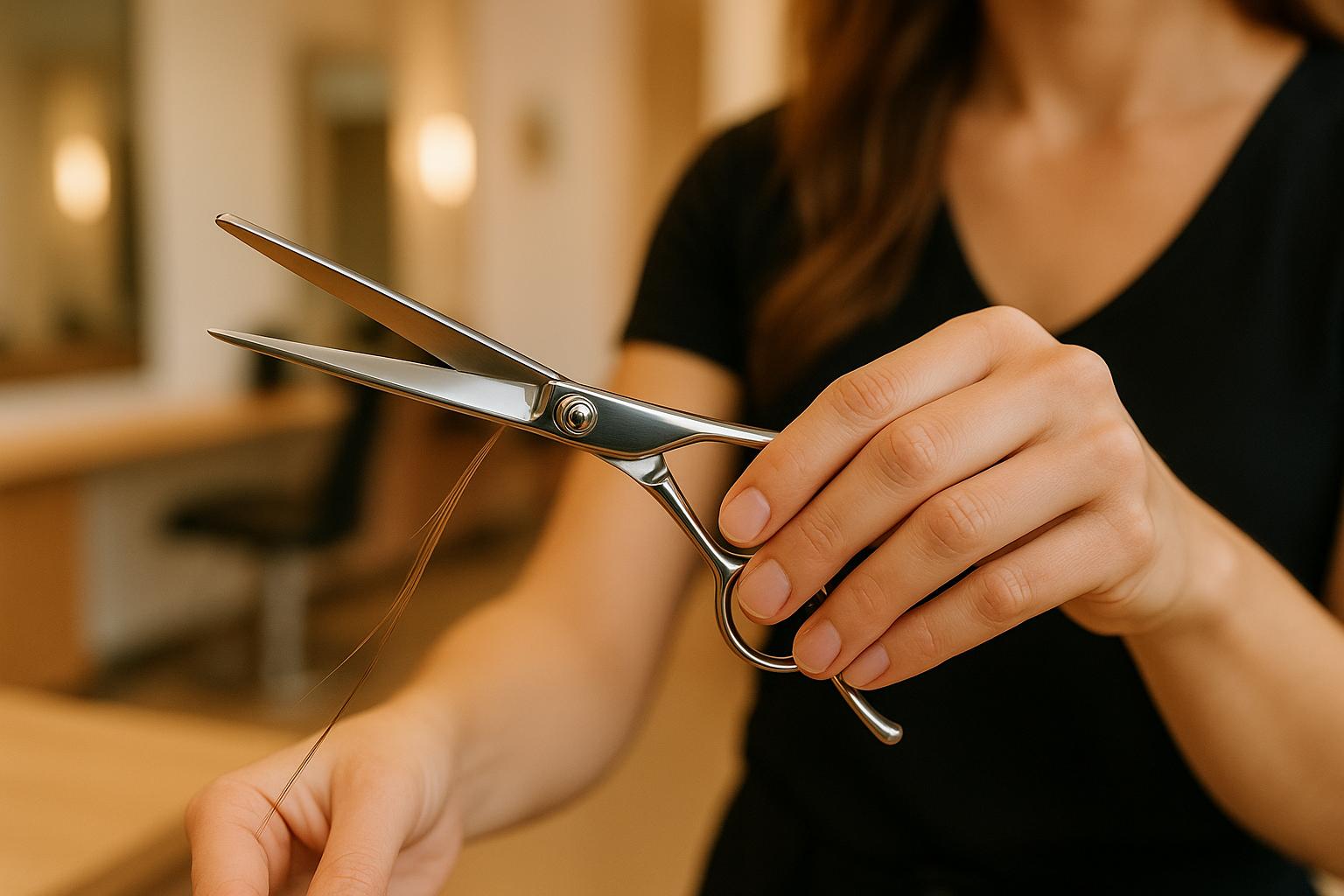
Tension adjustment is one of those details that separates a working professional's shears from an amateur's. Too tight, and you're fighting the blades with every cut — accelerating hand fatigue and blade wear. Too loose, and the blades separate during cutting, bending fine hair instead of slicing it cleanly. If you want a deeper dive into why this matters, read our article on how adjustable tension screws improve shear performance.
The Koten uses what Saki Shears calls a "super soft" precision tension control system. In practical terms, this means the adjustment mechanism is designed to allow fine, incremental tension changes with minimal effort. You can dial in exactly the right resistance for your cutting style — tighter for precision detail work, slightly looser for bulk removal — without needing tools or wrestling with a stiff screw.
Consistent tension also matters for the longevity of the shears. When tension is set correctly, the blades maintain proper contact along their full length, distributing wear evenly. Uneven tension causes localized friction points that accelerate blade degradation in specific areas, leading to inconsistent cutting performance and a shorter lifespan.
Sizing and Who the Koten Is For
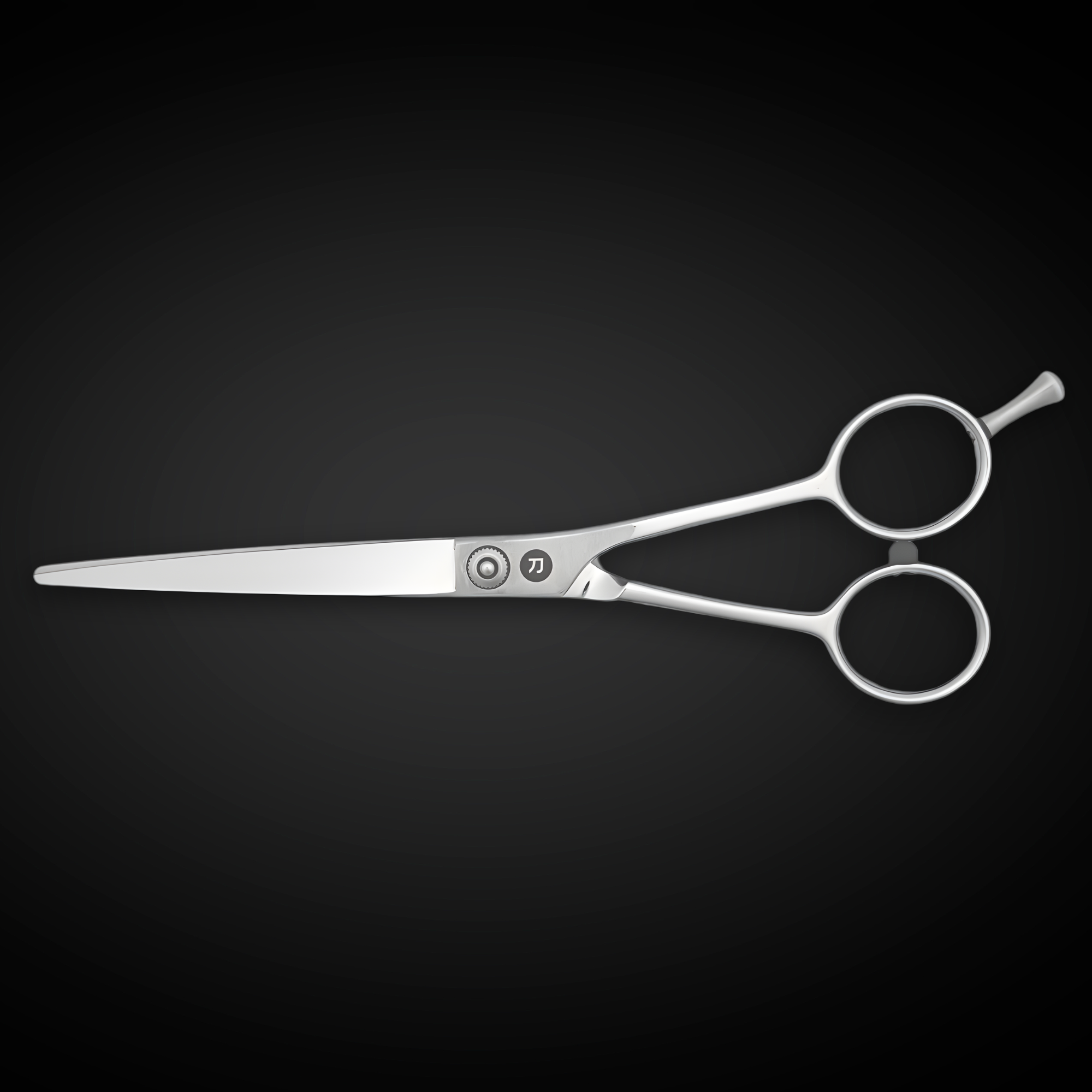
The Koten is available in four sizes: 5.0", 5.5", 6.0", and 7.0". This range covers virtually every cutting style and hand size. As a general guide, most women stylists find 5.5" to 6.0" most comfortable, while men and barbers often prefer 6.0" to 7.0" for scissor-over-comb work and longer cutting styles. The 5.0" is ideal for detailed, close-in work like around the ears and neckline. For a complete breakdown of how to match shear size and style to your needs, see our ultimate guide to choosing professional hair shears.
The Koten is designed for experienced stylists and barbers who want the performance characteristics of a true Japanese-made shear — the edge quality, the balance, the cutting feel — without crossing into the $600-$1,000+ territory that some Japanese brands occupy. At $399, it sits at a price point that's accessible to working professionals who use their shears 40+ hours a week and need tools that perform consistently under heavy daily use.
That said, this isn't a beginner's shear. The convex edge and the premium steel are engineered for professionals who understand how to maintain their tools — who know when to oil, when to adjust tension, and when to send shears out for professional sharpening. If you're still building your cutting fundamentals, a quality 440C shear like the Saki Makoto student set is a better starting place. But if you've been cutting for a few years and you're ready for a shear that responds to your technique rather than limiting it, the Koten is built for that transition.
Care and Maintenance
Hand-forged shears reward careful maintenance with years — even decades — of reliable performance. Corrosion is one of the biggest threats to any steel shear in a wet salon environment; our guide on how corrosion affects hair cutting scissors explains why this matters. Here are the essentials for keeping the Koten in working condition:
Daily: Wipe the blades clean after each client using a soft cloth. Hair product residue, moisture, and microscopic hair fragments accumulate on the blade surface and in the pivot area, creating friction that affects cutting performance and accelerates wear.
Weekly: Apply a drop of shear oil (or light machine oil) to the pivot screw area. Open and close the shears a few times to distribute the oil evenly. This keeps the action smooth and prevents corrosion in the joint — the most vulnerable area on any pair of shears.
Monthly: Check the tension using the drop test. Hold the shears vertically with the tips pointing up, open one blade to about 90 degrees, and let it fall under its own weight. It should close smoothly and stop around the 45-degree mark. If it slams shut, the tension is too loose. If it barely moves, it's too tight. Adjust as needed.
Every 4-6 months: Send your shears for professional sharpening by someone experienced with convex blade geometry. This is not optional — even the best steel dulls with use, and convex edges require a specific sharpening technique (flat-hone) to maintain the correct radius. A bad sharpening job can damage the blade geometry permanently, so choose your sharpener carefully. You can test your edge between sharpenings using a hair shear sharpness tester.
What Comes with the Koten
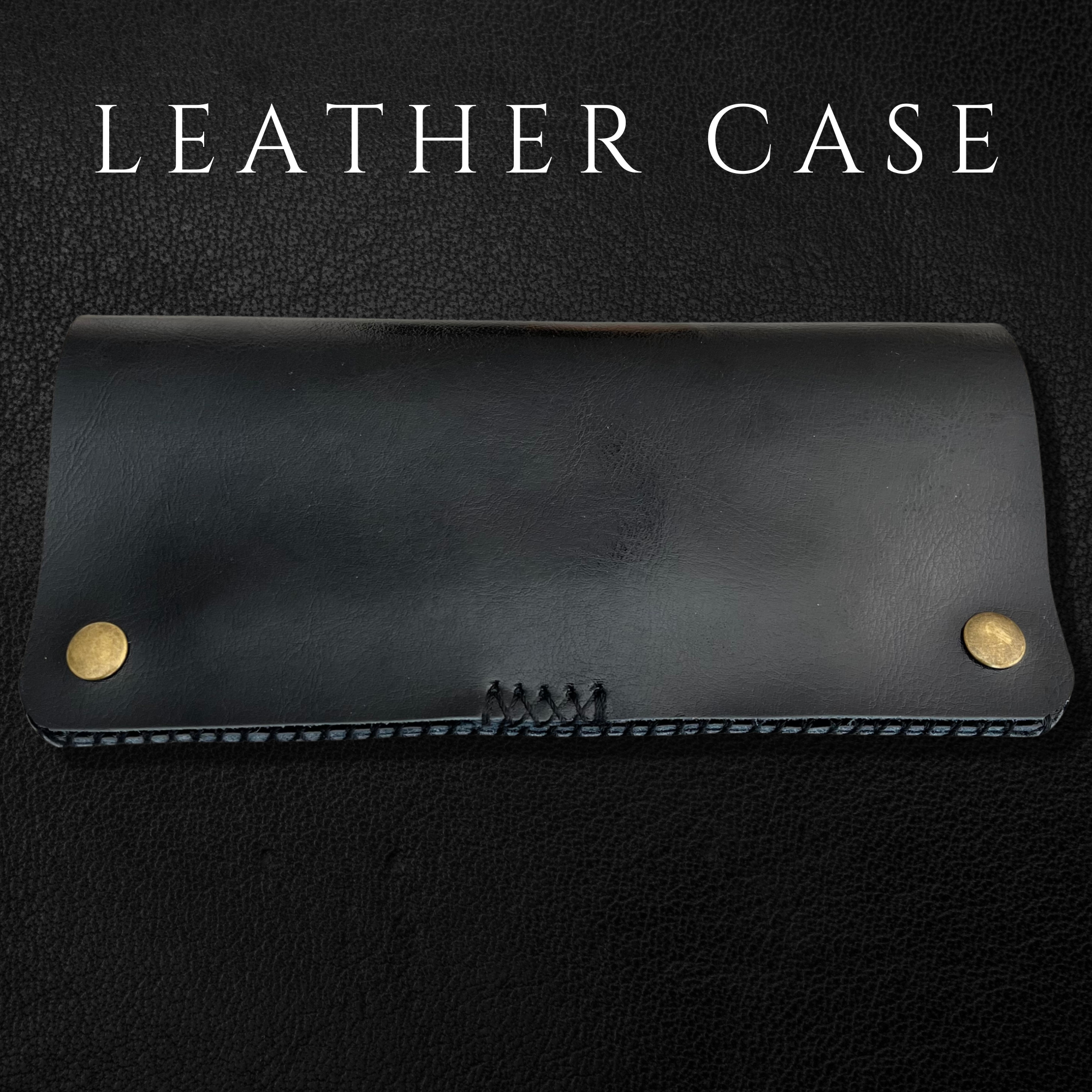
Each pair of Saki Koten shears ships with a leather carrying case for protection and transport. For more on proper storage, see our guide on the best cases for storing hair cutting tools. The shears are covered by the Saki Shears Lifetime Warranty against manufacturing defects, with free shipping and free returns across the United States.
FAQs
What makes the Saki Koten different from other Saki Shears models?
The Koten is entirely hand-forged and manufactured in Japan — every step of the process, from steel sourcing to final quality testing, happens in Japan. The hand-forging process creates a denser, more consistent grain structure than stamped production methods, and every pair is individually hand-finished and tension-adjusted by Japanese craftsmen.
How often do the Koten shears need to be sharpened?
For professionals cutting full-time (30-40+ clients per week), professional sharpening every 4-6 months is recommended. The hand-forged Super Stainless Alloy holds its edge well between sharpenings thanks to the denser grain structure achieved through the forging process. Always use a sharpener experienced with convex blade geometry.
Which size should I choose?
Most stylists find 5.5" or 6.0" to be the most versatile. If you do a lot of detail work around ears and necklines, consider the 5.0". For scissor-over-comb work, longer styles, or if you have larger hands, the 7.0" gives you more reach and leverage. Comfort is the most important factor — the shears should feel balanced and natural in your hand.