Saki Katana Hair Shears Review: Why Stylists Choose 440C Japanese Steel
When professionals talk about reliable, day-in-day-out cutting shears, the Saki Katana hair cutting shears come up more often than almost any other model in the mid-range professional category. Priced at $199 and built from Japanese 440C stainless steel, the Katana has earned a reputation as a workhorse shear that performs well above its price point. But what actually makes 440C steel such a popular choice among working stylists, and does the Katana deliver on the promises that come with Japanese-forged blades?
After examining the Katana’s construction, steel composition, edge geometry, and ergonomic design, this review breaks down exactly what you’re getting — and who this shear is best suited for.

Understanding 440C Japanese Stainless Steel
The steel in a pair of hair shears determines almost everything about how they cut, how long they stay sharp, and how they feel in your hand over an eight-hour day. The Saki Katana uses 440C stainless steel — a high-carbon chromium steel that has been a mainstay in Japanese shear manufacturing for decades. According to the ASM International materials database, 440C contains approximately 1.0% carbon and 17% chromium, which gives it an unusual combination of hardness, corrosion resistance, and the ability to take an extremely fine edge.
What matters to stylists is what those numbers translate to in practice. The Katana’s 440C blades are heat-treated to a Rockwell hardness of 59–61 HRC. That range is significant — it’s hard enough to hold a sharp edge through hundreds of haircuts, but not so hard that the blades become brittle or difficult to sharpen. For context, many entry-level shears use softer steels in the 54–56 HRC range, which means they dull faster and require more frequent professional sharpening. On the other end, some ultra-premium shears push into the 62–64 HRC territory, which can make them feel slightly more rigid during cutting and require a specialist sharpener.
If you’re weighing 440C against higher-end steel options like VG10 cobalt steel (which you’ll find in the Saki Gold hair shears), the trade-offs are straightforward. VG10 holds an edge slightly longer and can be sharpened to a finer degree, but 440C is more forgiving during day-to-day use and costs less to maintain. For a deeper comparison of these steel types, our guide to hair shear steel types covers the metallurgy in detail.
How 440C Compares in Real-World Salon Conditions
Numbers on paper are one thing. What actually happens when you’re cutting through thick, color-treated hair at 6 PM after a full day of clients is another. The 440C steel in the Katana handles these real-world conditions well because of how it responds to the types of stress that professional cutting creates. Wet hair puts different demands on a blade than dry hair — water acts as a lubricant but also creates more drag across the cutting surface. The Katana’s 440C blades maintain consistent cutting pressure whether you’re doing a wet precision cut in the morning or dry-cutting bangs as your last appointment of the day.
Corrosion resistance is another practical consideration. Stylists work with water, chemical treatments, and various styling products throughout the day. The 17% chromium content in 440C creates a passive oxide layer on the blade surface that resists the corrosive effects of these substances. This doesn’t mean maintenance is optional — you should still wipe your blades between clients — but it does mean that occasional exposure to hair color, perm solution, or sanitizing spray won’t pit or degrade the cutting edge the way lower-chromium steels can.
Blade Design: Convex Edge and Hollow-Ground Geometry
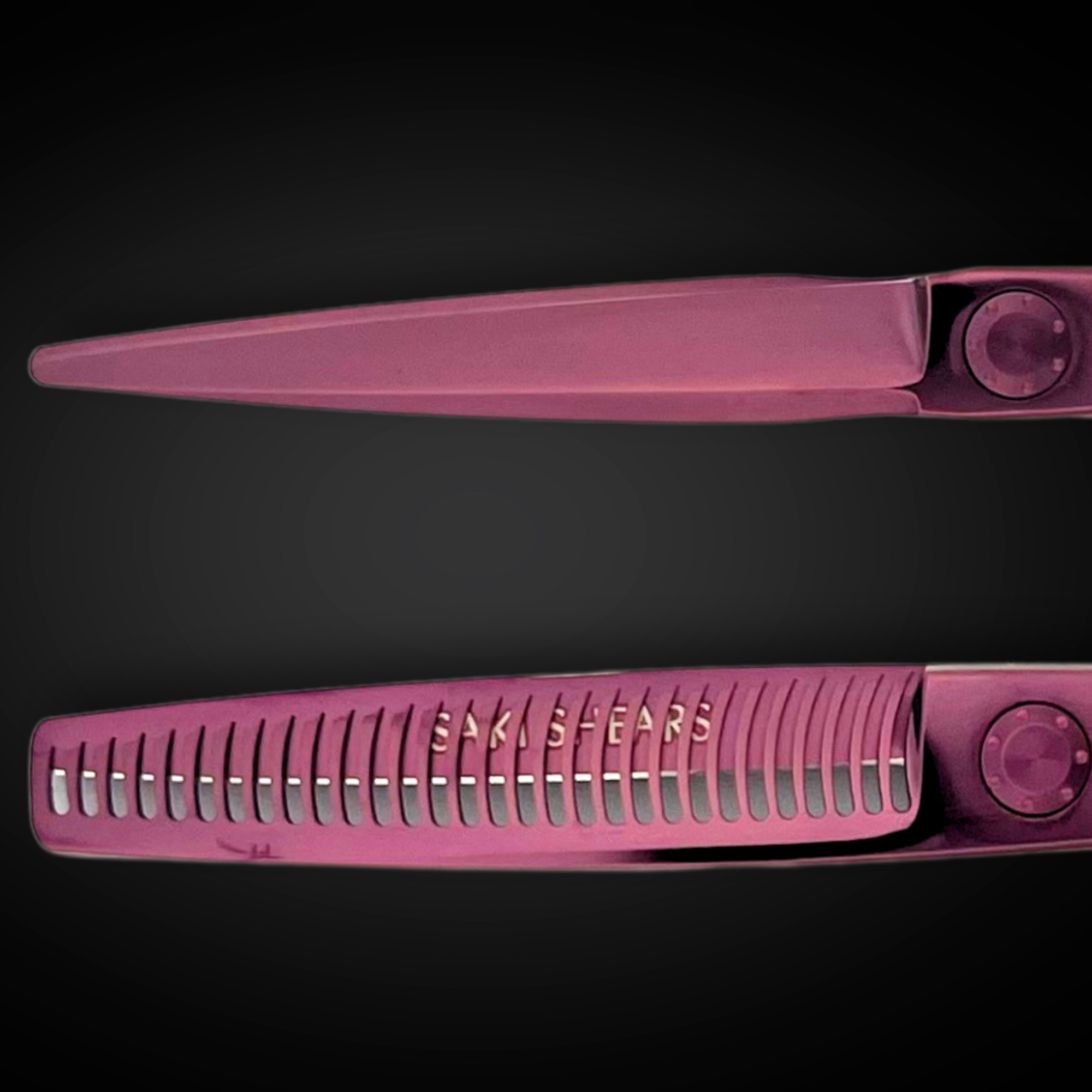
The Katana features a convex edge — the same blade geometry used in traditional Japanese cutting instruments. Unlike beveled edges, which create a V-shaped cutting surface, a convex edge curves smoothly from the blade body to the cutting line. This design allows the blade to glide through hair rather than pushing against it, which produces a cleaner cut with less hair displacement.
For stylists who do a lot of blunt cutting, wet cutting, or dry cutting, this matters. A convex edge reduces the force required per cut, which means less fatigue over a full day of clients and less damage to the hair cuticle. The hollow-ground and triple-honed finishing process on the Katana takes this further — each blade is ground with a slight concavity on the inner face, reducing friction between the two blades as they close. The result is a noticeably smooth cutting action, especially on fine or silky hair types that tend to slip away from lesser shears.
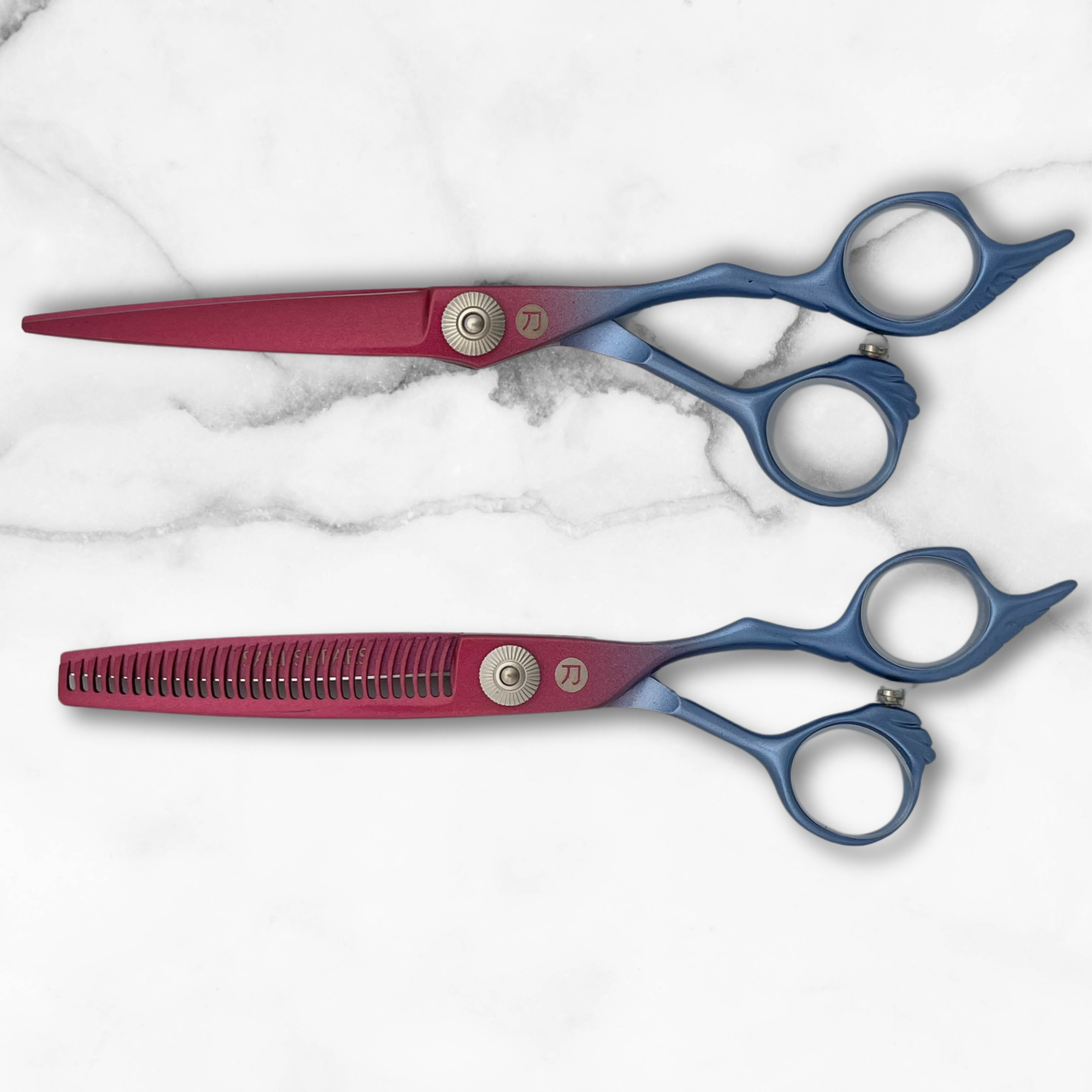
The thick, short sword-back blade design is another detail worth noting. Shorter blades with a thicker spine provide more control during precision work. If you’re doing detailed work around the ears, creating clean lines at the nape, or working with layered cuts that demand accuracy, the Katana’s blade geometry gives you a stable platform to work from. For stylists who prefer a longer blade for different cutting techniques, the Katana is also available in a 7.0-inch size — the same steel and construction, just more reach.
The Crane Handle: Engineered for Long Days Behind the Chair
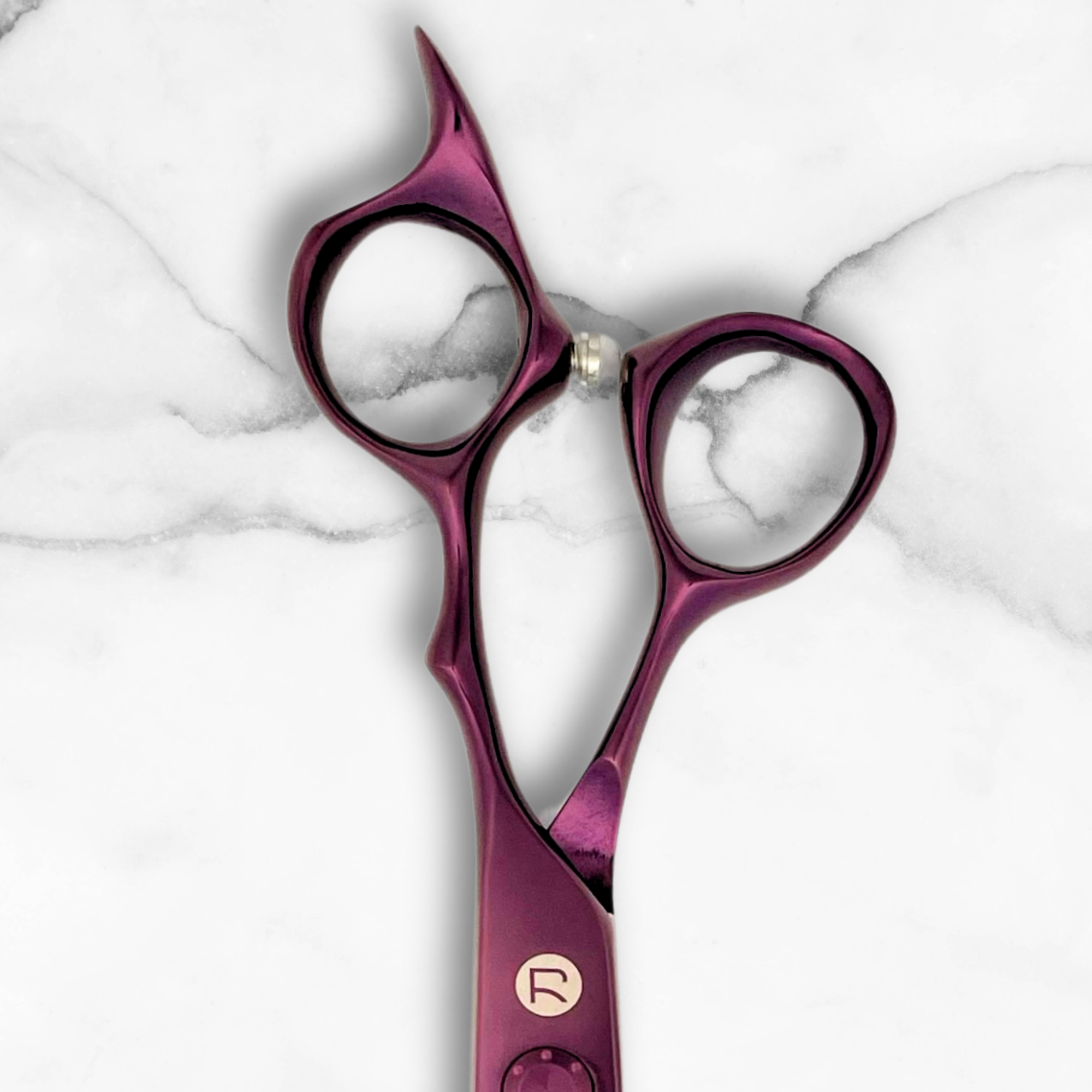
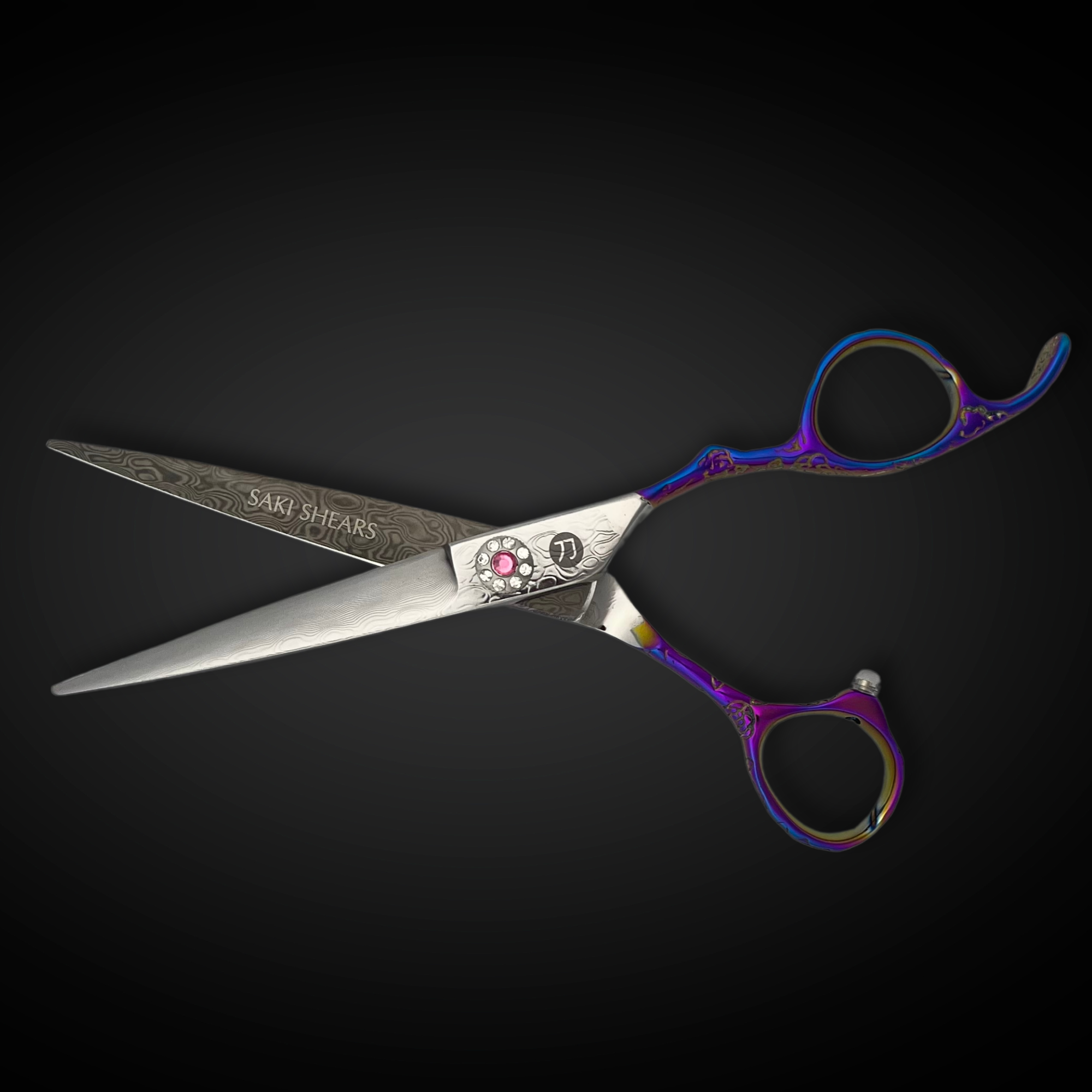
Ergonomics can make or break a shear for working professionals, and this is where the Katana makes one of its strongest arguments. The extra-long offset crane handle is designed to keep your hand, wrist, and elbow in a more natural alignment while cutting. Instead of forcing your thumb upward to meet a symmetrical handle (which rotates your wrist and elevates your elbow), the crane design drops the thumb ring lower, allowing your arm to relax into a more downward position.
Over the course of a ten-hour day with back-to-back clients, this difference is real. Stylists who have dealt with wrist pain, thumb fatigue, or early signs of repetitive strain issues often find that switching to an offset or crane handle provides immediate relief. The Katana’s crane handle is longer than most, which distributes the leverage across more of your hand and reduces the pinching pressure that shorter handles can create at the base of the thumb.
The adjustable ring size accommodates different finger thicknesses, and the included finger inserts let you fine-tune the fit until the shear sits securely without squeezing. If you’ve been considering swivel-thumb shears for ergonomic reasons — like the Saki Sakura swivel cutting shears — the Katana’s crane handle offers a middle ground: better ergonomics than standard handles without the adjustment period that swivel mechanisms require.
Tension System and Ball-Bearing Screw
The Katana uses a ball-bearing tension screw, which is a feature you’d typically expect in shears costing significantly more. Ball-bearing pivots reduce metal-on-metal friction at the screw point, creating a smoother open-and-close action that stays consistent over time. Non-bearing tension systems tend to develop play in the pivot as the metal wears, leading to uneven cuts and the need for frequent readjustment.
The transparent screw-in silencer is another functional touch. It dampens the click at the end of each closing motion, reducing noise fatigue during long cutting sessions. While this might sound like a minor detail, stylists who cut all day will tell you that hundreds of small metallic clicks add up — both in terms of sound and the micro-vibrations transmitted through the handle to your fingers.
Proper tension adjustment is critical for getting the best performance from any shear. The Katana’s ball-bearing system makes tension changes smooth and predictable — a quarter-turn at a time, testing on tissue paper until the blades cut cleanly about two-thirds of the way down without snagging or leaving the tissue uncut. If you’re not sure how to dial in your tension correctly, our shear size and setup guide covers the fundamentals.
Who Is the Katana Best For?
The Saki Katana occupies a specific niche in the professional shear market, and understanding that niche helps determine if it’s the right fit for your work.
Advanced stylists and master barbers who need a reliable daily driver will appreciate the Katana’s combination of cutting precision and durability. The 440C steel and convex edge handle everything from heavy wet cuts to delicate dry finishing work without complaint. If you’re cutting 15–25 clients a day and need a shear that performs consistently from the first appointment to the last, this is the category the Katana was built for.
Stylists moving up from entry-level shears will notice an immediate difference in cutting smoothness and edge retention. If you’ve been working with a shear in the $80–$120 range and finding that it dulls quickly, drags through thick hair, or causes hand fatigue, the Katana represents a meaningful upgrade without jumping to the $350+ price range. The Saki Tomika at $180 is another option in this upgrade path, though it uses a standard offset handle rather than the Katana’s extended crane design.
Barbers who do both scissor-over-comb and freehand work benefit from the Katana’s blade control. The thick spine and short blade provide the stability needed for scissor-over-comb fading, while the convex edge and smooth pivot allow the quick, fluid cuts that freehand work demands.
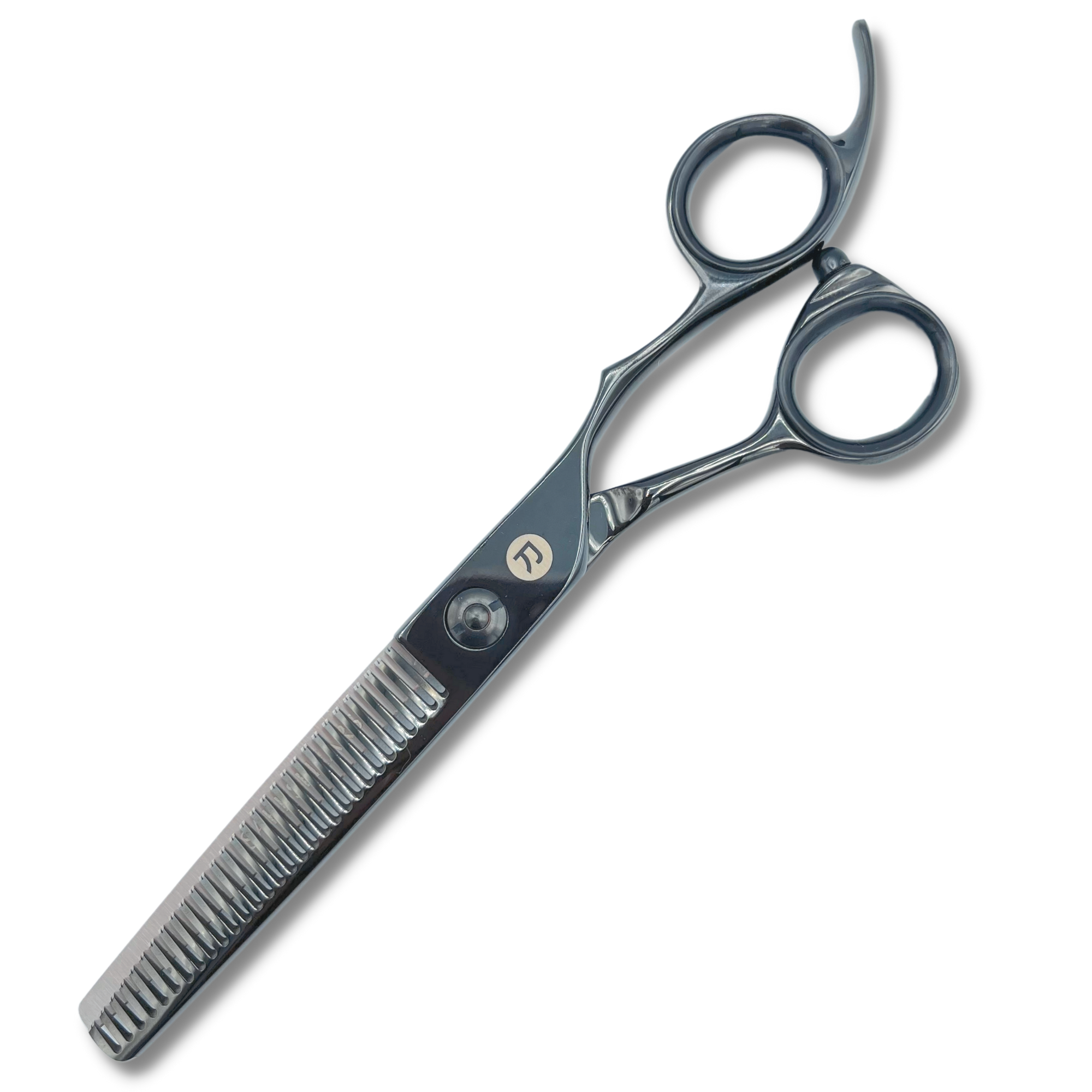
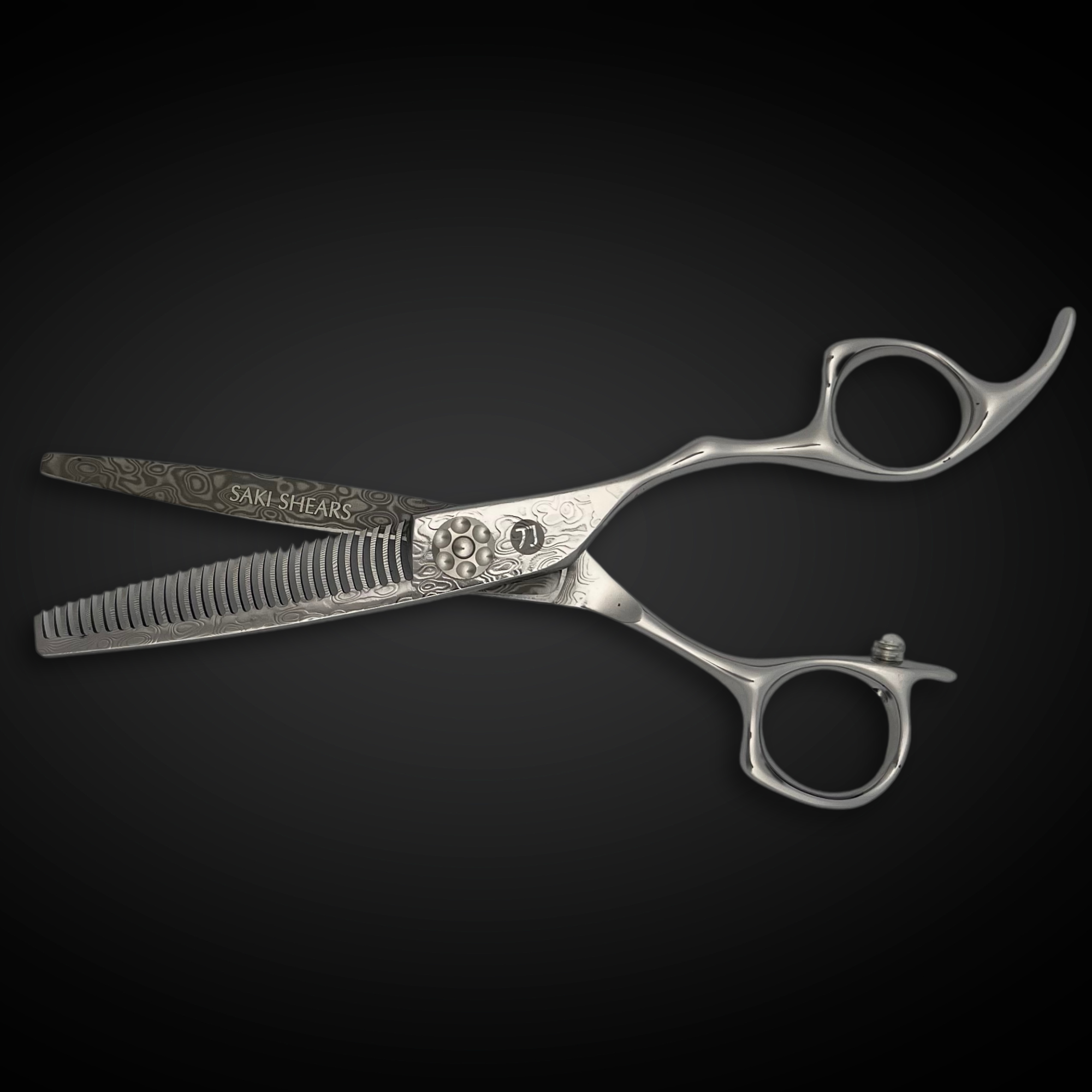
Where the Katana may not be the ideal choice is for stylists who exclusively do texture work or who need a shear primarily for slide cutting on very fine hair. For heavy texturizing, you’d pair it with a dedicated thinning shear like the Saki Katana thinning shear (30 teeth, same 440C steel). For advanced slide cutting where you want maximum blade flexibility, the Saki Kotaro with its slightly different blade profile may feel more natural.
The Katana Alongside a Complete Shear Collection
Most experienced stylists don’t rely on a single pair of shears for every service. The Katana works well as a primary cutting shear within a broader collection. A common professional setup might include the Katana for general cutting work, a thinning shear for texture and bulk removal, and a specialty shear for specific techniques.
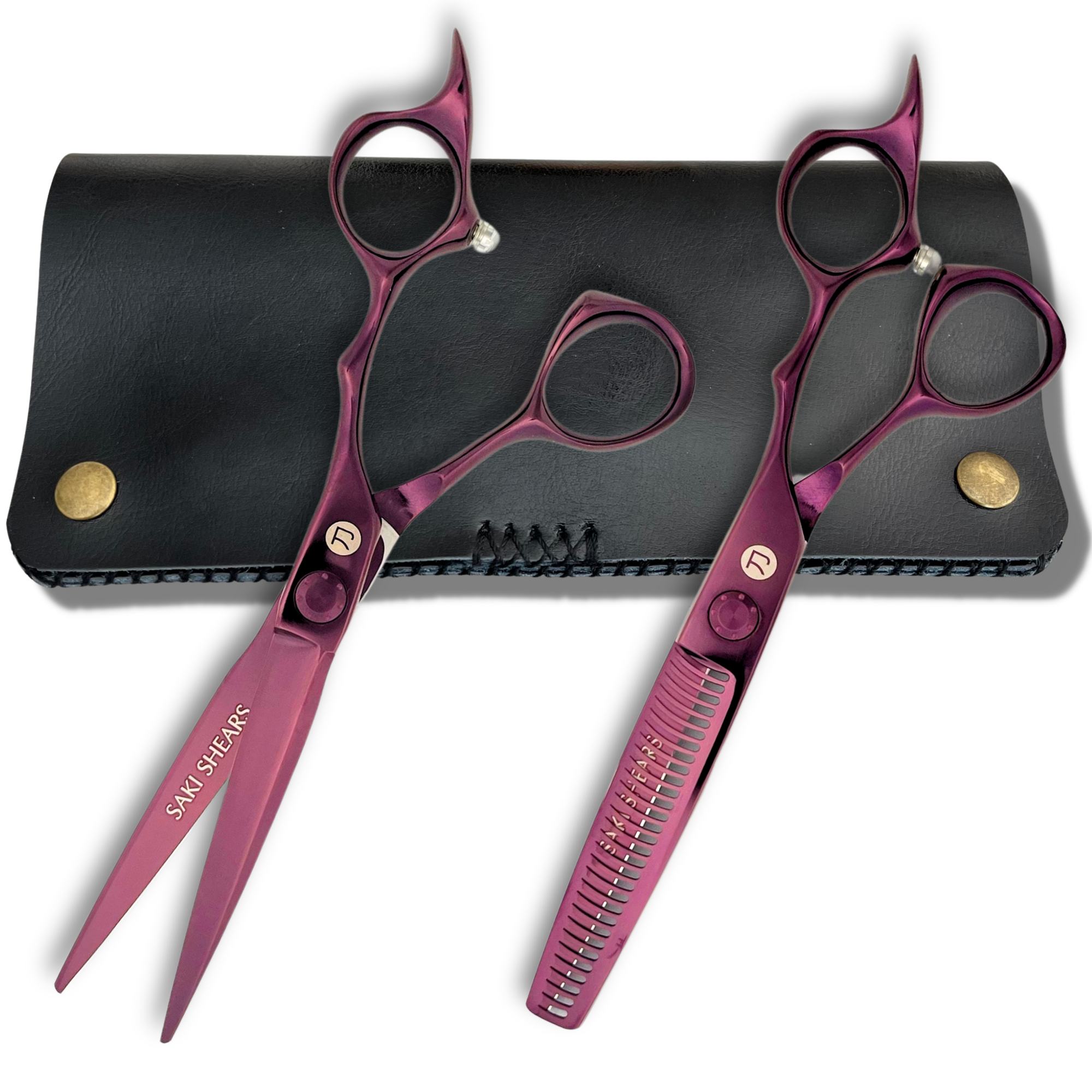
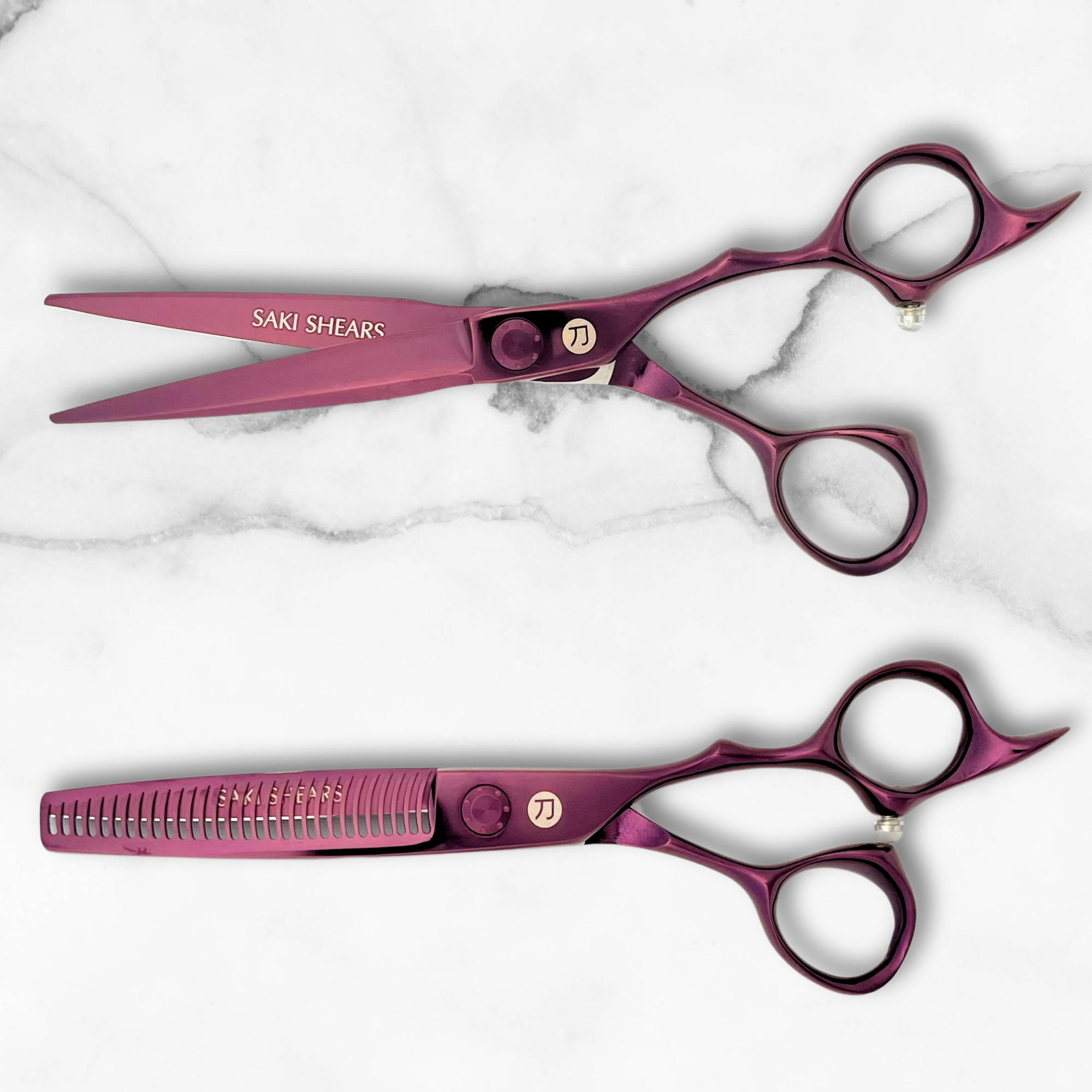
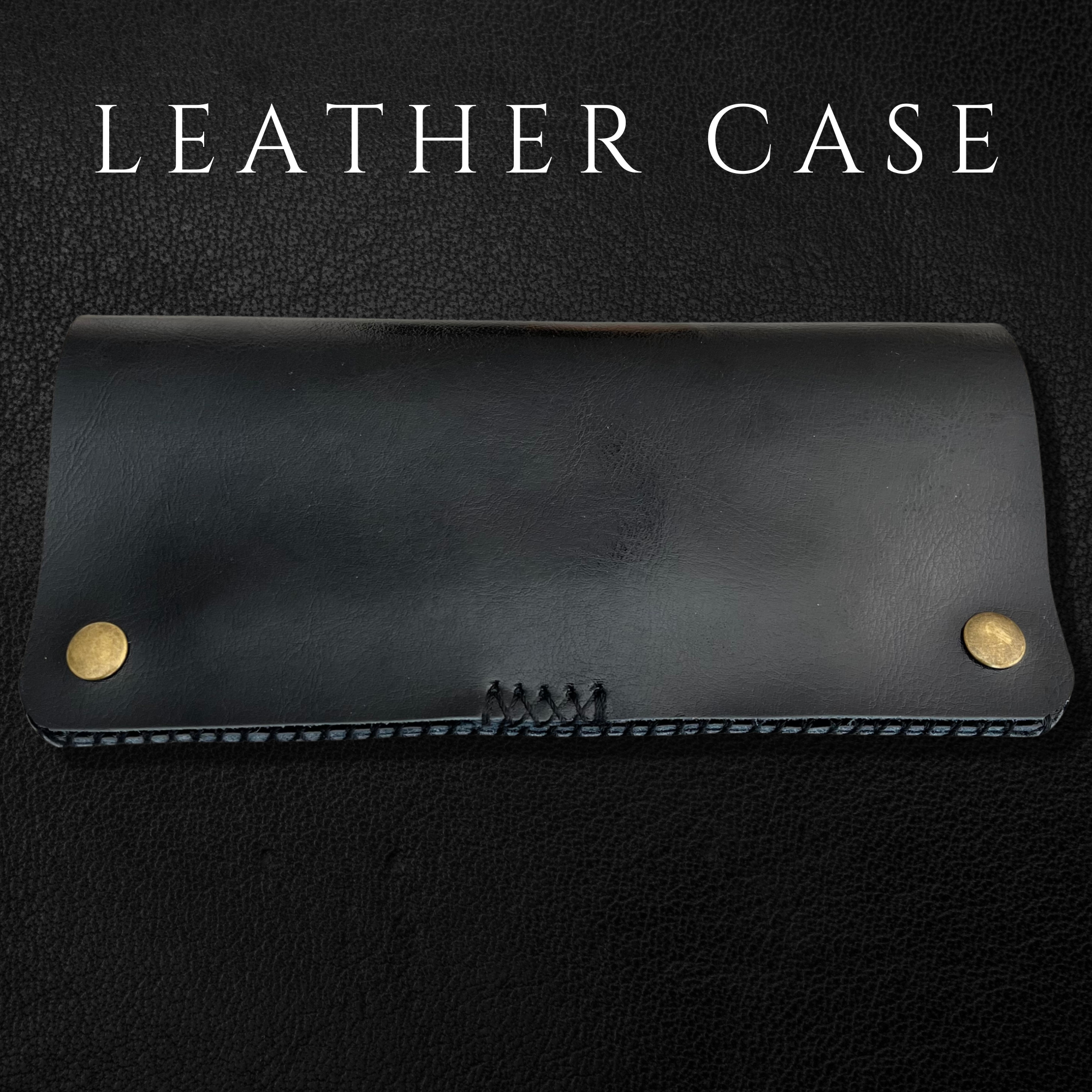
Saki offers the Katana as part of a complete professional collection that pairs the cutting shear with the matching Katana thinning shear, a swivel razor, and a leather carrying case at $299 — a better value than purchasing the components individually. The 5.5-inch option pairs with the 6-inch thinning shear, while the 7-inch option maintains the same pairing. There’s also a left-handed 6-inch option for southpaw stylists who are tired of adapting to right-handed shears.
For stylists who want to build out a more diverse collection, our guide to the best Japanese cutting shears in 2026 compares several models across different price points and specialties.
Maintenance and Long-Term Value
One of the practical advantages of 440C steel is that it’s widely serviced by professional shear sharpeners. Unlike some proprietary or exotic steel alloys that require specialized equipment, 440C is the standard that most sharpening professionals train on. This means maintaining your Katana is straightforward and relatively affordable — typically $25–$40 per sharpening depending on your area.
With proper care — daily wiping with a soft cloth, weekly oiling of the pivot point with shear oil, and professional sharpening every 500–700 haircuts — a well-maintained pair of Katana shears should last 8–10 years of full-time professional use. The two-piece welded construction means the blade and handle are joined with precision and won’t develop the wobble that cast or stamped shears can develop over time.
The Katana is covered by the Saki Shears Lifetime Warranty, which covers manufacturing defects and provides peace of mind for what is a significant investment in your tools. According to research published by the Bureau of Labor Statistics, hairstylists and barbers rely heavily on the quality of their tools for both service quality and physical health — investing in well-constructed shears is as much a health decision as a business one.
Final Assessment
The Saki Katana delivers where it matters most for working professionals: consistent cutting performance, comfortable ergonomics, and long-term durability at a price point that doesn’t require financing. The 440C Japanese stainless steel provides the hardness and edge retention that daily professional use demands, the convex edge and hollow-ground blades create the smooth cutting action that keeps both stylist and client happy, and the crane handle design genuinely reduces the physical toll of a full day behind the chair.
It’s worth noting that the handmade, two-piece welded construction sets the Katana apart from mass-produced shears in the same price bracket. Each pair is assembled and finished individually, which means tighter tolerances at the pivot point and more consistent blade alignment out of the box. You can feel this difference the first time you open and close them — there’s no looseness, no gritty friction, just a clean, weighted action that inspires confidence.
At $199, the Katana competes against shears that cost half as much and holds its own against many that cost twice as much. It’s not trying to be everything to everyone — it’s a purpose-built professional cutting shear that does its job exceptionally well, day after day. For stylists and barbers who value reliable performance and Japanese craftsmanship without paying a premium for exotic materials they may not need, the Katana is one of the strongest options available in 2026.
For more information on building a professional shear collection tailored to your cutting style, explore the full range of Saki Shears professional hair cutting shears.

Ecrit par Charles Harris