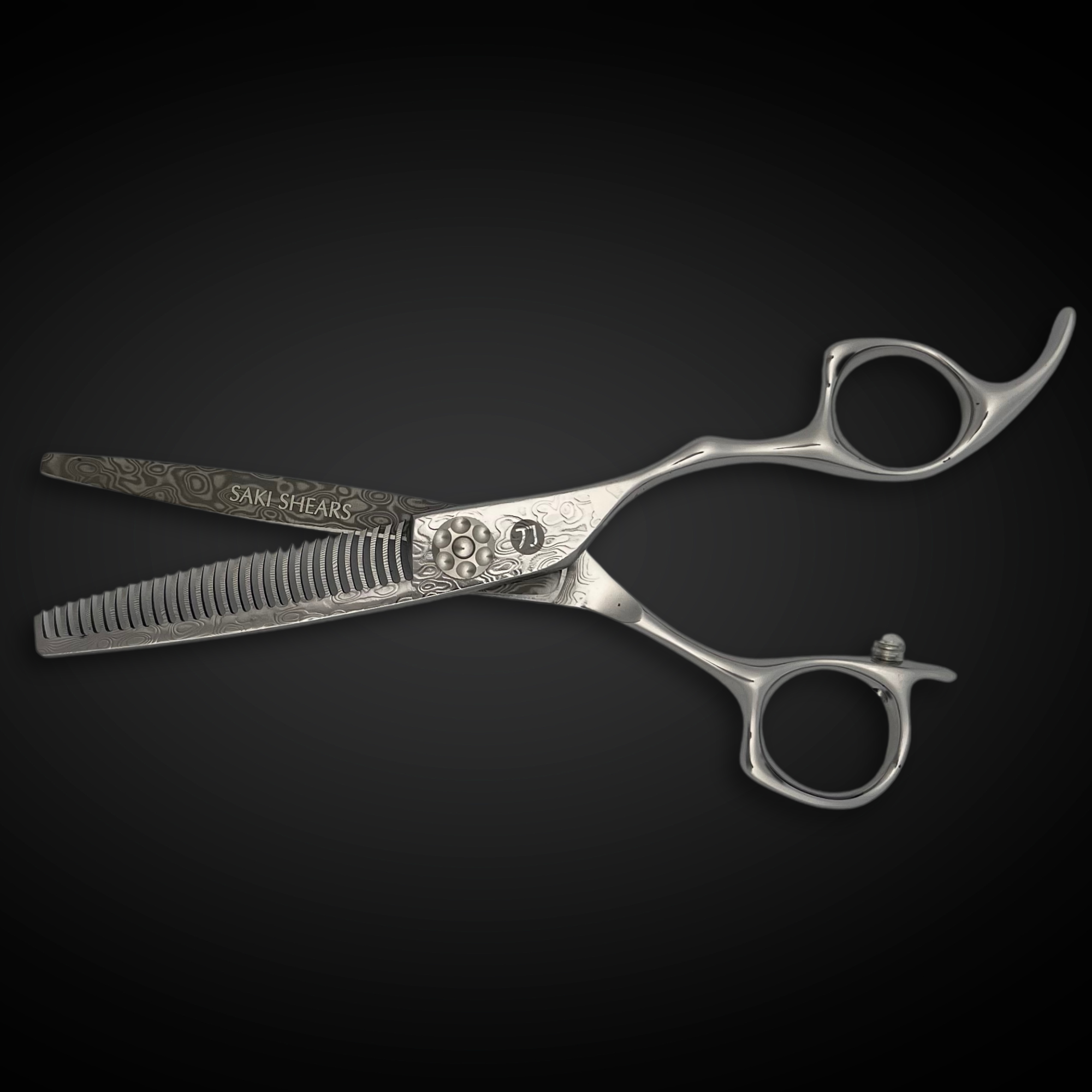
Best Japanese Hair Cutting Shears for Professional Stylists in 2026
If you've been cutting hair lng enough, you know the difference a quality pair of shears makes. Japanese hair cutting shears have become the standard in professional salons worldwide—not because of marketing, but because the engineering is measurably better. The steel, blade geometry, and handle design all work together to give you sharper cuts, less hand fatigue, and longer edge retention between sharpenings.
This guide walks through what separates professional-grade Japanese shears from the rest, then recommends specific models based on your cutting style and budget. We'll focus on honest trade-offs: yes, premium options cost more, but they hold an edge longer and require less maintenance. We'll also cover the Saki Gold Set, which sits at the intersection of performance and price for most stylists.
Why Japanese Steel Matters for Professional Shears
Japanese shear manufacturing grew out of sword-making tradition. That heritage shows up in how Japanese manufacturers approach blade steel—treating edge geometry and hardness as inseparable from the steel's composition itself. Western shears often prioritize ease of manufacturing; Japanese shears prioritize cutting performance.
The differences are structural. Japanese steel is typically folded and tempered to higher hardness ratings (measured in Rockwell Hardness or HRC). Higher HRC means the blade stays sharp longer under use. It also means the blade is more brittle—it won't bend, but it can chip if mishandled. This trade-off is intentional. Professional stylists rarely drop their shears, so brittleness isn't a practical concern. Edge retention is.
You'll encounter two primary steel types in professional Japanese shears: VG-10 (cobalt stainless steel) and 440C (austenitic stainless steel). Both are stainless—they resist corrosion—but they perform differently.
VG-10 Steel: Contains cobalt, which increases hardness and edge retention. VG-10 shears typically reach 60-61 HRC. They stay sharp longer between sharpenings, which saves money over the lifespan of the shears. The trade-off is cost and ease of sharpening. VG-10 requires skilled sharpening; it's harder to work with if you're trying to DIY maintenance.
440C Steel: More commonly used, easier to sharpen, and more affordable. Typically rated 59-61 HRC. While fractionally softer than VG-10, the difference in practical use is smaller than the price difference. 440C is the choice if you sharpen your own shears or need lower upfront cost without sacrificing too much performance.
The professional hair shears sharpening guide covers maintenance in detail, but the principle is simple: Japanese shears need professional sharpening 1-2 times per year, depending on your salon volume. Budget for it, and the investment in quality steel pays for itself.
Blade Geometry: Convex vs. Beveled Edge
Two blade edge designs dominate professional shears: convex and beveled.
Convex Edge: Curved edge that comes to a sharp point. Think of the curve on a katana blade. Convex edges require more force to start a cut but deliver superior glide once engaged. They're the choice for slide cutting with Japanese hair scissors, where you move the blade along the hair length to remove bulk gradually. The curve allows the blade to slice rather than shear, reducing drag on the hair and giving more control over the amount of hair removed. Convex edges excel at precision work and textured cuts.
Beveled Edge: Flat edge ground at an angle. More common across price points because it's easier to manufacture and sharpen. Beveled edges require less force to initiate a cut and work well for point cutting and blunt lines. The edge engages quickly, which is useful for rapid, repetitive cutting.
The choice between them isn't about which is "better"—it's about technique. A stylist who slides frequently will prefer convex. A stylist who point-cuts will prefer beveled. Many professionals own both and switch based on the service. The convex edge vs. beveled edge hair shears article breaks down the mechanics in detail, but in practice, you discover your preference through use.
Handle Design and Ergonomics
Handle ergonomics matter more than many stylists realize until they're three hours into a color service and their hand starts aching. Japanese shears typically use one of three handle styles, each suited to different hand sizes and grip preferences.
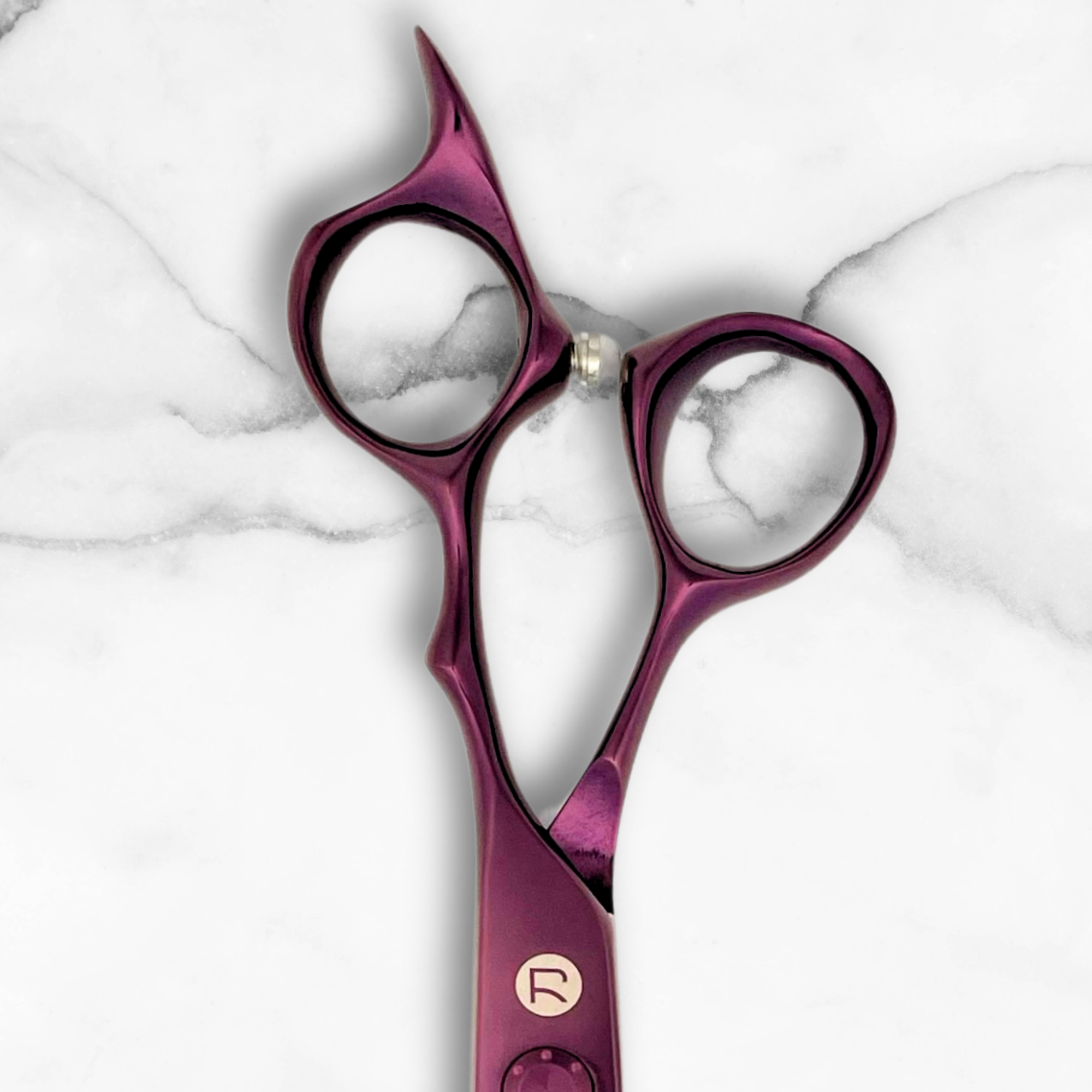
Offset Handle: The thumb hole sits lower than the finger hole. This design reduces wrist rotation required during cutting, lowering fatigue over long services. It's the most common choice for professionals with larger hands or existing wrist issues. The offset also provides better leverage for tougher hair types.
Straight Handle: Thumb and finger holes align. Less common in modern professional shears but still available. Requires more wrist rotation, which some stylists prefer for certain techniques.
Ergonomic/Curved Handle: Shaped to fit the natural curve of your hand. Reduces muscle tension by supporting the palm properly. Best for stylists prone to carpal tunnel or tendonitis. Some models feature a swivel thumb, which rotates independently to adjust to your natural hand movement.
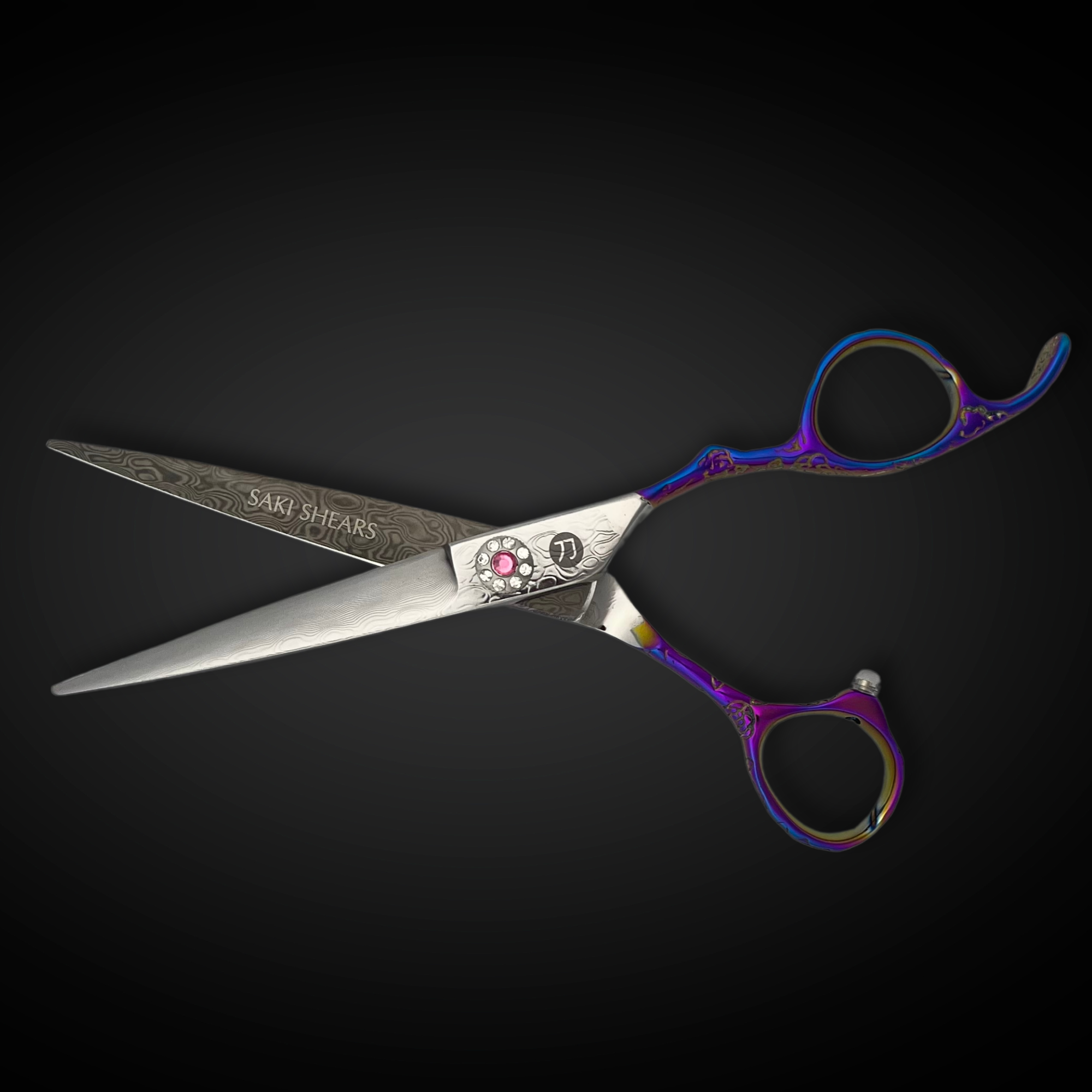
Handle material varies too. Japanese shears use stainless steel, aluminum alloy, or specialty metals. Stainless offers durability and a professional feel. Aluminum is lighter, useful if you're cutting all day. Some premium models use Damascus-patterned handles (more aesthetic than functional) or specialized alloys with reduced weight and increased comfort.
The ergonomic hair cutting scissors article covers this in depth, but the takeaway: if your hands hurt after work, handle design is worth investigating before you assume you need to change your technique.
Top Japanese Hair Shears for Professional Stylists
Best Overall: Saki Gold Set – VG-10 Cobalt Steel ($395)

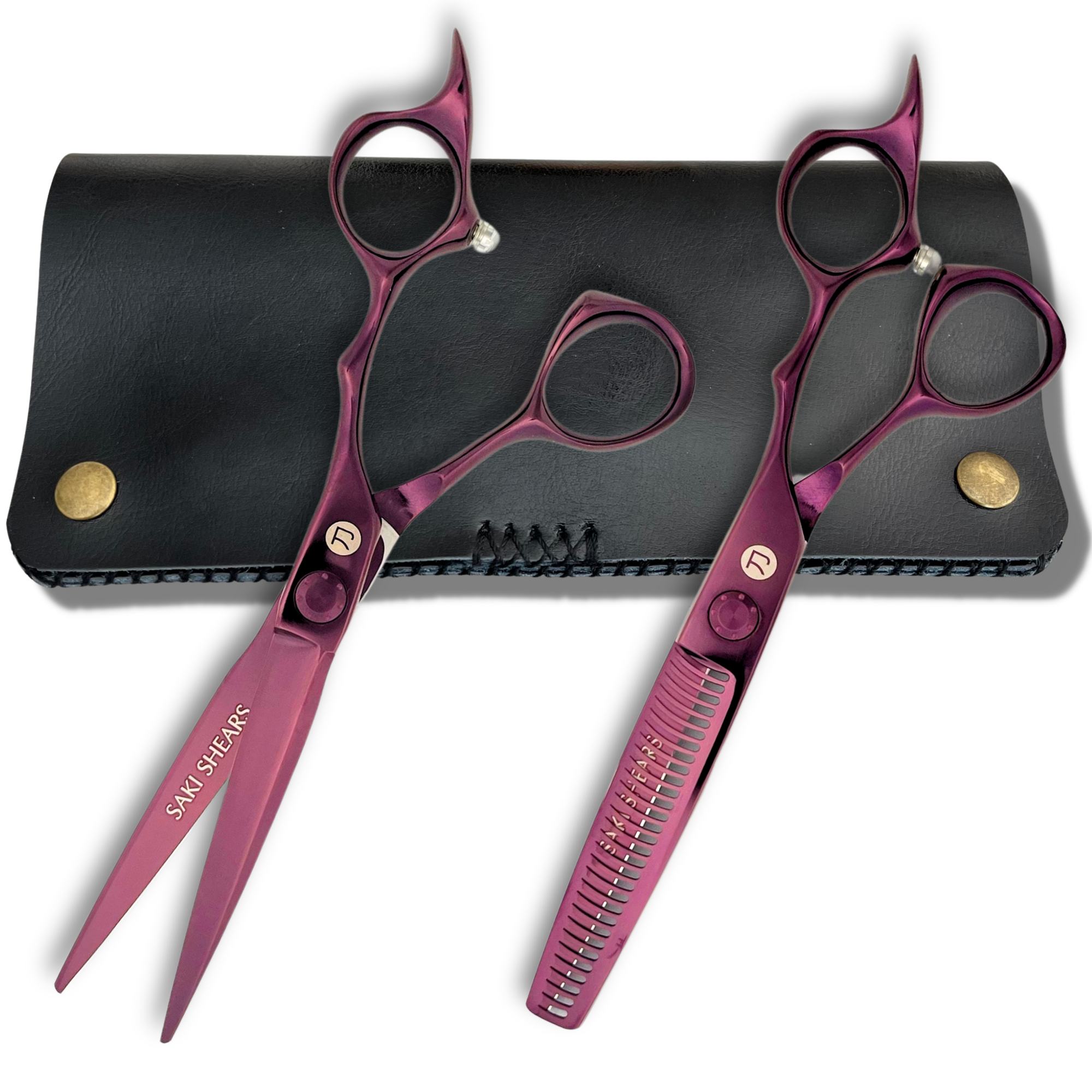
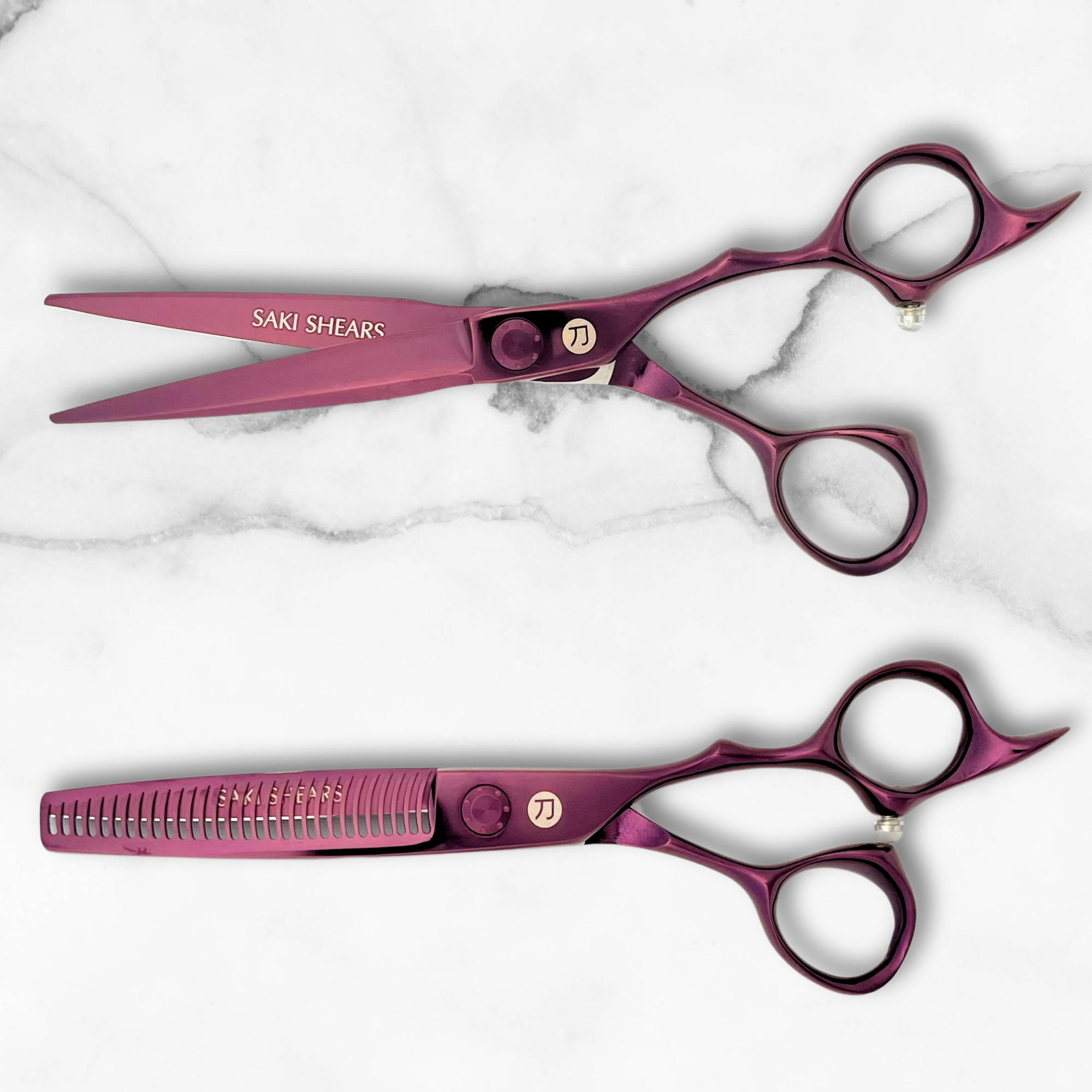
The Saki Gold Set represents the standard-bearer for professional Japanese shears in the mid-to-premium range. It pairs VG-10 cobalt steel (60-61 HRC) with a 6-inch blade length and an ergonomic offset handle. The offset design reduces wrist strain during long services, and the VG-10 steel means you'll sharpen less frequently than 440C models—important if your salon does high volume cutting.
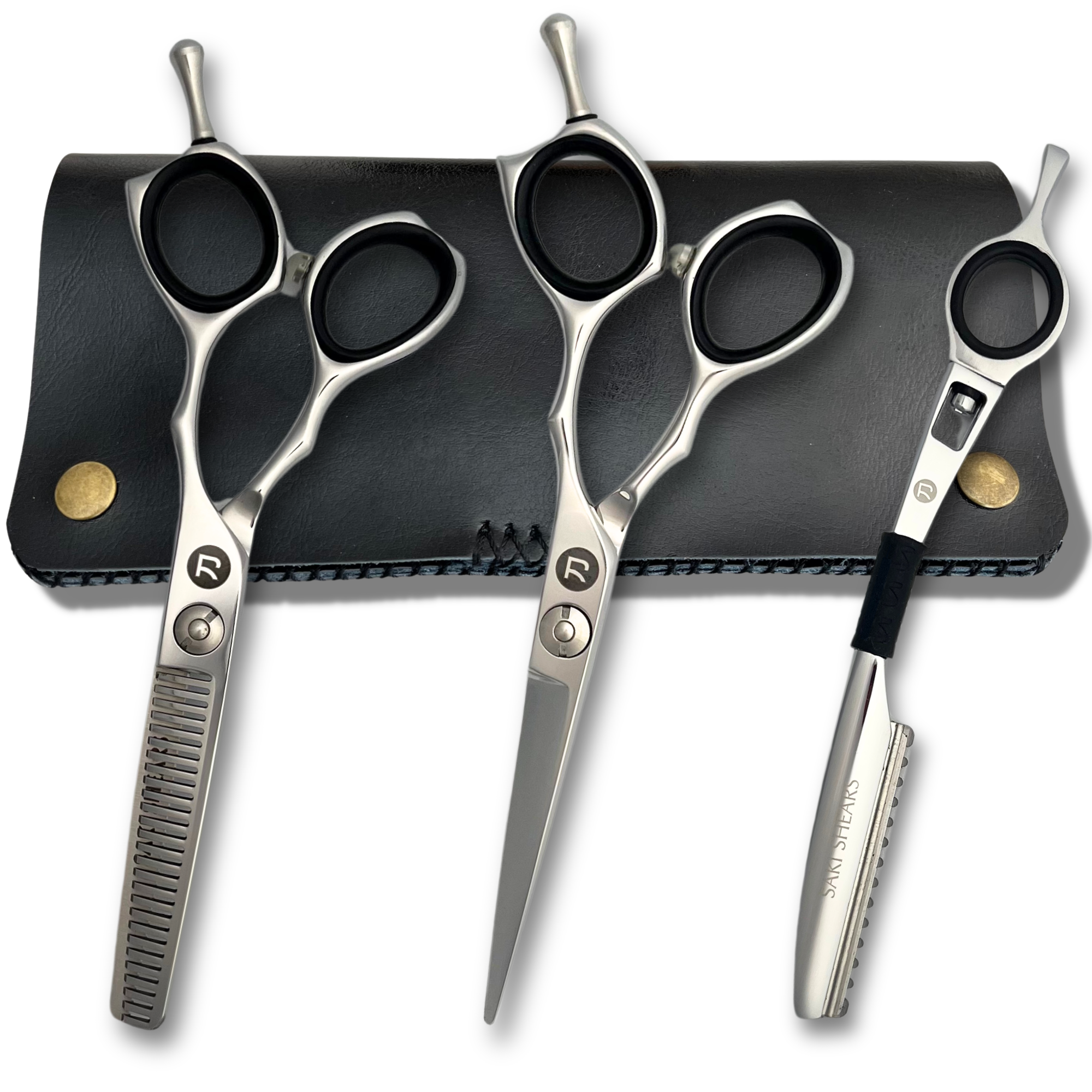
The set includes primary shears and texturizing shears, giving you two cutting tools in one purchase. The primary shear has a convex edge for smooth, controlled cuts. The texturizer works for point cutting and line work. Together, they cover most cutting techniques you'll encounter in general styling.
The trade-off: higher upfront cost. If you're new to professional shears or cutting on a tighter budget, the Saki Gold Set is aspirational—worth saving for, but not the only option. For established stylists doing consistent salon work, the longer edge retention of VG-10 justifies the price over a 3-5 year horizon.
Best Value: Saki Kotaro – 440C Steel ($189)
The Saki Kotaro delivers professional performance at less than half the price of the Gold Set. It uses 440C steel at 60-61 HRC hardness, paired with an offset handle and 6-inch blade. The edge won't last quite as long as VG-10, but it's sharper than many imported mid-range options and easy to resharpen when needed.
The Kotaro is the right choice if you're building your shear collection on a budget or if you're confident in your ability to maintain shears regularly. 440C is more forgiving to sharpen than VG-10, so if you're learning or prefer to send shears out 2-3 times per year rather than 1-2, the Kotaro delivers without the premium cost.
Many stylists own multiple Kotaro shears for different techniques rather than owning one expensive premium pair. Two or three Kotaro shears at $189 each give you specialized tools (one for cutting, one for texturizing, one for thinning) for less than the Gold Set.
Best for Precision Cutting: Saki Katana – Convex Edge ($199)
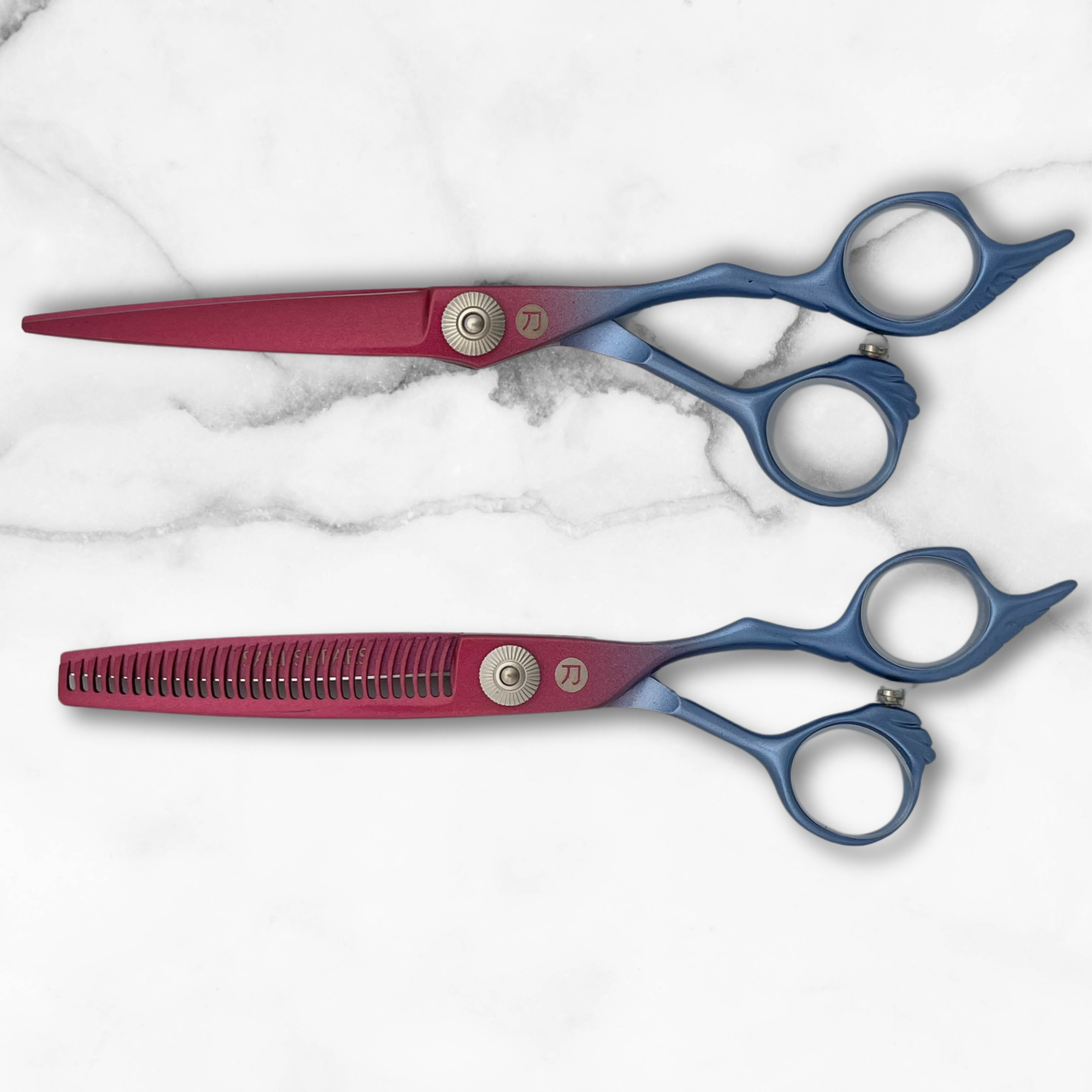
If you slide-cut frequently or work with textured, short styles, the Saki Katana is purpose-built. It features a convex edge with a distinctive crane handle—a curved, ergonomic design inspired by traditional Japanese aesthetics but functionally superior for stylists who use primarily slide-cutting techniques.
The Katana uses 440C steel at 59-61 HRC. The convex blade requires slightly more force to initiate a cut but glides through hair with minimal drag once engaged. This makes it ideal for removing bulk from thick hair or creating texture in short styles. The crane handle reduces wrist rotation compared to a straight handle, though not as aggressively as an offset.
The Katana is the specialist's choice—not your only pair, but a critical addition if slide cutting is central to your work. Pair it with a beveled-edge shear for point cutting and detail work, and you have a versatile set.
Best for Carpal Tunnel Relief: Saki Sakura Swivel – Swivel Thumb ($189)
The Saki Sakura Swivel features a rotating thumb ring, which rotates independent of your thumb. As your hand moves during cutting, the swivel adjusts to match your natural hand angle without requiring you to rotate your wrist. This eliminates a major source of carpal tunnel strain.
440C steel, 60-61 HRC hardness, 6-inch blade. The swivel mechanism is the differentiator. If you've experienced repetitive strain or know you're susceptible to it, the Sakura Swivel is worth testing. Some stylists feel it takes an adjustment period; others immediately feel the difference in hand comfort.
This is a pragmatic choice. Don't buy it because swivel mechanisms sound advanced—buy it because you understand your body and know wrist rotation causes you pain. If that's the case, it works.
Secondary Options Worth Considering
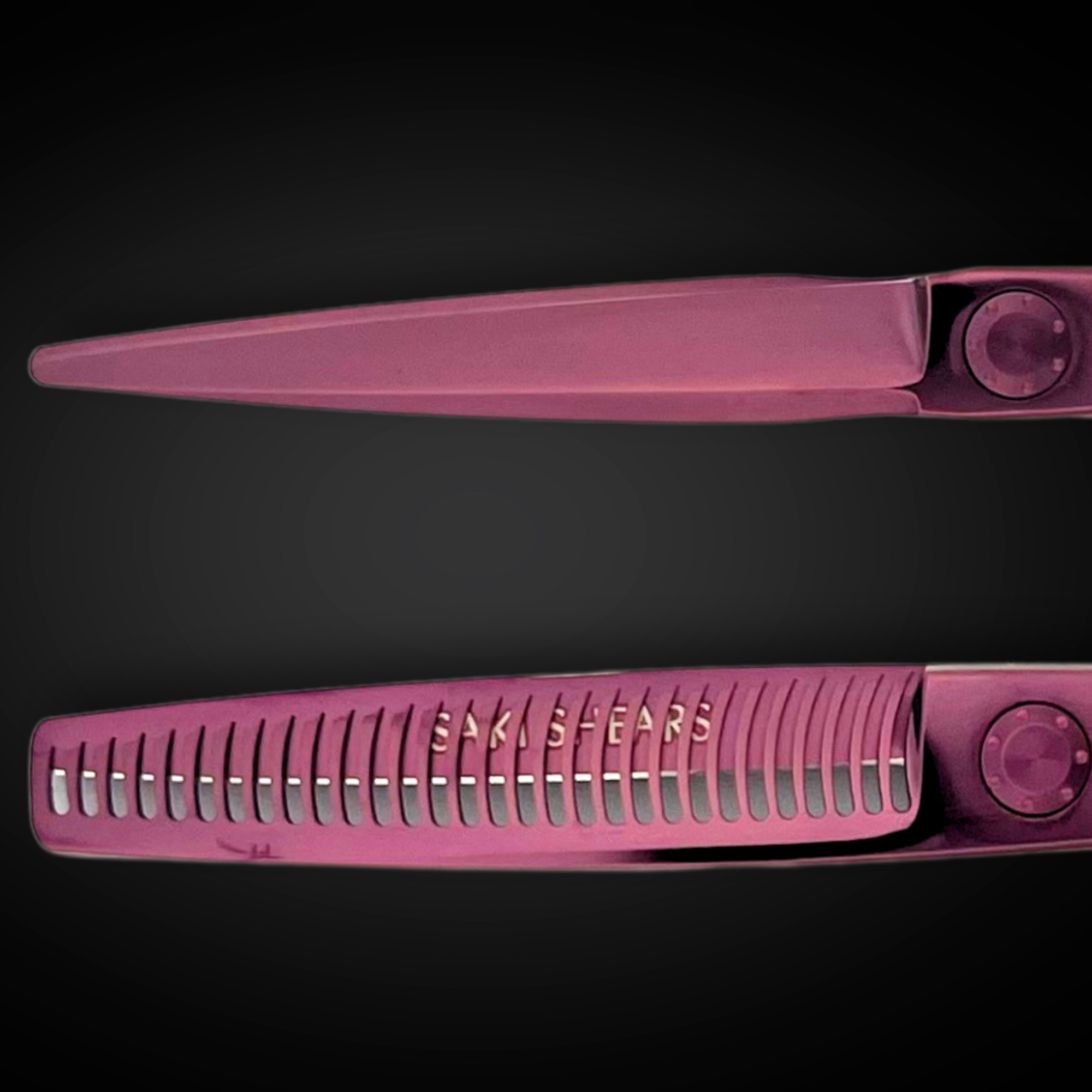
The Saki Tomika offers a 5.5-inch blade for stylists with smaller hands or those who prefer a more compact tool. Thinning shears like the models in the Saki Kohana Set are worth exploring if you thin hair regularly; the double-serrated blade (one smooth, one notched) removes less hair per cut, giving you finer control over texture.

What to Look for When Choosing Japanese Shears
Beyond the specific products, here's how to evaluate any Japanese shear:
Steel Type and Hardness: Insist on knowing the steel type and HRC rating. "High-quality Japanese steel" is marketing. VG-10 at 60-61 HRC or 440C at 59-61 HRC are industry standards. Anything softer (below 58 HRC) is a compromise; anything claiming to be harder should raise questions about brittleness.
Blade Length: 5.5 to 6.5 inches is standard. Smaller hands may prefer 5.5; larger hands often prefer 6 or 6.5. Test before buying if possible. Blade length affects how much hair you can remove per cut and how much control you have.
Blade Geometry: Understand whether you're buying convex or beveled and why. Read the how to hold hair cutting shears guide to understand how geometry affects your technique.
Tension System: Adjust the tension using the tension screw (usually on the pivot). Correct tension prevents the blade from catching hair and allows smooth opening and closing. Too tight, and you fatigue your hand; too loose, and the shear chatters. Most Japanese shears come pre-set; adjust after purchase based on your hand strength.
Handle Comfort: This is personal. An offset handle that feels perfect to a colleague might feel wrong to you. If possible, hold and test shears before purchasing. If buying online, check the return policy.
Japanese Shears for Different Cutting Styles
Choosing shears is partly about the tool's objective quality and partly about matching the tool to your technique.
Slide Cutting: Convex edge is essential. The blade's curve allows you to move it along the hair length without snagging. The Katana is purpose-built for this. If you slide-cut frequently, don't compromise on blade geometry.
Point Cutting and Detail Work: Beveled edge or straight-across blades work better here. You're puncturing into the hair line rather than slicing along it. Point cutting benefits from shears that engage quickly. The Kotaro's beveled edge excels here.
Blunt Cutting and Color Correction: Convex or beveled both work, depending on your pressure and technique. Focus on blade sharpness and length. A dull shear will catch and pull on blunt lines, creating flyaway hair. The Gold Set's convex blade, combined with VG-10's edge retention, makes it a strong choice for high-volume blunt cutting.
Thinning and Texturizing: Specialized thinning shears (with double-serrated blades) or texturizers (multi-blade designs) handle this. A standard shear can texturize via point cutting, but dedicated texturizers are faster and more controlled. The Kohana Set includes thinning shears alongside primary shears.
Maintenance: Keeping Japanese Shears Sharp
Japanese shears demand respect. They're precise instruments, not everyday tools. A few principles:
Professional Sharpening: Send shears to a professional sharpener 1-2 times per year, depending on volume. Don't attempt to sharpen them yourself unless you have training. A badly sharpened shear is worse than a dull one.
Daily Care: Wipe blades clean with a soft cloth after each client. Hair and water can corrode even stainless steel over time. Store shears in a protective case or sheath, not loose in a drawer.
Oil the Pivot: A tiny drop of clipper oil on the pivot point (where the blades meet) keeps movement smooth. Don't over-oil; it attracts dirt.
Avoid Hard Water and Chemicals: If your salon water is hard, dry shears immediately after rinsing. Harsh chemicals can corrode the steel. Store in a dry environment. The Beauty Schools Directory has additional resources on proper tool care as part of cosmetology fundamentals.
For detailed guidance, the professional hair shears sharpening guide covers maintenance in depth.
FAQ: Questions About Japanese Hair Shears
What's the difference between Japanese and Western professional shears?
Japanese shears prioritize blade geometry and steel hardness. The edges are sharper, hold their edge longer, and are designed for specific cutting techniques (convex for gliding, beveled for puncturing). Western shears often prioritize ease of manufacturing and resharping. Japanese shears require more investment upfront but lower lifetime maintenance costs and superior cutting performance. The manufacturing heritage traces to sword-making, which shows in the precision and care applied to blade edge angles and steel selection.
Should I buy a set or individual shears?
A set is more economical and gives you immediate versatility (primary shear plus texturizer or thinning shear). Individual shears let you specialize and match each tool to a specific technique. Many professionals start with a set and add individual shears over time as their style evolves. The Gold Set, Katana Set, and Kotaro Set are all solid starting points depending on budget.
How often do I need to sharpen Japanese shears?
Professional sharpening 1-2 times per year is typical for salon-volume use. VG-10 steel holds an edge longer, so you might sharpen annually. 440C may need sharpening every 6-8 months depending on how much you cut and what hair types you work with. Frequency increases with high-volume salons and thicker, coarser hair. Budget $15-30 per sharpening and factor it into your tool maintenance costs.
Final Thoughts: Investing in the Right Shears
Japanese hair shears are not luxury items—they're tools. The premium you pay for quality Japanese steel and precision blade geometry translates to sharper cuts, reduced hand fatigue, and lower lifetime maintenance. A stylist who invests in professional-grade shears is investing in the quality of their work and the longevity of their career.
Start with honest self-assessment. How much do you cut per week? Do you have hand or wrist pain? What techniques define your work? The answers point you toward the right shear.
The Gold Set is the default choice for most professional stylists: VG-10 performance at mid-premium pricing. The Kotaro works if budget is primary and you're willing to sharpen more frequently. The Katana is essential if slide cutting drives your business. The Sakura Swivel is practical if you need ergonomic relief.
None of these choices are mistakes. Any professional-grade Japanese shear outperforms consumer options. The decision is about matching the tool to your hands, your technique, and your budget. Test before buying if possible. If not, order with confidence knowing that quality Japanese shears have a return window and a reputation for lasting years.
Your hands are your livelihood. They deserve tools built to last.

Ecrit par Charles Harris