440C vs VG10 vs Damascus Steel: The Complete Guide to Hair Shear Steel Types
The steel in your shears determines how sharp they get, how long they stay that way, and how well they hold up through years of daily use. When you're spending $175 to $400 on a professional pair, understanding the difference between 440C Japanese stainless steel, VG10 cobalt steel, and Damascus steel isn't optional — it's how you make sure you're buying the right tool for how you work.
At Saki Shears, three distinct steel types run through the entire product line. Each has its own metallurgical profile, its own feel at the blade, and its own sweet spot in professional use. This guide breaks down exactly what sets them apart, so you can match the steel to your technique — not just to a price tag.
If you're looking for a place to start, the Saki Dotanuki Damascus shears represent the upper tier of blade technology in the line — 34 layers of folded Japan Damascus steel with a hardness of 61–62 HRC. But whether that's the right choice depends entirely on understanding what those specs actually mean. Let's get into it.
Why Steel Composition Matters More Than You Think
Hair shear steel is judged on three primary axes: hardness, edge retention, and corrosion resistance. These three properties exist in a constant trade-off. A harder steel holds an edge longer but is more brittle and harder to resharpen. A softer steel is more forgiving but dulls faster. Alloy additions — cobalt, chromium, vanadium, molybdenum — shift this balance in specific directions.
The Rockwell Hardness Scale (HRC) is the standard measurement. Most professional-grade shears land between 58 and 63 HRC. Below 58, the edge simply doesn't hold up under daily professional use. Above 63, you're into territory that requires very careful handling and expert sharpening.
For stylists, the practical implications are direct: harder steel = longer intervals between sharpenings, but you pay more upfront and need a qualified sharpener when the time comes. Softer steel = cheaper to buy and easier to sharpen, but you're getting it done more often.
Now let's look at each steel type Saki uses.
440C Japanese Stainless Steel: The Professional Standard
440C is the most widely used steel in professional hair shears worldwide, and for good reason. It's a high-chromium martensitic stainless steel — typically 16–18% chromium — with enough carbon content (0.95–1.20%) to achieve solid hardness in the 58–62 HRC range after heat treatment.
What Makes 440C Work for Stylists
The chromium content is what makes it stainless — resistant to the moisture, product residue, and repeated cleaning that shears face every day. That corrosion resistance, combined with its capacity to hold a convex edge, makes 440C the reliable workhorse of the professional shear market.
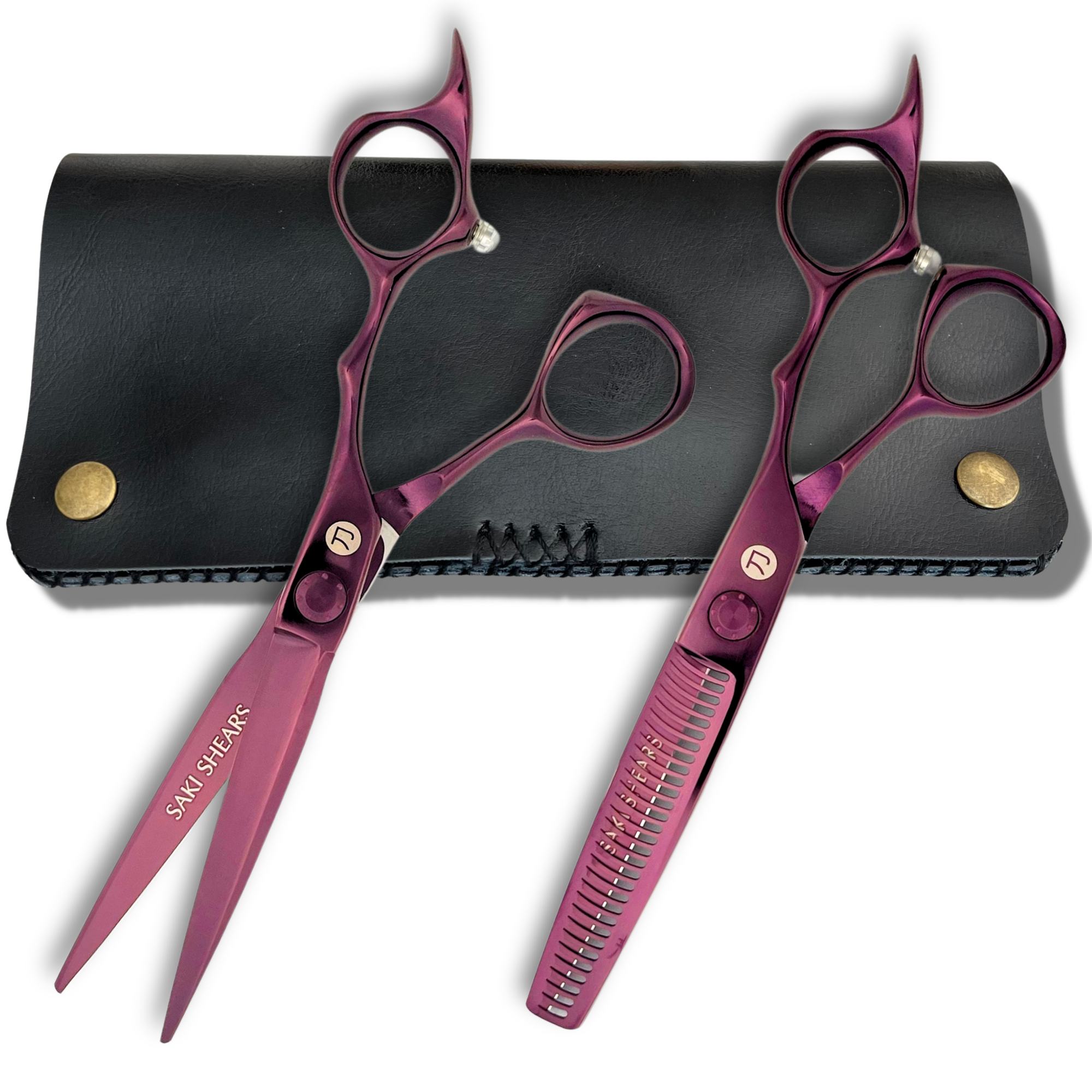
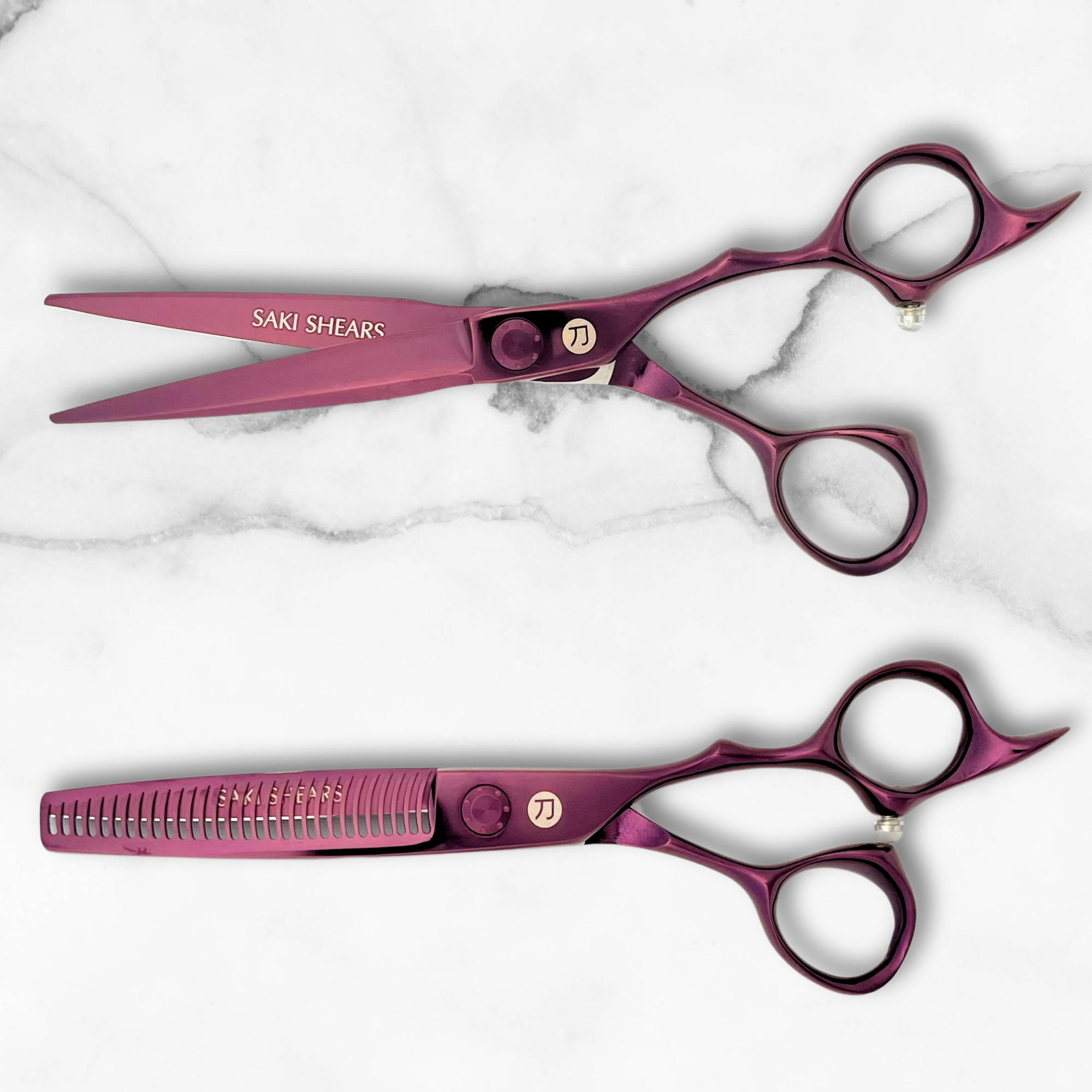
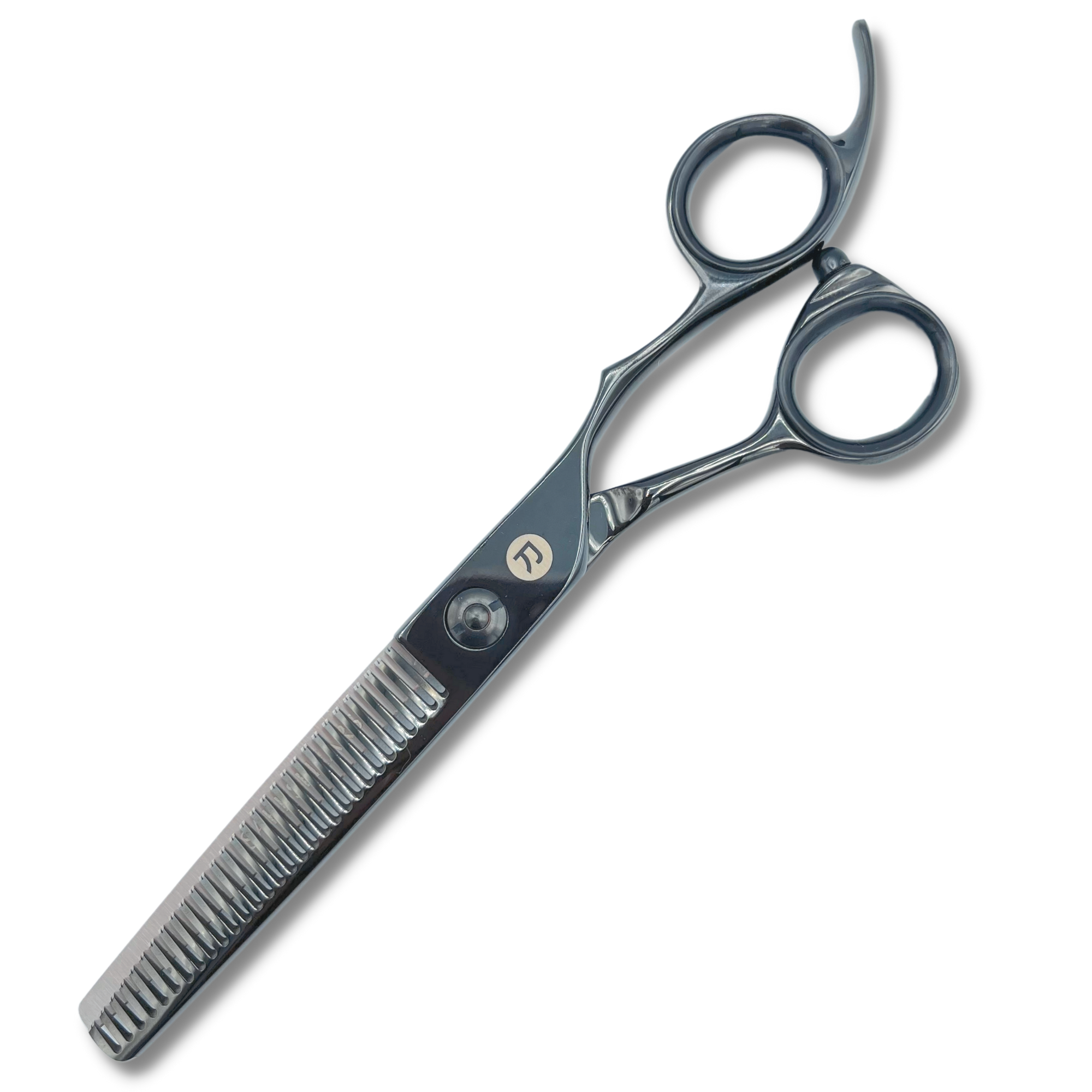
In Saki's line, 440C steel shows up in several flagship models. The Katana shears feature a hardness of 59–61 HRC with a convex edge, triple-honed blade, and an offset crane handle built for blunt, wet, and dry cutting. The Kotaro runs the same steel with an ergonomic offset handle and removable finger rest — the preferred setup for slide cutting and extended sessions.
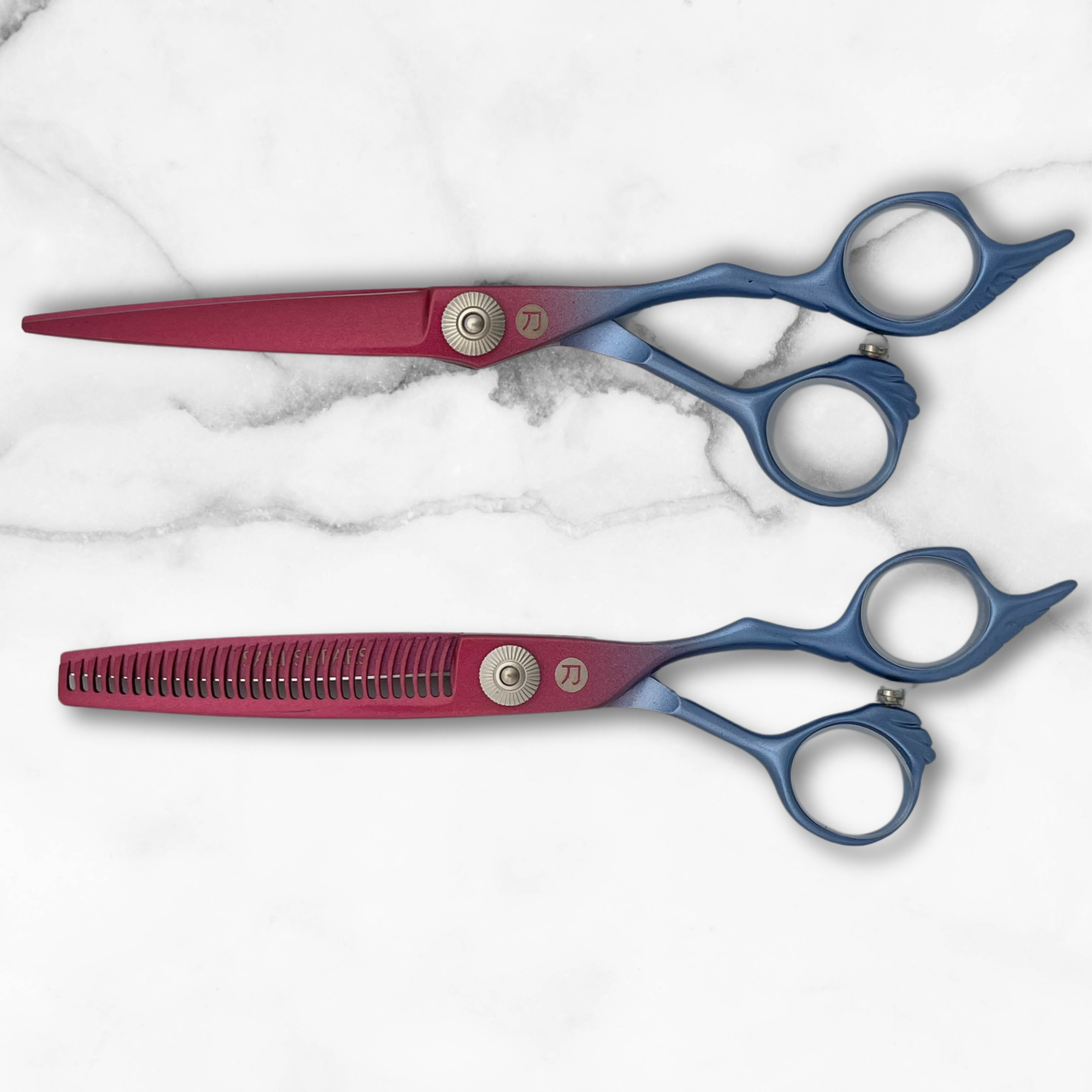
For stylists in cosmetology programs or those building a first serious pair, the Makoto student set also uses 440C at 60–61 HRC — which means you're training on the same steel professionals use, just in a more accessible price range. One step up from the student set, the Tomika applies the same 440C steel in a full professional build — we covered where the Tomika fits for rising stylists in a dedicated review.
440C: Best For
- High-volume stylists who sharpen regularly
- All-around cutting — wet, dry, blunt, slide, point
- Stylists who want reliable performance without premium steel pricing
- Humid salon environments (excellent corrosion resistance)
HRC range: 59–61 | Edge type: Convex, triple-honed | Sharpening: Every 6–12 months with professional use
VG10 Cobalt Steel: When Edge Retention Is Everything
VG10 — sometimes called "Super Steel" in the industry — is a Japanese stainless steel that adds cobalt and vanadium to the 440C baseline formula. The cobalt (approximately 1.3–1.5%) tightens the grain structure at a microscopic level, allowing the steel to be made sharper and to hold that sharpness for significantly longer than standard 440C.
The vanadium addition further refines the carbide structure, contributing to wear resistance. VG10 is the same steel used in high-end Japanese kitchen knives — specifically because chefs, like stylists, need an edge that stays sharp through hours of continuous work.
The Saki Gold: VG10 in Action
In Saki's lineup, VG10 appears in the Premium Gold Hair Shears Set — the top-tier option in the product line at $395. The cutting and thinning shears in this set achieve a hardness of 60–61 HRC, but the distinction isn't just the hardness number. It's how finely the edge can be ground, and how slowly it degrades under use.
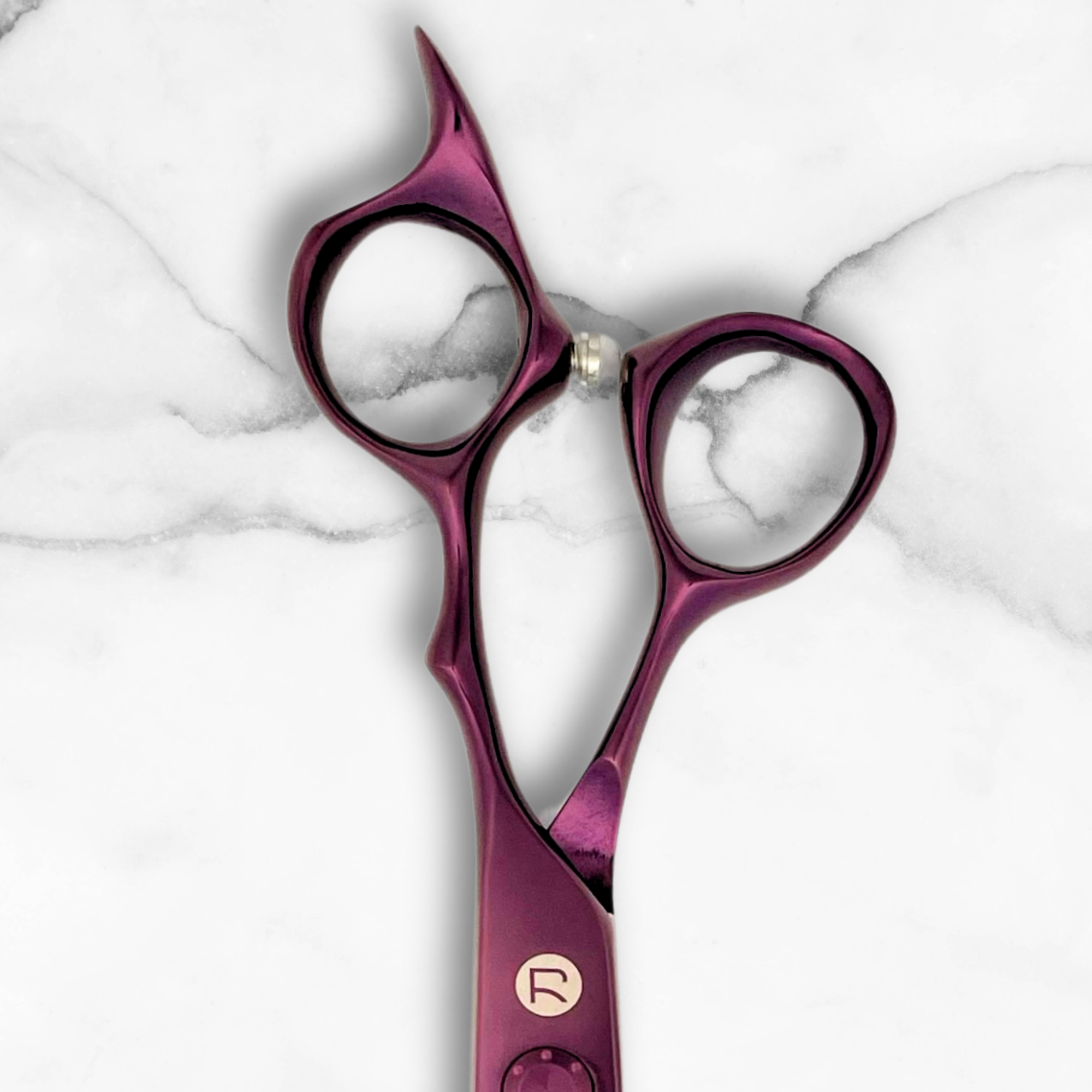
The Gold features an ergonomic offset handle with camel grip and an anatomic (cut-away) thumb hole — details that matter over a full day of cutting. This is a shear designed for stylists who understand that the tool is an extension of their craft, not just a means to complete a service.
VG10 vs 440C: The Real Difference
Both steels land in a similar HRC range, which confuses some buyers. The difference isn't hardness — it's refinement. VG10 accepts a finer edge, maintains it longer between sharpenings, and offers slightly better wear resistance due to its carbide structure. You're not buying a dramatically harder shear; you're buying one that stays at peak sharpness for more weeks between sharpenings.
For stylists doing fine precision work — detailed layers, textured cuts, anything requiring exceptional blade smoothness — VG10 justifies the premium. For general cutting across a wide variety of services, 440C handles it without compromise.
VG10: Best For
- Precision stylists doing detailed layering and fine cutting
- Stylists who want longer intervals between sharpenings
- Those cutting dry or very fine hair where blade smoothness matters most
- Investment buyers looking for long-term value over upfront savings
HRC range: 60–61 | Edge type: Convex, hand-finished | Sharpening: Less frequent than 440C; requires VG10-qualified sharpener
Damascus Steel: Where Metallurgy Meets Craft
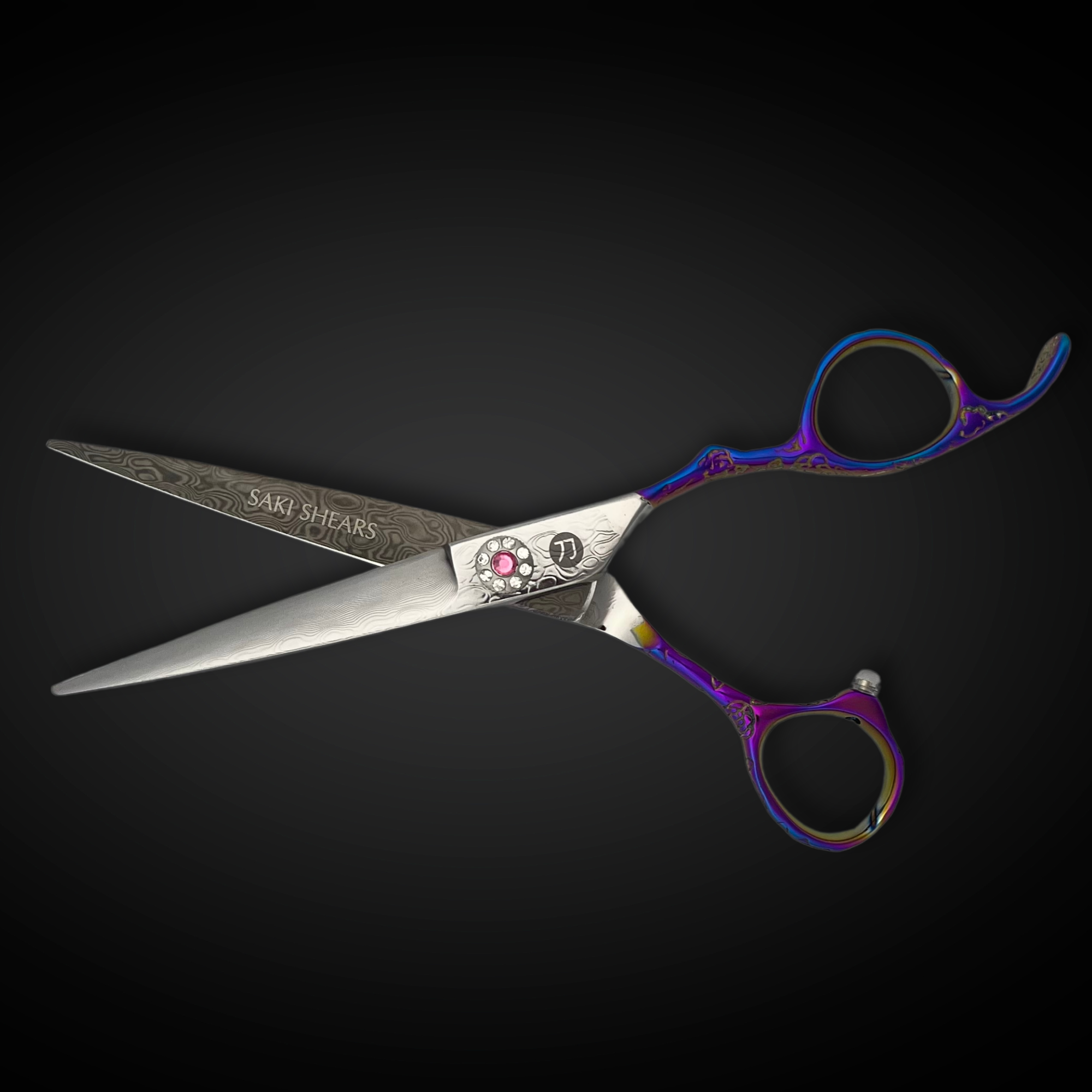
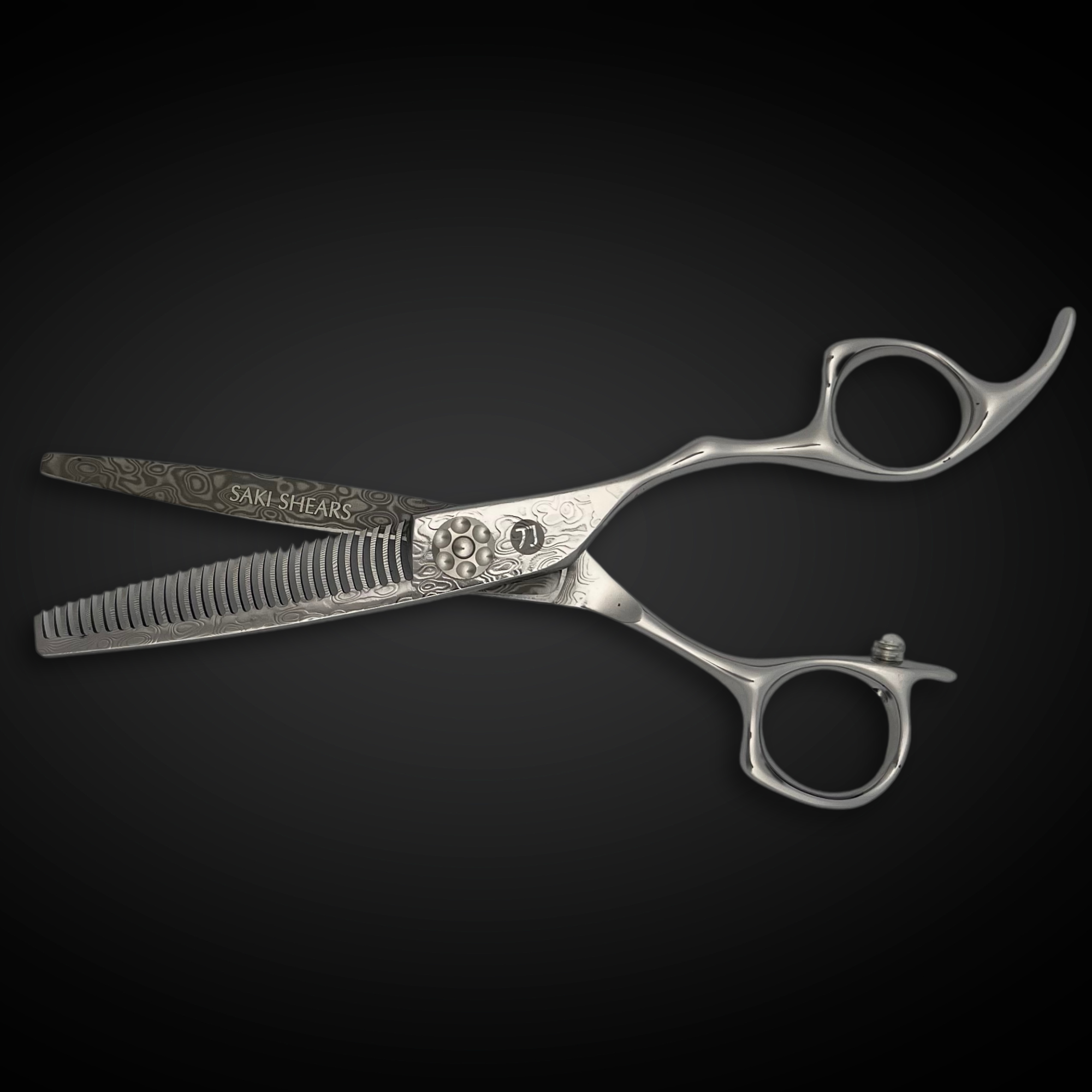
Damascus steel has a different category of appeal. It's not just a material choice — it's a manufacturing process. Japanese Damascus steel is made by folding and welding together multiple layers of different steel alloys, then repeatedly working and drawing them out to create the characteristic wavy or wood-grain pattern visible on the blade surface.
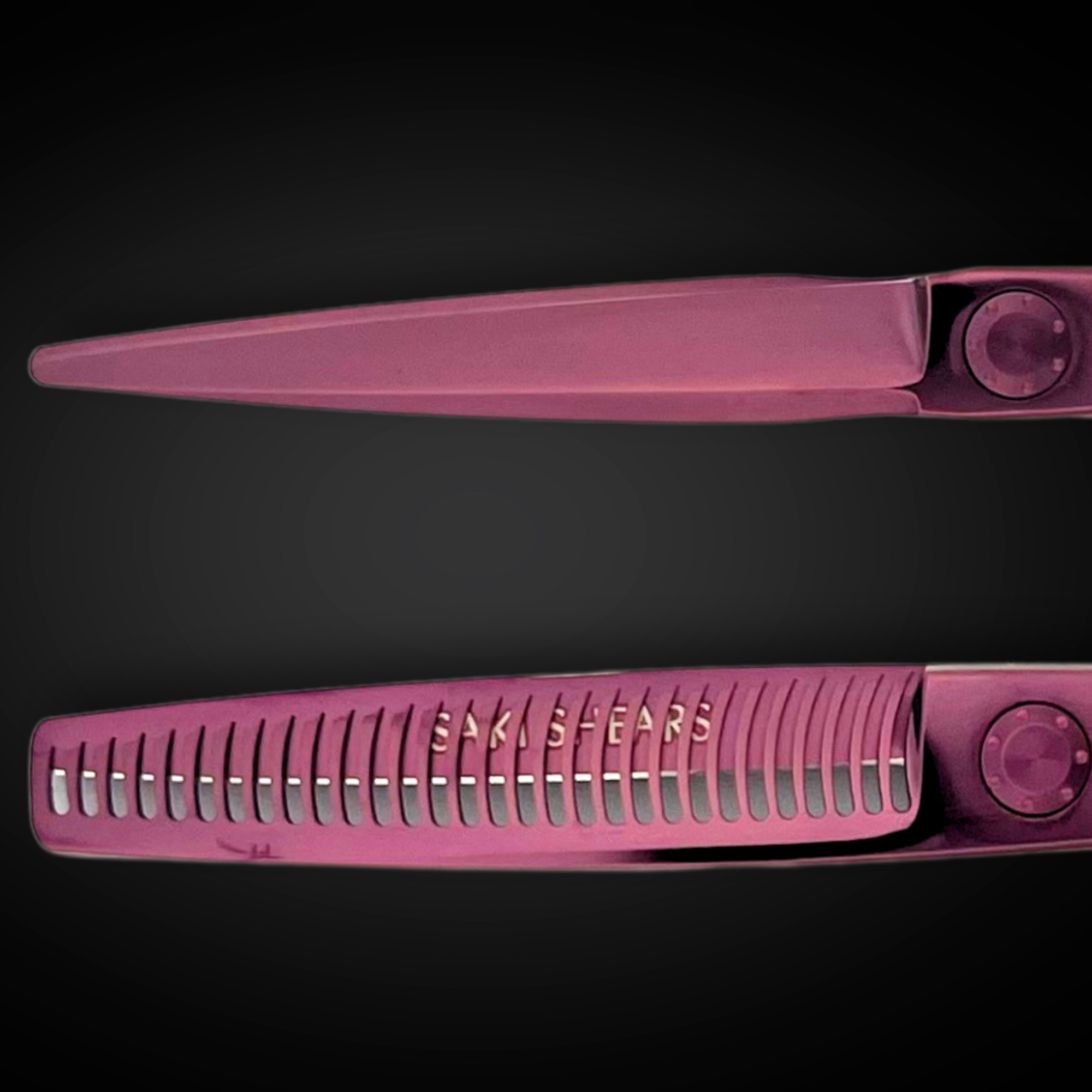
The Saki Dotanuki Damascus is made from 34 layers of folded Japan Damascus steel, achieving a hardness of 61–62 HRC — meaningfully higher than the 440C models. That extra hardness is part of why the edge is so fine and so long-lasting. The layering process also creates micro-serrations invisible to the naked eye that contribute to cutting performance on certain hair types.
The Pattern Is Structural, Not Decorative
The visual pattern on Damascus steel is a structural artifact — the visible boundary between the alternating steel layers. Each fold doubles the layer count, compressing and work-hardening the steel in ways that can't be achieved through a single-steel forging process. The result is a blade with both fine-grain hardness and a degree of internal flexibility.
This isn't an aesthetic upgrade applied on top of a standard blade. The pattern is the blade — it's what the steel is made of, all the way through.
Damascus in Professional Use
The Dotanuki is available in 5.5" and 6" — both with a convex edge and sword blade profile. At 61–62 HRC, the edge will outlast 440C significantly between sharpenings, and the sharpening itself requires someone with Damascus steel experience. This isn't a pair you take to a general-service sharpener; you want a specialist who understands multi-layer steels.
The Professional Beauty Association notes that shear steel quality directly affects stylist fatigue and long-term wrist health — finer edges require less force per cut, reducing cumulative strain over a career. Damascus steel is at the top of that performance curve.
Damascus: Best For
- Experienced stylists who understand shear maintenance
- Those whose work demands exceptional edge quality and longevity
- Stylists who sharpen infrequently but demand peak performance when they do
- Professionals who see their shears as a long-term career investment
HRC range: 61–62 | Edge type: Convex, sword blade | Sharpening: Infrequent; requires Damascus-qualified sharpener
Side-by-Side: Which Steel Fits Your Work
| Steel | HRC | Edge Retention | Sharpening | Best Use |
|---|---|---|---|---|
| 440C Stainless | 59–61 | Good | Standard sharpener | All-around, high volume |
| VG10 Cobalt | 60–61 | Very Good | VG10 qualified | Precision, fine cutting |
| Japan Damascus | 61–62 | Excellent | Damascus specialist | High-performance, investment |
A Note on Handle and Ergonomics: Steel Is Only Part of the Story
Even the best steel delivers poor results in a poorly balanced shear. While you're evaluating steel type, don't overlook how the handle geometry interacts with how you cut. Offset handles reduce wrist tension during long sessions; swivel thumbs, like those on the Sakura Swivel, allow horizontal cutting action that lowers elbow and shoulder position — a meaningful difference for anyone managing repetitive strain concerns.
The Professional Beauty Association estimates that a significant percentage of stylists develop repetitive strain injuries over the course of their careers. Shear geometry — not just steel — plays a direct role in that outcome. Pairing the right steel with the right handle for your hand position is the full picture.
If you've looked at the size question alongside steel type, the companion piece How to Choose the Right Hair Shear Size: 5.5 vs 6 vs 7 Inch covers the other half of that decision.
Sharpening and Maintenance by Steel Type
How you care for your shears matters as much as what they're made of. A few principles apply across all three steel types:
- Dry after every use. Even stainless steel is susceptible to corrosion at the pivot and finger rests. A quick dry and a drop of shear oil at the screw keeps metal moving cleanly.
- Tension adjustment is not optional. A loose pivot causes the blades to separate under pressure — what stylists call "hair folding" — regardless of blade sharpness. Adjust the tension screw so the blades close smoothly under their own weight without slamming.
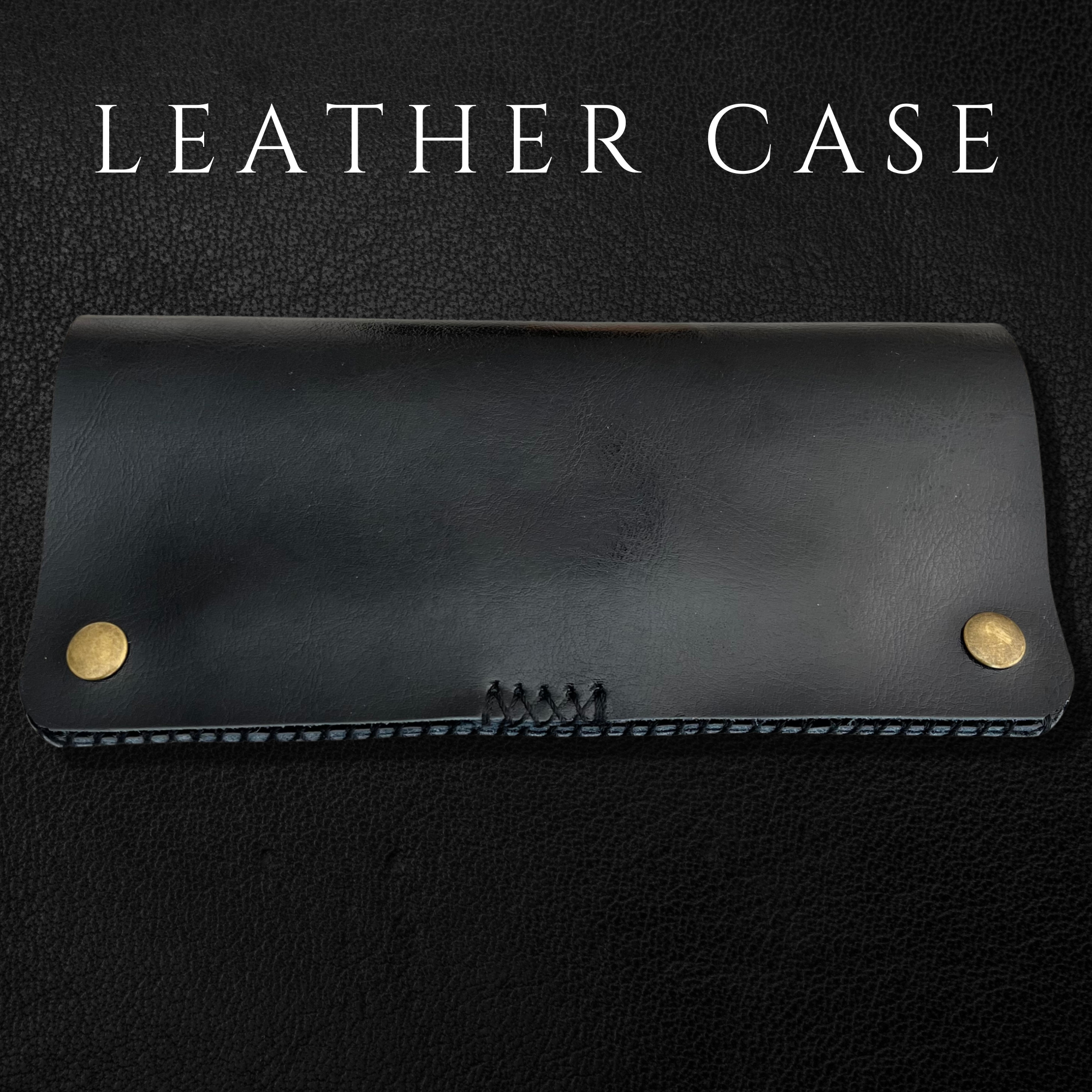
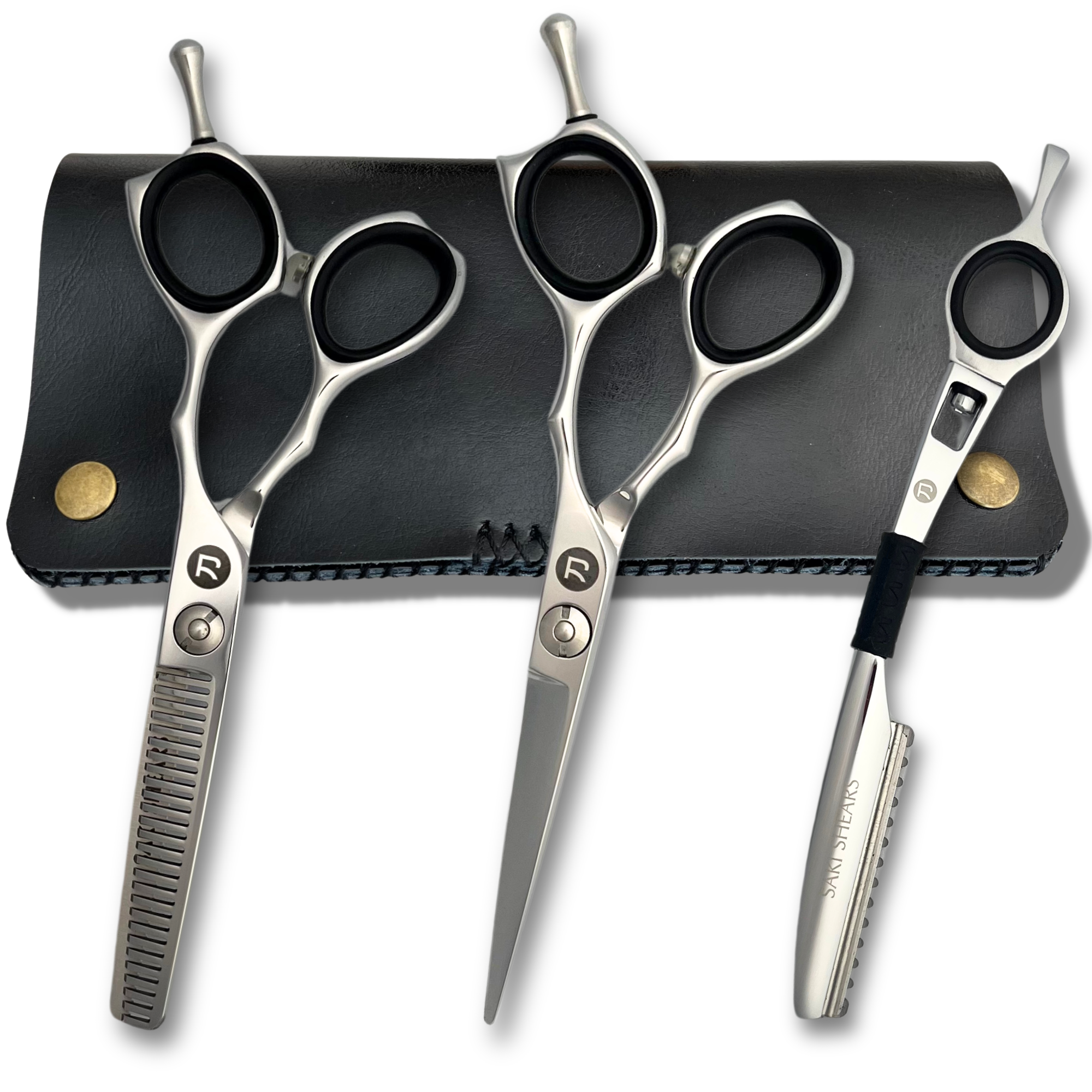
- Store properly. In a leather case, blades closed, separated from other tools. Blade-to-blade contact is how edges get nicked.
For sharpening specifically: 440C shears can go to most professional shear sharpeners. VG10 and Damascus require someone with specific experience in those steels — ask before you hand them over. An inexperienced sharpener on a Damascus blade can damage the layer structure and devalue the shear significantly.
Many of the sets across Saki's full line come with a leather carrying case that protects the blade during storage and transport. It's one of those details that extends the service life of the shear without requiring anything additional from you.
Which Shears Match Each Steel Type
Here's a quick reference across Saki's active product line:
440C Steel: Katana, Katana Set, Kotaro, Kotaro Set, Sakura Swivel, Kohana Pink Set, Makoto Student Set, Tomika — the reliable core of the line, covering everything from student to advanced professional.
VG10 Cobalt Steel: Premium Gold Hair Shears Set — the single VG10 option in the line, positioned as the precision performance tier.
Japan Damascus Steel: Dotanuki Damascus — 34 layers, 61–62 HRC, available in 5.5" and 6".
Frequently Asked Questions
Is 440C steel good for professional hair shears?
Yes. 440C Japanese stainless steel is the most widely used material in professional hair shears worldwide. With a hardness of 59–61 HRC and excellent corrosion resistance from its high chromium content, it handles the demands of daily professional use reliably. It accepts a sharp convex edge, is compatible with standard sharpeners, and performs across all cutting techniques — wet, dry, blunt, and slide.
What is VG10 steel and why is it used in premium hair shears?
VG10 is a Japanese stainless steel that adds cobalt and vanadium to the 440C baseline. The cobalt tightens the grain structure, allowing the steel to be made sharper and to hold that sharpness longer between sharpenings. It's the same steel used in high-end Japanese kitchen knives. In hair shears, VG10 is valued for its exceptional edge retention and the fineness of edge it can hold — making it the preferred choice for precision work.
Are Damascus steel hair shears worth the investment?
For experienced professional stylists who prioritize edge quality and longevity, Damascus steel shears are a sound long-term investment. The multi-layer forging process produces a blade at 61–62 HRC that outperforms single-steel shears in edge retention. The tradeoff is that Damascus shears require a specialist sharpener familiar with multi-layer steels. For stylists who understand shear maintenance and want the highest-performing blade available, the Saki Dotanuki Damascus delivers exactly that.

Ecrit par Charles Harris