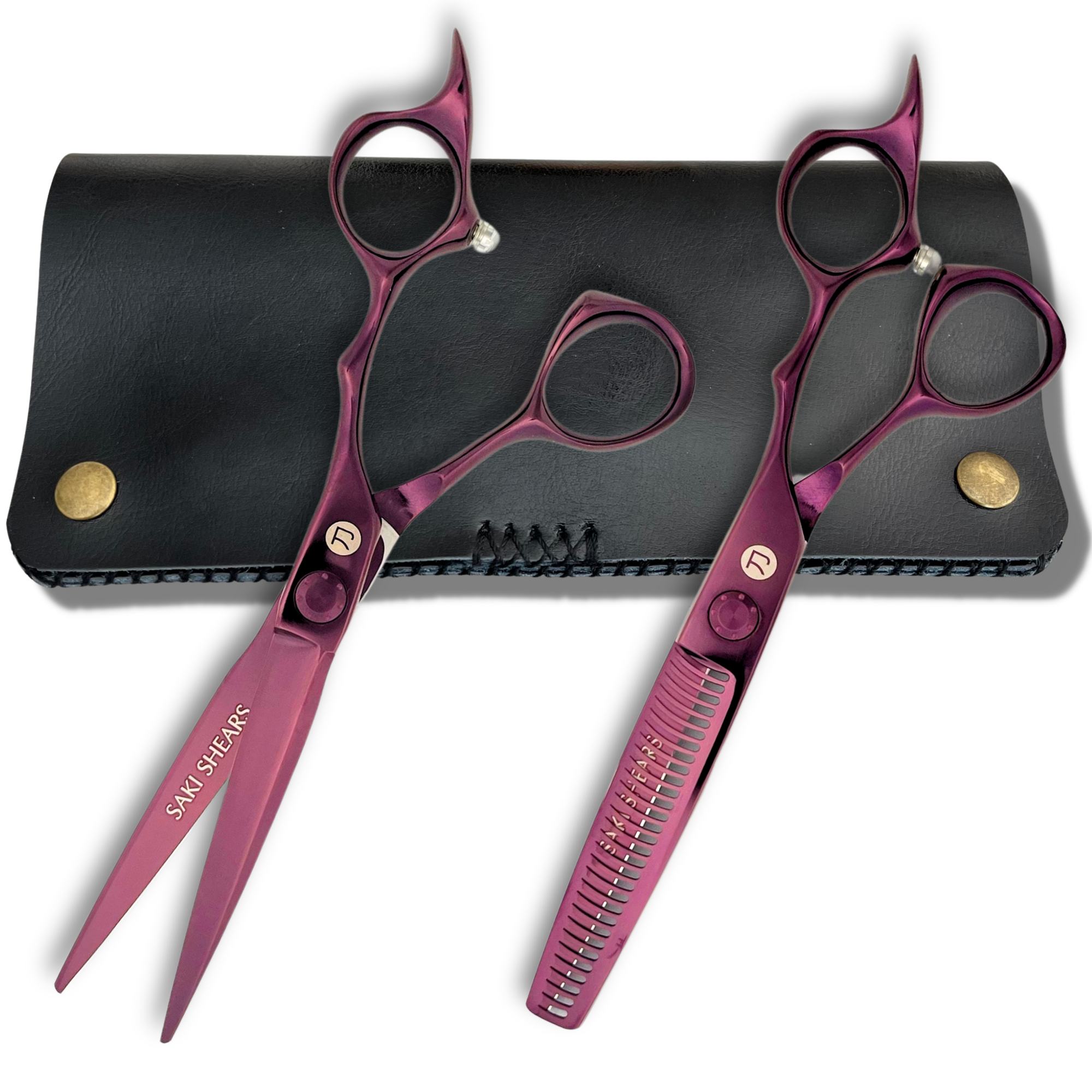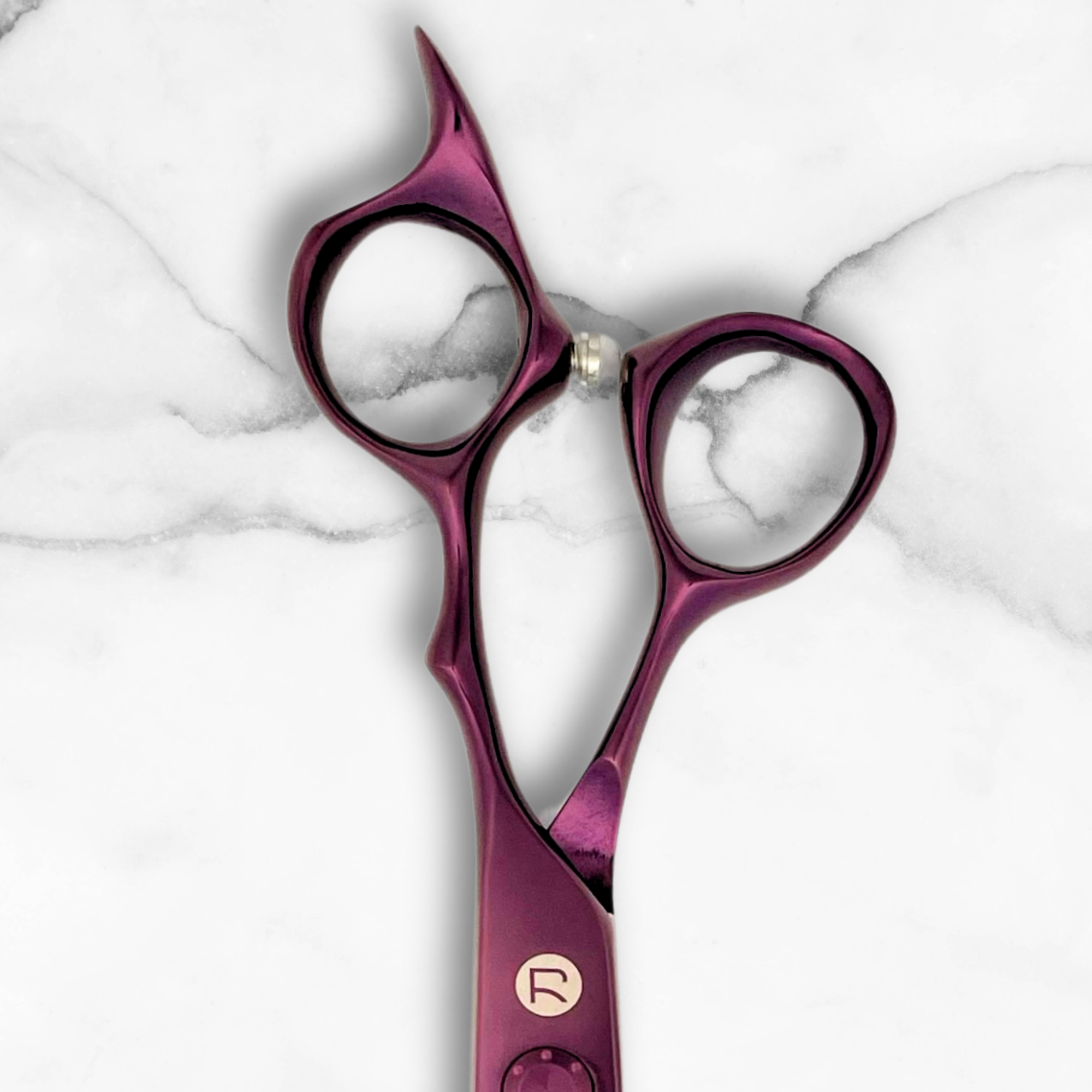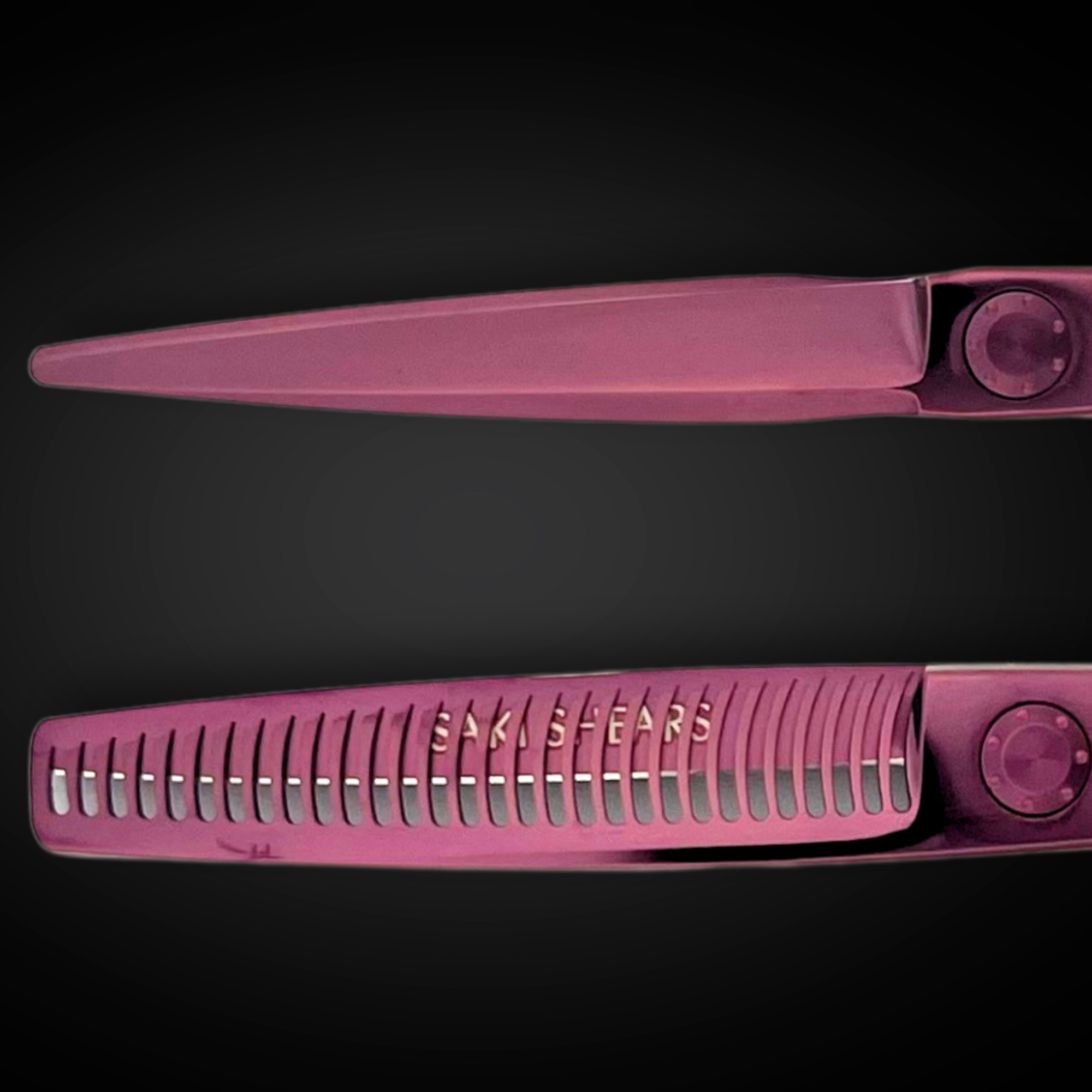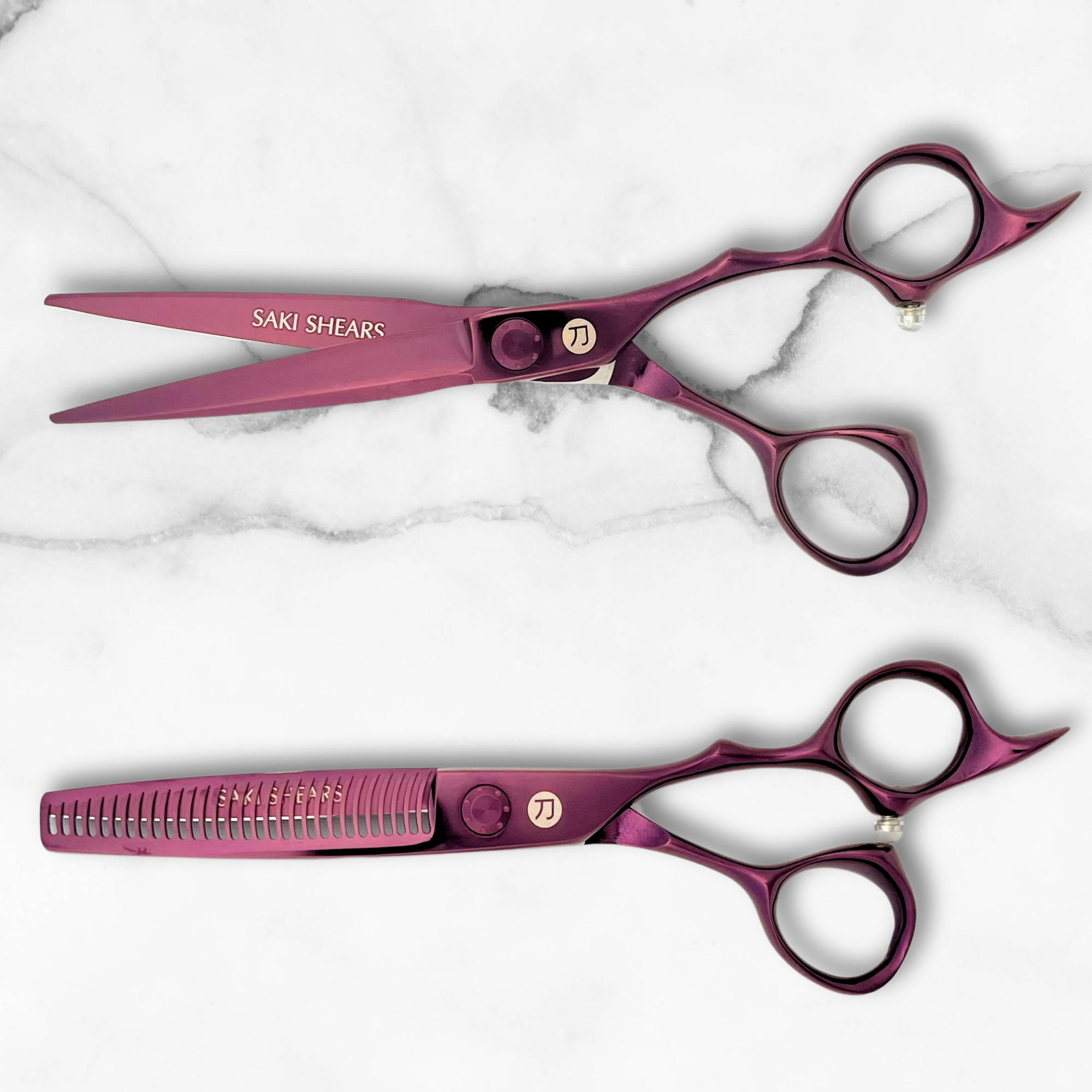
What Defines a Master-Grade Hair Cutting Shear
"Premium" and "master-grade" get attached to a lot of shears in marketing copy, but the terms mean something specific to the people who actually use these tools for a living. A master-grade hair cutting shear is defined by a small set of concrete characteristics: the steel it's forged from, how much of the finishing work is done by hand, how the blade is balanced, and how the edge is ground. None of these are marketing flourishes — each one has a direct, measurable effect on how the shear performs over years of daily cutting.
Steel Quality
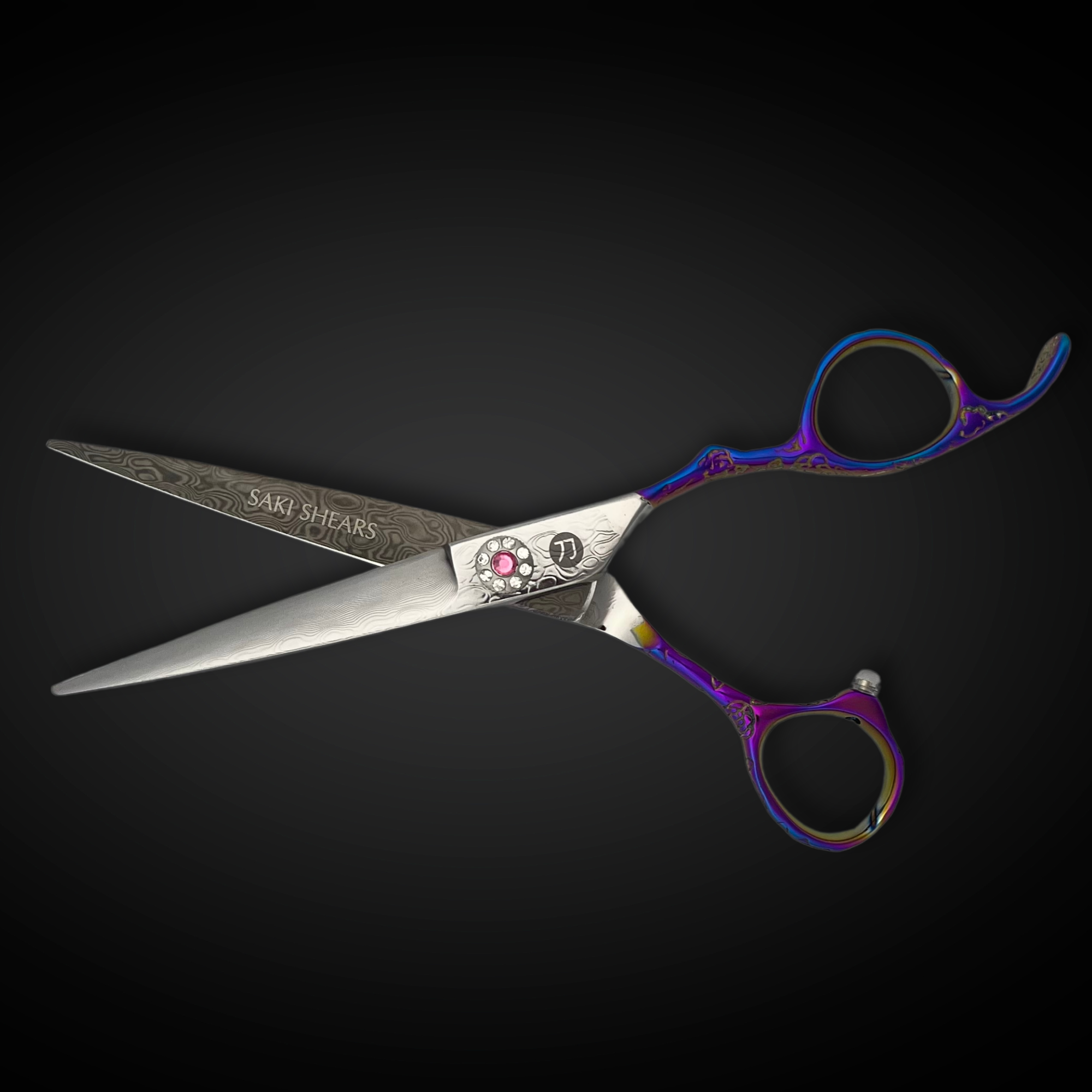
Everything about a shear's long-term performance starts with the steel. Master-grade shears are typically forged from high-carbon Japanese steel, often in the VG or ATS families, sometimes with added cobalt for extra hardness and corrosion resistance. These steels can be hardened to a higher Rockwell rating than the mild stainless used in mass-produced shears, which means the edge stays sharp through more cuts before it needs honing. Lower-grade steel dulls faster, chips more easily, and often can't hold as fine an edge no matter how well it's sharpened.
Steel alone doesn't tell the whole story, though. The alloy has to be paired with heat treatment that's actually suited to it, which is where hand craftsmanship starts to matter as much as the raw material.
Hand-Finishing and Craftsmanship
Mass-produced shears are typically stamped and ground by machine from start to finish, which keeps costs down but leaves little room for correcting inconsistencies in the steel or the grind. Master-grade shears usually involve significant hand-finishing — a craftsman individually adjusts the edge bevel, polishes the blade face, and fine-tunes the pivot fit by hand rather than relying entirely on automated tooling. This is slower and more labor-intensive, but it's also why hand-finished shears tend to have a more consistent edge along the full length of the blade and a smoother action at the pivot.
Hand-finishing also shows up in details that are easy to overlook but matter over years of use: how cleanly the screw or tension mechanism is seated, how evenly the blades meet along their entire length, and how well the finger rest and handle are fitted to the rest of the shear.
Balance
Balance refers to where a shear's weight sits relative to the pivot point, and it's one of the clearest signals of a well-made tool. A shear that's balanced close to the pivot feels lighter and more maneuverable during fast, repetitive cutting, which reduces hand and wrist fatigue over a full day of appointments. Poorly balanced shears — often the result of mismatched materials or inconsistent manufacturing — feel front-heavy or back-heavy, forcing the hand to compensate on every cut. Master-grade shears are built with balance as a design goal from the start, not as an afterthought of whatever steel and handle happened to be paired together.
Edge Geometry
How the edge is ground affects both cutting feel and the type of work a shear is suited for. A convex edge — hollow-ground down to a single fine point — produces a clean, quiet cut with minimal hair displacement, but it requires precise, skilled sharpening to maintain. A beveled edge is more forgiving to resharpen and holds up well to heavy daily use. Master-grade shears are ground with attention to consistency along the entire blade length, so the cutting feel doesn't vary from heel to tip. That consistency is difficult to achieve with automated grinding alone and is usually where hand-finishing plays its largest role.
Why These Factors Matter Together
None of these four factors — steel, craftsmanship, balance, and edge geometry — makes a shear master-grade on its own. Excellent steel with a rushed grind still won't hold a consistent edge. Careful hand-finishing on mediocre steel still won't hold an edge as long as it should. What separates a genuinely premium shear from one that's simply marketed that way is whether all four factors were treated as equally important during manufacturing, rather than one being used to compensate for shortcuts elsewhere.
- Steel quality — the alloy and hardening that determine edge retention
- Hand-finishing — individual attention to grind, polish, and pivot fit
- Balance — weight distribution relative to the pivot for reduced fatigue
- Edge geometry — grind consistency along the full blade length
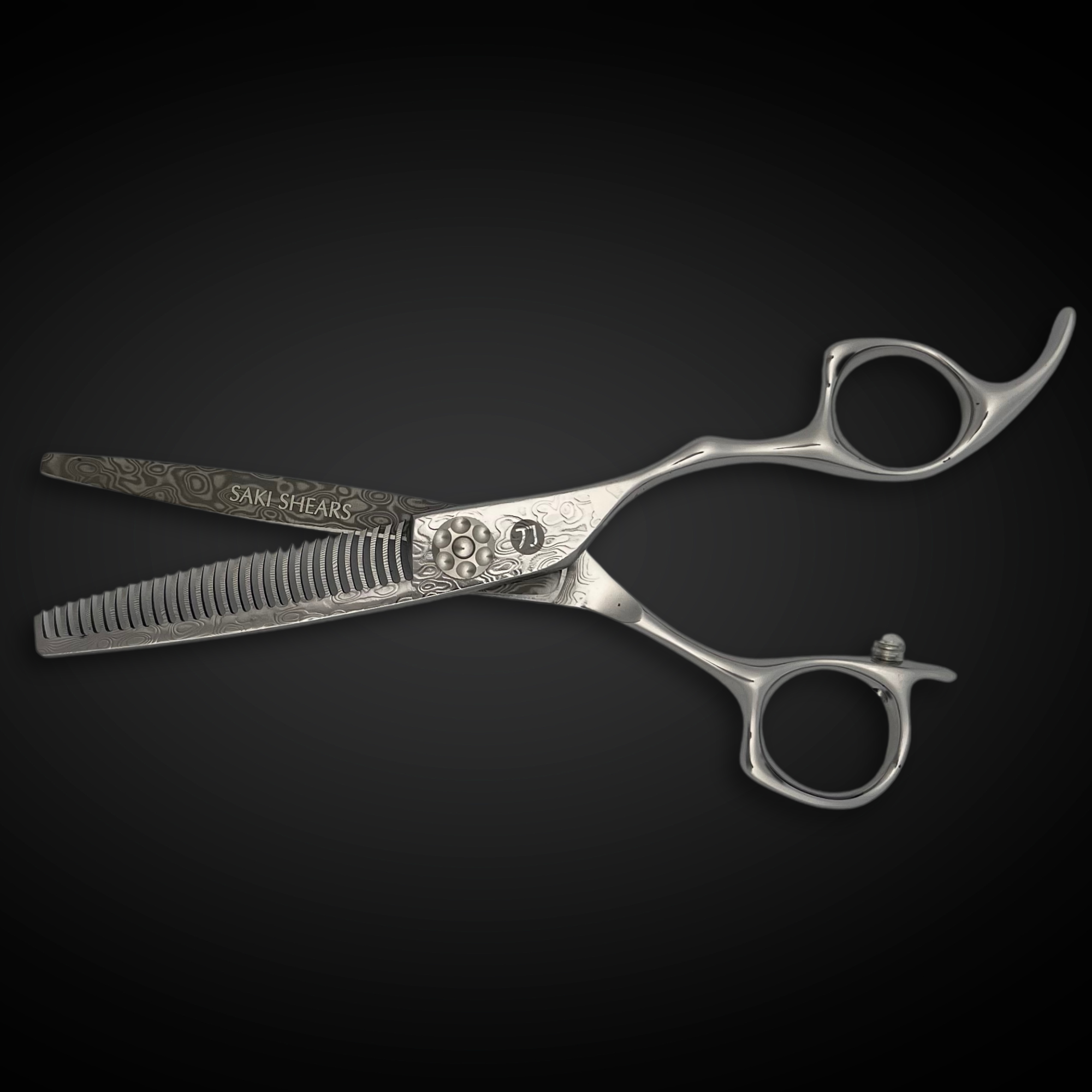
Stylists and barbers evaluating a shear against this standard can browse Saki's current lineup of master-grade cutting shears at the hair cutting shears collection. For stylists working with Damascus steel patterns specifically, the Damascus hair shears collection is also worth a look.

Written by Charles Harris