The Straight Razor in Professional Barbering: Uses, Technique, and Safety
The straight razor remains one of the most versatile tools in a barber's kit despite decades of clipper innovation. Used correctly, it delivers a level of precision at the neckline and hairline that guards and trimmers can't match, and it's still the foundation of a proper straight-razor shave. This piece covers how working barbers use the razor day to day: blade types, core techniques, and the safety and hygiene practices required when a single tool touches multiple clients.
Straight Razor or Shavette: Choosing the Right Blade
Two tools fall under "straight razor" in most shops. A traditional straight razor has a fixed, sharpenable blade that needs regular honing and stropping to hold an edge. A shavette, sometimes called a replaceable-blade razor, uses disposable single- or double-edged blade inserts that get discarded after limited use. Shavettes cost less to maintain, don't require honing equipment, and let a barber use a fresh edge on every client without owning a strop. A traditional razor holds an edge that many experienced barbers prefer for feel and control, but it takes maintenance skill and time to keep it there. Neither option is simply "better" — the right choice depends on how much upkeep a barber wants to take on and where they are in developing razor skills. Many shops keep both on hand: a full straight razor for shaves and one or two shavettes loaded with fresh blades for quick detail work.
Where the Razor Earns Its Place
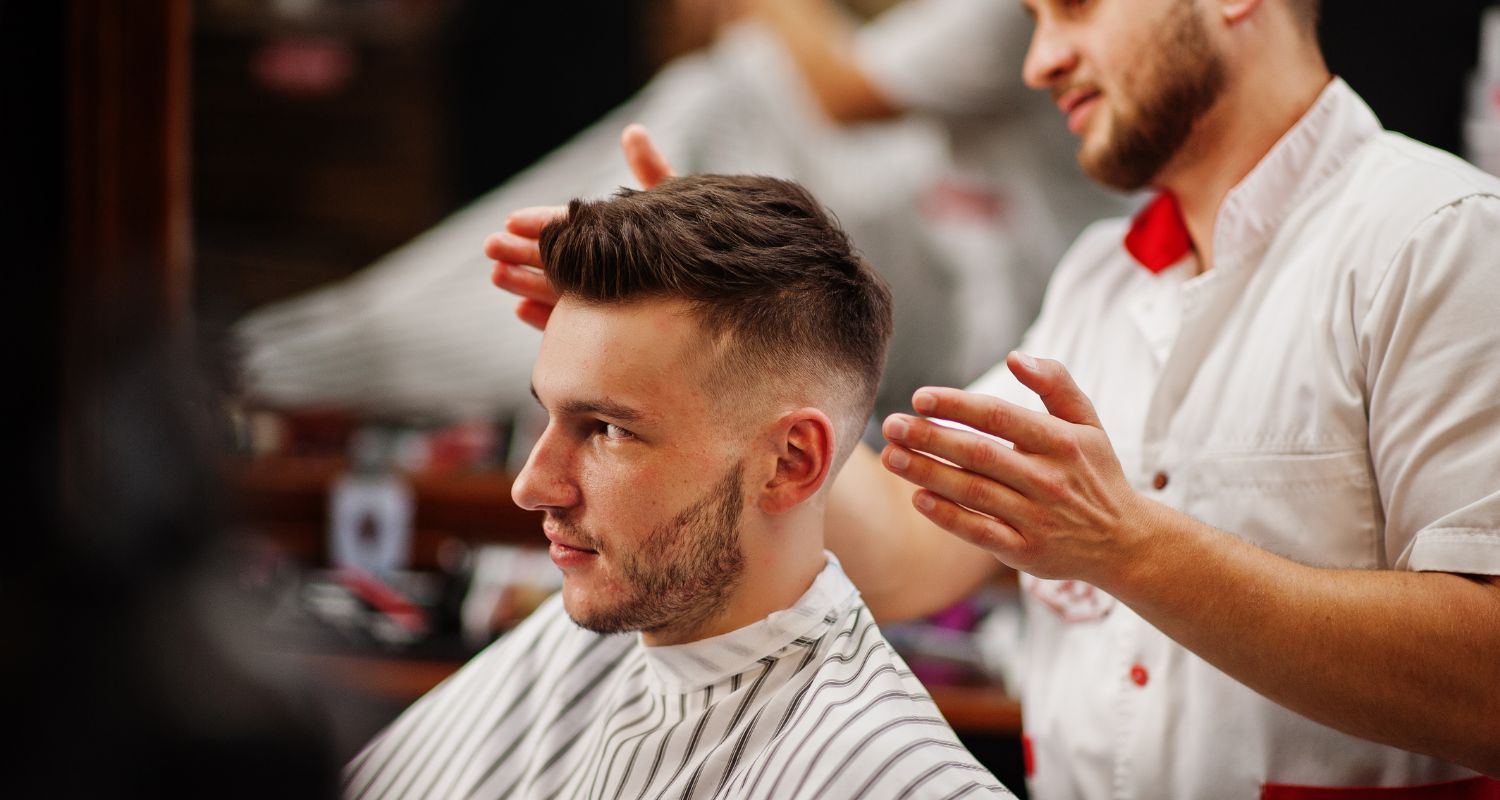
Clean neckline and hairline work is where the razor separates a sharp finish from an average one. Once clippers or shears establish the general shape, the razor defines the perimeter: squaring or rounding a neckline, sharpening a hairline, and cleaning stray hairs along the ears. Because the blade cuts flush to the skin, it produces a crisper edge than a trimmer alone, particularly on clients with fine or light-colored hair where guard lines are harder to read. Razor work is also used to soften the edge of a fade into bare skin and for detail shaping around sideburns and facial hair borders.
The Traditional Straight-Razor Shave
A full shave is a distinct service built around a set sequence: pre-shave preparation with a hot towel or warm lather to soften the beard, lathering, and then a pass with the razor in the direction of hair growth, followed by a second pass across or against the grain if the client's skin tolerates it. Blade angle matters more than pressure — a shallow angle, generally around 30 degrees, combined with taut skin and light pressure, reduces irritation and nicks. Stropping a fixed-blade razor, or confirming a fresh blade in a shavette, is standard practice immediately before every shave. Aftercare — a cool towel, an alum block, and a non-alcohol balm — finishes the service and lowers the odds of razor burn.
Safety and Hygiene Between Clients
Because the razor makes direct skin contact and can draw blood, hygiene protocol isn't optional. For shavettes, that means a new blade insert for every client, no exceptions. For fixed-blade razors, the blade must be disinfected with an EPA-registered, hospital-grade disinfectant between clients, following the contact time listed on the product label, and stored in a closed, sanitized container when not in use. State cosmetology and barbering boards set specific disinfection requirements for razors used on multiple clients, and those rules vary — barbers should know and follow the requirements in their own state. A few practical habits worth building into the routine:
- Inspect the blade edge before each use and replace or re-hone it at the first sign of dullness or a nick.
- Keep a dedicated, labeled container for used blades, separate from clean tools.
- Wash hands, and put on fresh gloves where required, before razor work.
- Disinfect the razor handle and any surface the blade touched, not just the blade itself.
Building the Skill
Straight-razor work takes time to develop. Most barbers start with shavette work on necklines and simple detail lines before moving into full shaves, and many practice honing and stropping technique separately from client work. A well-balanced razor with a comfortable handle makes the learning curve easier; barbers choosing a first razor or shavette can browse Saki Shears' straight razor and shavette selection to compare blade styles and weights. As with shears, the tool matters less than consistent practice, a sharp edge, and attention to the safety steps that keep the service consistent for every client in the chair.

Written by Charles Harris