The Straight Razor Shave: Blade Angle, Skin Prep, and Grain Direction
A clean straight razor shave is one of the clearest signs of a barber who knows the craft. It is also one of the easiest services to botch: the margin between a smooth, irritation-free finish and a razor burn complaint is a matter of a few degrees of blade angle and the direction of a single stroke. The fundamentals below are worth drilling until they are automatic.
Get the Blade Angle Right
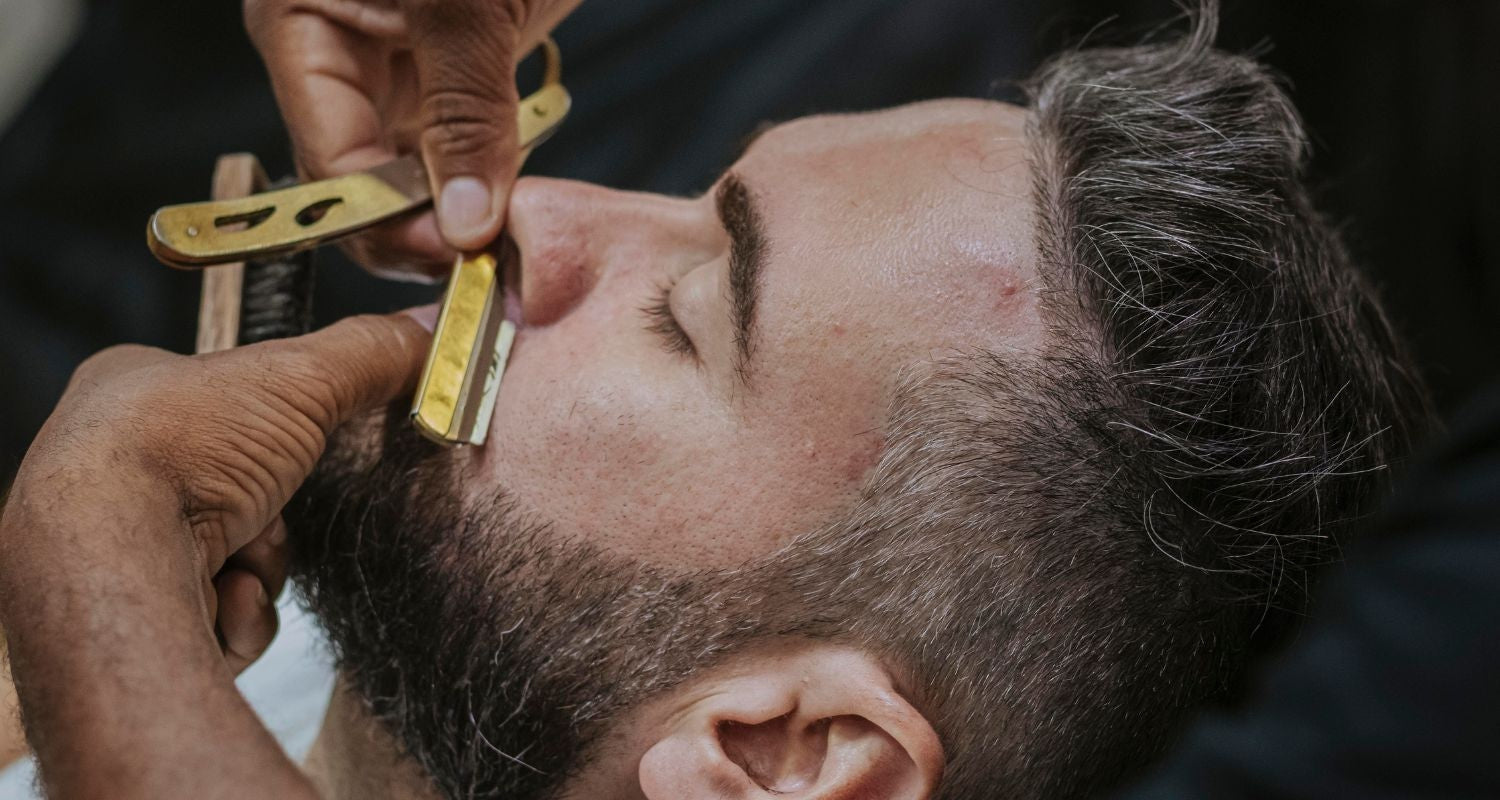
Most straight razors cut best somewhere in the 30-degree range relative to the skin — noticeably flatter than the angle most barbers use with a safety razor. Too steep an angle and the edge scrapes rather than shears, digging into the skin and raising the odds of a nick on any bump or contour of the jaw and neck. Too flat an angle and the blade rides over the hair without cutting cleanly, forcing you into extra passes that irritate the skin more than a single confident pass ever would. The angle should stay consistent as you follow the curve of the face; that means adjusting your wrist and the client's head position together rather than trying to hold one fixed hand angle across a moving surface.
Skin Prep Is Not Optional
Hair cuts easier when it is warm and hydrated, and skin resists nicking when it is softened first. A proper hot towel application, held long enough to actually raise the skin temperature, opens pores and softens the hair shaft. Follow it with a pre-shave oil or cream to further lubricate the surface, then build a lather that stays wet through the full stroke — a lather that dries out mid-pass loses its glide and turns a smooth stroke into drag. Skipping or rushing prep is the single most common reason a technically correct stroke still ends in irritation.
Stroke Direction Relative to the Grain
Hair grows in different directions across the face and neck, and grain direction should dictate your stroke order, not the other way around:
- First pass, with the grain: cutting in the direction hair grows removes the bulk of length with the least trauma to the skin. This is the safest pass and the one to lean on for clients with sensitive skin or a history of ingrown hairs.
- Second pass, across the grain: once the skin has been re-prepped, a pass perpendicular to growth direction picks up what the first pass left behind and tightens the finish.
- Third pass, against the grain: this delivers the closest possible finish but also carries the highest risk of irritation and ingrown hairs, since the blade is now working against the direction the follicle wants to lay. Reserve it for clients who specifically want a very close shave and whose skin has shown no history of razor bumps, and always re-lather and re-check skin condition before attempting it.
Stretching the skin taut in the direction opposite the stroke, with your free hand, is what makes each of these passes work — it lifts the hair slightly and presents a flatter surface to the blade, reducing tugging.
Common Mistakes That Cause Nicks and Irritation
- Too much pressure. A sharp blade at the correct angle needs almost no downward force. Pressing harder to compensate for a dull edge is how nicks happen.
- Going against the grain too soon. Attempting a third pass before the skin has recovered from the first two is a common cause of razor burn.
- Uneven skin tension. A slack stretch lets the blade catch and tug instead of gliding, especially around the jawline and under the chin.
- A dull or poorly honed edge. No amount of technique compensates for a blade that has lost its edge. Strop before every client and get blades professionally honed on a regular schedule.
- Skipping aftercare. A cold towel to close the pores, followed by an alum block to disinfect any micro-abrasions and a fragrance-free moisturizer, meaningfully reduces post-shave redness and bumps.
None of this replaces practice on real skin under supervision, but barbers who consistently check their angle, respect grain direction, and keep their blades properly maintained see far fewer callbacks for irritation. Browse Saki Shears' straight and safety razors for tools built to hold a consistent edge through a full shift of work.

Written by Charles Harris