Damascus Steel Hair Shears: What Stylists Should Know
What Damascus Steel Actually Is
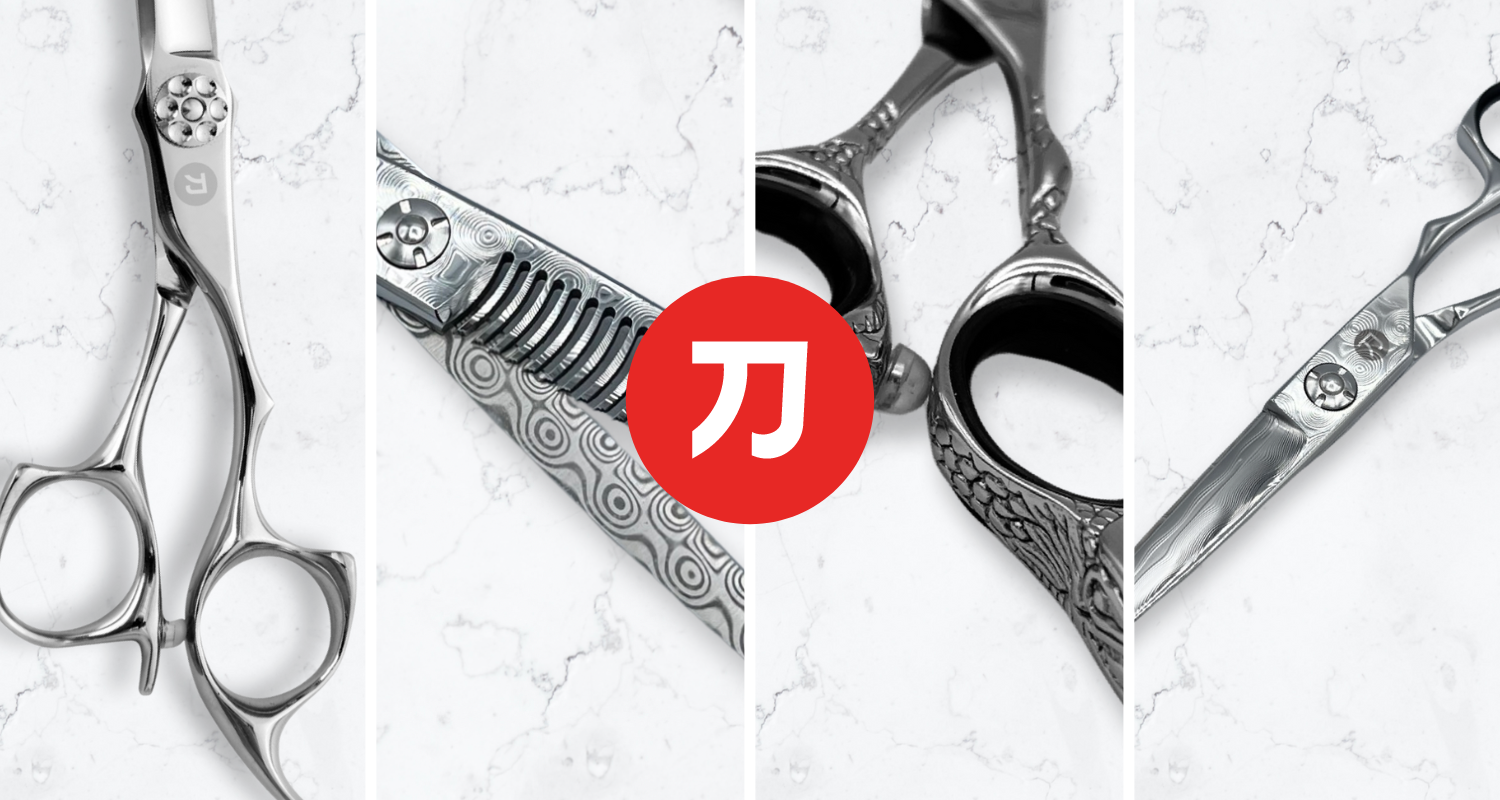
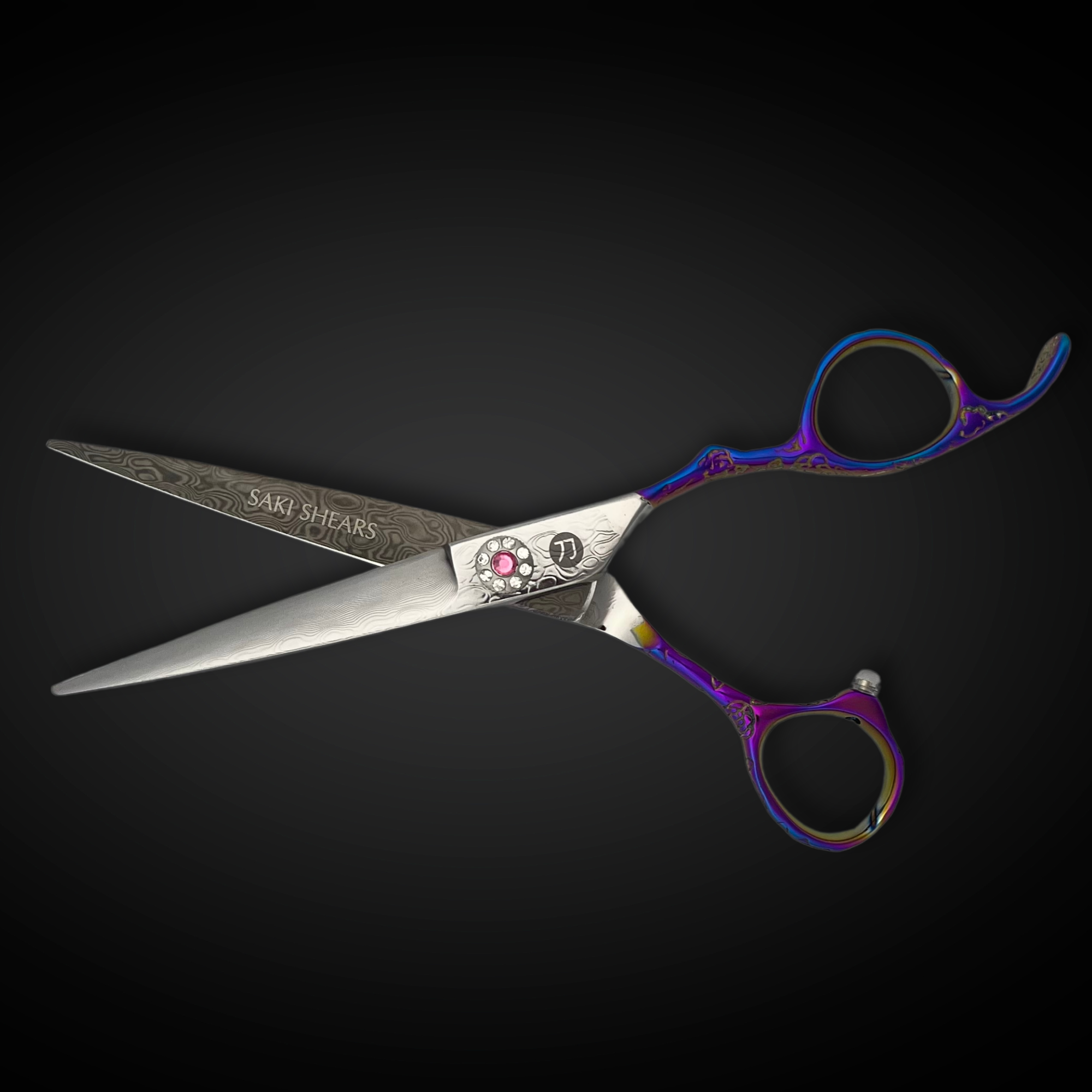
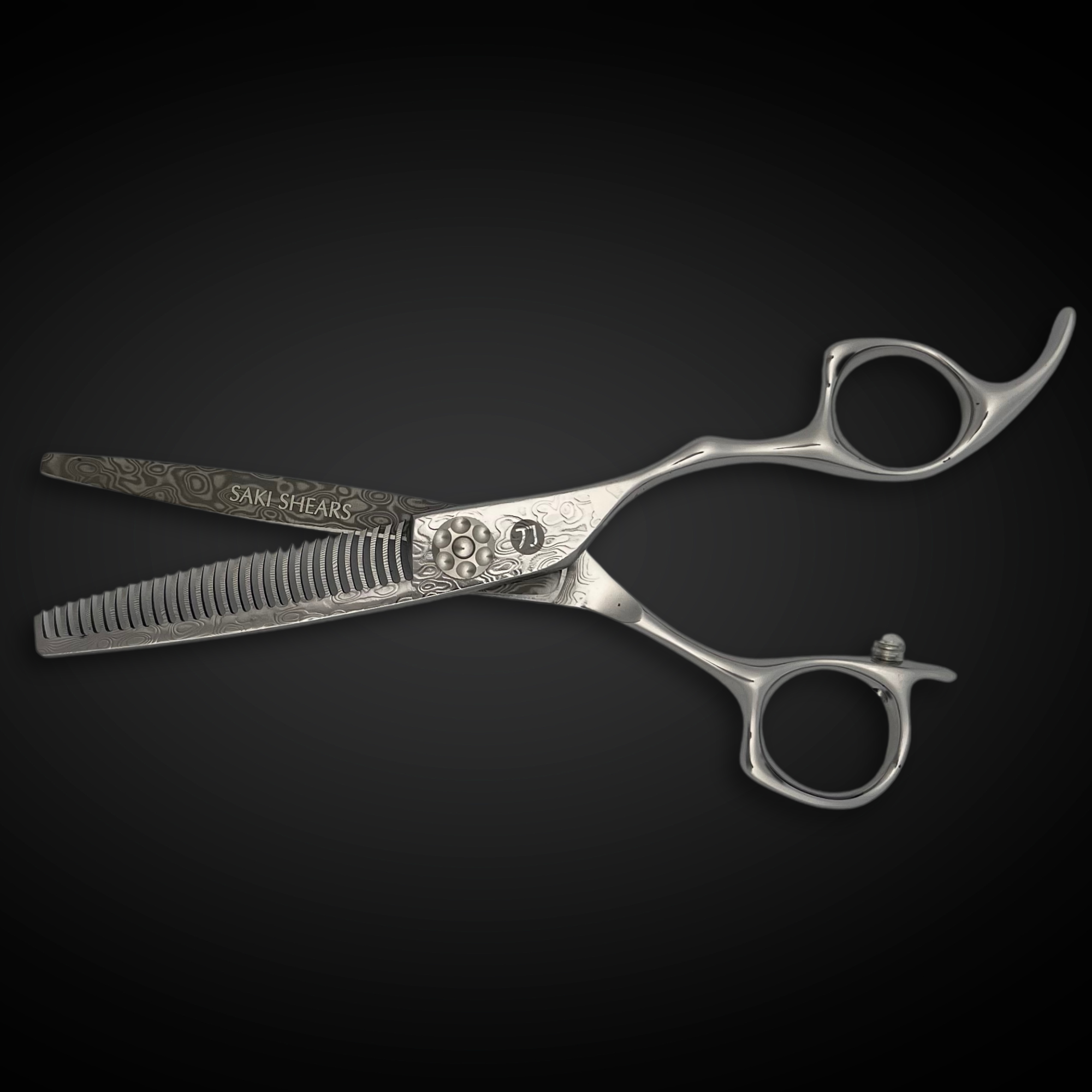
Damascus steel refers to a blade made from multiple layers of different steel alloys that have been forge-welded together, then folded and hammered repeatedly before being shaped into a final blade. The name comes from a historical tradition of pattern-welded blades, and today it is used to describe any blade built from layered steel rather than a single, uniform alloy. The defining visual trait, a wavy or mottled pattern along the blade face, is the result of the layering: when the finished blade is etched with a mild acid, the different steels in the layers react differently and the pattern becomes visible.
How Layered Blades Are Made
The basic process starts with two or more steel types, typically one harder, higher-carbon steel for cutting performance and one softer, more flexible steel for structural support. These are stacked, heated, and forge-welded into a single billet, then folded and hammered out repeatedly, doubling the layer count with each fold. A blade might end up with anywhere from a few dozen to several hundred layers depending on how many times it was folded. Once the layering is complete, the billet is forged and ground into the final shear shape, heat-treated for hardness, and polished before the pattern is etched into the surface. It is worth knowing that not every shear marketed as "Damascus" goes through this full process. Some manufacturers use true forge-folded, multi-layer steel, while others start with a conventional mono-steel blade and etch or laser-mark a Damascus-style pattern onto the surface for appearance only. The two are not equivalent, and the layered construction is what actually affects the steel's properties, not the pattern itself.
What Layering Changes About Performance
The genuine performance case for layered steel in a hair shear comes down to combining a hard cutting edge with a more resilient body. A harder core steel, often something like VG10 or a comparable high-carbon alloy, can be ground to a finer edge and will generally hold that edge longer between honings. Wrapping that hard core in softer, tougher outer layers can make the finished blade somewhat less prone to chipping than a shear made entirely from a single very hard steel, since the outer layers absorb some of the stress that would otherwise concentrate at the edge. This is a real, if modest, engineering benefit rather than pure marketing.
Where the Claims Get Overstated
It is easy to oversell Damascus steel, and stylists should go in with realistic expectations. A well-made mono-steel shear from a reputable maker, using a quality high-carbon or cobalt alloy at an appropriate hardness, can match or come close to a layered blade in day-to-day cutting performance. The layering pattern itself has no effect on sharpness or edge retention; it is a byproduct of the construction, not a performance feature. Hardness is usually reported as an HRC (Rockwell C) rating, and it is the core steel's HRC and how well the blade was heat-treated that determines edge retention, not the number of layers or how elaborate the pattern looks. Layered construction also does not change sharpening requirements. A Damascus shear still needs the same honing schedule and care as any other high-quality steel, and it is not inherently easier or harder to maintain. Finally, more layers is not automatically better. Past a certain point, additional folding mostly changes the visual pattern rather than adding further structural benefit.
The Real Trade-Offs
- Cost: layered, forge-welded blades take more labor to produce, and that cost is passed on. Expect a genuine Damascus shear to sit at a premium price point compared to an equivalent mono-steel shear from the same maker.
- Edge retention: a well-made layered blade with a hard core can hold an edge slightly longer than a softer mono-steel blade, but the gap versus a premium mono-steel shear of similar hardness is usually small.
- Toughness: the layered structure can add some resistance to chipping under stress, which may matter for stylists who are heavy-handed or who cut a lot of coarse or wet hair.
- Appearance: the pattern is a genuine aesthetic differentiator and, for some stylists, part of the appeal of the tool, but it has no bearing on how the shear performs.
- Authenticity varies by maker: forged, multi-layer construction and cosmetic etching on mono-steel are both sold as "Damascus," and only the former delivers the structural benefits described above.
What to Check Before Buying
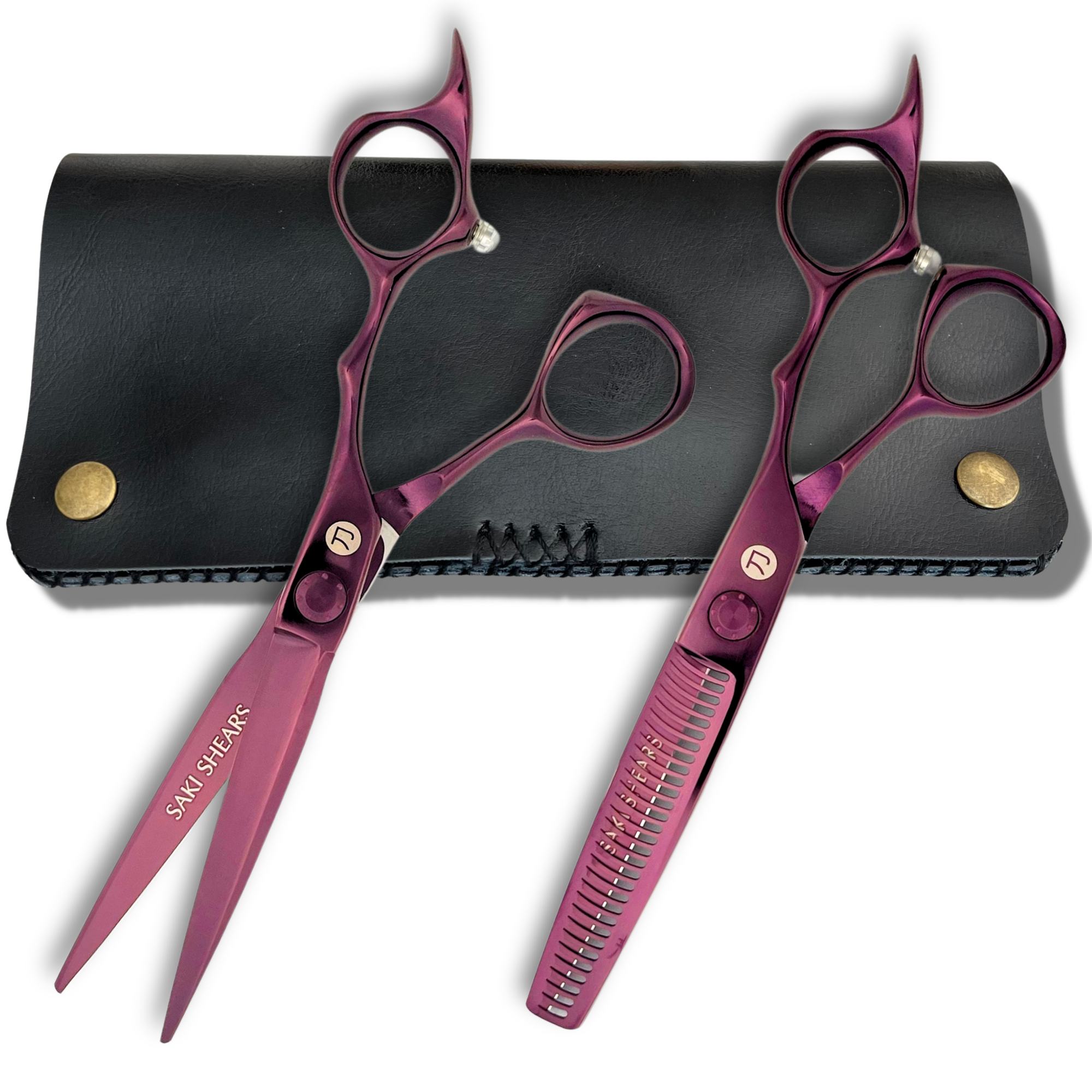
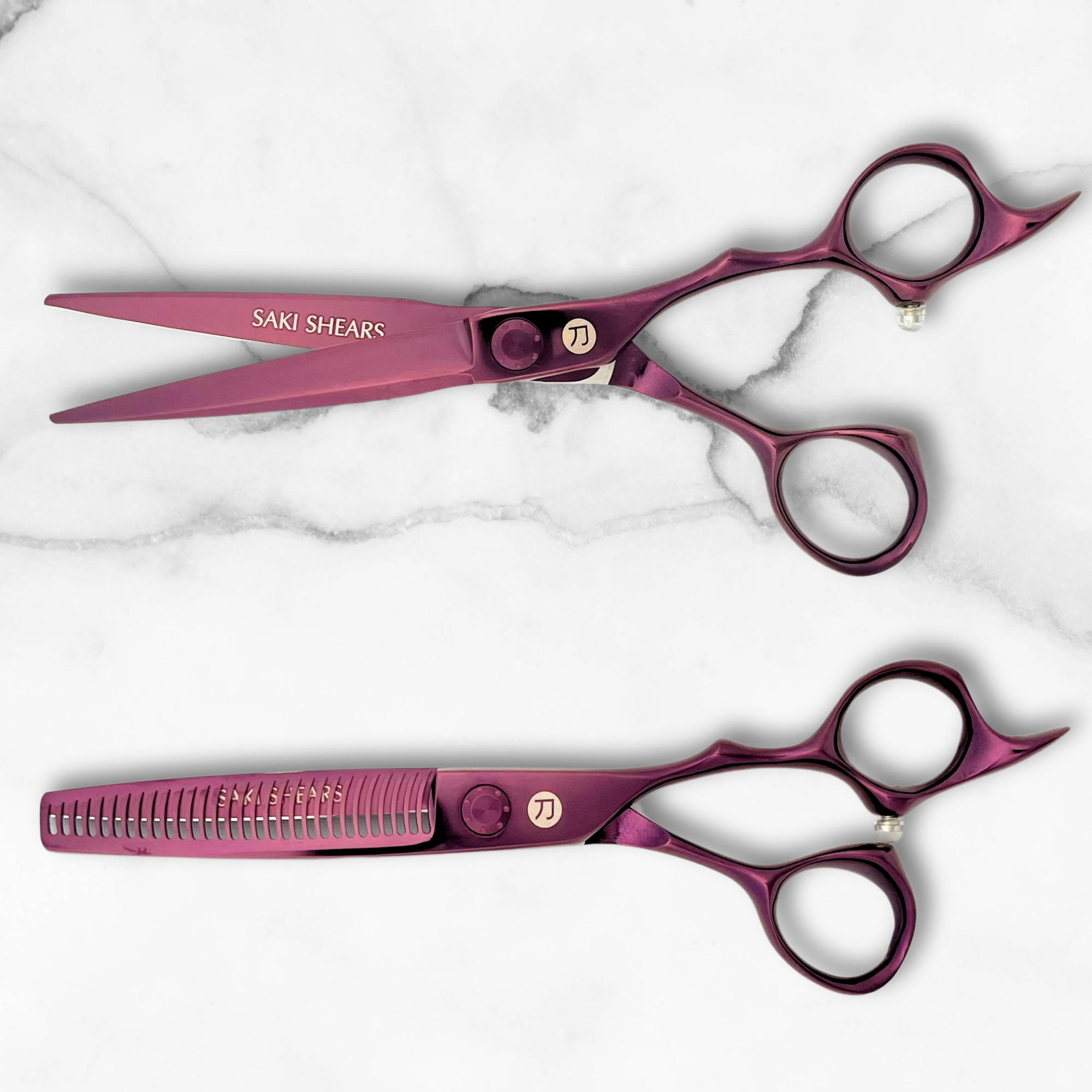
If you are considering a Damascus hair shear, ask about the core steel alloy and its HRC rating rather than relying on the pattern alone. A maker who can tell you the core steel type and hardness is more likely to be using genuine forge-welded construction. Handle fit, balance, and pivot quality still matter as much as they do with any other shear, since blade material alone does not make a tool comfortable to use through a full shift. Saki's Damascus line is built around a hard core steel wrapped in layered outer steel for exactly the combination of edge retention and durability described above, and it can be browsed in the Damascus hair shears collection.
Is Damascus Worth It
Damascus steel is a legitimate construction method with real, if incremental, benefits for edge retention and toughness when it is done properly, and it produces a distinctive blade that some stylists specifically want. It is not a dramatic upgrade over a well-made premium mono-steel shear, and it should be chosen for the combination of its actual metallurgical benefits and its appearance, not on the assumption that a patterned blade automatically outperforms every other option on the market.

Written by Charles Harris