Should You Sharpen Your Hair Shears Yourself or Rely on a Professional?
Shears take a beating over the course of a working day: constant contact with hair, product residue, moisture, and repeated opening and closing under tension. Keeping them in good condition is part maintenance you can safely do yourself, and part specialized work that belongs with a professional. Knowing where that line falls will keep your shears cutting cleanly and protect the investment you made in them.
What You Can Safely Do Yourself
Daily and weekly upkeep is well within reach for any stylist and takes only a few minutes.
- Wipe blades after every client. Hair, oils, and product buildup left on the blade accelerate dulling and can contribute to corrosion over time. A dry, lint-free cloth after each use is enough.
- Oil the pivot regularly. A drop of shear-specific oil at the pivot point keeps the blades gliding smoothly and reduces friction-related wear. Wipe away excess so it doesn't transfer to hair.
- Check tension. Hold the shear by the finger ring and let the other blade fall open under its own weight; it should close slowly and evenly rather than dropping or sticking. If tension feels consistently off, note it, but resist the urge to force the adjustment screw beyond a light touch.
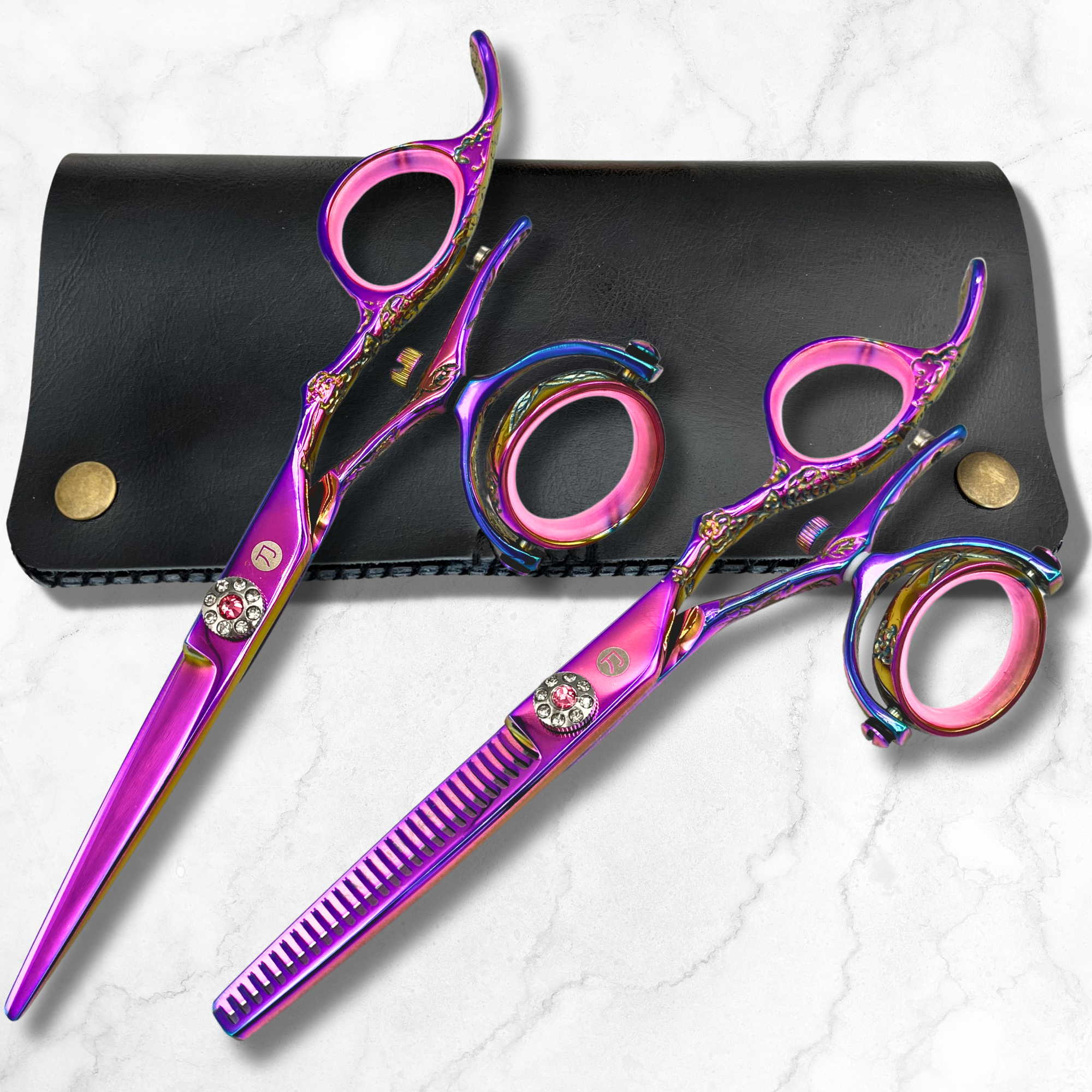
- Store shears properly. A closed case or blade guard protects the edge between uses and prevents the kind of chips or nicks that come from shears knocking against other tools in a drawer.
This routine maintenance keeps a shear performing well between sharpenings but does not restore a dull or damaged edge. It is prevention, not repair.
What Requires a Professional
True sharpening — reshaping and refining the actual cutting edge — is a different skill set entirely, one that takes specialized equipment and training to do without damaging the blade. Attempting to sharpen shears at home with generic tools, sandpaper-style sharpeners, or improvised methods risks uneven edges, altered blade geometry, and permanent loss of the shear's original cutting angle. Once an edge is ground incorrectly, it generally cannot be fully corrected.
Signs that a shear needs professional sharpening rather than at-home maintenance include hair folding or being pushed out of the blades instead of being cut cleanly, a visibly rough or uneven spot along the edge, and noticeably more hand effort required to complete a cut that used to be effortless. These are edge-geometry problems, not tension or cleanliness problems, and they call for someone with the right stones, jigs, and experience to correct them.
Judging Sharpening Quality
Not all sharpening services produce the same result, so it is worth knowing what to check when you get a shear back.
- Test on actual hair, not paper. Paper can feel deceptively sharp even when a shear will struggle with hair. Make a clean, deliberate cut on a small section and check whether hair is severed cleanly or pushed and folded.
- Listen and feel for consistency. A properly sharpened shear should close with a smooth, even sound and resistance along the full length of the blade, not just near the pivot or the tip.
- Inspect the edge under light. Tilt the blade to catch the light along the cutting edge. Flat, dull spots or an uneven bevel line usually indicate rushed or inconsistent work.
- Recheck tension after sharpening. Sharpening can slightly affect how the blades meet, so it is worth rechecking tension once the shear is back in your hands.
A good sharpening service should also be able to explain what they did to the edge and how they matched the original bevel angle, since preserving that angle is central to keeping a shear cutting the way it was designed to.
Building a Maintenance Rhythm
The most reliable approach is to treat cleaning, oiling, and tension checks as an everyday habit, and treat sharpening as a separate, less frequent service performed by someone trained to do it. How often a shear needs sharpening depends heavily on daily cutting volume, hair type, and how consistently the at-home maintenance is kept up, so pay attention to how the shear performs rather than sharpening on a fixed schedule. If you are building out a kit and want shears designed with durable, easy-to-maintain steel from the start, it is worth comparing options in the hair cutting shears and Damascus hair shears collections.
Bottom Line
Wiping, oiling, and checking tension are safe, useful habits that belong in every stylist's daily routine. Actual sharpening and edge correction is specialized work that should go to a professional with the right equipment and experience. Respecting that distinction is what keeps a good pair of shears performing at its best for years.

Written by Charles Harris