How to Choose the Right Hair Shear Size: 5.5 vs 6 vs 7 Inch Guide
Choosing the right shear size is one of the most overlooked decisions in building a professional styling toolkit. Many stylists grab whatever size feels comfortable in the moment, only to struggle with control, fatigue, or inconsistent results a few months into using it. The difference between a 5.5-inch and a 7-inch shear isn’t just millimeters—it fundamentally changes how you work, what techniques feel natural, and which clients you can serve most effectively.
If you’ve ever watched two stylists work side by side, you’ve probably noticed they might reach for completely different shears for the same haircut. That’s not coincidence. Shear size is deeply personal and technical at the same time. It depends on your hand size, the techniques you favor, the client base you serve, and whether you’re doing detail work on shorter styles or longer, layered cuts. A barber doing tight over-comb work needs something very different from a colorist blending subtle layers on longer hair.
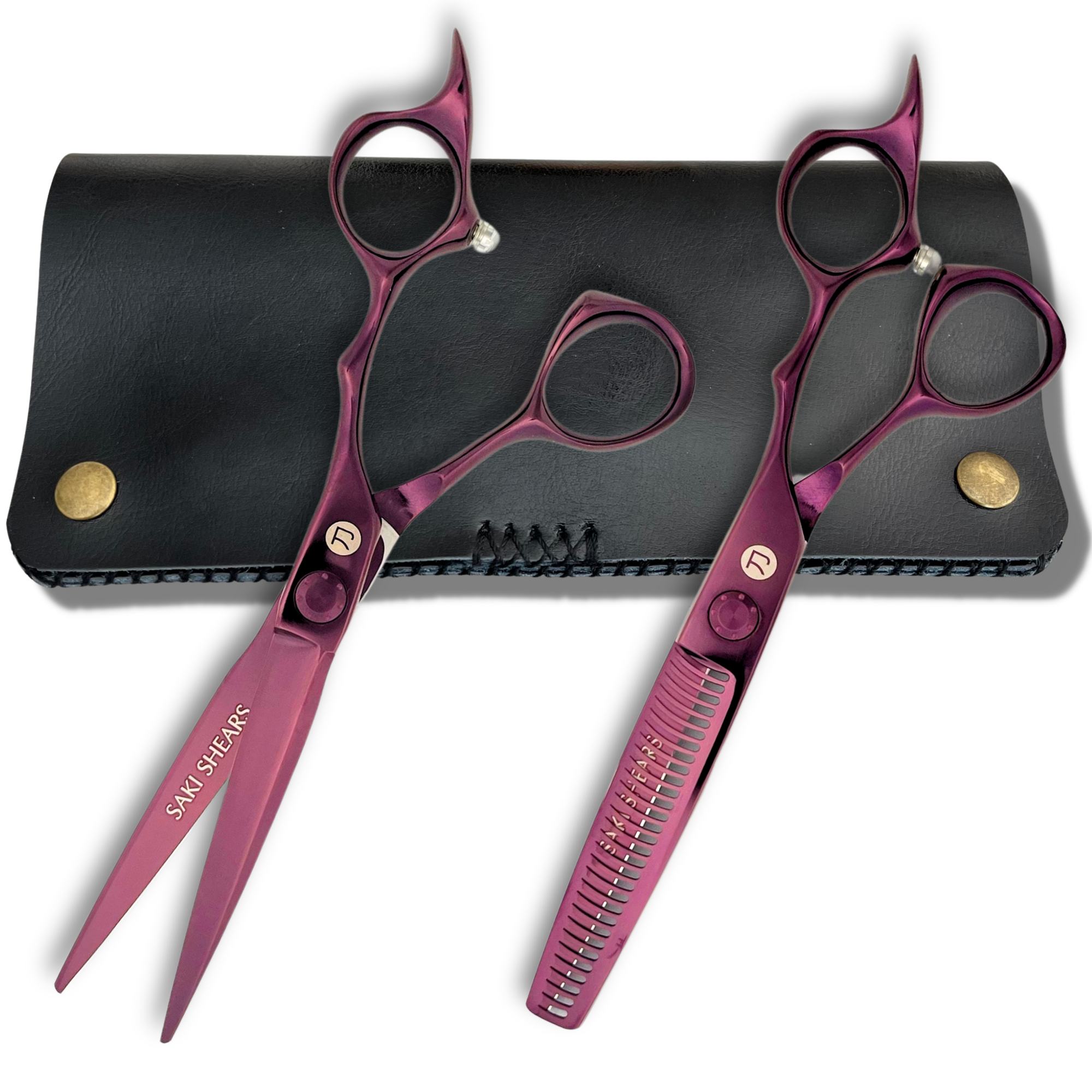
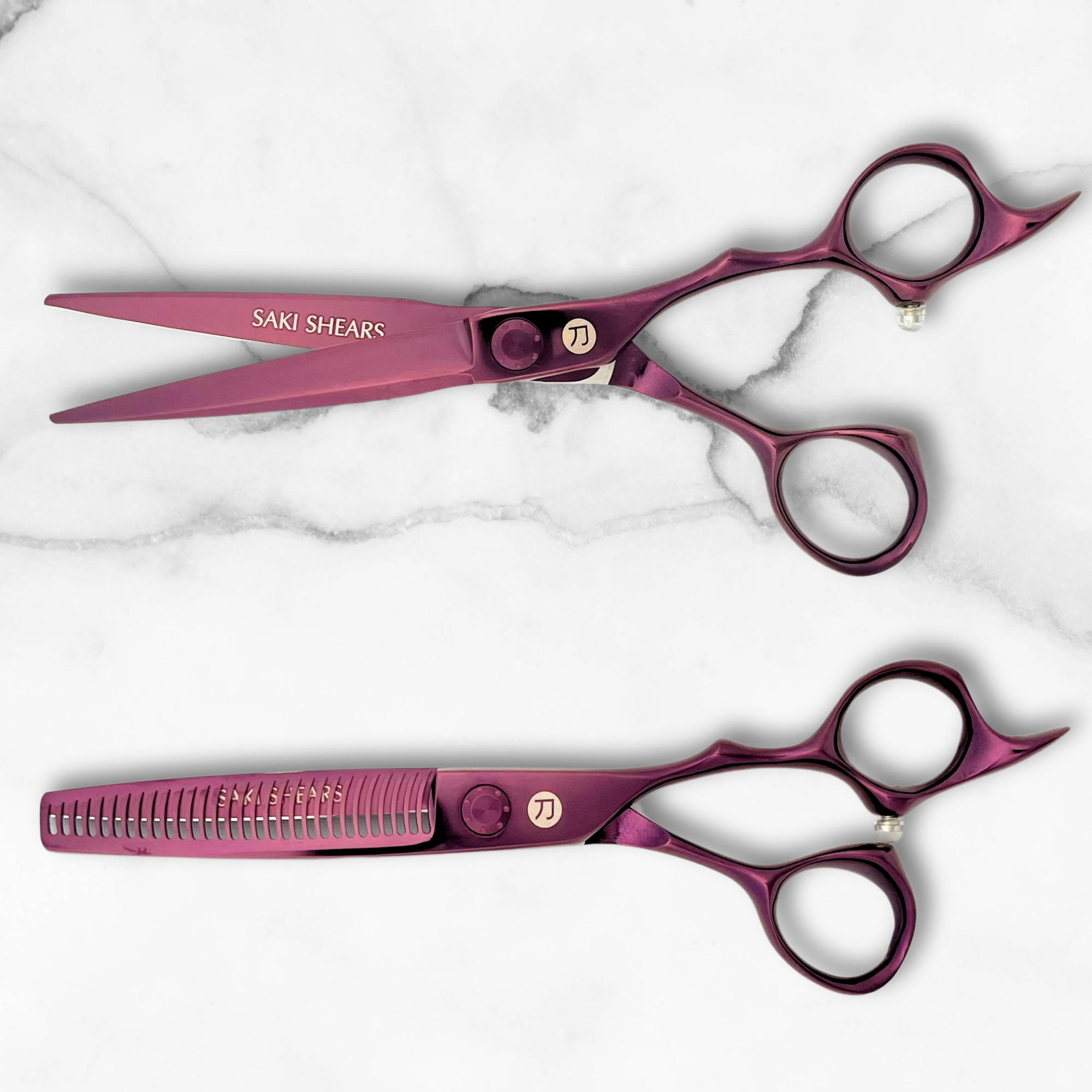
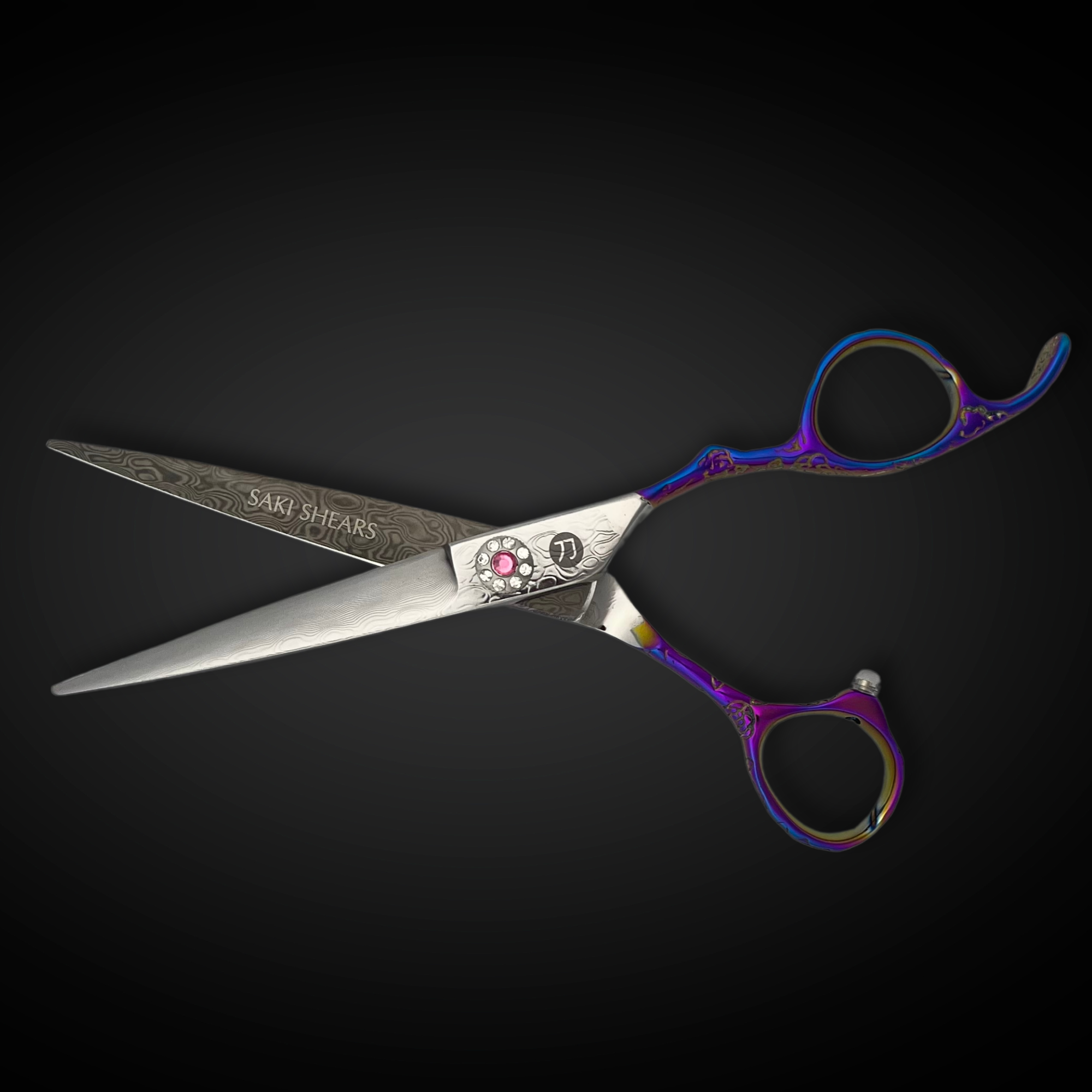
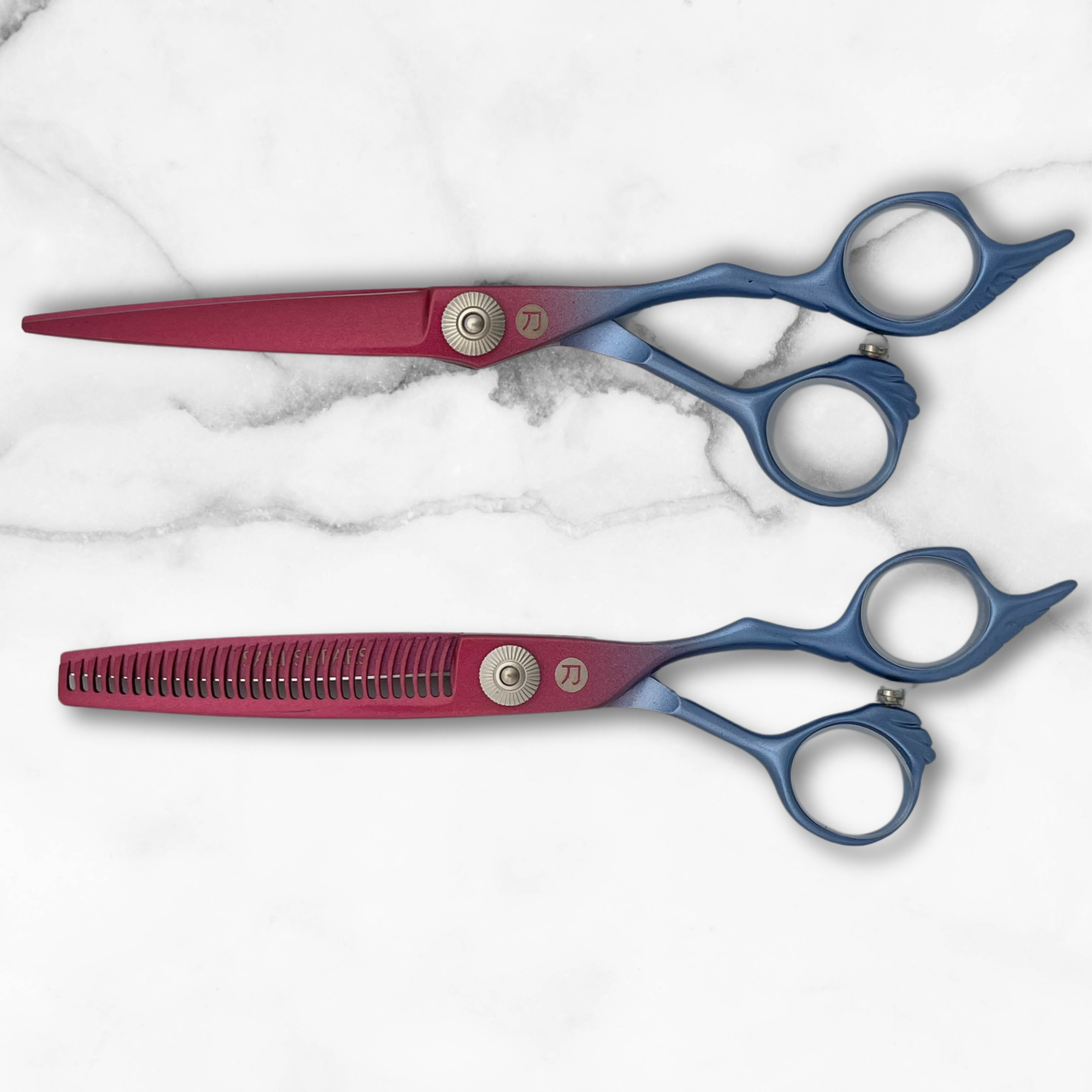
This guide walks through the real-world differences between 5.5-inch, 6-inch, and 7-inch shears so you can make an informed choice. We’ll cover what size actually measures, who benefits from each option, and how to build a versatile collection if your work demands multiple sizes. If you’re looking to expand your arsenal, the Kotaro Set offers a practical solution: it comes in both 5.5 and 6-inch sizes, letting you compare the same shear design at different lengths.

Understanding Shear Size: What’s Actually Being Measured
Before diving into which size you need, let’s clarify what “size” actually means. Shear measurements refer to the overall blade length, typically measured in inches from the tip of the blade to where the blade meets the finger rest. This is industry standard globally, and it’s worth knowing because some manufacturers measure differently (blade length only vs. total length with rest), which can cause confusion when comparing brands.
The most common professional sizes are 5.5 inches, 6 inches, and 7 inches. These aren’t arbitrary choices. They’re spaced roughly half an inch apart—a gap that creates noticeably different handling characteristics. A half-inch difference might seem trivial, but in hand mechanics it translates to different leverage, reach, and control dynamics.
It’s also important to distinguish size from weight and balance. A heavier shear will feel different than a lighter one at the same size, and handle type (offset, straight, or semi-offset) affects how natural the size feels in your hand. This is why two stylists can prefer completely different sizes even with identical hand measurements.
5.5-Inch Shears: Precision and Control
The 5.5-inch shear is the smaller end of the professional spectrum, and it’s chosen by stylists who prioritize control and precision. These shears work exceptionally well for detailed scissor work, geometric cuts, and any styling that demands accuracy over speed.
5.5-inch shears are particularly valued by stylists with smaller hands. The shorter blade length creates less rotational strain on the wrist and forearm, which matters during long days behind the chair. If you find standard 6-inch shears tiring to work with for extended periods, or if you’re working on shorter, tighter cuts where precision matters more than reach, 5.5 inches gives you tighter control. The blade travels a shorter distance per cut, which naturally translates to more defined, intentional lines—ideal for textured pixies, precise fades, or intricate detail work. If you want a concrete example of a precision-first 5.5-inch shear, our review of the Saki Tomika looks at how this size serves stylists early in their careers.
These shears also work well for point-cutting and texturizing techniques. When you’re doing detailed scissor-over-comb work on men’s cuts or creating texture through specific point angles, the smaller size lets you make micro-adjustments without losing control. Stylists working on curly or textured hair often appreciate the precision a 5.5-inch shear provides.
The trade-off: a 5.5-inch shear covers less ground per cut on longer hair. If you’re blending longer layers or working on thick, dense hair on a regular basis, you might find yourself making more passes than you’d like. The shear is not designed for rapid bulk removal. It’s built for control. If that matches your cutting philosophy and clientele, 5.5 inches becomes your ideal size. The Kotaro Cutting shear in 5.5 inches is a solid choice for stylists who want reliable, balanced performance without premium pricing.
6-Inch Shears: The Versatile Standard
Six inches is the most popular size in professional salons, and there’s a reason: it’s the middle ground that works for most stylists and most applications. A 6-inch shear gives you enough reach to blend longer layers efficiently while maintaining enough control for detail work. It’s the size that doesn’t demand a specific hand size, technique specialty, or client demographic to justify itself.
Most stylists find that a 6-inch shear feels balanced. It’s long enough to make meaningful progress on bulk hair removal, blending, and layering without feeling unwieldy. It’s short enough that it doesn’t cause excessive wrist strain during an 8-hour shift. If you’re trained on a 6-inch shear, your muscle memory, rhythm, and technique are all calibrated to that size. Switching away from it often feels strange, even if an alternative size might technically suit you better.
The 6-inch shear works across all cutting techniques and hair types. You can point-cut, slide-cut, and blunt-cut with equal competence. It handles short, textured cuts and longer, heavily layered styles. You can work efficiently on thick hair and maintain precision on fine hair. This versatility is why many stylists keep a 6-inch shear as their primary, go-to tool and only reach for other sizes in specific situations.
If you’re building your first professional-grade collection, starting with a 6-inch is typically the safest choice. The Kotaro Set in 6 inches is an excellent starting point—it includes both a primary cutting shear and a thinning shear, giving you the foundation of a functional toolkit at a reasonable price point.
7-Inch Shears: Barber Work and Extended Reach
Seven inches is noticeably longer, and it’s chosen by stylists who need extended reach or who primarily work on specific cutting styles. This size is particularly common among barbers who use over-comb techniques regularly. The extra length gives you leverage when working in long, flowing motions over a comb, and it covers more hair per cut on longer styles.
If you’re doing men’s barbering with clippers and over-comb finishing work, the extra reach of a 7-inch shear becomes valuable. You can position your hand further from the head while still maintaining control of where the blade cuts. This is genuinely useful when you’re blending longer hair over a comb, especially on clients with thick, coarse hair. The biomechanics of barber work often favor a longer shear than salon work does.
A 7-inch shear is also useful if you work with very long hair regularly—extensions, bridal styles, long-layered cuts that require significant bulk removal. The longer blade means fewer passes to achieve the same amount of removal, which can speed up your work and reduce hand fatigue on specific tasks.
The trade-off: a 7-inch shear requires more wrist rotation per cut and can feel less precise for tight detail work. It’s harder to make micro-adjustments, and on shorter styles it can feel like overkill. Many stylists who own a 7-inch shear describe it as a “specialty” tool they reach for in specific situations, not their daily primary shear. Among Saki Shears, the Katana Set in 7 inches is the only option available in this size, making it the natural choice if you’re specifically seeking a larger, longer shear with premium Japanese steel and black titanium coating.
How Your Hand Size Affects Shear Selection
Hand size is relevant, but often overshadowed in conversations about shear sizing. Smaller hands generally feel more comfortable with shorter shears, simply because there’s less blade extending beyond your grip. Larger hands might find 5.5-inch shears feel cramped or require excessive finger curling. However, this isn’t a strict rule—technique, training, and personal preference often outweigh pure hand size.
More important than hand size is hand strength and endurance. If you develop wrist, hand, or forearm fatigue by midday, shear size and weight matter significantly. A 5.5-inch shear creates less rotational load on your wrist with each cut. Over an 8-hour day, that adds up. Conversely, if you have strong, pain-free wrists and you’re already trained on a 6 or 7-inch shear, switching to a smaller size might feel awkward and reduce your efficiency.
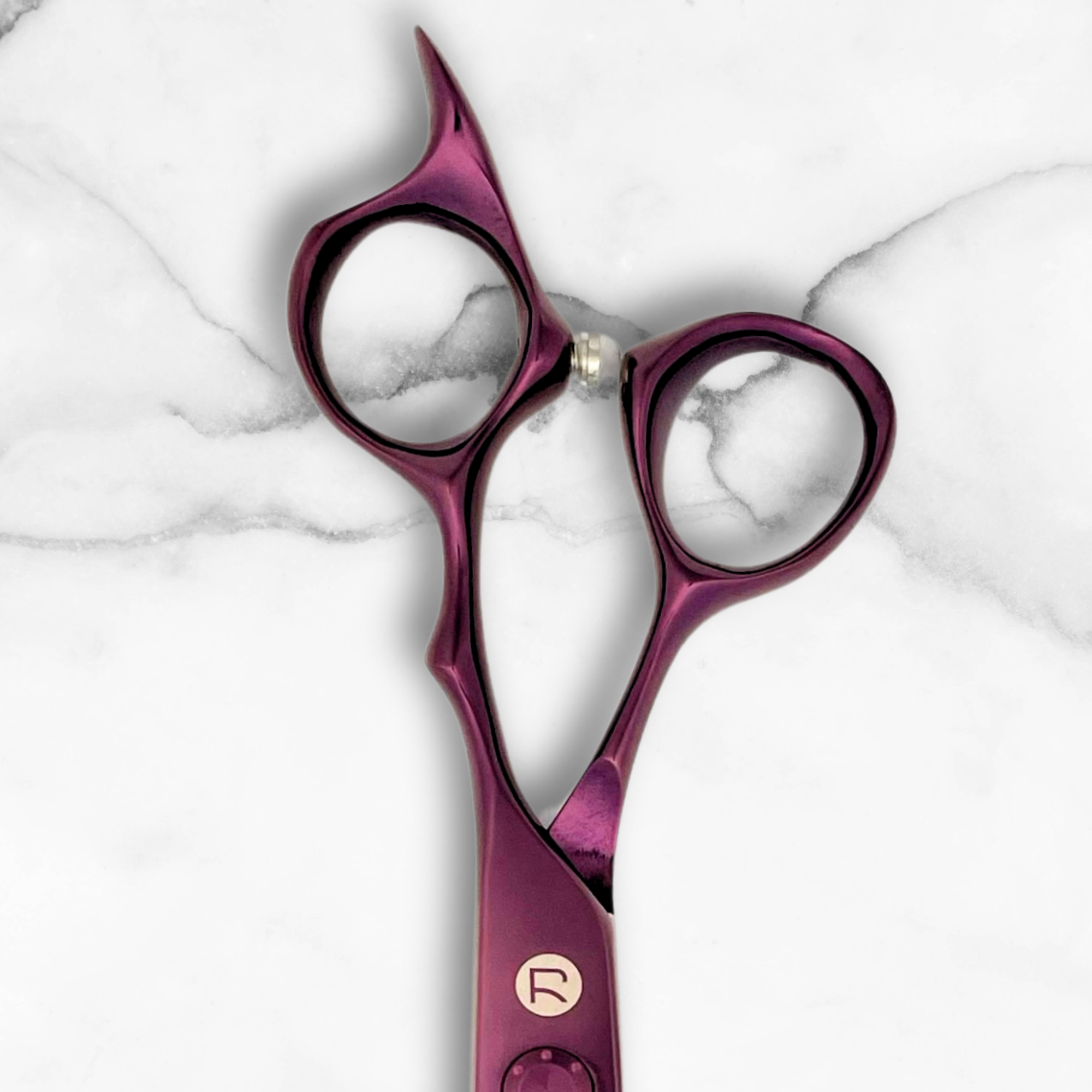
Handle design also matters as much as blade length. An offset handle (where the blade and thumb handle don’t sit in the same plane) reduces wrist rotation and tension — a factor that the Occupational Safety and Health Administration (OSHA) identifies as critical for preventing repetitive strain injuries in manual professions. A removable finger rest lets you customize comfort. A swivel thumb accommodates different grip angles. These design features sometimes matter more than raw size when determining whether a shear feels right for your hand and work style.
Matching Shear Size to Your Cutting Techniques
Different techniques often favor different shear sizes, even when hand size and client base are identical. Understanding which techniques pair best with which sizes helps you make a smarter choice.
Point-cutting and texturizing: These require precision and control. Point-cutting involves angling the shear tip into the hair at specific angles to create movement and reduce weight gradually. A 5.5 or 6-inch shear gives you the control needed for this work. With a 7-inch shear, the blade is long enough that small wrist movements create larger changes at the tip, making it harder to hit precise angles consistently.
Blunt cutting (blunt lines and heavy layers): Blunt cutting benefits from clean, decisive cuts with minimal blade movement. A 6 or 7-inch shear covers more ground per cut, letting you create strong lines efficiently. A 5.5-inch shear works, but it requires more passes, which can introduce slight angle variations that soften the blunt line.
Slide-cutting: Slide-cutting moves the shear along the hair shaft to gradually remove weight. This technique is less sensitive to shear size, but a 6-inch shear offers good balance—long enough to move smoothly along the shaft, short enough to maintain control. A 7-inch shear can be harder to control during the sliding motion, and a 5.5-inch requires more careful positioning.
Over-comb work (barber techniques): Running the shear over a comb demands that you position your hand away from the head while maintaining blade control. A 7-inch shear’s extra length gives you more comfortable positioning and more leverage. A 6-inch works but feels more cramped. A 5.5-inch can be frustrating for this technique unless you have very small hands and are working on very short hair.

Building a Multi-Size Collection
Many experienced stylists own shears in multiple sizes. This isn’t because they’re indecisive—it’s because different work truly does demand different tools. A stylist might keep a 5.5-inch for detail and texture work, a 6-inch for everyday blending and bulk cuts, and occasionally reach for something specialized depending on the client.
If you’re considering a multi-size collection, start with your primary work. Most stylists should start with a quality 6-inch shear and build around it. Once you’re proficient and know your preferences, adding a smaller or larger shear makes sense. This approach lets you compare directly—you’ll notice what changes when you switch sizes, which helps you understand your own technique better.
The Kotaro Set is particularly useful for exploration because it includes both 5.5-inch and 6-inch shears in the same design and steel. Using both allows you to directly compare how size changes your cutting experience without variables like steel quality or handle design getting in the way. Once you know whether you prefer the precision of 5.5 or the versatility of 6, you can add complementary shears to your collection with confidence.
When building a collection, consider your actual work patterns. If 80% of your cuts are shoulder-length or longer blended styles, investing in quality 6 and 7-inch shears makes more sense than a 5.5-inch. If you specialize in short, textured work, two quality 5.5-inch shears might be more valuable than a 6 and a 7. The goal is to have shears that match your reality, not your idea of what you should do.
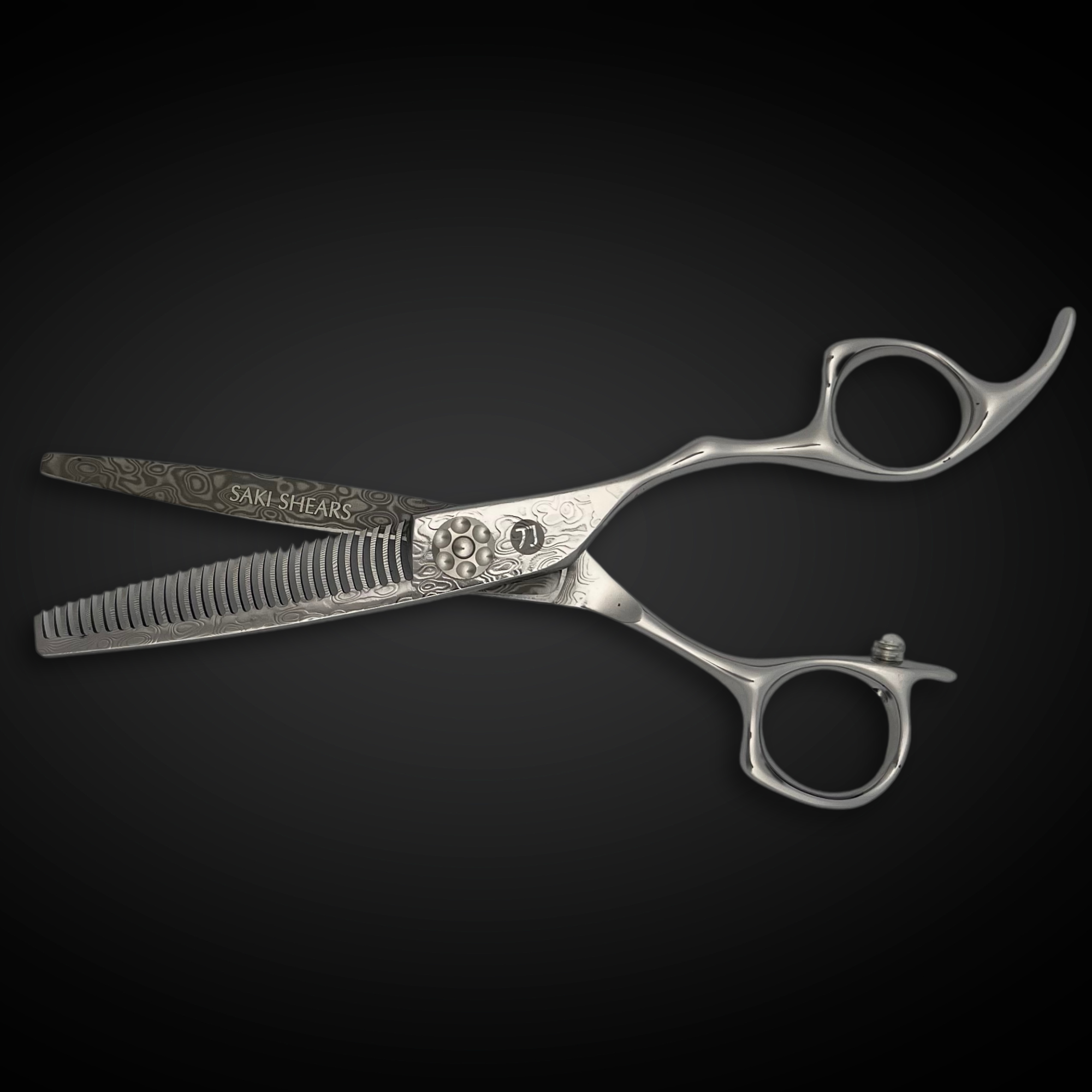
Beyond primary cutting shears, thinning shears and texturizing shears often come in dedicated sizes. The Kotaro Cutting shear is available in 5.5, 6, and even a 6-inch left-handed version, giving left-handed stylists equal access to quality options.
Practical Advice: Testing Before You Buy
Shear selection is personal enough that buying sight unseen, even from a trusted brand, carries some risk. Ideally, you’d hold and use a shear before committing to it. If you’re shopping online or don’t have access to showroom testing, look for retailers with solid return policies. Saki Shears has earned trust in the professional community partly because the quality is consistent—a 6-inch Kotaro will perform predictably whether it’s your first shear or your fifth.
If you’re transitioning from one size to another, give yourself at least a week of real work to adjust. Your hands have muscle memory. A 5.5-inch shear will feel slightly cramped for the first few days if you’re used to a 6-inch, but the adjustment period is usually shorter than you’d expect—often 2-3 days for most stylists. Don’t judge a new size based on 15 minutes in your chair. Judge it after a full week of regular cutting.
Beyond Size: Steel Quality and Handle Design Matter Too
While size is the focus of this guide, it’s worth noting that shear quality compounds the experience. A well-designed 6-inch shear from quality Japanese steel (like the Tomika in 5.5 inches or the Gold Set in 6 inches) will feel dramatically better than a cheap, poorly balanced shear of the same size. Steel quality affects blade sharpness, edge retention, and overall feel. Handle design affects comfort and control. A premium shear in your ideal size outperforms a cheap shear every time.
This is why building a collection gradually, with quality over quantity, typically serves you better than buying multiple mediocre shears. A single excellent 6-inch shear and a single excellent 5.5-inch shear, chosen deliberately based on your work, will outlast and outperform five cheap shears in various sizes.
Frequently Asked Questions
What size shear should I choose if I have small hands?
Small hands don’t automatically mean you need a 5.5-inch shear. Many stylists with small hands work comfortably with 6-inch shears because hand strength, training, and handle design matter more than raw size. That said, if you experience wrist or hand fatigue with a 6-inch shear, a 5.5-inch is worth trying. The real factor is whether the shear causes discomfort or limits your control. If it does, try a smaller size. If not, stick with what works for your technique.
Can I use a 7-inch shear for everyday cutting if I like the longer blade?
Yes, if your work supports it. Many barbers use 7-inch shears exclusively and work beautifully. However, 7-inch shears are less precise for detail work and point-cutting. If most of your cuts are short, textured styles or require significant detail, a 6-inch might frustrate you less. If your work is primarily longer-length blending and over-comb techniques, a 7-inch is genuinely better. The key is matching the shear size to your actual work, not fighting against it.
Should I buy a shear in each size to figure out which is best?
If budget allows, yes—but buy strategically. Start with a quality 6-inch shear since it’s the most versatile. Use it for a month or two. Once you know if you consistently want something smaller or larger, add that size. The Kotaro Set is ideal for exploration because it includes both 5.5 and 6-inch shears in the same design, letting you compare sizes directly. Don’t buy three sizes at once unless you’re already experienced and know what you need.
Conclusion: Size Is Just One Part of Finding Your Perfect Shear
Choosing a shear size boils down to understanding your hand, your techniques, and your work. A 5.5-inch shear is precision-focused and ideal for stylists who prioritize control and detail. A 6-inch is the versatile workhorse that suits most stylists across most cutting styles. A 7-inch is the specialist’s choice, favored by barbers and stylists who work regularly on longer hair with over-comb techniques.
The real answer to “what size do I need?” is: the one that matches how you actually work, not how you think you should work. If you’re unsure, start with a 6-inch and adjust from there. If you’re ready to explore, try the same shear design in different sizes—that’s how you learn what actually matters to your technique and comfort.
Quality matters as much as size. A well-made 5.5-inch shear outperforms a cheap 6-inch every single time. The best Japanese hair cutting shears start with choosing a size that matches your work, then investing in steel quality and design that will last through years of professional use.
Your shear is an extension of your hand. It should feel natural, not like a tool you’re fighting. Once you find your size and invest in quality, you’ll notice the difference in every cut.

Written by Charles Harris