Building a Long-Term Maintenance Calendar for Your Hair Shears
A quick wipe-down and a drop of oil after every few clients keeps shears cutting cleanly through the day, but that daily habit only covers part of the job. The steel, pivot, and edge geometry in a good pair of hair shears also need attention on a longer cycle - weekly checks, monthly deep maintenance, and seasonal adjustments for humidity and storage conditions. This is the maintenance calendar that protects the investment over years of daily use, not just through a single shift.
A Weekly and Monthly Oiling Schedule
Daily oiling keeps the pivot moving freely between clients, but a weekly routine goes a step further. Once a week, fully open the shear, apply oil directly to the pivot screw and the inside of the blades where they meet, then work the blades open and closed several times so the oil distributes evenly across the contact surfaces. Wipe away any excess so it doesn't attract hair clippings and product residue.
On a monthly basis, take the extra few minutes to check tension at the same time. Shears that have been oiled weekly but never had their tension reassessed can still develop a faint wobble or a blade that doesn't glide as smoothly as it should. Adjust tension gradually, checking the cut on scrap hair rather than making large changes at once. If a shear consistently loses tension within days of adjustment, that's a sign it may be due for professional service rather than another home fix.
Professional Sharpening vs. a Quick Home Touch-Up
Not every dull-feeling shear needs to go out for a full sharpening. A quick home touch-up - a light honing or a pass with a fine ceramic stone, followed by proper oiling - is usually enough if the shear is only slightly less crisp than usual and the edge hasn't been chipped or rolled. This kind of touch-up can extend the time between professional sharpenings and is reasonable to do every few weeks depending on how heavily the shear is used.
Professional sharpening is a different service and belongs on a longer cycle. Signs it's time to send a shear out include a visible nick or chip in the edge, a cutting line that pulls or pushes hair instead of slicing cleanly, or a noticeable drop in performance that oiling and tensioning don't resolve. For most working stylists cutting daily, that tends to land somewhere in the range of every few months, though heavier use shortens the interval and lighter use extends it. Keeping a simple log of sharpening dates makes the pattern easier to see over time.
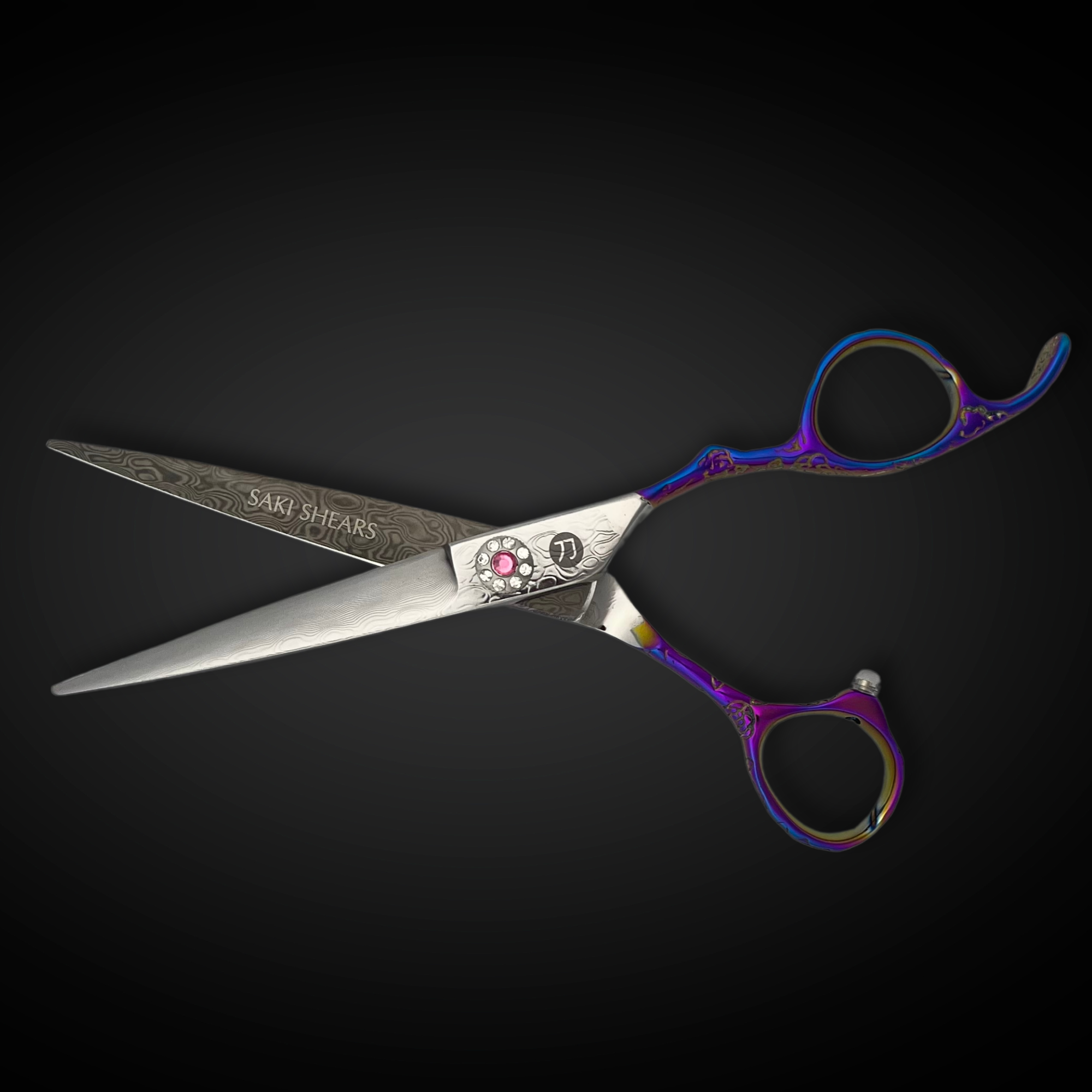
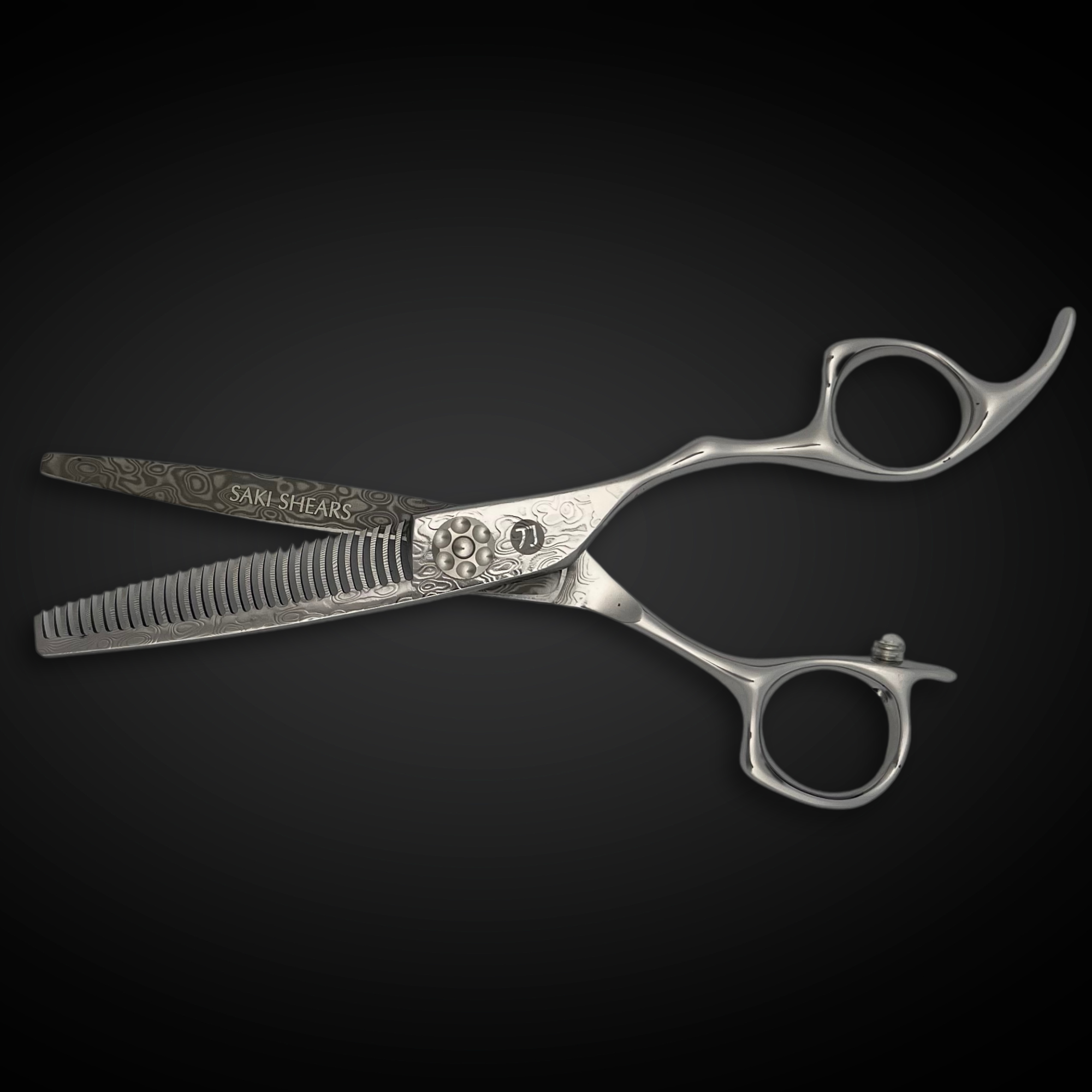
Quality steel matters here too - a shear built from a stable, well-tempered blade holds an edge longer between sharpenings and responds better to home touch-ups. Stylists comparing options can review current lines at the hair cutting shears collection or the Damascus hair shears collection for steel built to hold an edge over a long service life.
Long-Term Storage Between Uses
How a shear is stored when it's not in your hand affects how it performs when it is. Shears left open on a station, tossed loose into a drawer, or carried unprotected in a bag are exposed to unnecessary contact with other tools, dust, and moisture. A dedicated case or roll with individual slots keeps blades from knocking against each other and helps the edge hold up between sharpenings.
For shears that won't be used for an extended stretch - a backup pair, a seasonal set, or a shear waiting to be sent out - close the blades fully, apply a slightly heavier coat of oil than usual, and store them in their case in a dry spot away from direct sunlight. A light film of oil left on the blade during storage helps prevent the surface oxidation that can dull an edge even when the shear isn't being used.
Seasonal Humidity and Steel Care
Humidity swings through the year change how steel behaves, even indoors. In humid months, moisture in the air settles on blade surfaces more readily, which is when spotting and early corrosion are most likely to appear if shears are put away damp or without a protective coat of oil. During these months it's worth shortening the interval between wipe-downs and checking stored shears more often for any sign of moisture.
Dry, low-humidity months bring a different consideration. Steel itself doesn't need extra moisture, but the oil film on a blade can evaporate or thin out faster, so more frequent light oiling helps maintain consistent protection. If a station uses a humidifier or is near an exterior door with seasonal temperature swings, that's worth factoring into where shears are stored, since sudden temperature changes combined with humidity can contribute to condensation on cold steel.
Putting It on the Calendar
Long-cycle maintenance is easiest to keep up with when it's scheduled rather than left to memory. A simple recurring checklist works well:
- Weekly: full oiling of the pivot and blade contact points, wipe down and inspect for nicks
- Monthly: check and adjust tension, evaluate whether a home touch-up is due
- Every few months (adjust by usage): send shears out for professional sharpening
- Seasonally: reassess oiling frequency and storage conditions for humidity changes
None of this replaces the quick daily habits already built into a shift - it works alongside them. Treating long-term care as its own routine, on its own calendar, is what keeps a good pair of shears performing consistently for years rather than months. For stylists building out a rotation of tools to maintain on this kind of schedule, the full range is available in the all shears collection.

Von Charles Harris